16 Traditional Interior Design Ideas You’ll Want to Copy
Traditional interior design has remained one of the most loved decorating styles for generations. While many trends come and go, a classic interior continues to create a welcoming atmosphere that feels elegant, comfortable, and timeless.
The beauty of traditional interior design comes from its balance. Every piece has a purpose, colors work together naturally, and architectural details bring character without making a room feel busy. Whether you’re decorating a single room or planning an entire home makeover, these ideas can help you create a sophisticated space that stays beautiful for years.
1. Rich Wood Paneling
Natural wood instantly brings warmth and depth into any traditional home. From dark walnut walls to beautifully crafted oak panels, wood creates a refined backdrop that complements both antique and modern furnishings.
Why It Works
Wood paneling adds texture, character, and visual interest without relying on bold colors. It creates an inviting environment while highlighting the craftsmanship that defines traditional interior design.
Well-finished wood surfaces also improve durability, making them a practical investment for long-term home value.
How To Use It
Install full-height wall panels in formal living rooms, dining rooms, or libraries for a luxurious appearance.
For a lighter approach, use half-wall wainscoting paired with soft neutral paint. Complete the space with brass hardware, framed artwork, and classic furniture.

2. Ornate Crown Molding
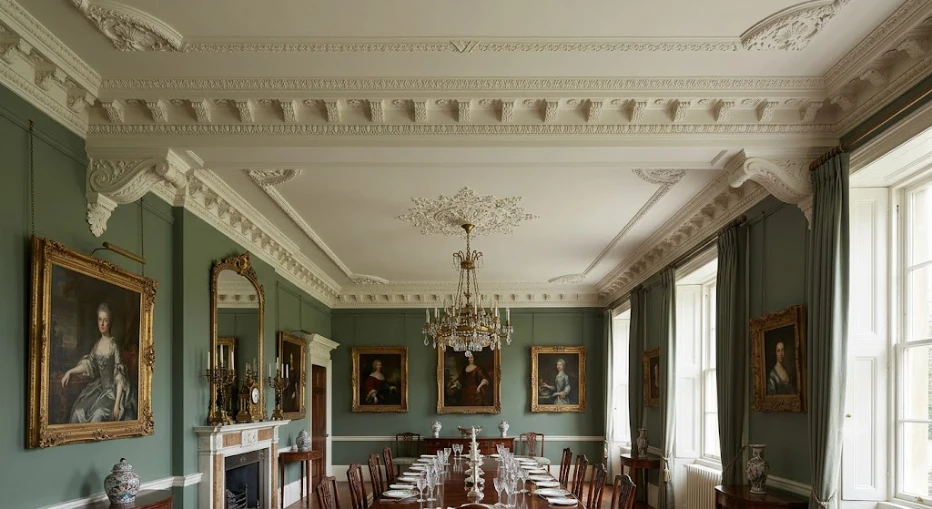
Decorative crown molding gives ceilings a polished transition while adding architectural elegance that instantly elevates any room.
What Makes It Special
Unlike plain trim, decorative molding introduces fine craftsmanship through graceful curves and detailed profiles. It frames the room beautifully and creates a finished appearance.
Pro Tip
Choose molding that matches your ceiling height.
Large rooms can support wider, more decorative profiles, while smaller rooms often look better with simpler designs that maintain proportion.
3. Classic Neutral Palette
Traditional homes rarely depend on bright colors. Instead, they build beauty through soft neutrals layered with natural materials and subtle contrast.
Why Neutrals Matter
Cream, ivory, beige, taupe, warm gray, and soft white create calm interiors that allow furniture and architectural details to become the focal point.
These timeless shades also make rooms feel larger and brighter.
Style It Right
Mix several neutral tones rather than using a single color throughout the room.
Natural wood, linen curtains, marble surfaces, and warm lighting prevent the palette from feeling flat.

4. Statement Antique Furniture
Authentic antique furniture gives a traditional interior personality and history that modern reproductions often cannot match.
Why It’s Helpful
Every antique piece tells a story. Carved cabinets, vintage dining tables, and handcrafted armchairs introduce unique details while becoming conversation pieces.
Their solid construction also means they often last for decades.
Easy Wins
Instead of filling every room with antiques, select one signature piece.
Popular choices include:
- A carved buffet
- Vintage writing desk
- Antique chest
- Classic grandfather clock
- Ornate console table
Mix these with newer furniture to keep the space fresh and comfortable.

5. Elegant Area Rugs
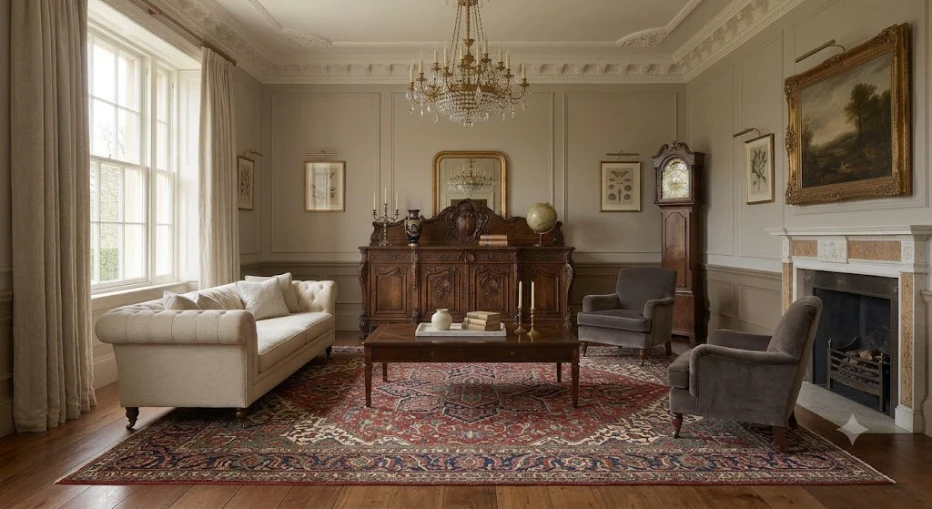
Area rugs help define seating areas while introducing color, texture, and pattern without overwhelming the room.
What They Do Best
Traditional rugs soften hardwood flooring, improve comfort, and connect furniture into one cohesive layout.
Persian, Oriental, and floral-inspired rugs remain popular choices because they complement classic furniture beautifully.
Smart Styling Tips
Choose a rug large enough for the front legs of major furniture pieces to rest on it.
Layering quality rugs with hardwood floors creates warmth and visual balance throughout the room.
6. Symmetrical Layouts
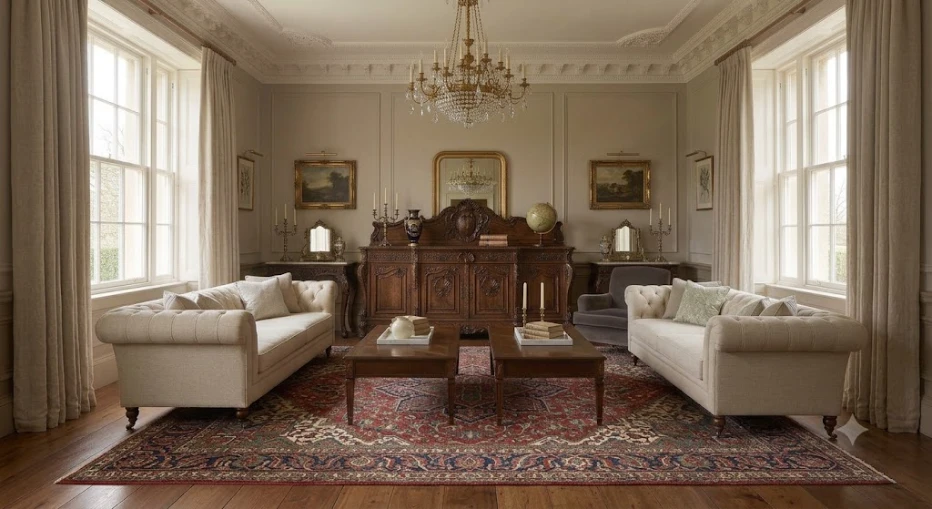
One of the defining characteristics of traditional interior design is symmetry. Balanced arrangements create a calm and organized appearance.
Why It Works
Matching furniture placement naturally feels comfortable and visually pleasing.
Balanced layouts also make entertaining easier by encouraging conversation and improving movement throughout the room.
How To Apply It
Common symmetrical arrangements include:
- Matching sofas
- Identical table lamps
- Twin armchairs
- Evenly spaced artwork
- Centered coffee tables
Focus on creating equal visual weight on both sides of the room instead of making every element identical.
7. Decorative Fireplace Mantels
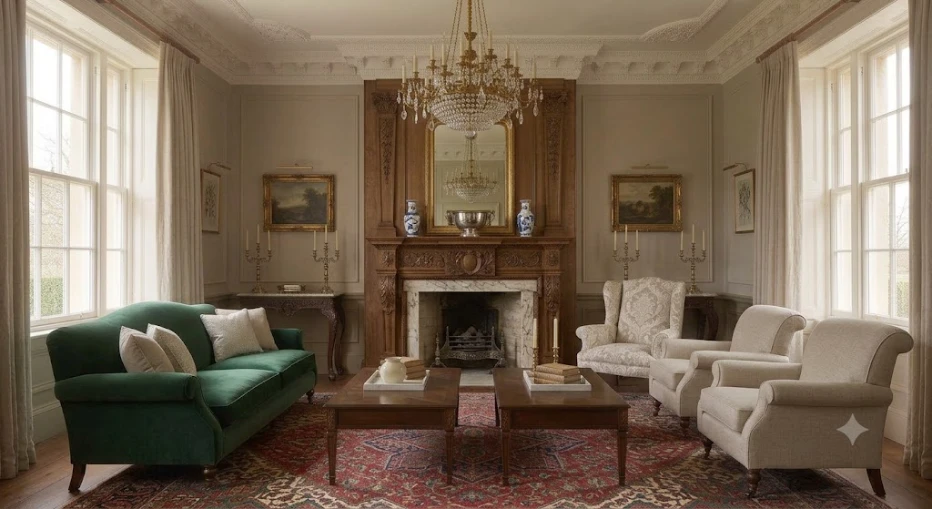
A fireplace often becomes the centerpiece of a traditional living room. Even non-working fireplaces add architectural interest and timeless charm.
Why It Matters
Detailed mantels create a natural focal point while providing space to display artwork, mirrors, family photographs, or seasonal decorations.
Stone, marble, and carved wood remain popular materials because they complement classic interiors.
Style Ideas
Decorate mantels with carefully selected accessories rather than overcrowding them.
Popular combinations include:
- Large framed mirror
- Brass candle holders
- Ceramic vases
- Fresh greenery
- Traditional artwork

8. Timeless Upholstered Seating
Comfort has always been an important part of traditional interior design. Upholstered seating creates inviting spaces while maintaining elegance.
What You’ll Love
High-quality upholstered furniture offers lasting comfort and blends beautifully with wood finishes, decorative rugs, and classic lighting.
Well-crafted sofas and armchairs remain stylish for many years when paired with timeless fabrics.
Fabric Choices
Popular upholstery materials include:
- Linen
- Cotton blends
- Velvet
- Leather
- Damask
- Performance fabrics
Choose solid colors or subtle woven patterns that coordinate naturally with the rest of the room instead of competing for attention.
9. Layered Window Treatments
Windows play an important role in a traditional home. Instead of using a single curtain or blind, layering different treatments creates depth, privacy, and a polished appearance.
Why Layering Works
Combining sheer curtains with heavier drapes allows you to control natural light throughout the day while adding softness to the room. The extra layers also make windows appear larger and more elegant.
Layered treatments improve insulation, reduce glare, and complete the overall design without making the space feel crowded.
Try This
Install floor-length drapes on decorative curtain rods and pair them with sheer panels underneath. Choose fabrics such as linen, cotton, or velvet in neutral shades that coordinate with your furniture.
Decorative tiebacks, tassels, and pleated headers add an extra touch of sophistication.

10. Traditional Lighting Fixtures
Lighting does more than brighten a room. It adds personality and highlights architectural details that define traditional interior design.
Key Benefits
Classic lighting fixtures create a warm atmosphere while serving as decorative focal points. Chandeliers, wall sconces, pendant lights, and table lamps work together to provide balanced illumination throughout the home.
Choosing timeless fixtures helps maintain a cohesive design across every room.
Lighting Tips
Mix different light sources instead of relying on one ceiling fixture.
A well-balanced room often includes:
- Ceiling chandelier
- Table lamps
- Wall sconces
- Floor lamps
- Accent lighting for artwork
Warm white bulbs create a welcoming environment that complements wood finishes and neutral color palettes.

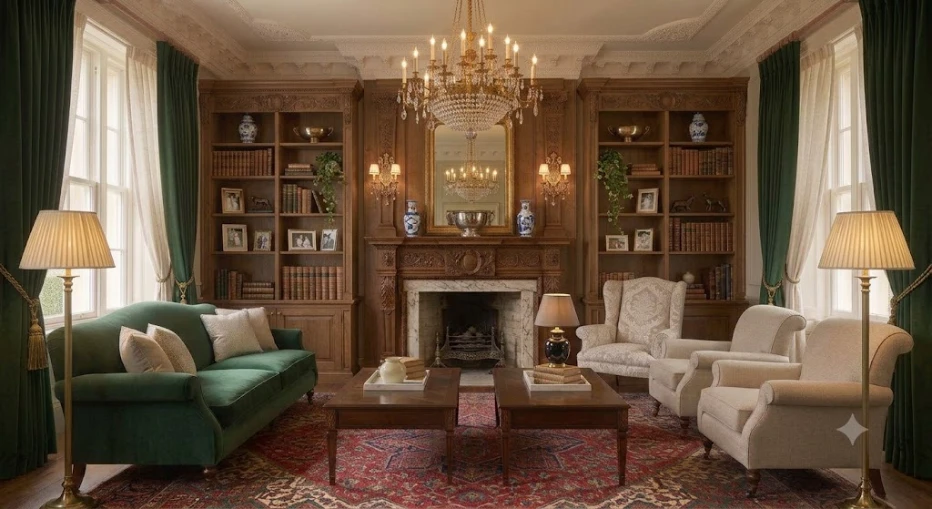
11. Built-In Bookcases
Built-in bookcases combine storage with style. They make use of wall space while giving a room a refined and organized appearance.
Why They’re Genius
Custom shelving creates a seamless look that feels like part of the home’s architecture. It also provides space to display books, artwork, collectibles, and decorative accessories without adding bulky furniture.
Built-ins can increase functionality while enhancing the room’s overall character.
Style Notes
Keep shelves balanced by mixing different decorative elements.
Include:
- Hardcover books
- Framed family photos
- Ceramic vases
- Decorative bowls
- Sculptures
- Green plants
Leave some open space between items to prevent the shelves from looking cluttered.
12. Detailed Ceiling Medallions
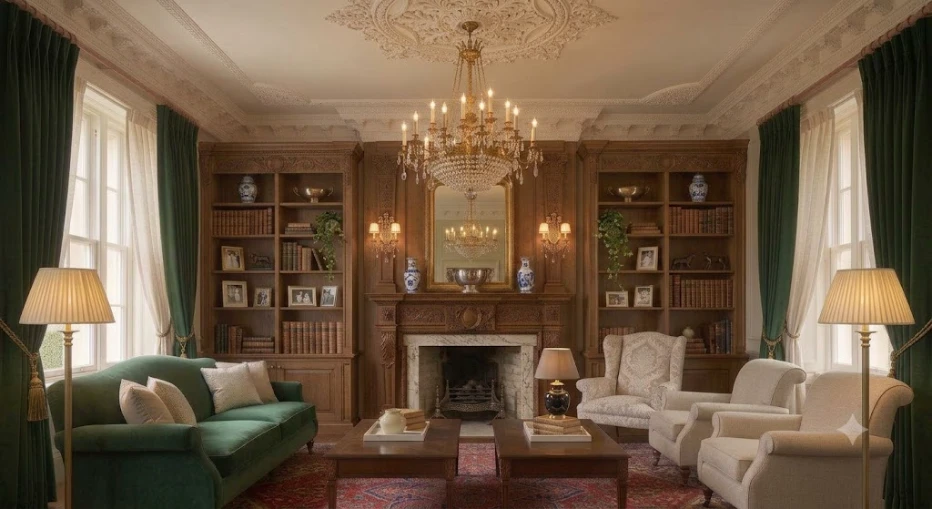
Ceiling medallions are a classic architectural feature often found in traditional homes. They frame light fixtures beautifully and add visual interest overhead.
Why They’re Worth It
Even a simple ceiling can become a design feature with a decorative medallion. It draws attention upward and complements crown molding for a complete architectural look.
Modern lightweight materials make installation easier while maintaining the appearance of handcrafted plaster.
Keep It Balanced
Choose a medallion that matches the size of your chandelier and the scale of the room.
Oversized designs can overwhelm smaller spaces, while subtle patterns often create a more elegant finish.
13. Classic Wall Art Arrangements
Artwork gives personality to a home and reflects the homeowner’s style. In traditional interiors, carefully arranged wall art creates balance and sophistication.
What Works Best
Classic paintings, landscapes, botanical prints, portraits, and vintage illustrations complement traditional furniture and architectural details.
Frames in wood, gold, or antique finishes help tie the collection together.
Hanging Tips
Maintain consistent spacing between frames and align artwork with nearby furniture.
For larger walls, create a gallery arrangement using matching frame styles to achieve a clean and organized appearance.

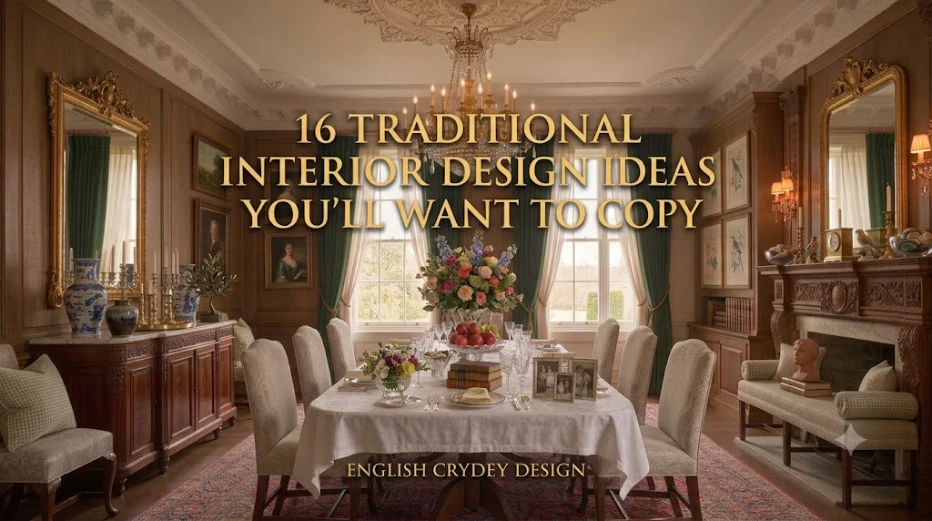
14. Elegant Dining Room Details
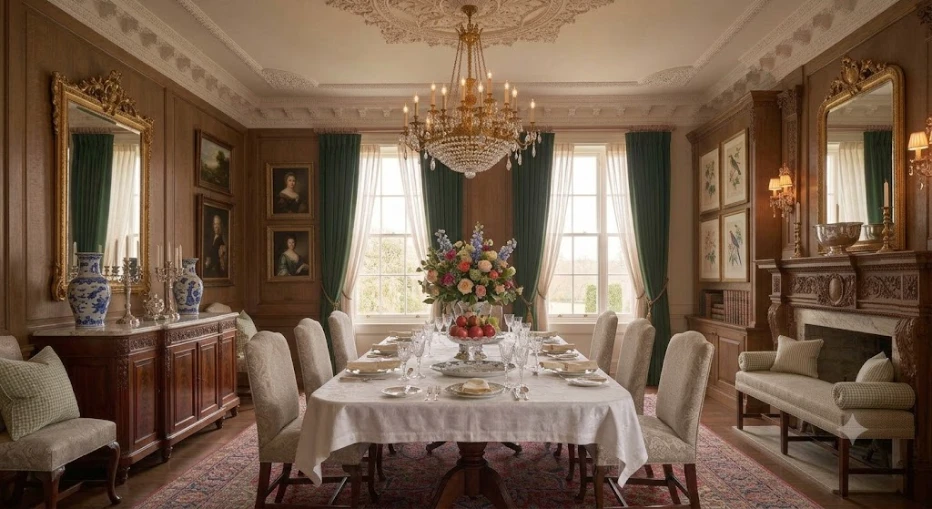
The dining room often serves as one of the most formal spaces in a traditional home. Every detail contributes to an atmosphere that feels welcoming and refined.
Must-Have Elements
A traditional dining room typically includes:
- Solid wood dining table
- Upholstered dining chairs
- Statement chandelier
- Area rug
- Buffet cabinet
- Decorative mirror
- Fine table linens
These elements work together to create a timeless setting suitable for everyday meals and special gatherings.
Finishing Touches
Complete the room with fresh flowers, candles, classic dinnerware, and subtle seasonal decorations.
Keeping the tabletop simple allows the craftsmanship of the furniture to remain the focal point.

15. Subtle Patterned Fabrics
Patterns introduce visual interest without dominating the room. Traditional interiors often rely on understated designs rather than bold prints.
Why Patterns Help
Soft florals, stripes, checks, damask, and woven textures create depth while maintaining a calm atmosphere.
Using similar color families keeps the overall design cohesive.
Smart Choices
Apply patterned fabrics to:
- Accent pillows
- Dining chair cushions
- Window treatments
- Ottomans
- Bedding
- Upholstered benches
Pair patterned fabrics with solid-colored furniture to maintain visual balance.
16. Thoughtful Decorative Accessories
Accessories complete the room by adding personality and warmth. Every decorative item should support the overall style instead of competing for attention.
What To Include
Traditional homes often feature carefully selected accessories such as:
- Ceramic vases
- Brass candle holders
- Decorative trays
- Antique clocks
- Fresh flowers
- Coffee table books
- Framed family photographs
- Small sculptures
Choosing fewer, high-quality pieces creates a more elegant appearance than filling every surface.
Styling Rule
Group decorative items in odd numbers and vary their height, texture, and material.
Maintain open space around each arrangement so every piece can stand out naturally.

Conclusion: Bringing It All Together
Traditional interior design continues to stand the test of time because it combines elegance, comfort, and lasting quality. Rich wood finishes, classic furniture, architectural details, layered textiles, and carefully selected accessories work together to create spaces that feel welcoming every day.
Rather than following short-lived decorating trends, this style focuses on timeless materials and thoughtful craftsmanship. Small improvements, such as adding crown molding, investing in quality upholstered seating, or choosing a classic area rug, can significantly improve the appearance of any room.
The best traditional interiors are never overcrowded. Every furniture piece, decorative accessory, and architectural detail has a purpose, creating a home that feels balanced, comfortable, and beautifully coordinated for years to come.