16 Bathroom Flooring Ideas That Are Trending and Totally Gorgeous
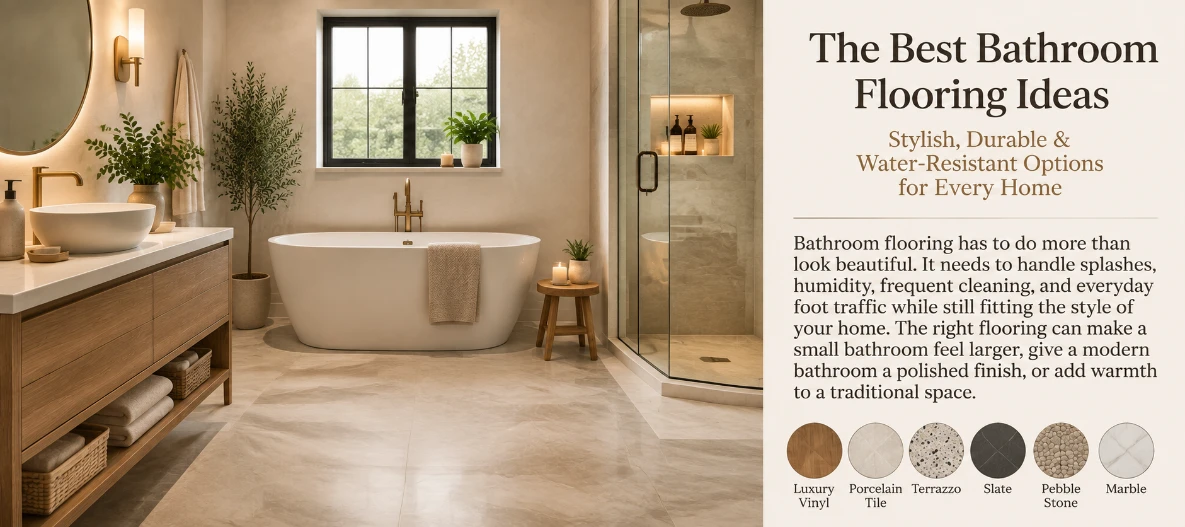
Bathroom flooring has to do more than look beautiful. It needs to handle splashes, humidity, frequent cleaning, and everyday foot traffic while still fitting the style of your home. The right flooring can make a small bathroom feel larger, give a modern bathroom a polished finish, or add warmth to a traditional space.
Today, homeowners have far more choices than basic ceramic tile. From luxury vinyl and large-format porcelain to terrazzo, slate, pebble stone, and waterproof flooring systems, there are options for almost every design preference and budget.
When choosing among these bathroom flooring ideas, think about more than color and pattern. Water resistance, slip resistance, maintenance, installation requirements, durability, and the condition of the subfloor can all affect how well a flooring material performs.
Moisture control is especially important in bathrooms. The U.S. Environmental Protection Agency notes that damp areas with poor ventilation can encourage mold growth and recommends choosing materials that are suitable for areas exposed to moisture.
Here are 16 stylish bathroom flooring ideas worth considering for a bathroom renovation or refresh.
1. Luxury Vinyl Plank
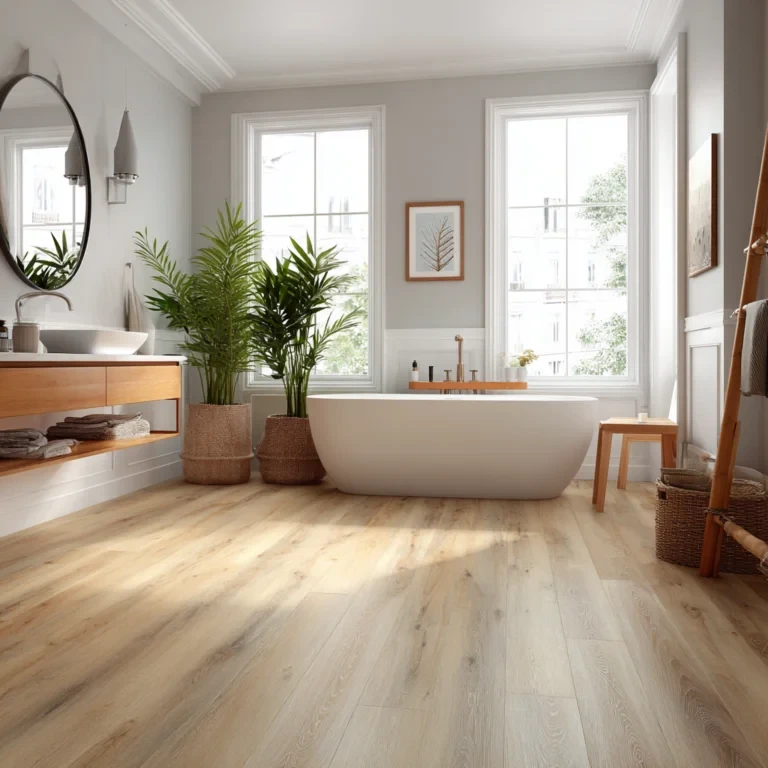
Luxury vinyl plank, often called LVP, is one of the most practical choices for homeowners who want the appearance of wood without the same moisture concerns associated with traditional wood flooring.
Modern LVP can closely imitate oak, walnut, maple, and other wood finishes. It is available in warm, cool, light, and dark tones, making it easy to coordinate with bathroom cabinets, wall colors, and fixtures.
For a contemporary bathroom, wide light-oak planks can create a clean and spacious appearance. Darker wood-look planks work particularly well with white walls and black hardware.
Why Choose Luxury Vinyl Plank?
- Comfortable underfoot
- Easy to clean
- Available in many wood-look finishes
- Suitable for many bathroom styles
- Often simpler to install than tile
- Can work well in budget-conscious renovations
Choose a product specifically rated for bathroom or wet-area use, and follow the manufacturer’s installation requirements carefully.
2. Porcelain Tile Sheets
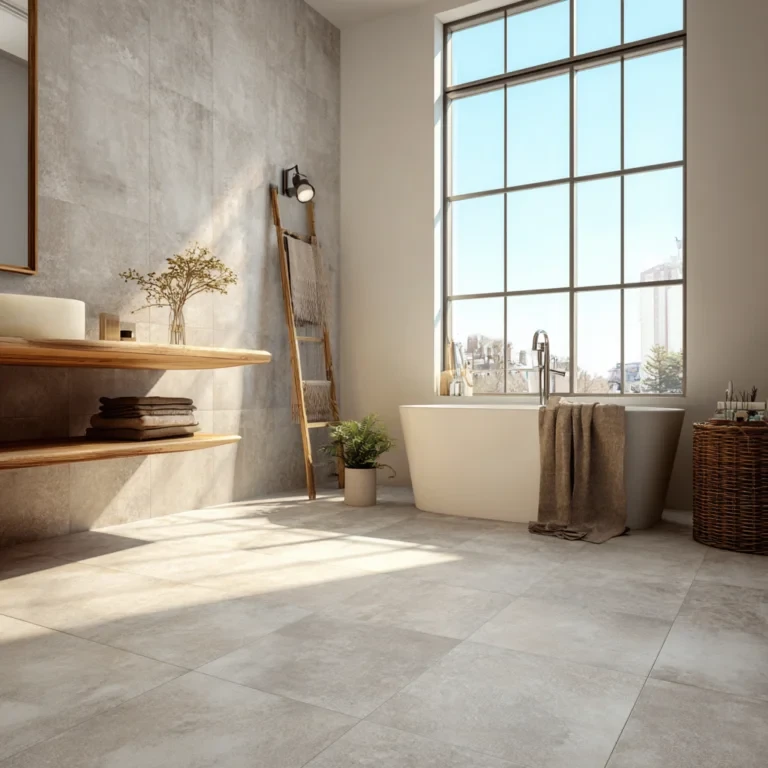
Large porcelain tile sheets can give a bathroom floor a sophisticated, almost seamless appearance. Because there are fewer grout joints than with smaller tiles, the finished floor can look cleaner and less visually busy.
Porcelain is particularly popular for modern and minimalist bathrooms. Large-format designs can imitate marble, limestone, concrete, or other natural materials without requiring the maintenance associated with some natural stone surfaces.
A soft white or warm beige porcelain floor can make a smaller bathroom feel open. Gray stone-look porcelain can create a more contemporary atmosphere.
Best Design Tip
Use large-format porcelain with a subtle pattern when the rest of the bathroom already has strong visual elements. This keeps the floor elegant without making the room feel overcrowded.
3. Natural Stone Slabs
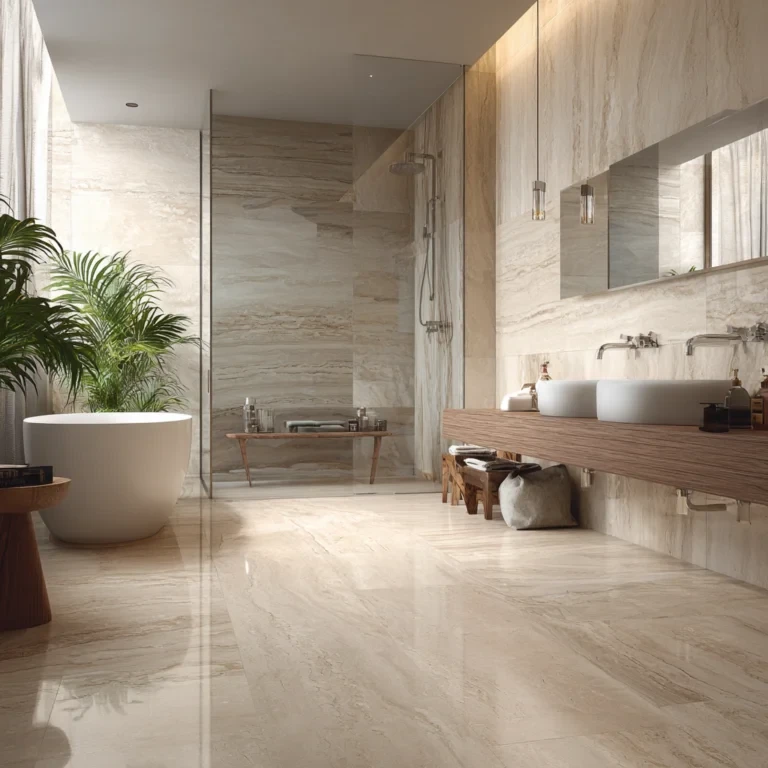
Natural stone can give a bathroom a high-end architectural appearance. Marble, limestone, and other stone surfaces bring natural variation, texture, and character to the room.
A stone floor can work especially well in luxury bathrooms with freestanding tubs, large mirrors, elegant lighting, and neutral cabinetry.
However, natural stone requires more attention than many manufactured flooring materials. Some stone types are porous and may require sealing and appropriate cleaning products.
Before choosing a stone floor, check its suitability for bathroom use and ask the installer about sealing, maintenance, and slip resistance.
Popular Stone Looks
- White marble
- Cream limestone
- Gray stone
- Travertine-inspired finishes
- Dark charcoal stone
Natural variation is part of the appeal, so samples should be viewed in the actual bathroom lighting before making a final decision.
4. Patterned Ceramic Tiles
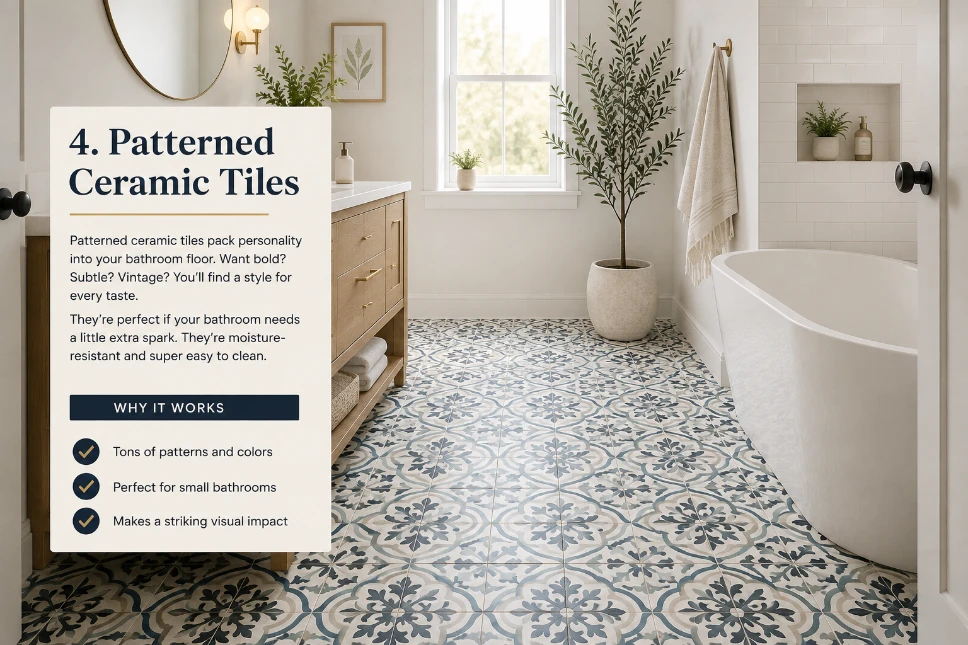
Patterned ceramic tiles can instantly turn an ordinary bathroom floor into a design feature.
Geometric patterns, floral-inspired designs, Moroccan-style motifs, and vintage patterns can all create a distinctive look without requiring dramatic changes to the walls.
For a balanced bathroom, use patterned flooring with relatively simple walls. White subway tile, neutral paint, and understated fixtures allow the floor to become the main visual feature.
A Simple Styling Formula
If your bathroom has:
- White walls → try bold black-and-white flooring
- Warm wood cabinets → choose earthy patterned tiles
- Colorful walls → select a quieter geometric pattern
- Minimalist fixtures → use a decorative floor for contrast
This approach creates visual interest while keeping the room cohesive.
5. Waterproof Laminate Flooring
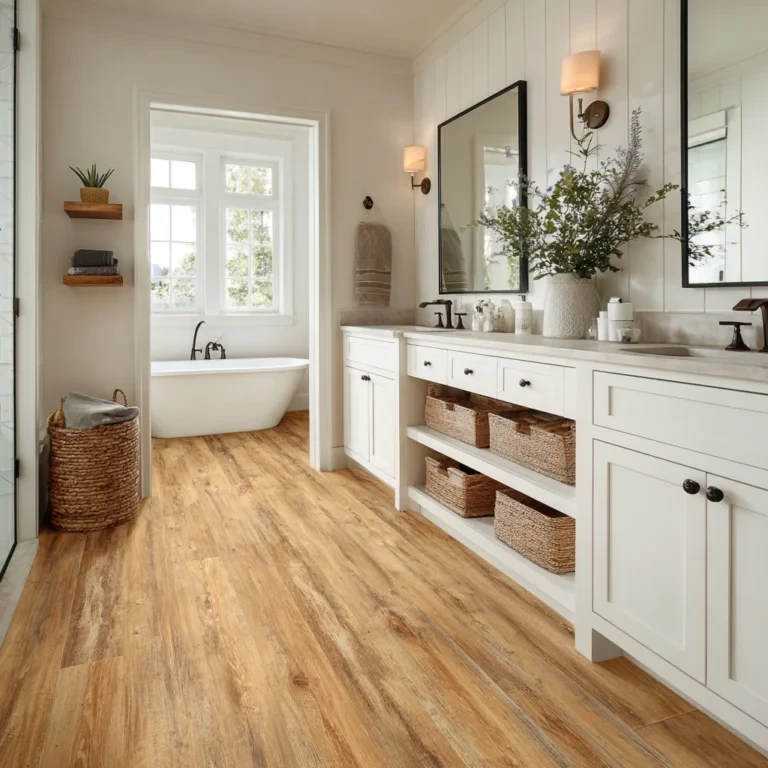
Water-resistant and waterproof laminate products have expanded the range of flooring options available for bathrooms. Wood-look designs can bring warmth to spaces that would otherwise rely heavily on ceramic or stone.
The important distinction is that not every laminate product is designed for wet environments. Always check the manufacturer’s specifications before installing it in a bathroom.
Good installation is equally important because water can cause problems when it reaches areas beneath the flooring.
Where It Works Best
Waterproof laminate can be particularly attractive in powder rooms and bathrooms where the floor experiences normal splashes rather than constant direct water exposure.
For bathrooms with frequent standing water, choose a flooring system specifically designed for those conditions.
6. Pebble Stone Flooring
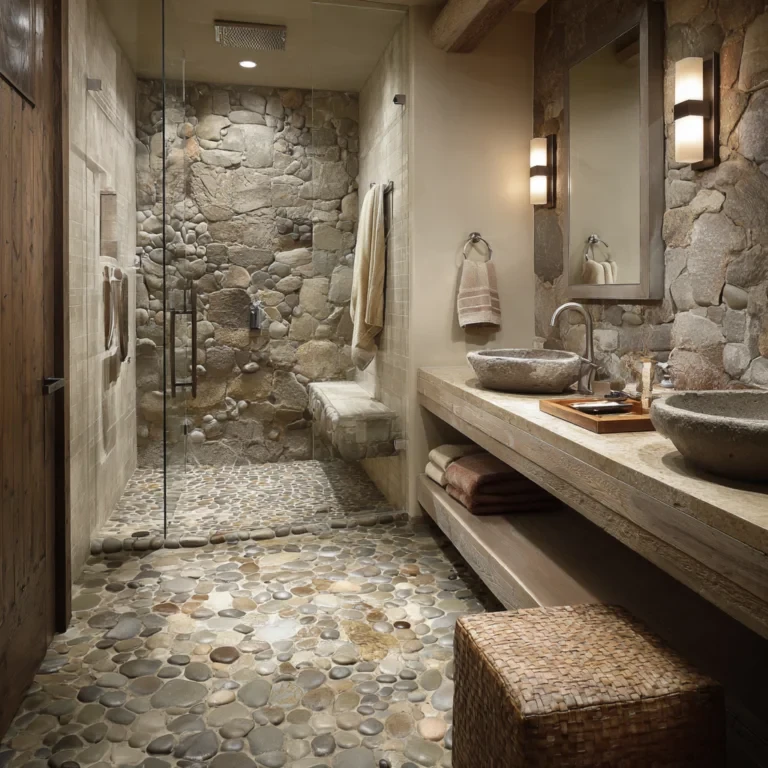
Pebble stone flooring brings a natural, spa-like character to the bathroom. Rounded stones arranged in mesh sheets create texture and a connection with outdoor landscapes.
This look is especially popular in bathrooms inspired by nature. Pair pebble flooring with wood tones, warm lighting, plants, and natural-colored walls for a relaxing atmosphere.
Pebbles can also add useful visual texture to an otherwise simple bathroom.
Things to Consider
The uneven surface can feel different underfoot compared with smooth tile. Grout color also has a major effect on the final appearance.
Light grout can create a softer look, while darker grout can emphasize the individual stones.
7. Hexagon Tile Patterns
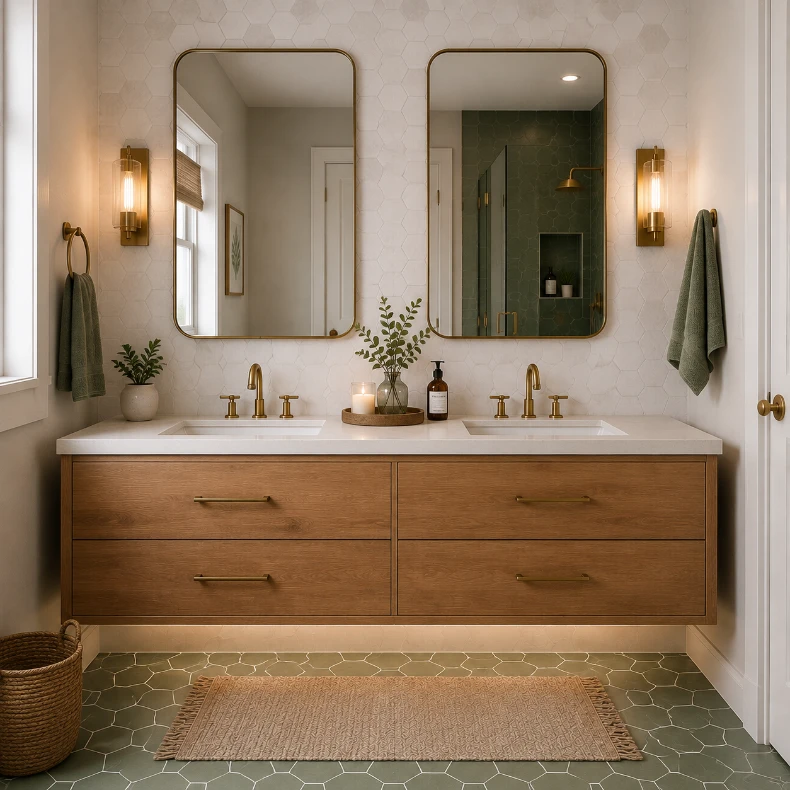
Hexagon tiles remain a versatile option for bathroom floors because they can look traditional, contemporary, playful, or sophisticated depending on their size and color.
Small hexagons work beautifully in vintage-inspired bathrooms. Larger hexagons create a more modern appearance and can make the floor feel visually structured.
Black hexagon tiles with light grout are a classic choice, while soft gray, cream, or beige hexagons can create a calmer design.
Try Different Scale
Don’t assume that small tiles are always best for a small bathroom. Large hexagons can create fewer visual interruptions and give the room a cleaner appearance.
The best size depends on the bathroom’s proportions, layout, and overall design.
8. Engineered Wood Planks
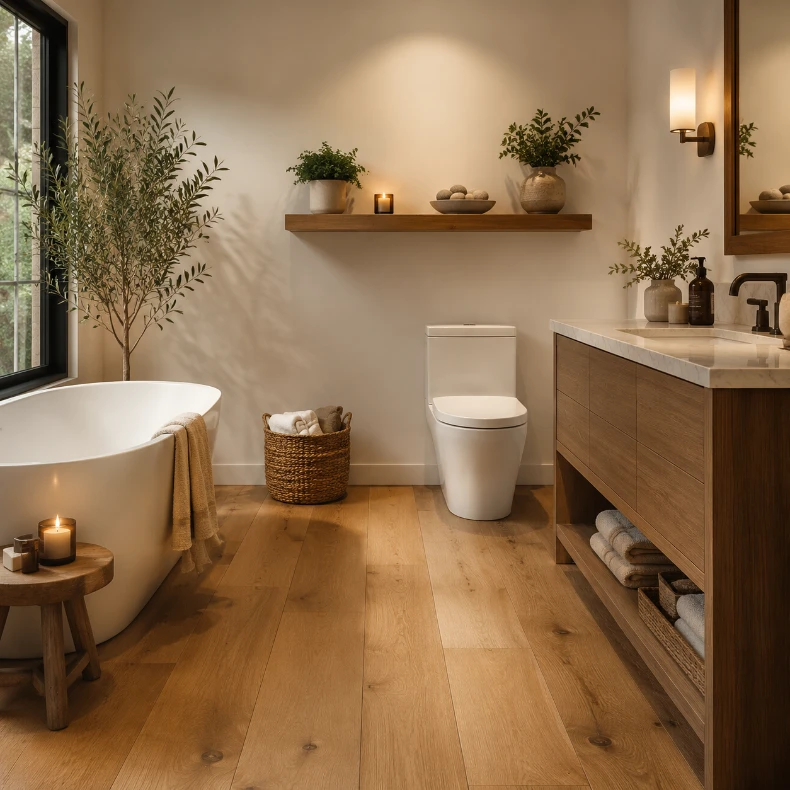
Engineered wood can bring genuine wood character into areas where traditional solid hardwood may be less suitable.
Its layered construction makes it different from solid wood, but moisture is still an important consideration. Bathrooms have higher humidity and more water exposure than most other rooms, so product specifications and installation instructions matter.
The National Wood Flooring Association provides technical guidance on moisture and wood flooring, including the potential for wood-based materials to swell or change when exposed to excessive moisture.
Best Approach
If you’re considering engineered wood for a bathroom, choose a product approved for the intended environment and work with an experienced installer.
For a similar warm appearance with less concern about moisture, wood-look porcelain or bathroom-rated vinyl may be a more practical alternative.
9. Concrete Micro-Topping
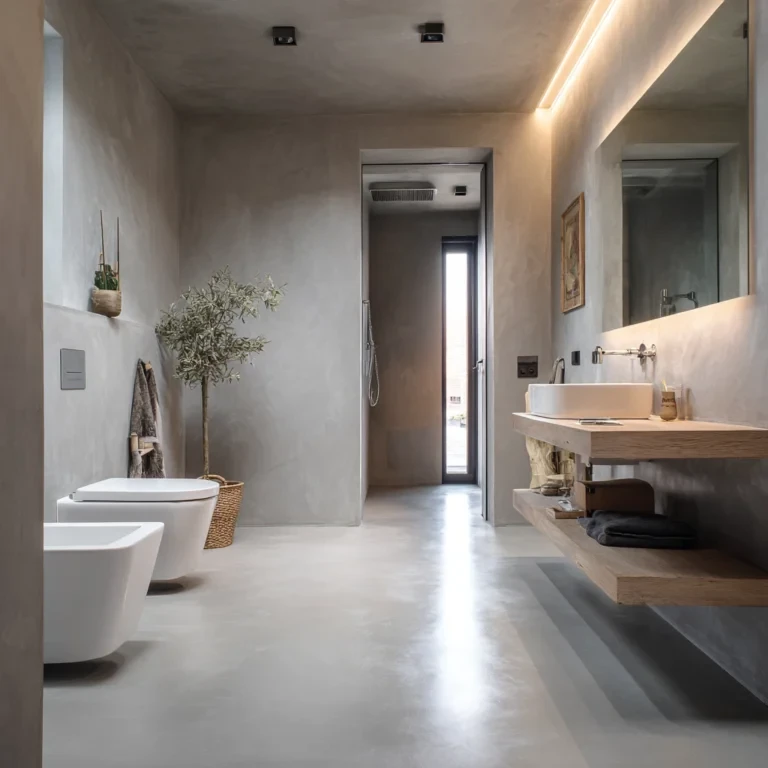
Concrete micro-topping creates a smooth, modern surface with a minimalist architectural feel. It can give bathrooms a seamless appearance that works particularly well with contemporary interiors.
The neutral gray tones pair naturally with:
- Matte black fixtures
- Natural wood
- White ceramic
- Glass shower panels
- Minimalist vanities
Micro-topping can also be customized in tone and finish, depending on the system being used.
Because installation quality is critical, this option is better suited to professional installation than a simple DIY flooring project.
10. Cork Flooring Panels
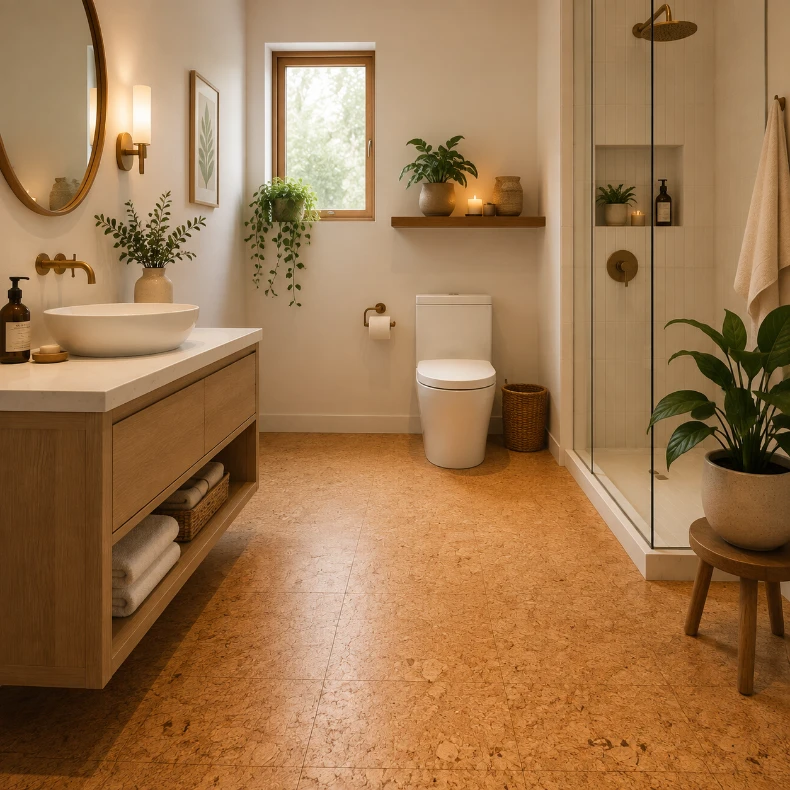
Cork is an interesting choice for homeowners who want something softer and warmer than conventional tile.
Its natural texture can create a comfortable feeling underfoot, and its organic appearance works nicely with Scandinavian, contemporary, and nature-inspired bathrooms.
However, bathroom use requires careful product selection and installation. Cork is not automatically suitable for wet environments simply because it is used as flooring.
How to Style Cork
Pair medium or light cork tones with:
- White walls
- Natural wood cabinetry
- Green plants
- Simple ceramic fixtures
- Warm lighting
The result can feel calm and inviting rather than overly clinical.
11. Terrazzo Tile Flooring
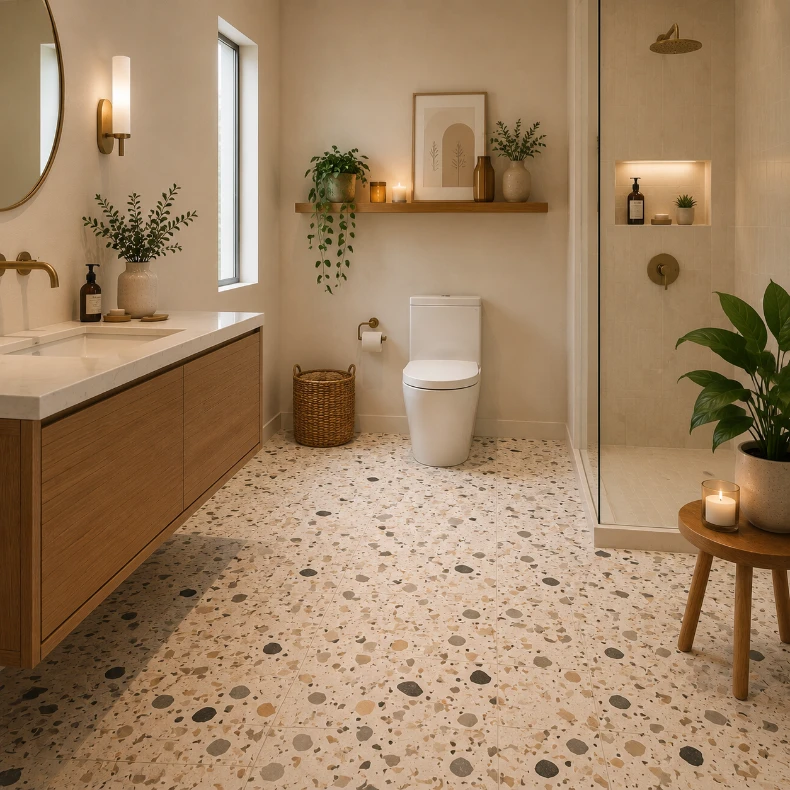
Terrazzo is an excellent option for adding personality without relying on a complicated floor pattern.
Its characteristic chips and flecks can combine multiple colors in a single surface. This makes terrazzo useful when you want the floor to coordinate with several bathroom colors.
A terrazzo floor containing cream, gray, black, and subtle warm tones can provide a ready-made color palette for the rest of the room.
Why Terrazzo Works So Well
Terrazzo can complement both classic and modern bathrooms. Large terrazzo tiles create a contemporary appearance, while smaller formats can feel more decorative.
For a sophisticated look, keep the walls relatively simple and let the terrazzo provide the visual interest.
12. Bamboo Composite Planks
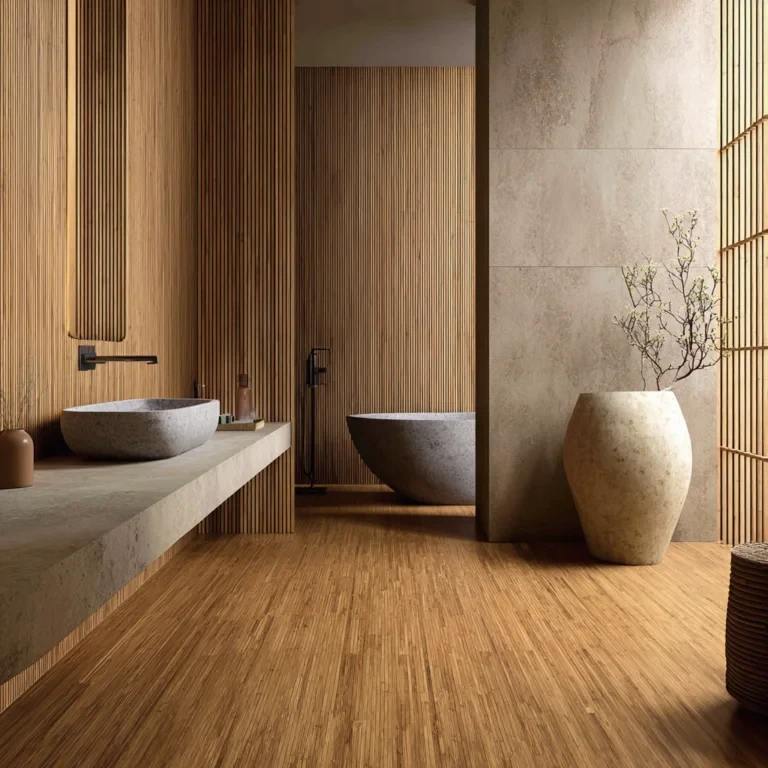
Bamboo-inspired and composite flooring can add a warm, natural appearance to a bathroom without relying on conventional hardwood.
Composite construction varies widely by manufacturer, so bathroom suitability should always be confirmed before installation.
If you like the look of natural wood but want a flooring material designed around easier maintenance, compare bamboo composite products with bathroom-rated vinyl and porcelain wood-look tile.
Design Idea
Use warm bamboo tones with:
- Cream walls
- White countertops
- Natural woven accessories
- Light wood cabinetry
- Brushed metal fixtures
This combination creates a fresh and relaxed bathroom aesthetic.
13. Mosaic Glass Tiles
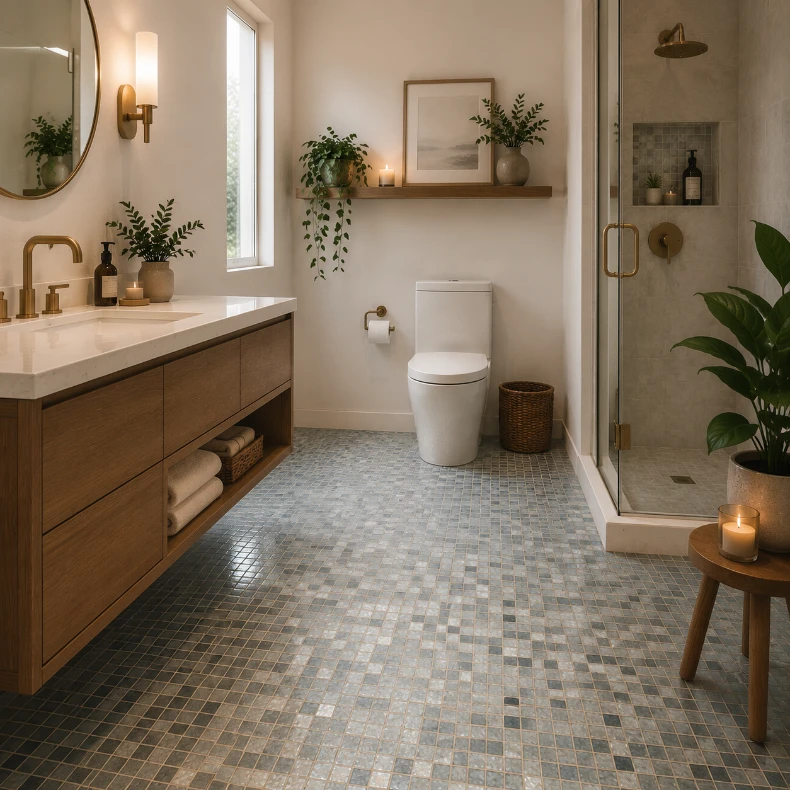
Mosaic glass flooring can create a decorative, light-catching effect, especially when used in smaller bathroom areas.
Glass mosaics are available in many colors and finishes, making them useful for creating borders, accent sections, or complete flooring designs.
For a sophisticated bathroom, try muted blue-gray or soft neutral glass mosaics. For a more dramatic room, darker mosaic combinations can create contrast.
Use Texture Carefully
Flooring should not only look attractive; it should also feel appropriate for walking. When selecting glass tile for a bathroom floor, verify that the specific product is intended for flooring and has suitable slip characteristics.
14. Rubber Flooring Sheets
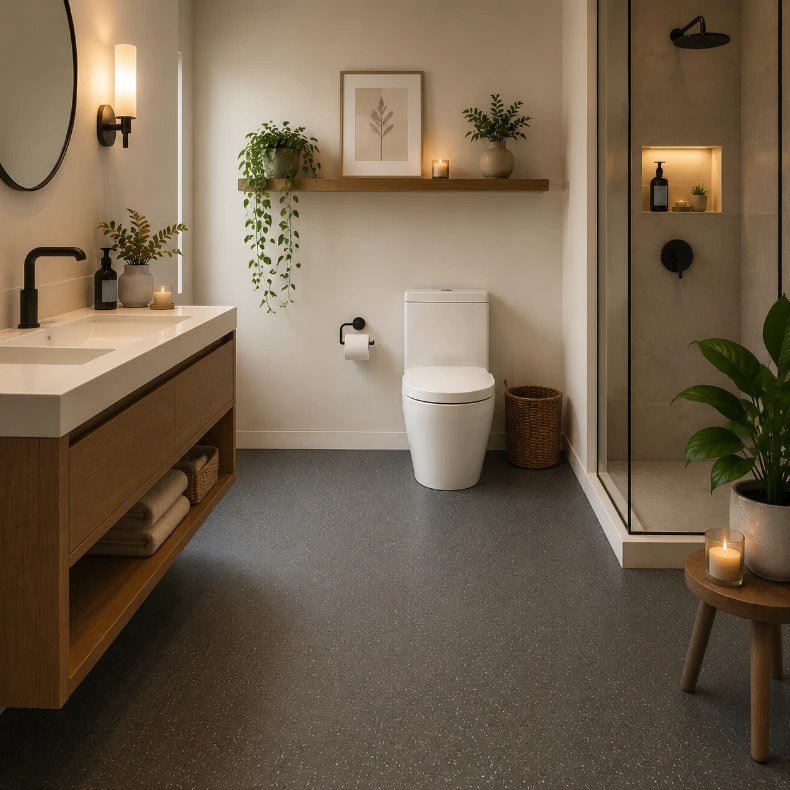
Rubber flooring is a less traditional bathroom choice, but it can provide a practical and contemporary alternative in the right setting.
It is often associated with commercial spaces, gyms, and utility areas, but modern rubber flooring comes in cleaner colors and finishes that can work in residential interiors.
Sheet flooring can also reduce the number of seams across the floor.
Where Rubber Flooring Makes Sense
Rubber can be considered for:
- Contemporary bathrooms
- Accessible bathroom designs
- Utility-style spaces
- Family bathrooms
- Minimalist interiors
Look for products specifically rated for residential bathroom conditions and follow the installation requirements closely.
15. Slate Tile Flooring
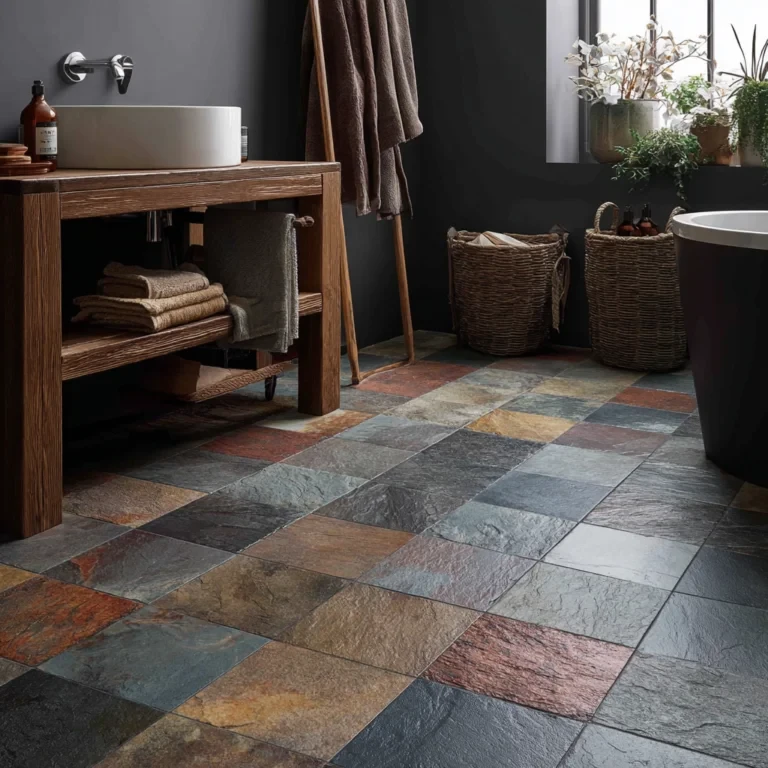
Slate is ideal for homeowners who want a darker, more natural floor with plenty of character.
Its earthy colors can range from charcoal and black to brown, gray, green, and muted rust tones. This makes slate particularly effective in rustic, modern farmhouse, industrial, and nature-inspired bathrooms.
A charcoal slate floor paired with white walls creates strong contrast. Add warm wood cabinetry to soften the overall appearance.
Slate Maintenance
Natural stone needs appropriate care. Depending on the specific slate, sealing may be recommended, and cleaning products should be compatible with the stone.
Ask the tile supplier or installer about maintenance requirements before purchasing.
16. Resin Epoxy Flooring
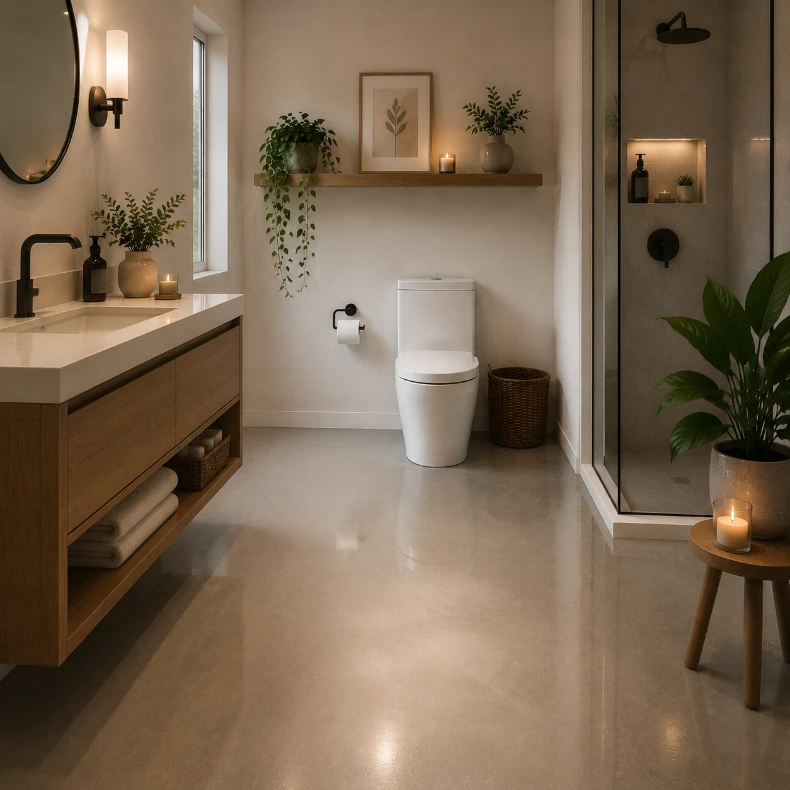
Resin and epoxy flooring can create a highly contemporary bathroom surface with a smooth, continuous appearance.
It can be used to create understated neutral floors or more dramatic finishes. The lack of traditional tile patterns can give the room a streamlined architectural appearance.
This flooring style is particularly suitable for modern interiors where clean lines are more important than decorative patterns.
Why Homeowners Consider Epoxy
- Seamless visual effect
- Modern appearance
- Easy-to-clean surface when properly installed
- Customizable finishes
- Works well with minimalist interiors
Professional preparation is important because the existing floor must be suitable for the chosen coating system. Moisture problems in the substrate should also be addressed before installation.
How to Choose the Best Bathroom Flooring
With so many bathroom flooring ideas available, choosing one can feel overwhelming. Start with performance requirements before focusing on appearance.
1. Consider Water Exposure
A guest powder room has different flooring requirements from a bathroom with a frequently used shower.
Think about how much water normally reaches the floor and choose a product designed for those conditions.
2. Look at Slip Resistance
Bathrooms can become slippery when water is present. Don’t select flooring based solely on photographs or color.
Ask about the manufacturer’s slip-resistance information and choose a surface appropriate for the room’s use.
3. Think About Maintenance
Some flooring requires more regular sealing or specialized cleaning than others.
If you want a low-maintenance bathroom, porcelain, ceramic, and appropriate vinyl products may be easier to manage than some natural stone options.
4. Match the Flooring to the Bathroom Size
Large-format tiles can create a streamlined appearance, while smaller tiles can introduce pattern and texture.
In a small bathroom, consistent flooring across the main floor can help the space feel visually connected.
5. Consider the Entire Color Palette
Your flooring should work with the:
- Vanity
- Wall color
- Shower tile
- Countertop
- Fixtures
- Doors
- Lighting
A floor does not have to match everything exactly. It simply needs to coordinate with the major finishes.
Bathroom Flooring Ideas for Different Styles
Modern Bathroom
Choose large-format porcelain, concrete-look surfaces, large hexagons, or resin flooring.
Farmhouse Bathroom
Wood-look porcelain, warm vinyl planks, slate, and muted patterned tile can complement farmhouse interiors.
Luxury Bathroom
Marble-look porcelain, natural stone, terrazzo, and sophisticated large-format tile can create an upscale appearance.
Small Bathroom
Light-colored porcelain, subtle hexagons, and continuous flooring can help create a more open visual effect.
Spa-Inspired Bathroom
Pebble stone, warm neutral tile, natural stone, and organic colors can create a relaxing atmosphere.
How to Make Bathroom Flooring Last Longer
The flooring material is only part of the equation. Installation and moisture management are equally important.
The EPA emphasizes that controlling moisture is central to reducing mold problems. It recommends addressing leaks, improving ventilation, and keeping damp areas dry.
For better long-term performance:
- Repair plumbing leaks quickly.
- Use the bathroom exhaust fan during and after showers.
- Wipe up standing water when possible.
- Follow the flooring manufacturer’s cleaning instructions.
- Re-seal natural stone when recommended.
- Check grout and caulk periodically.
- Avoid harsh cleaners that are not approved for your flooring.
- Make sure the subfloor is properly prepared before installation.
A beautiful floor can still develop problems if moisture gets underneath it, so proper installation should never be treated as an afterthought.
Final Thoughts
The best bathroom flooring ideas combine style, durability, moisture performance, and practical maintenance. There is no single flooring material that works perfectly for every bathroom.
Luxury vinyl can provide a warm wood appearance, porcelain offers countless styles and excellent versatility, natural stone adds character, terrazzo brings personality, and modern resin or concrete finishes can create a sleek contemporary look.
Before choosing your favorite design, consider how much water the floor will encounter, how much maintenance you are willing to handle, and how the flooring will coordinate with the rest of the bathroom.
Most importantly, choose a product specifically suited to your bathroom’s conditions and follow the manufacturer’s installation requirements. Proper moisture management and ventilation also play an important role in keeping the finished space comfortable and in good condition.
With the right combination of material, color, pattern, and installation, your bathroom floor can become one of the strongest design features in the entire room.