12 Victorian Bathroom Ideas That Feel Luxe, Romantic, and Totally Now
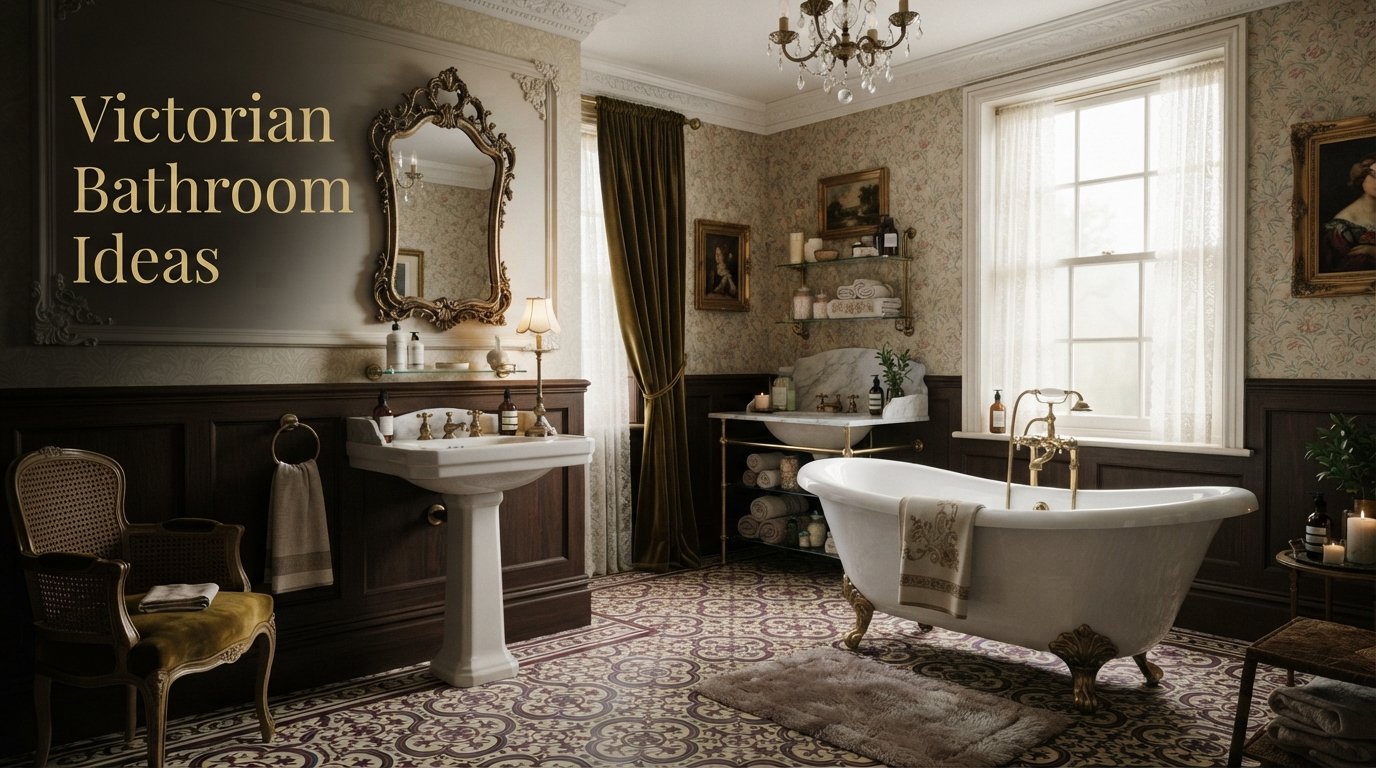
A Victorian bathroom has a special kind of charm. It can feel elegant without looking overly polished, romantic without becoming too delicate, and historic without making your home feel like a museum.
The secret is choosing a few recognizable period details and pairing them with modern comfort. A freestanding tub, patterned floor, traditional wall tile, brass hardware, furniture-style storage, and rich paint can create the look, while contemporary plumbing, lighting, ventilation, and waterproofing keep the room practical.
Historically inspired bathrooms also have more flexibility than many people realize. Traditional Victorian interiors often relied on practical, easy-to-clean surfaces, including ceramic tile and sanitary finishes, rather than filling every surface with decoration.
Here are 12 Victorian bathroom ideas that bring together old-world character and modern-day functionality.
1. Make a Freestanding Tub the Main Attraction
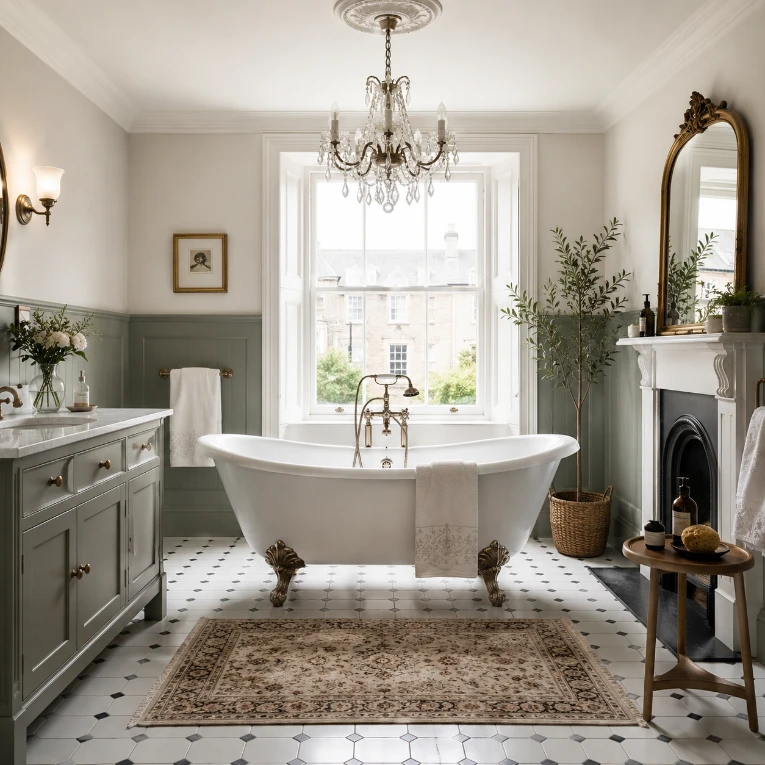
Few features create a stronger Victorian impression than a freestanding bathtub.
A classic clawfoot tub immediately gives the bathroom a furniture-like quality. Traditional versions were commonly associated with cast iron and porcelain finishes, while today’s options include lighter materials that can be easier to install.
Place the tub where it has enough visual space around it rather than squeezing it into a corner. If you have a large window, positioning the tub nearby can create a beautiful focal point.
Pick the Right Tub Style
Consider:
- Classic clawfoot tubs
- Roll-top tubs
- Slipper tubs
- Painted exterior tubs
- White porcelain-style tubs
A darker exterior can create drama, while a white tub keeps the room brighter and more traditional.
Make It Feel Current
You don’t need every fixture to look antique.
Pair a traditional tub with:
- A simple modern floor
- Contemporary plumbing connections
- Minimal accessories
- A modern shower nearby
- Updated ventilation
This balance prevents the bathroom from looking like a themed period room.
2. Use Patterned Tile to Give the Floor Character
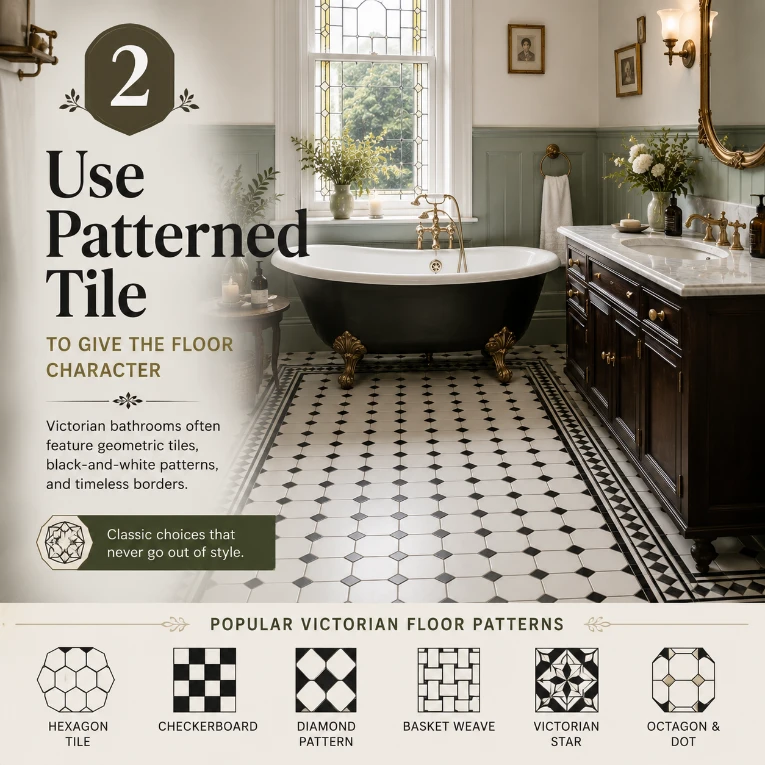
The floor is one of the easiest places to introduce Victorian personality.
Small geometric tiles, hexagons, diamonds, checkerboard patterns, and black-and-white combinations all work particularly well. Heritage-style bathrooms frequently use decorative geometric flooring paired with simpler wall surfaces.
For a classic appearance, try a white floor with black borders. For something softer, combine cream, muted green, gray, or dusty blue.
Popular Victorian Floor Patterns
Some attractive options include:
- Black and white checkerboard
- Small hexagonal mosaics
- Diamond patterns
- Star-and-cross designs
- Geometric borders
- Penny-style mosaics
- Encaustic-inspired patterns
Keep the Rest Simple
If the floor has a strong pattern, let it become the star.
Use relatively quiet wall tile and simple sanitaryware so the room doesn’t become visually crowded.
This is especially important in a small bathroom. A carefully chosen floor pattern can add character without requiring decoration on every wall.
3. Combine Wall Paneling With Classic Wallpaper
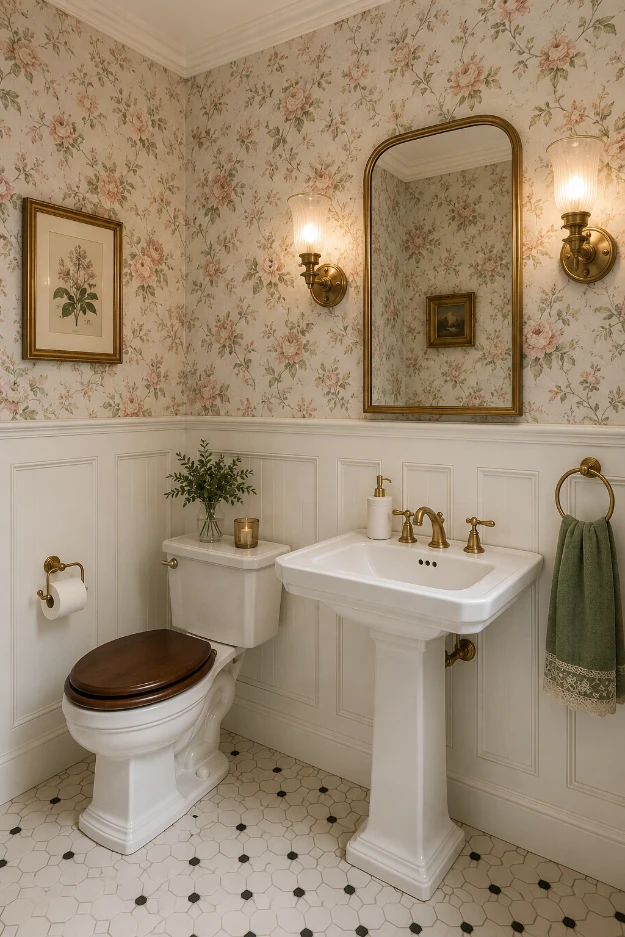
Victorian interiors are known for layered wall treatments, and this idea can translate beautifully into a bathroom.
One approach is to install wainscoting or decorative paneling on the lower portion of the wall and use wallpaper or paint above it.
Wainscoting also has a practical history in bathrooms because it can help protect lower walls from splashes.
Try These Combinations
For a romantic look:
White paneling + floral wallpaper + brass fixtures
For a darker bathroom:
Forest-green paneling + cream wallpaper + antique brass
For a cleaner modern look:
Painted beadboard + soft neutral wall + black hardware
You can also use glossy ceramic tile as the lower wall treatment instead of wood paneling.
Protect the Walls
Bathrooms have high humidity, so don’t treat ordinary wallpaper or untreated wood like a normal bedroom finish.
Choose products specifically suitable for bathroom conditions and pay attention to ventilation. Keep materials that aren’t designed for frequent water exposure away from direct shower spray.
4. Choose a Vanity That Looks Like Furniture
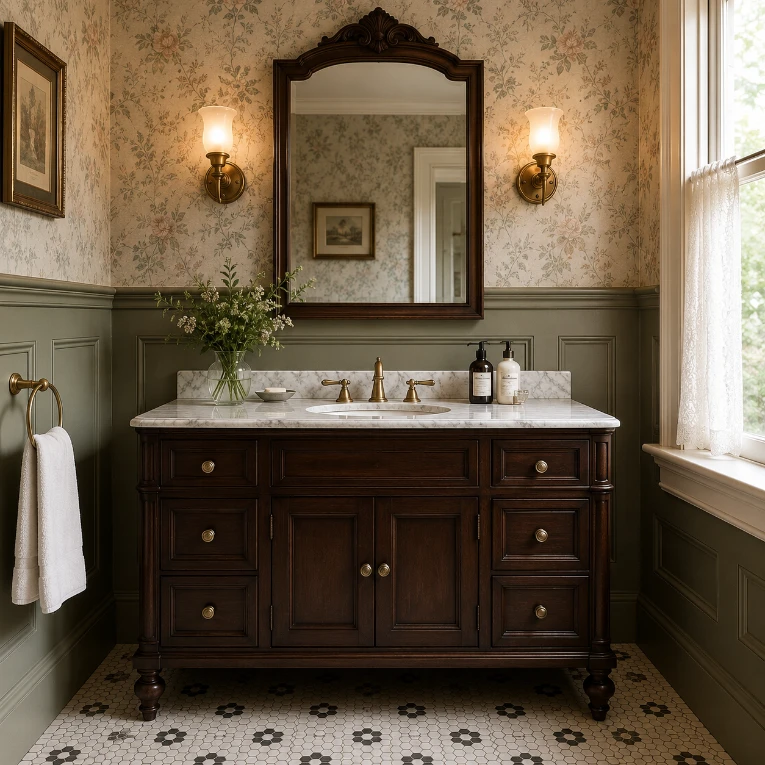
A basic contemporary vanity can sometimes make a Victorian bathroom feel too modern.
Instead, choose a vanity that resembles a beautiful piece of furniture.
Look for:
- Shaker-style doors
- Turned legs
- Raised panels
- Dark wood finishes
- Painted cabinetry
- Marble countertops
- Traditional drawer pulls
A furniture-style vanity works particularly well with a freestanding sink or traditional basin.
Create Useful Storage
Victorian bathrooms were not designed around the huge collection of toiletries many households have today.
Your modern bathroom needs storage, though.
Use hidden drawers and cabinets for everyday items while keeping only a few attractive pieces visible.
For example, store cleaning products and extra toiletries inside the vanity while displaying hand towels, a soap dispenser, or a small decorative container on the countertop.
This keeps the room elegant without sacrificing practicality.
5. Layer Decorative Mirrors With Traditional Lighting
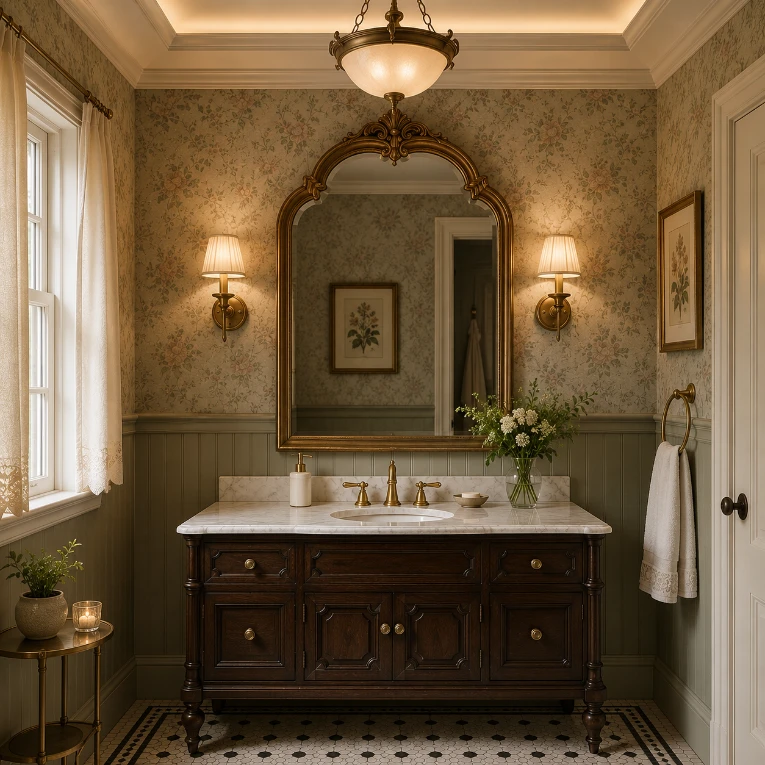
A mirror can become one of the most noticeable decorative elements in a Victorian bathroom.
Instead of a frameless mirror, consider a framed design with curves, carved details, antique-style finishes, or an arched silhouette.
Pair it with wall sconces on either side.
Get the Lighting Right
Layering is more effective than relying on one ceiling fixture.
Consider:
- Wall sconces beside the mirror
- A central ceiling fixture
- Small accent lighting
- Soft ambient lighting
- Task lighting around the vanity
Traditional-style fixtures can provide the visual character, while modern LED technology can provide efficient illumination.
Try a More Dramatic Mirror
For a smaller bathroom, one large decorative mirror can make the room feel more substantial.
An ornate gold frame works beautifully with deep green, navy, burgundy, cream, or charcoal walls.
If gold feels too formal, aged brass or dark metal can create a more understated result.
6. Bring in Rich, Sophisticated Wall Colors
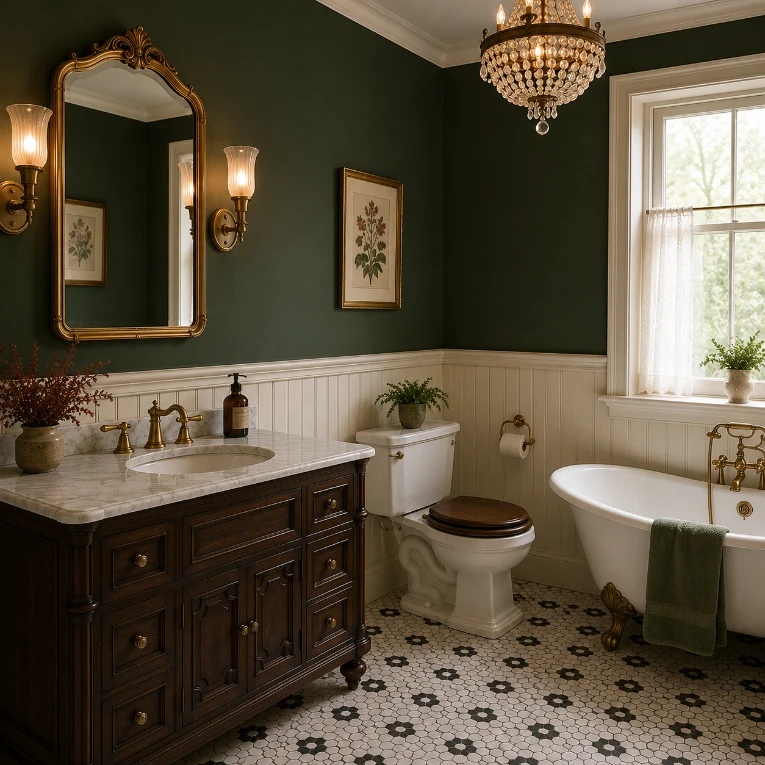
White is classic, but a Victorian-inspired bathroom doesn’t have to be completely white.
Rich colors can make the room feel intimate and luxurious.
Traditional-inspired palettes often include deep greens, burgundy, navy, plum, and other saturated shades, balanced with softer neutrals.
Colors Worth Considering
Try:
- Forest green
- Olive green
- Deep navy
- Burgundy
- Muted plum
- Charcoal
- Dusty rose
- Warm cream
You don’t necessarily need a dark color on every wall.
For example, use deep green on the lower paneling and warm cream above it. Or keep the walls neutral and use dark paint on the vanity.
Think About Sheen
Bathrooms need finishes that can handle moisture and cleaning.
A washable eggshell or satin-type finish can provide subtle reflection without looking excessively glossy.
The right finish depends on the specific paint product, wall condition, and moisture level in the room.
7. Mix Marble With Ceramic and Wood
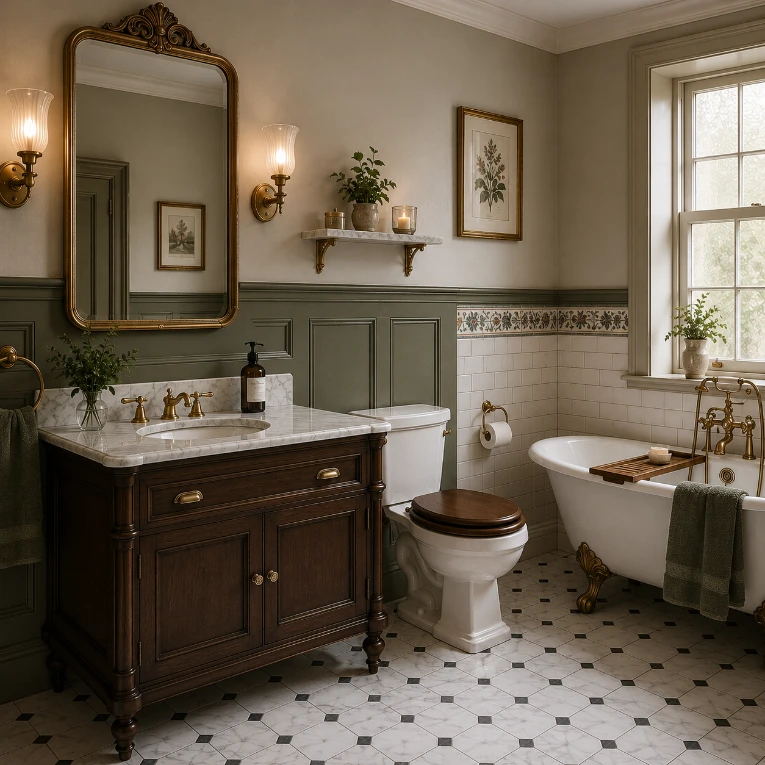
Marble instantly adds a luxurious quality to a Victorian bathroom, but using it everywhere can make the room feel expensive rather than characterful.
Instead, combine materials.
A marble vanity top can work with painted cabinetry. Marble-look flooring can sit beside traditional wall tile. A small marble shelf can add elegance without covering the entire bathroom.
Create a Balanced Material Palette
A strong combination could be:
| Material | Where to Use It |
|---|---|
| Marble | Vanity top or small accents |
| Ceramic tile | Walls |
| Mosaic tile | Floor |
| Painted wood | Vanity or paneling |
| Brass | Faucets and hardware |
| Glass | Shower enclosure |
This approach creates visual variation while keeping the overall design connected.
Consider Maintenance
Natural marble requires more care than many porcelain alternatives.
Before choosing it, check the manufacturer’s recommendations for sealing, cleaning, and suitable bathroom products.
If you want the appearance without the maintenance, high-quality porcelain or engineered surfaces can offer a practical alternative.
8. Add Vintage-Looking Fixtures With Modern Function
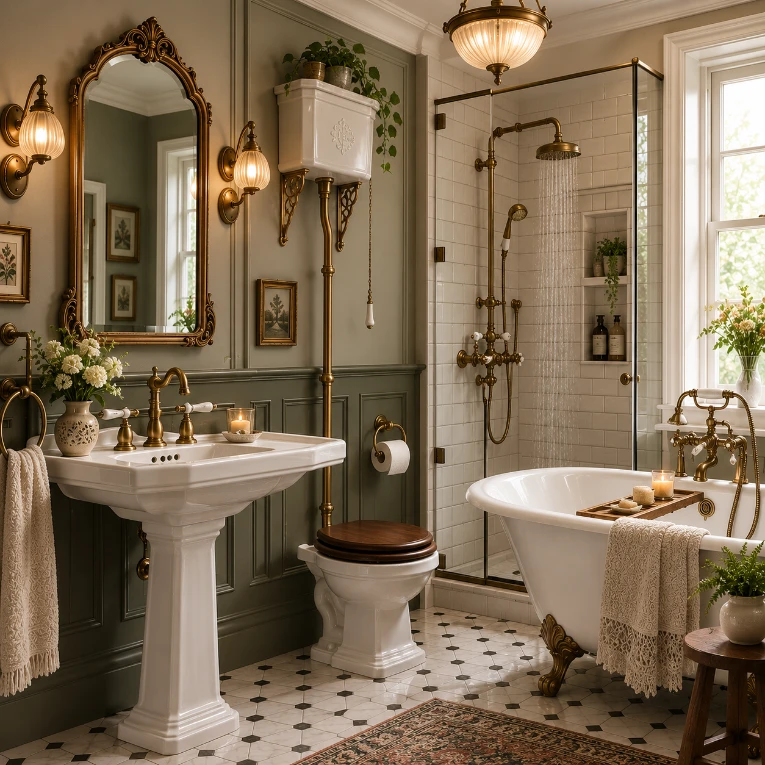
The fixtures are where Victorian style becomes especially recognizable.
Traditional-inspired taps, exposed shower pipes, porcelain handles, pedestal basins, and brass fittings can make a significant difference.
But there’s no reason your plumbing needs to operate like it did a century ago.
Choose the Details Carefully
Consider:
- Cross-handle faucets
- Bridge-style taps
- Traditional showerheads
- Brass towel rails
- Vintage-inspired toilet designs
- Porcelain handles
- Exposed pipework where appropriate
Aged brass is particularly attractive when combined with dark green or cream.
Brass and green remain a popular pairing in contemporary luxury bathrooms because the combination connects traditional warmth with a current color palette.
Check Compatibility Before Buying
Decorative fixtures still need to work with your existing plumbing.
Before purchasing, confirm:
- Pipe connections
- Mounting requirements
- Water pressure requirements
- Faucet hole spacing
- Shower valve compatibility
- Local plumbing requirements
The prettiest fixture isn’t useful if it doesn’t work with your bathroom’s plumbing system.
9. Add Soft Textiles for a Romantic Finish
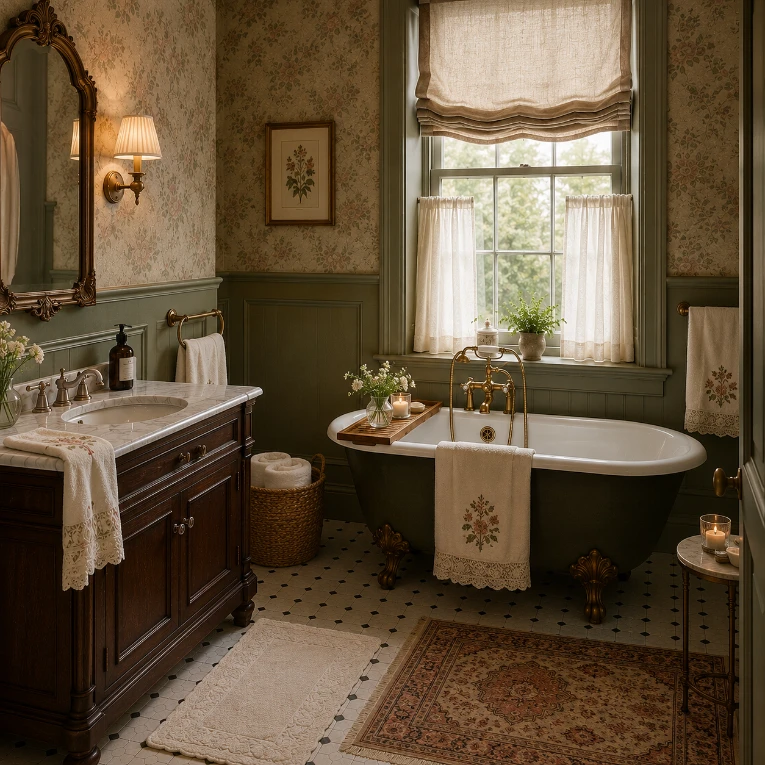
Hard surfaces dominate most bathrooms, so textiles can make the space feel much warmer.
Victorian-inspired rooms benefit from carefully chosen fabrics such as linen, cotton, and traditional-style window treatments.
A small fabric element can soften marble, ceramic, metal, and glass.
Where to Add Texture
Try:
- Linen curtains
- Soft bath mats
- Fabric Roman shades
- Embroidered hand towels
- Woven baskets
- A small vintage-style rug
Don’t overdo it.
One or two beautiful textile elements can have more impact than covering every surface with decorative fabric.
Choose Bathroom-Friendly Materials
Humidity can be hard on fabrics.
Use washable textiles and make sure the room has sufficient ventilation. Avoid placing delicate fabrics where they will regularly receive direct splashes.
10. Style With Antique-Inspired Accessories
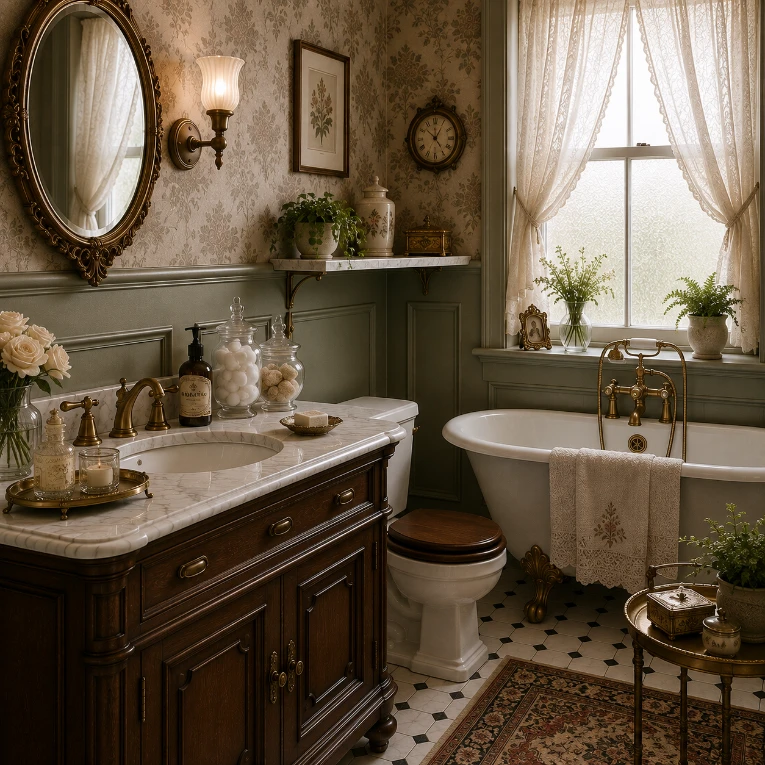
Accessories can give a Victorian bathroom its personality.
Think of the room as a collection of carefully selected objects rather than a display of random vintage pieces.
Try:
- Glass apothecary bottles
- Traditional soap dishes
- Small framed artwork
- Antique-style trays
- Ceramic containers
- Vintage clocks
- Decorative brass boxes
- Small plants or flowers
The goal is to create an intentional arrangement.
Don’t Make Everything Antique
This is one of the easiest mistakes to make.
If the mirror, vanity, taps, lighting, accessories, artwork, and storage all look old, the bathroom can become visually heavy.
Instead, mix eras.
For example:
Antique-style mirror + modern wall light + traditional vanity + contemporary shower glass
That contrast makes the bathroom feel designed for today’s home rather than staged for a historical exhibition.
11. Create a Heritage-Inspired Shower
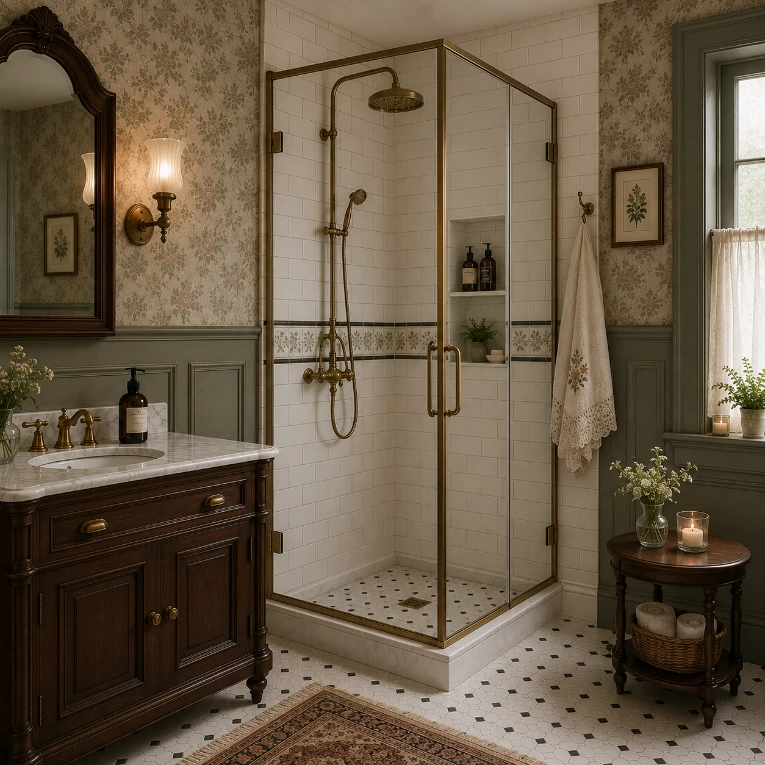
A Victorian bathroom doesn’t have to revolve entirely around a bathtub.
A traditional-looking shower can fit beautifully into the design.
Classic subway tile, small-format tile, traditional plumbing finishes, and framed glass can create a sophisticated shower area.
Historically inspired subway tile is especially useful because it provides a clean backdrop while still referencing period bathroom design.
Make the Shower Feel Period-Inspired
Consider:
- Glossy white subway tile
- Dark grout used carefully
- Decorative border tile
- Brass shower fittings
- Framed glass
- Built-in ceramic niches
- Traditional showerheads
A decorative tile border can help separate the shower from the rest of the room without introducing another competing pattern.
Pay Attention to Waterproofing
The beautiful surface finish is only one part of a successful shower.
The waterproofing system, substrate, slope, drainage, and tile installation all matter.
If you’re remodeling an older bathroom, have the existing floor structure and plumbing evaluated before committing to heavy fixtures or extensive tilework.
12. Finish the Room With Architectural Details
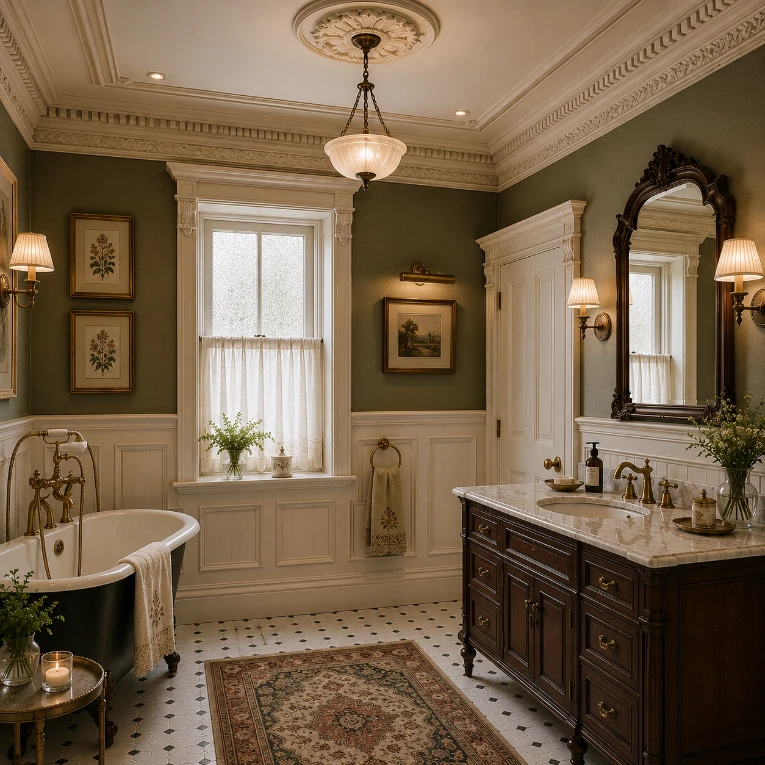
If you want the bathroom to feel truly special, look above eye level.
Victorian-inspired architecture often benefits from details such as crown molding, ceiling trim, decorative cornices, picture rails, and traditional door casings.
These details can make a simple bathroom feel more complete.
Architectural Features to Consider
Depending on your space, you might add:
- Crown molding
- Decorative ceiling trim
- Raised wall panels
- Picture-frame molding
- Traditional door casing
- Decorative window trim
- A ceiling medallion
You don’t need to use all of them.
A simple ceiling detail combined with a decorative mirror may be enough to give a small bathroom architectural character.
Keep the Scale Appropriate
Large molding can overwhelm a compact bathroom.
Before installation, consider the ceiling height, wall width, door placement, and overall proportions.
And remember that bathroom materials need to tolerate humidity. Use appropriate products and installation methods rather than treating decorative trim exactly like trim in a dry living room.
How to Make a Victorian Bathroom Feel Modern
The most successful Victorian bathrooms don’t try to reproduce every detail from the past.
Instead, they select the strongest characteristics of the style and combine them with modern needs.
A simple formula is:
1 statement fixture + 1 strong floor pattern + 1 architectural wall detail + warm metal + modern lighting
For example, imagine a bathroom with a white clawfoot tub, black-and-white mosaic flooring, forest-green wall paneling, aged brass fixtures, and a simple contemporary shower.
It immediately feels Victorian-inspired, but it can still function like a modern bathroom.
Current bathroom design is also moving toward softer, more personal spaces that combine vintage details, warm colors, decorative surfaces, and practical contemporary layouts.
Victorian Bathroom Color Combinations to Try
If you’re unsure where to start, use one of these palettes:
| Color Combination | Overall Feel |
|---|---|
| White + Black + Brass | Classic and elegant |
| Forest Green + Cream + Brass | Rich and romantic |
| Navy + White + Gold | Dramatic and refined |
| Burgundy + Cream + Dark Wood | Traditional and cozy |
| Sage + Marble + Brass | Soft and sophisticated |
| Charcoal + White + Aged Brass | Moody and modern |
The key is maintaining a limited palette. Too many colors, metals, and patterns can make even a large bathroom feel chaotic.
Common Victorian Bathroom Design Mistakes
A Victorian-inspired bathroom can go wrong when every traditional feature is used at once.
Avoid these common problems:
Too many patterns: If the floor is highly decorative, keep the walls calmer.
Too many metals: Choose one dominant metal finish and perhaps one supporting finish.
Overdecorating: A few carefully chosen accessories look more convincing than shelves full of antiques.
Ignoring modern function: Beautiful fixtures still need proper water pressure, drainage, ventilation, and storage.
Using unsuitable materials: Bathroom humidity should always be considered when selecting wallpaper, wood, textiles, and decorative finishes.
Making everything dark: Rich colors are beautiful, but balance them with lighter tile, mirrors, ceilings, or fixtures.
Final Thoughts
Victorian bathroom design works because it combines practical surfaces with beautiful details. The style can be dramatic, but it doesn’t have to feel old-fashioned.
Start with one major feature, such as a clawfoot tub, patterned floor, furniture-style vanity, or decorative wall treatment. Then build around it using traditional-inspired fixtures, warm metals, classic tile, soft textiles, and a carefully controlled color palette.
The result can feel romantic and luxurious while still being comfortable for everyday life.
The best Victorian bathroom is not one that looks frozen in another era. It is a space where period-inspired craftsmanship and modern functionality work naturally together.