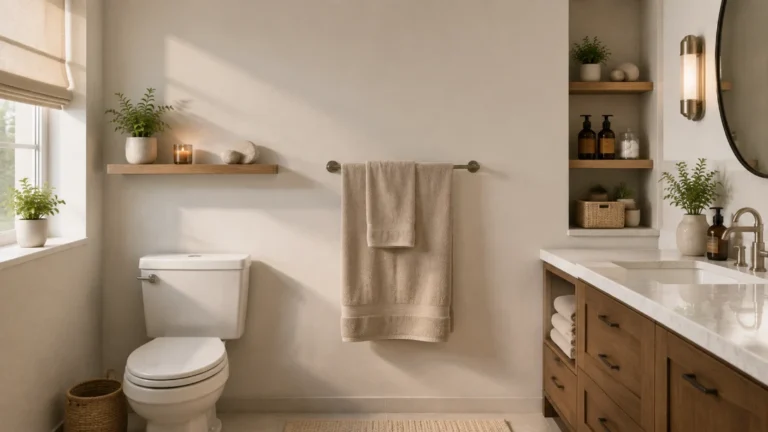
12 Bathroom Vanity Mirror Ideas for Better Style, Light, and Function
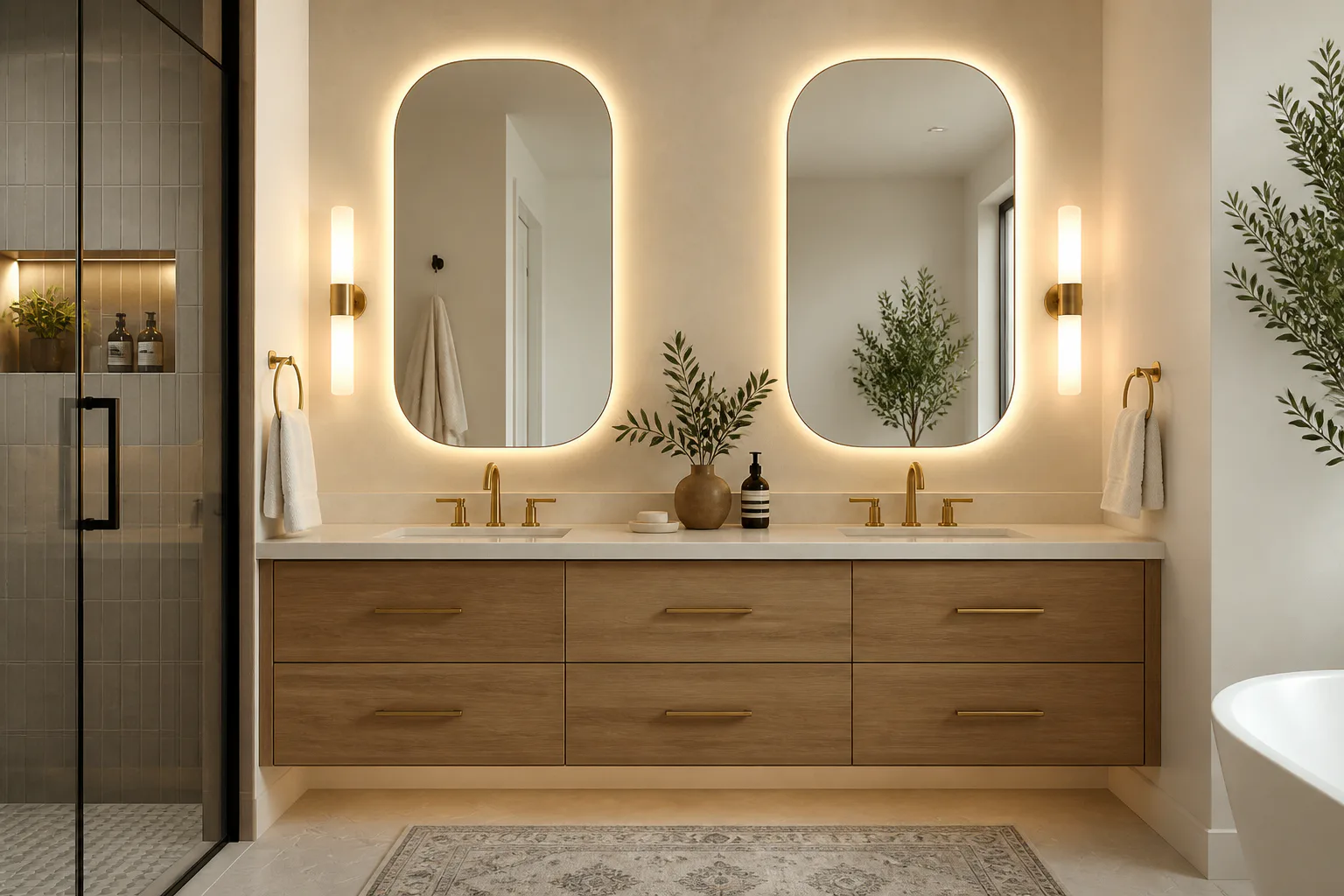
Good bathroom vanity mirror ideas balance size, shape, light, storage, and style. The right mirror should fit the vanity width, work with your lighting plan, and support how you use the space every day. Whether your bathroom is small, shared, modern, or traditional, a better mirror choice can make it feel brighter, cleaner, and more finished.
A strong starting point is simple: match the mirror to the vanity scale, decide whether you need built-in function like lighting or storage, and then choose a shape and frame that supports the room. From there, details like placement height, finish, and whether to use one or two mirrors make the design feel intentional.
Start with size
Mirror size changes how the whole vanity feels. A mirror that is too small looks disconnected, while one that is too large can crowd sconces, trim, or storage. In most bathrooms, the mirror should relate closely to the vanity width rather than the full wall width.
Use a mirror slightly narrower than the vanity for a balanced look.
Leave enough wall space at the sides for sconces if you want side lighting.
For double vanities, choose either one large mirror or two separate mirrors based on layout and style.
Check ceiling height before choosing a tall mirror so it does not feel cramped under light fixtures.
Best mirror shapes
Shape affects both style and softness. Straight lines feel tailored and architectural, while curved tops and round forms break up the hard edges of tile, cabinets, and countertops.
Rectangular mirrors
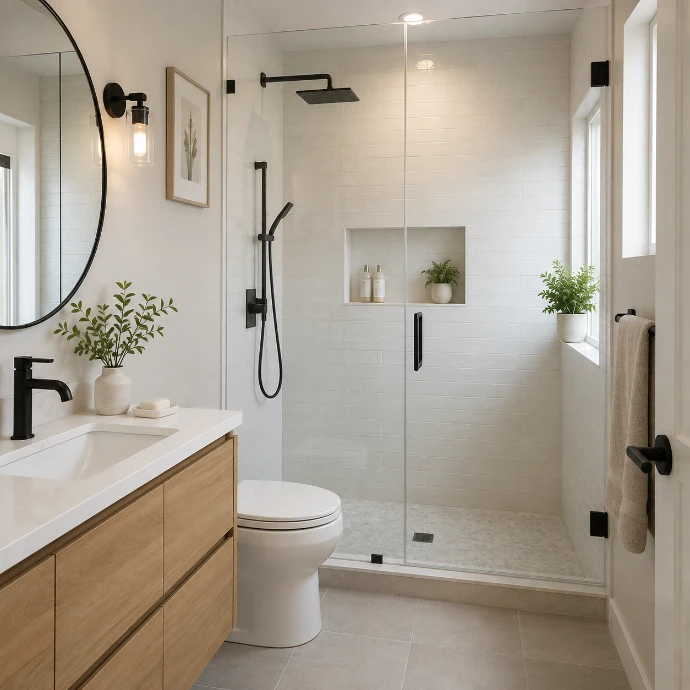
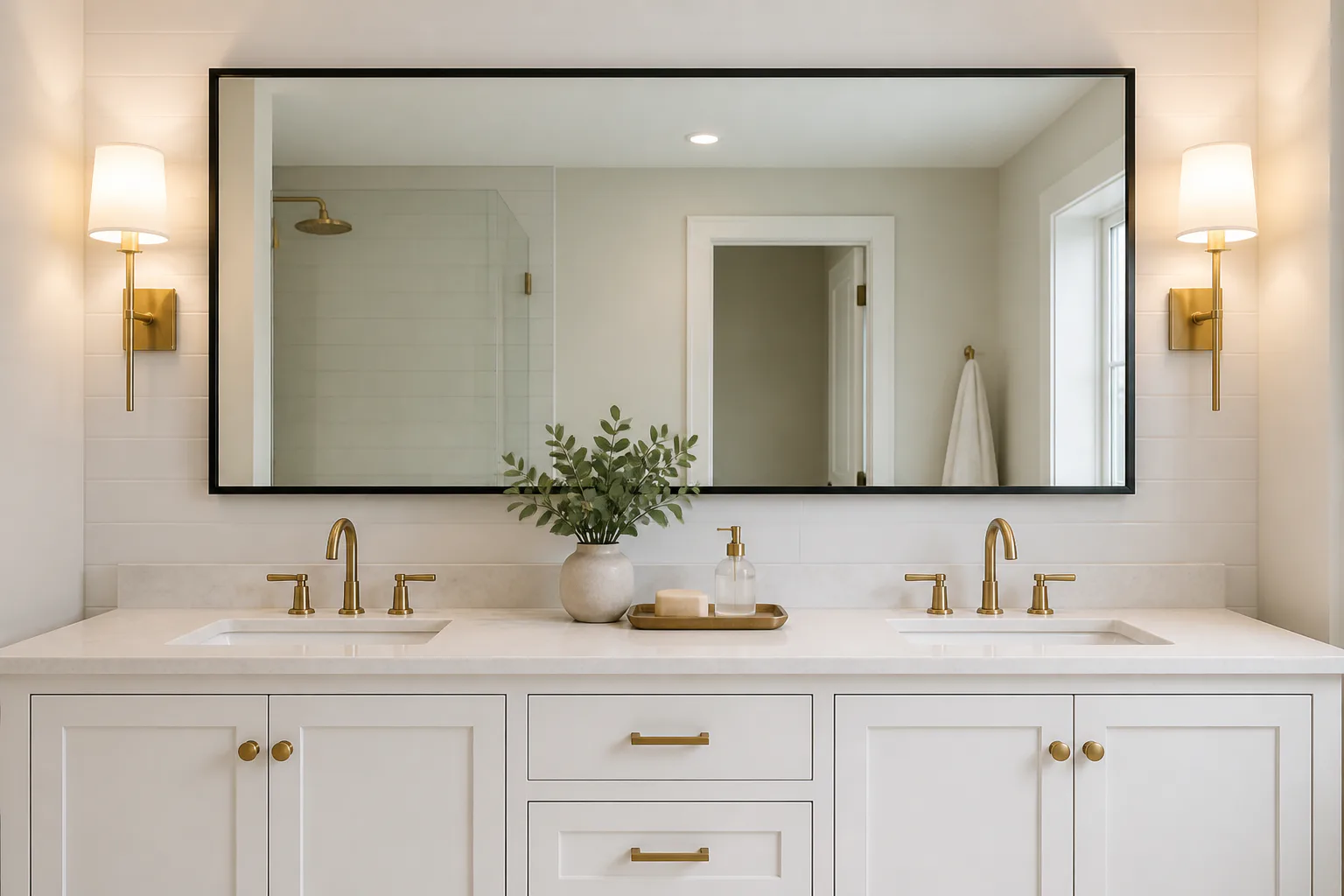
Rectangular mirrors are the most flexible choice. They work in modern, transitional, farmhouse, and classic bathrooms, and they are easy to align with vanity lights, medicine cabinets, and double sinks.
This shape is a safe pick if you want a clean, practical result. A thin frame keeps it minimal, while a thicker wood or metal frame gives it more presence.
Round mirrors
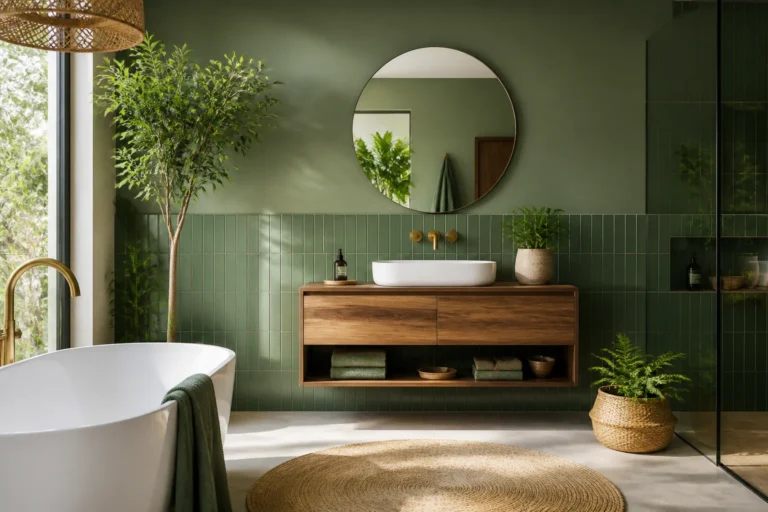
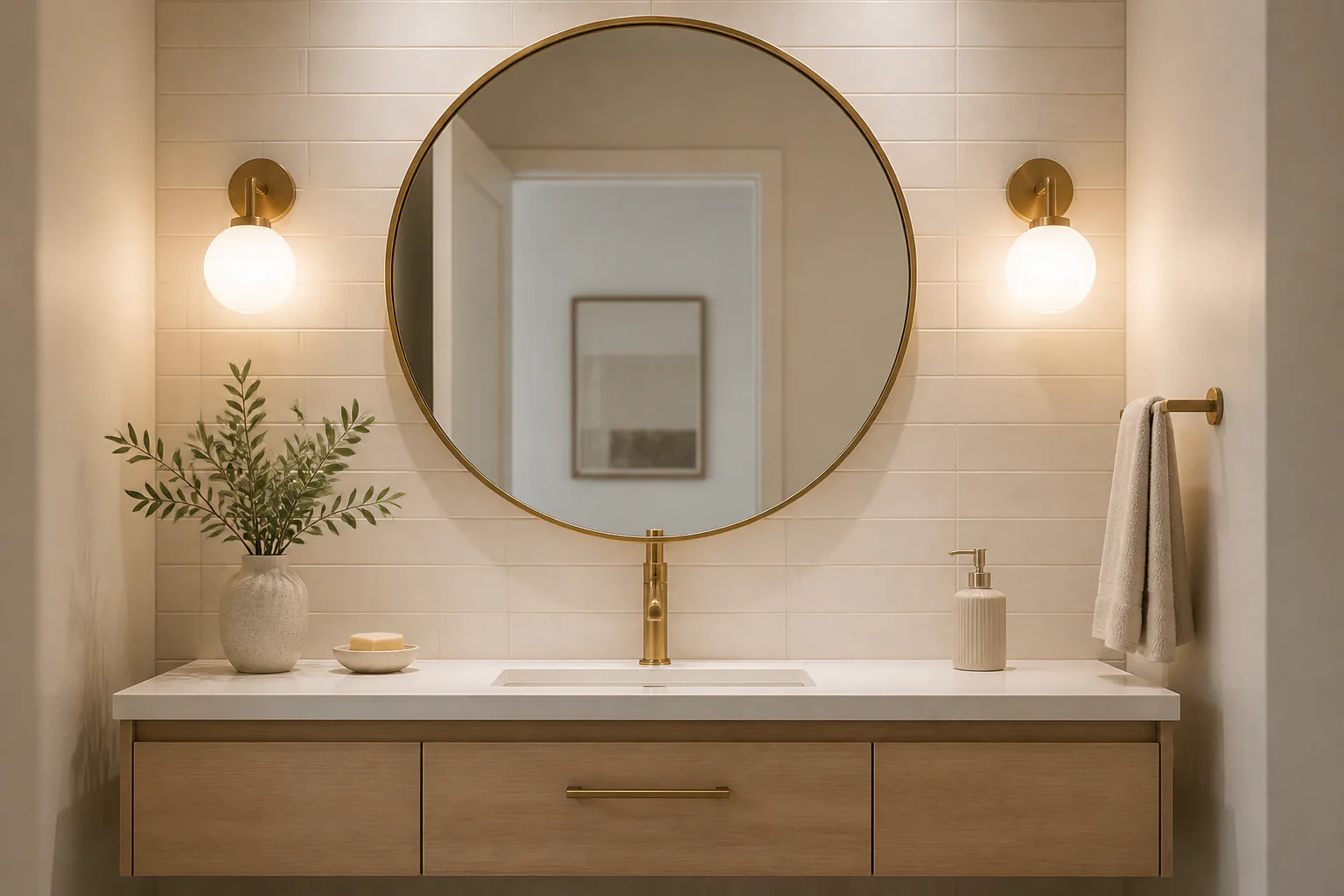
Round mirrors soften a bathroom quickly. They pair well with floating vanities, simple tile, and smaller powder rooms where a softer shape helps the room feel less boxy.
They also work well over a single sink when you want the mirror to feel decorative. Just make sure the diameter is large enough to look anchored over the vanity.
Oval mirrors
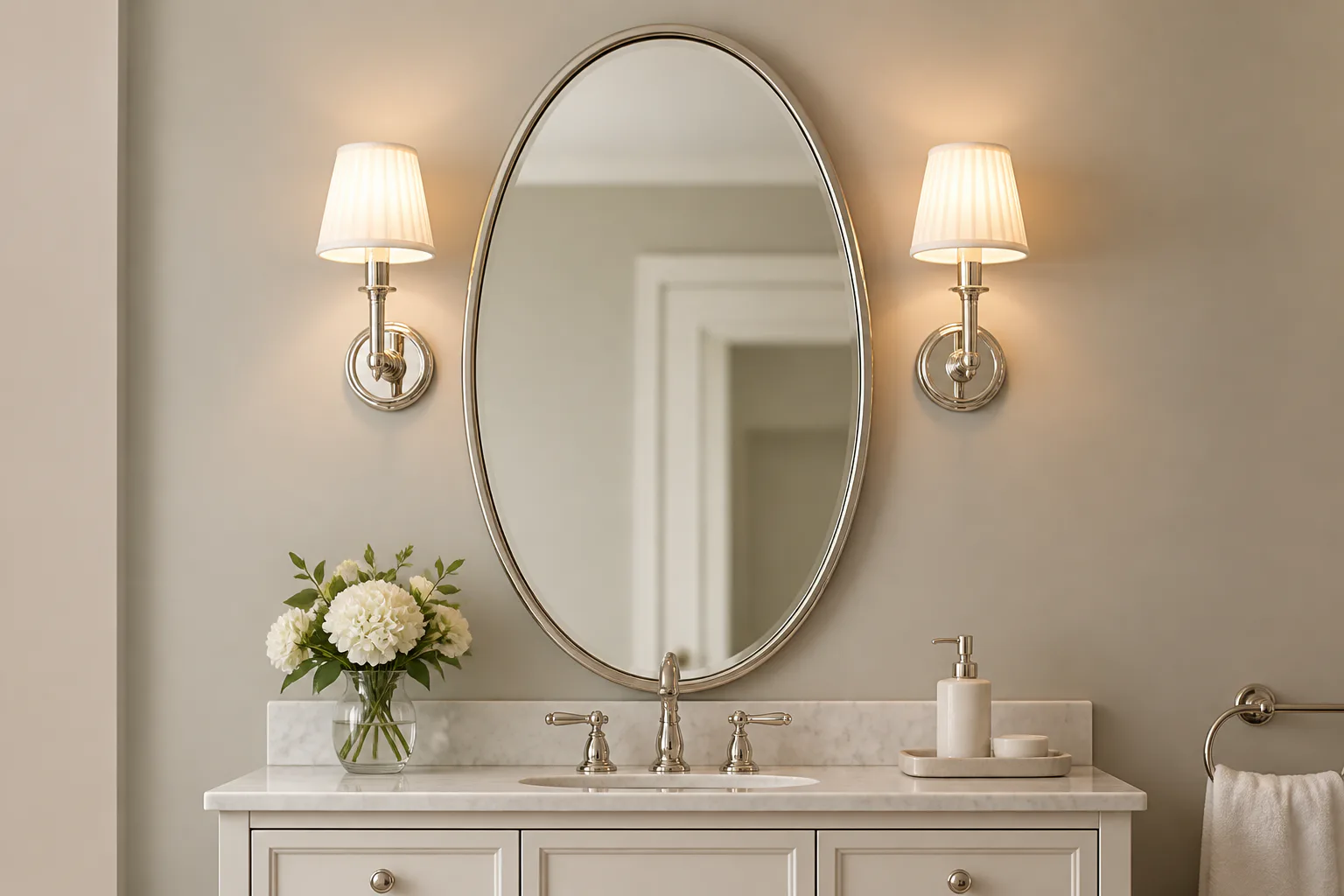
Oval mirrors bring a more traditional or elegant look. Vertical ovals can help draw the eye upward, which is useful in bathrooms with shorter backsplashes or compact vanities.
This shape fits especially well with classic sconces, polished metal finishes, and furniture-style cabinets. It can also make a narrow wall feel a bit taller.
Arched tops
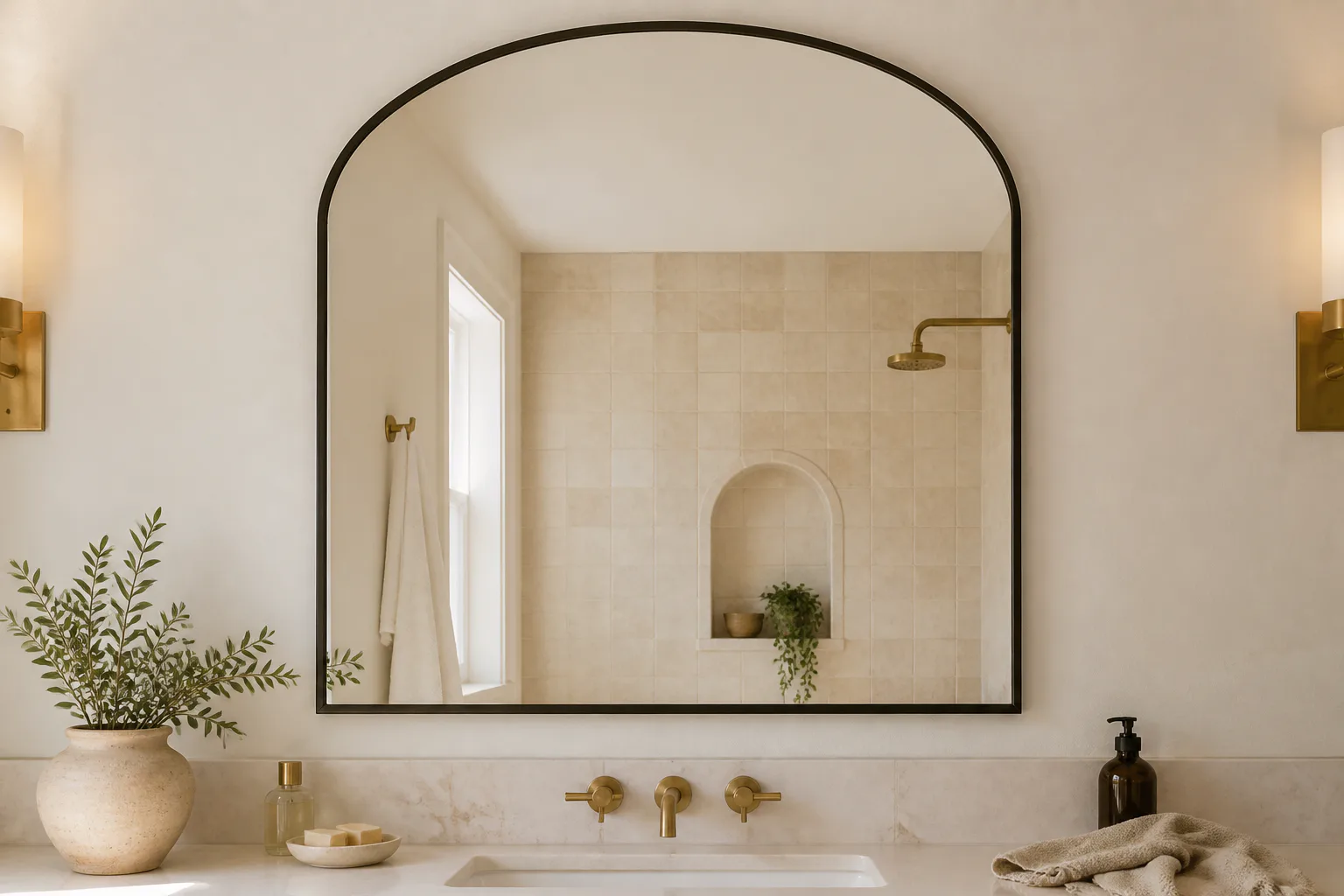
Arched mirrors add character without feeling overly ornate. They suit Mediterranean, vintage-inspired, transitional, and even modern spaces depending on the frame style.
An arch is useful when you want a feature shape but still need the broad reflection area of a mostly rectangular mirror. It feels more custom than a basic flat-top option.
One mirror or two
For a single-sink vanity, one mirror is the clear choice. For double vanities, either approach can work, but each creates a different visual effect.
Option | Best for | Look | Main advantage |
|---|---|---|---|
One large mirror | Shared walls, smaller bathrooms, simple layouts | Clean and open | Makes the room feel wider |
Two separate mirrors | Double sinks, symmetrical designs, more decorative styles | Structured and custom | Defines each sink area clearly |
If the wall is wide and the sinks are spaced clearly apart, two mirrors often feel more intentional. If the room is tight or you want the easiest way to reflect more light, one large mirror usually works better.
Framed or frameless
Frame style controls how formal or minimal the vanity feels. This choice also affects how much contrast the mirror adds against wall tile, paint, and hardware finishes.
Framed styles
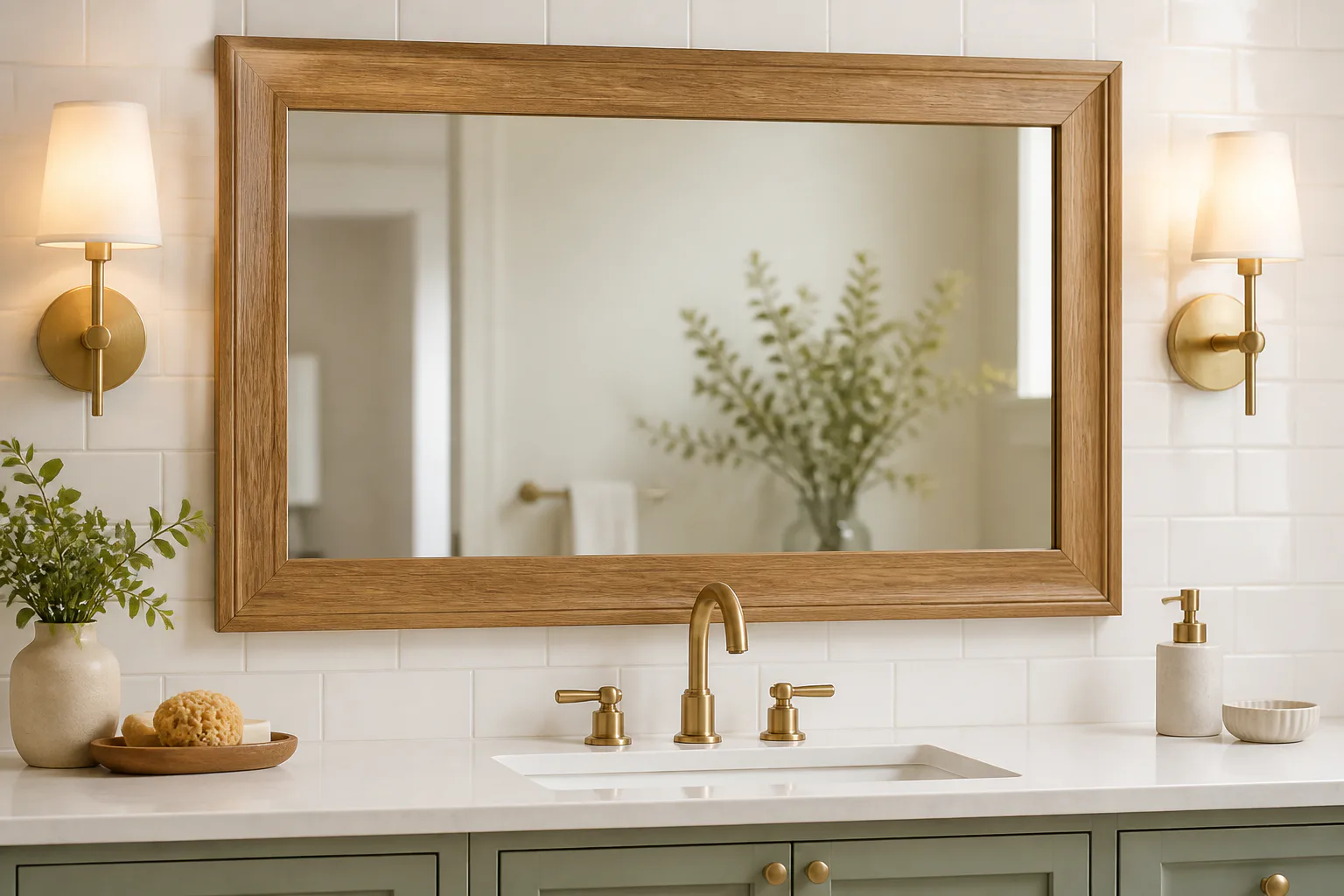
Framed mirrors look more finished and decorative. Metal frames suit modern and industrial bathrooms, while wood frames warm up white tile and painted cabinetry.
Black frames create crisp contrast.
Brass frames add warmth and polish.
Wood frames soften stone, porcelain, and painted surfaces.
Matching the frame exactly to the faucet is not required, but finishes should feel coordinated.
Frameless styles
Frameless mirrors feel lighter and cleaner. They work well in small bathrooms, contemporary spaces, and rooms where the tile, lighting, or vanity already carries enough visual detail.
This is a smart choice if you want the mirror to disappear into the overall design. It also helps a narrow bath feel less visually crowded.

Lighting-led ideas
Bathroom mirrors work best when lighting is planned with them, not added as an afterthought. Good mirror lighting reduces shadows on the face and makes grooming tasks easier.
Sconces at the sides
Side sconces give more even light than a single overhead fixture. They are especially helpful for shaving, makeup, and detailed grooming because they light both sides of the face.
This setup works best when the mirror leaves enough space on each side. It pairs well with rectangular, oval, and arched designs.
Light above the mirror
An over-mirror fixture is common and efficient. It is often the easiest option in existing bathrooms where wiring is already centered above the vanity.
Choose a fixture width that feels proportional to the mirror and vanity. If the light is too small, the whole setup can look undersized.
Built-in LED mirrors
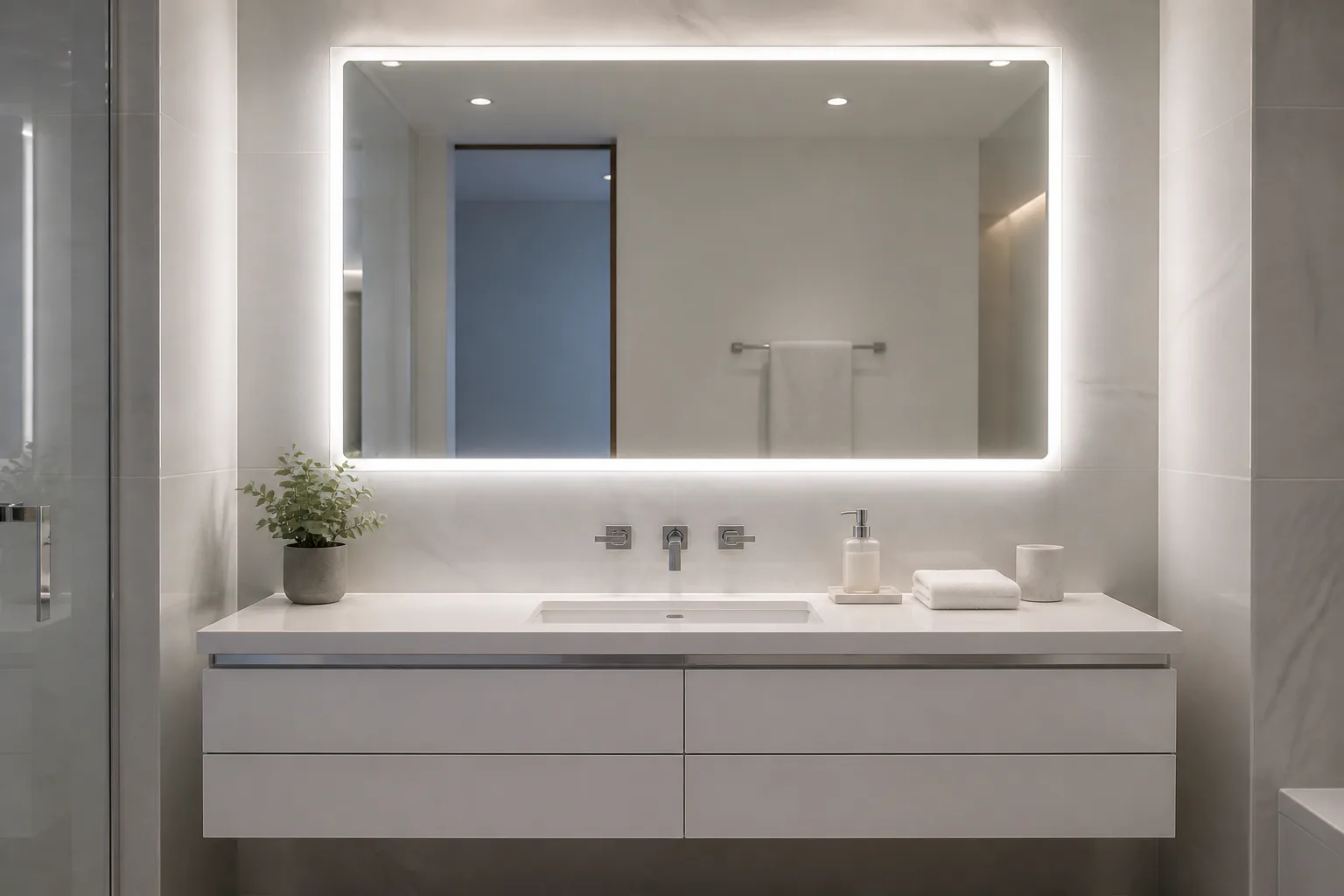
LED mirrors create a sleek, modern look and reduce fixture clutter. They are especially appealing in minimalist bathrooms where you want the mirror itself to provide a clean glow.
Good for contemporary spaces
Useful where wall space is limited
Helps create a crisp hotel-style look
Best when paired with other room lighting, not used as the only source
Storage-friendly options
If storage is limited, the mirror can do more than reflect. Functional mirror choices are especially useful in small bathrooms, guest baths, and homes where countertop clutter builds up fast.
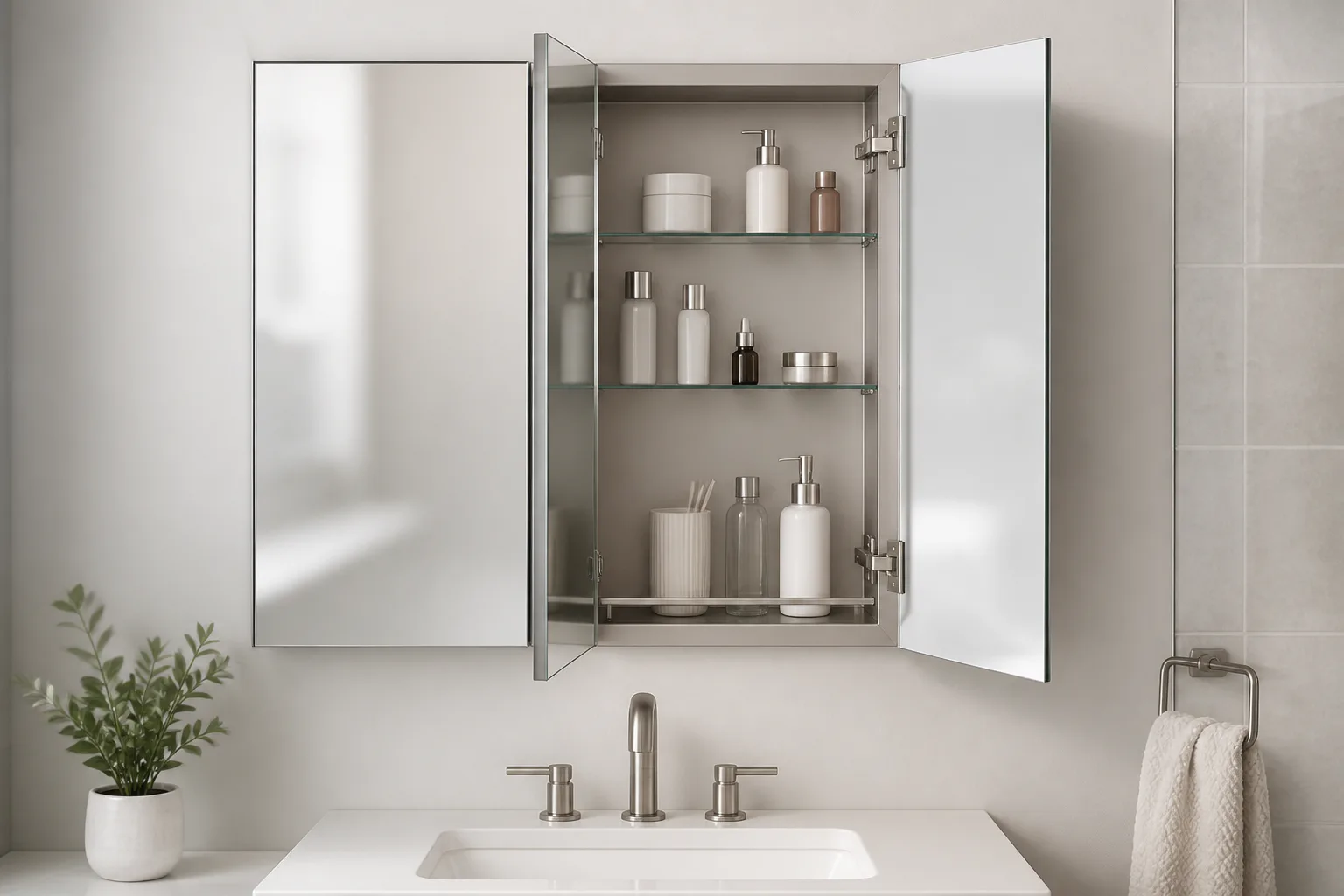
Medicine cabinets
Medicine cabinets hide daily-use items while keeping the vanity top clearer. Newer designs look far cleaner than older bulky versions, with recessed and surface-mounted styles that can fit different wall conditions.
This is one of the best ideas for compact bathrooms because it adds function without taking floor space. It also helps maintain a simpler visual line around the sink.
Shelf mirrors
Shelf mirrors include a narrow ledge for soap, toothbrushes, small decor, or skincare. They work well in powder rooms and smaller family bathrooms where a little extra staging space helps.
Keep the shelf use disciplined. Too many items can make the vanity look crowded instead of organized.
Style ideas by bathroom look
The mirror should support the vanity and room style, not compete with it. If you are unsure where to start, match the mirror to the strongest design cue already in the bathroom.
Modern
Thin black or brass frame
Frameless rectangle
Round mirror over a floating vanity
Backlit LED design
Traditional
Oval or arched shapes
Warm metallic finishes
More substantial frame profiles
Symmetrical pairs over double sinks

Farmhouse
Wood-framed mirrors
Black window-style grids used carefully
Arched tops for softness
Simple sconces with visible presence
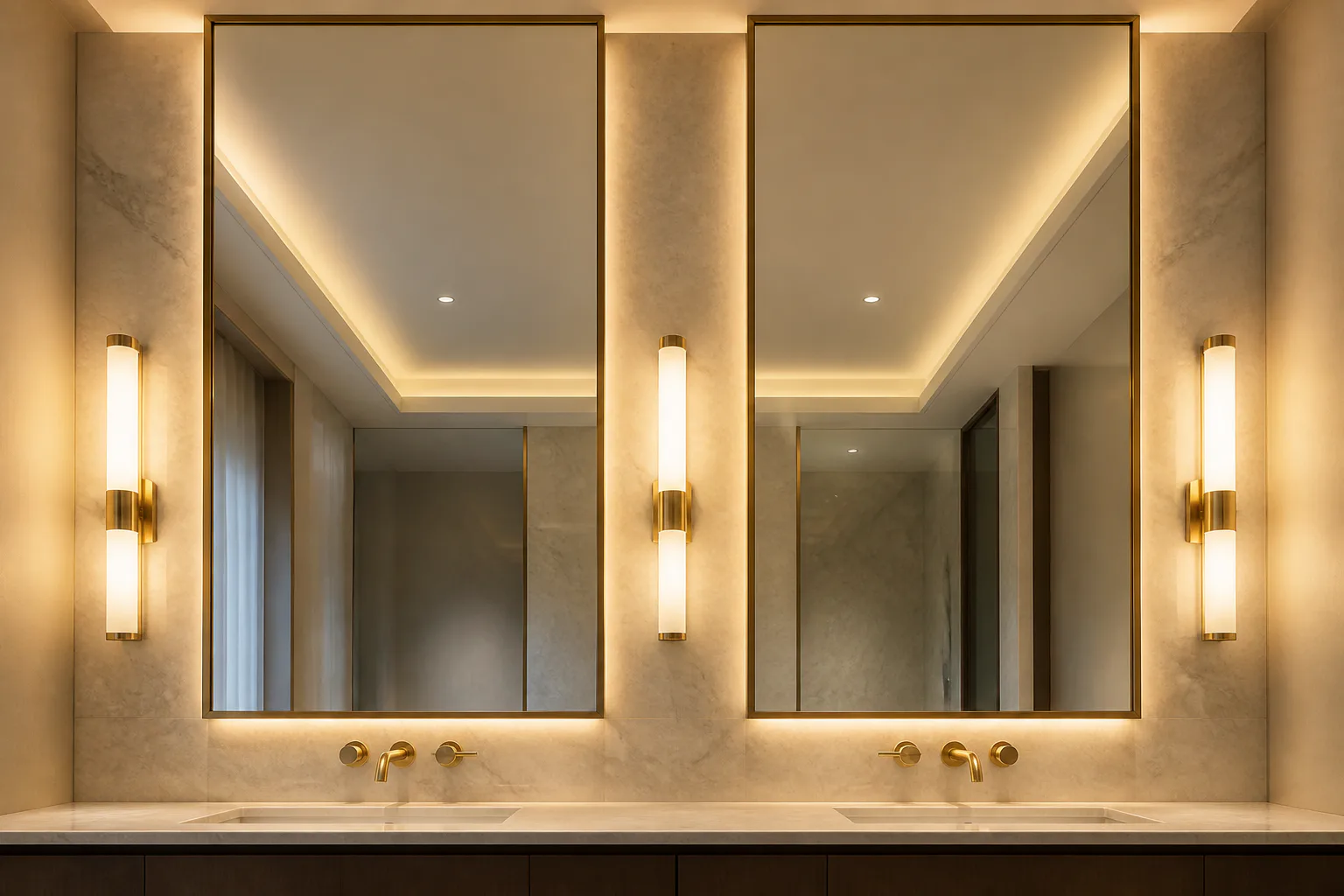
Luxury-inspired
Tall custom-looking mirrors
Brass or bronze frames
Integrated or layered lighting
Large-scale mirrors that run close to the backsplash width
Small bathroom solutions
In a small bathroom, the mirror has to work harder. It should open up the room visually without overwhelming the wall or blocking useful light.
Choose a larger mirror to reflect more light.
Use frameless or thin-frame styles to reduce visual weight.
Pick a medicine cabinet if storage is tight.
A round mirror can soften a narrow vanity area.
Keep wall lighting slim if the room is compact.
If the bathroom has one sink and limited counter space, a mirror with hidden storage is often more practical than a purely decorative piece. In powder rooms, you can be more expressive because storage demands are lower.
Double vanity ideas
Double vanities need clear proportion and alignment. The mirror plan should connect the two sink areas while still making each station feel usable.
Use two matching mirrors for a tailored, symmetrical layout.
Choose one oversized mirror if you want a cleaner, more open wall.
Center each mirror directly over each faucet, not just over each sink basin edge.
Repeat finish and shape details so the setup feels intentional.
If the faucets, sconces, and mirrors all fight for space, the wall can feel busy fast. Simpler mirror shapes often solve that problem better than changing every finish.
Placement mistakes to avoid
A good mirror can still look wrong if it is hung poorly. Placement mistakes are often what make a bathroom vanity feel off, even when the materials themselves are attractive.
Hanging the mirror too high above the backsplash
Choosing a mirror that is much narrower than the vanity
Crowding sconces too close to the frame
Picking a heavy frame for a very small bathroom
Using ornate shapes in an already busy tile scheme
Before buying, sketch the mirror, light fixture, faucet, and backsplash together as one composition. This helps you catch spacing issues early.
How to choose fast
If you want a quick decision, narrow your options by function first and style second. That prevents a decorative choice from creating daily frustration.
Measure the vanity width and available wall height.
Decide if you need storage, integrated light, or just reflection.
Choose one mirror for openness or two for symmetry.
Select a shape that complements the vanity lines.
Pick a frame finish that works with hardware and lighting.
The best bathroom vanity mirror ideas are the ones that solve your space first. If the room is small, prioritize scale and storage. If the room is design-led, let shape and finish do more of the work.
FAQ
Should a bathroom mirror match the vanity width?
No. It should relate to the vanity width, but it does not need to match it exactly. A mirror slightly narrower than the vanity usually looks balanced.
Are round mirrors practical over a bathroom vanity?
Yes, especially over a single sink. They are practical as long as the mirror is large enough for daily use and the lighting is planned properly.
What mirror works best in a small bathroom?
A larger frameless mirror or a medicine cabinet often works best. Both help the room feel bigger, and a cabinet adds storage without using floor space.
Is one large mirror better than two?
It depends on the vanity layout. One large mirror feels cleaner and more open, while two mirrors create stronger symmetry over double sinks.
Do bathroom mirror and faucet finishes need to match?
No. They should coordinate, not necessarily match exactly. A bathroom looks more layered when finishes relate in tone and style rather than copying each other piece for piece.
Final pick
If you want the safest all-around option, choose a rectangular mirror sized slightly smaller than the vanity, pair it with good side or overhead lighting, and keep the frame simple. If you need more function, switch that plan to a medicine cabinet. If you want more personality, use a round or arched mirror in a finish that supports the vanity hardware and lighting.