Bathroom Vanity Ideas That Fit Your Space and Style

Bathroom vanity ideas start with one clear goal: choose a vanity that fits your space, matches how you use the bathroom, and adds storage without making the room feel crowded. The best choice depends on size, layout, plumbing location, storage needs, and the look you want, whether that is warm wood, clean modern lines, or a furniture-style centerpiece.
A good vanity does more than hold a sink. It shapes the room, sets the storage plan, and affects cleaning, lighting, mirror placement, and traffic flow. If you want a vanity that looks good and works well every day, focus on proportion, storage style, countertop durability, and the right mounting style first.
Start with the layout
The smartest vanity ideas begin with the room itself. Measure the wall width, door swing, toilet clearance, and how far drawers can open without hitting another fixture. A vanity that looks perfect online can fail fast if it blocks movement or makes the bathroom feel tight.
Also check where the plumbing comes through the wall or floor. Keeping the sink close to existing plumbing simplifies the project, while a major shift in placement adds cost and limits some vanity designs.
Small bathrooms
In a compact bath or powder room, use a vanity that keeps visual weight low. Open-leg designs, floating vanities, and light finishes help the room feel larger than bulky dark cabinets that sit heavy on the floor.
Narrow-depth vanity for tight walkways
Wall-mounted vanity to open floor space
Integrated sink top to reduce seams
Single drawer with interior organizer instead of deep empty storage
Rounded corners if the room has a tight entry path
Shared bathrooms
For a busy family bath, storage and elbow room matter more than a dramatic silhouette. Wider vanities with drawer storage usually work better than narrow cabinets packed with shelves because drawers make small items easier to reach and sort.
Double sink vanity if width allows
Center drawer stack for personal zones
Tall side storage cabinet if under-sink space is limited
Durable top and easy-clean fronts
Separate task lighting over each sink area
Primary suites
In a primary bath, the vanity can act like furniture rather than basic utility storage. This is where custom details, warmer finishes, framed mirrors, and layered lighting make the biggest difference.
If the room is large, avoid a vanity that feels undersized against long blank walls. Either choose a wider unit, use dual vanities, or add matching storage towers to give the room proper scale.
Popular vanity styles
Style matters, but function still leads. The best-looking vanity is the one that supports your daily routine, stands up to moisture, and fits the architecture of the room.
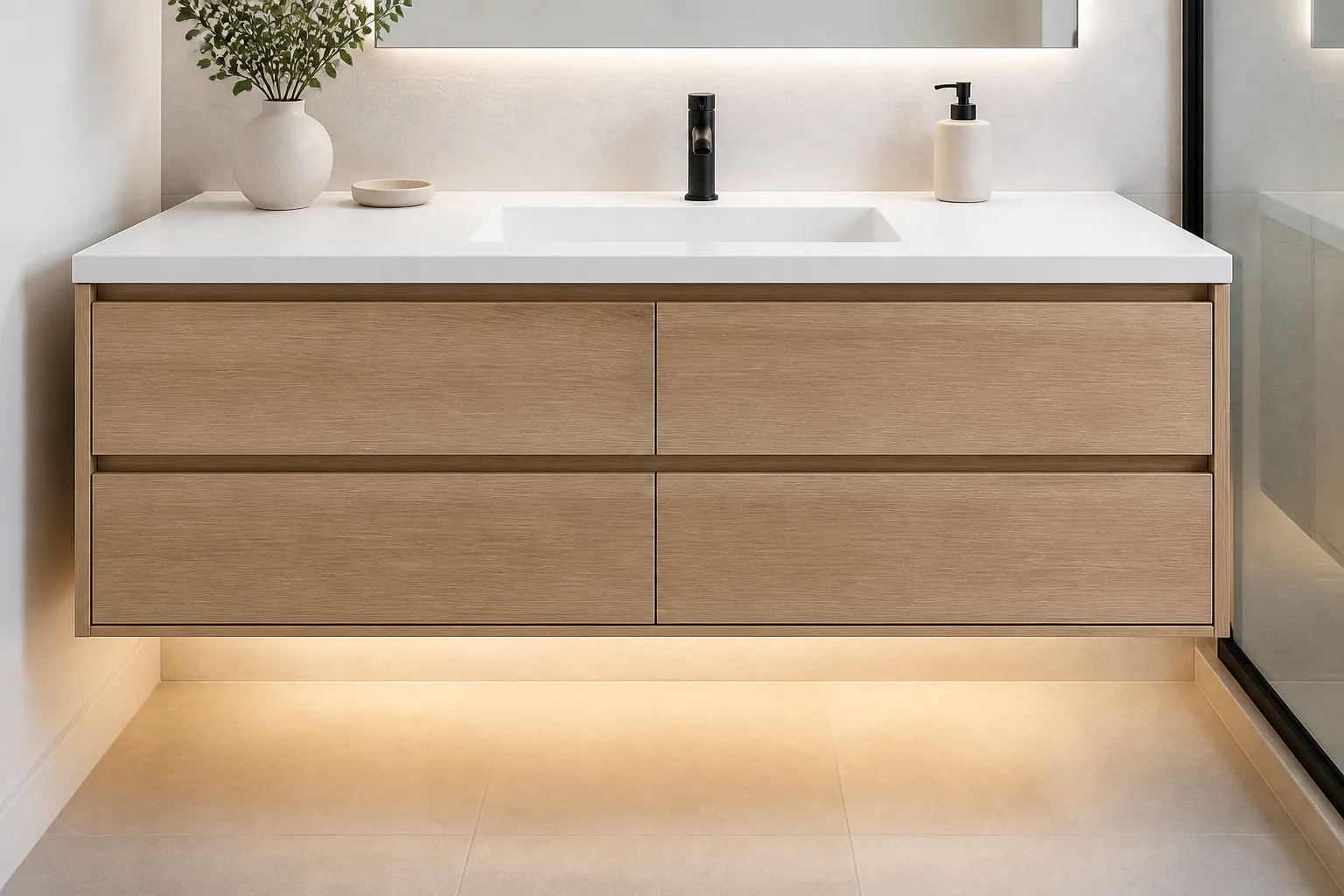
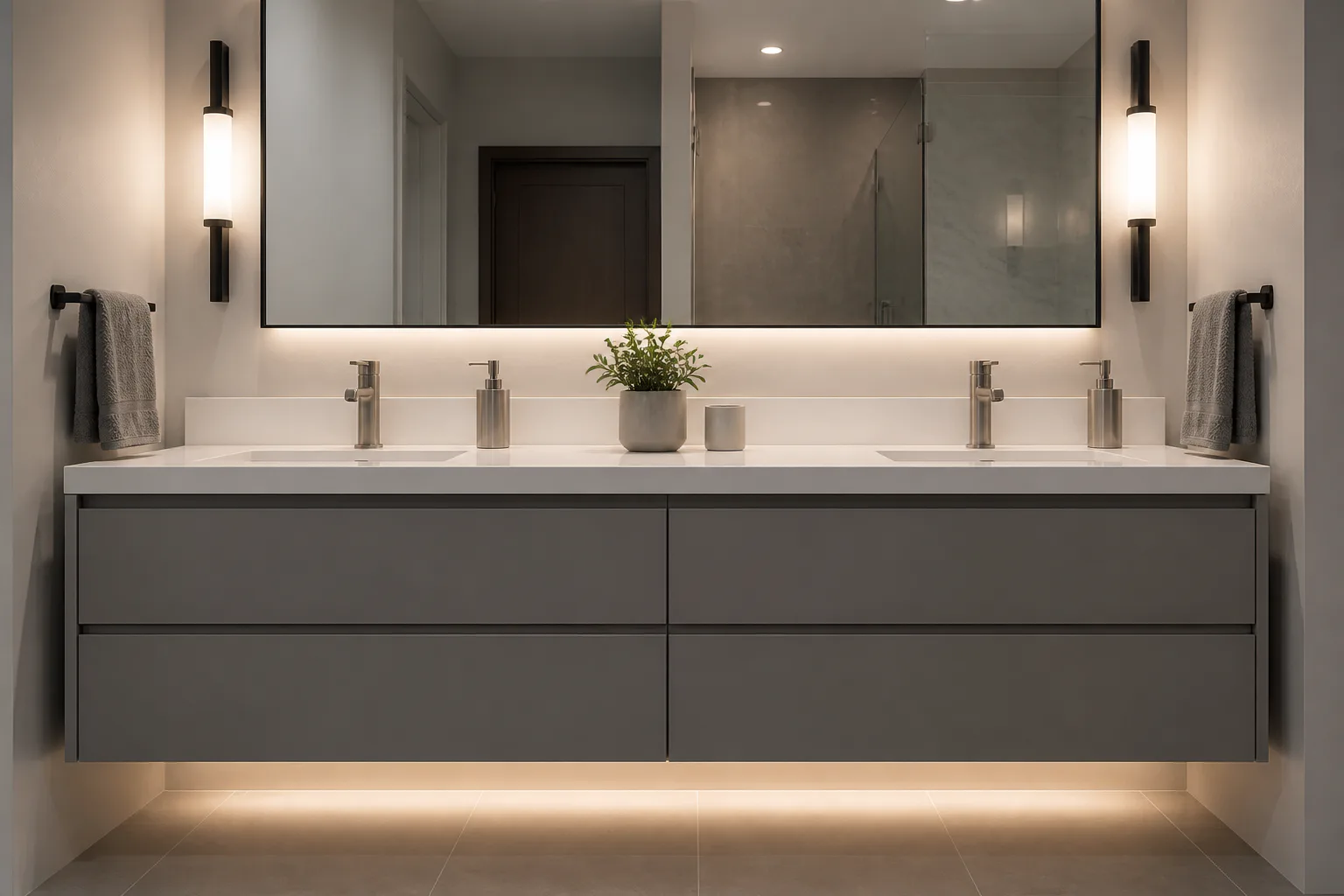
Floating vanity
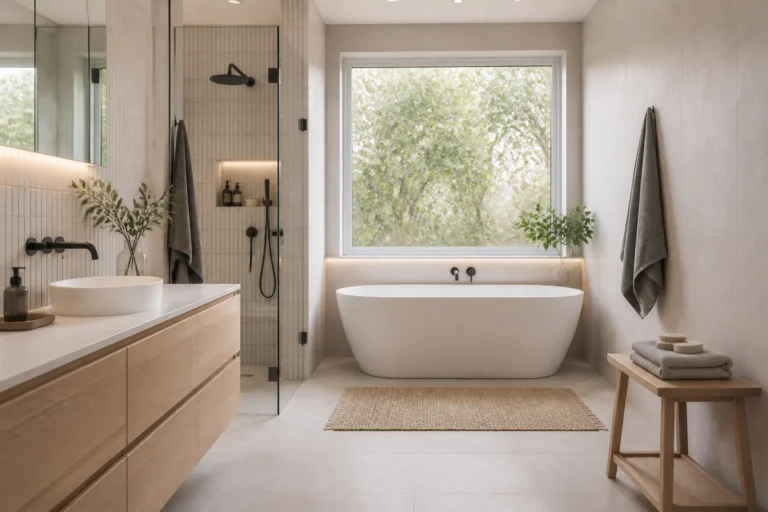
A floating vanity mounts to the wall and leaves open space below. It creates a cleaner, lighter look and makes floor cleaning easier, which is one reason it works so well in modern bathrooms.
This style is especially useful in smaller rooms because it exposes more flooring and makes the footprint feel lighter. It also pairs well with under-cabinet lighting for a subtle evening glow.
Furniture-style vanity
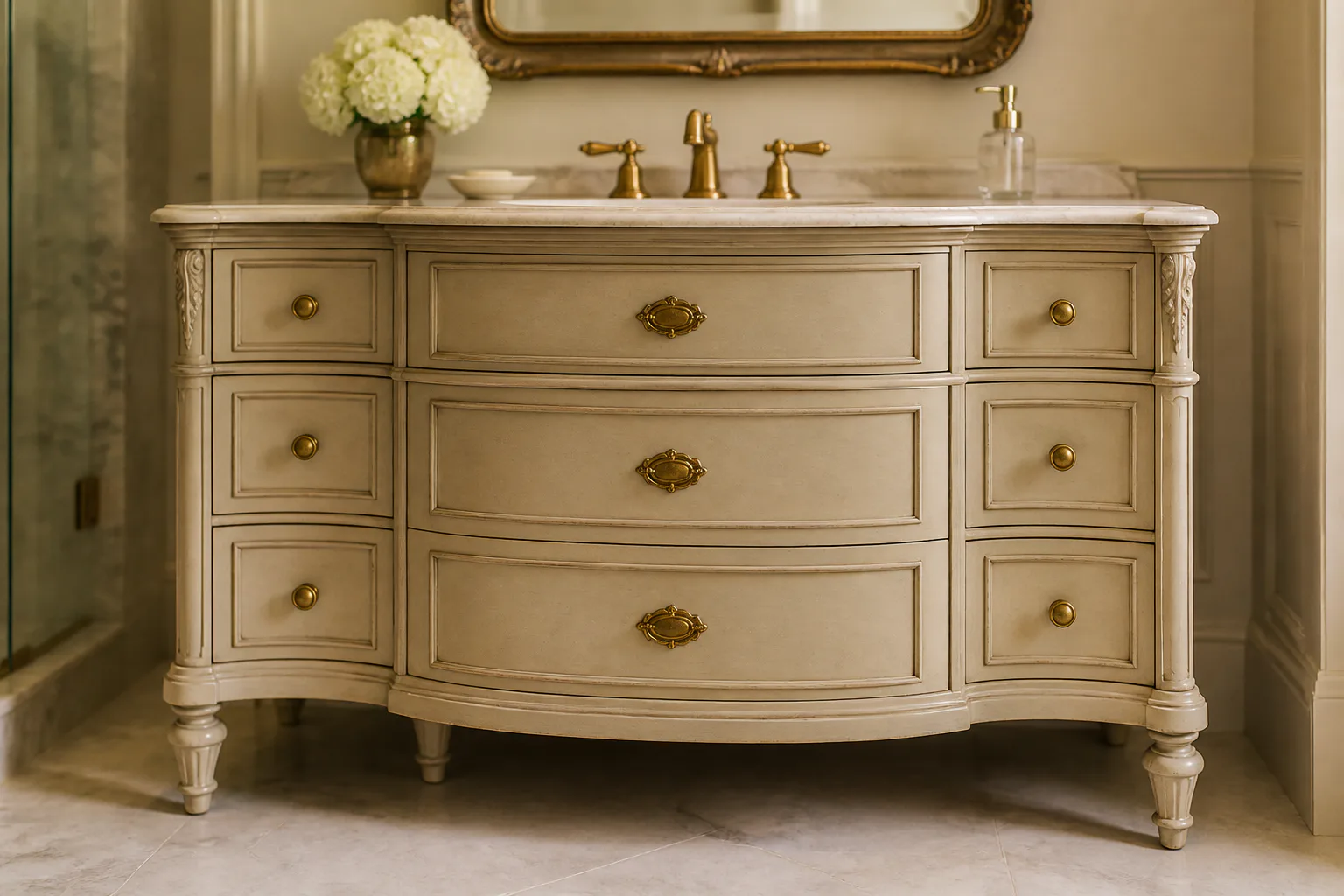
A furniture-style vanity feels more decorative and often looks like a dresser, console, or cabinet piece adapted for bathroom use. It suits traditional, transitional, and collected interiors where you want the vanity to feel like a focal point rather than built-in millwork.
This look works best when the room has enough floor space around it. In a very tight bathroom, legs and detailed trim can make cleaning harder and visual lines busier.
Freestanding vanity
A freestanding vanity is one of the easiest options to install and replace. It offers a familiar cabinet base, hides plumbing well, and comes in a wide range of widths and storage formats.
If you want a practical middle ground, this style is often the easiest answer. It can lean modern, classic, farmhouse, or minimal depending on the door style and hardware.

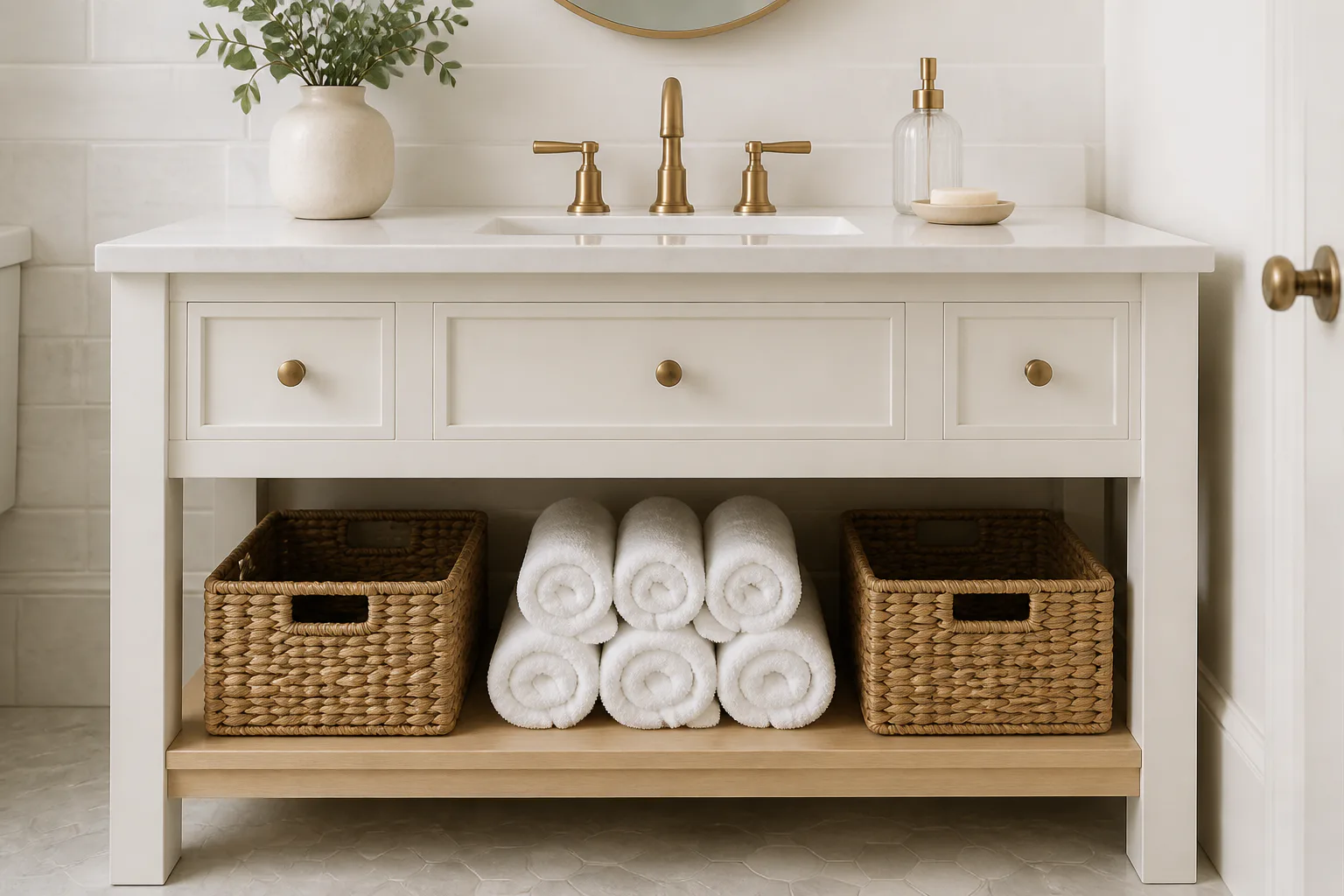
Open-shelf vanity
An open-shelf vanity gives the room an airy feel and can work well in guest baths. It also gives you a place for rolled towels and baskets, which softens a bathroom that otherwise feels hard and cold.
The trade-off is that open storage stays visible. If you prefer a cleaner look, use matching bins or reserve this style for bathrooms with lighter daily use.
Best materials and finishes
Bathrooms deal with humidity, splashes, and constant wiping, so materials matter. A finish that looks elegant in a dry room can wear badly in a bath if it is not suited to moisture.
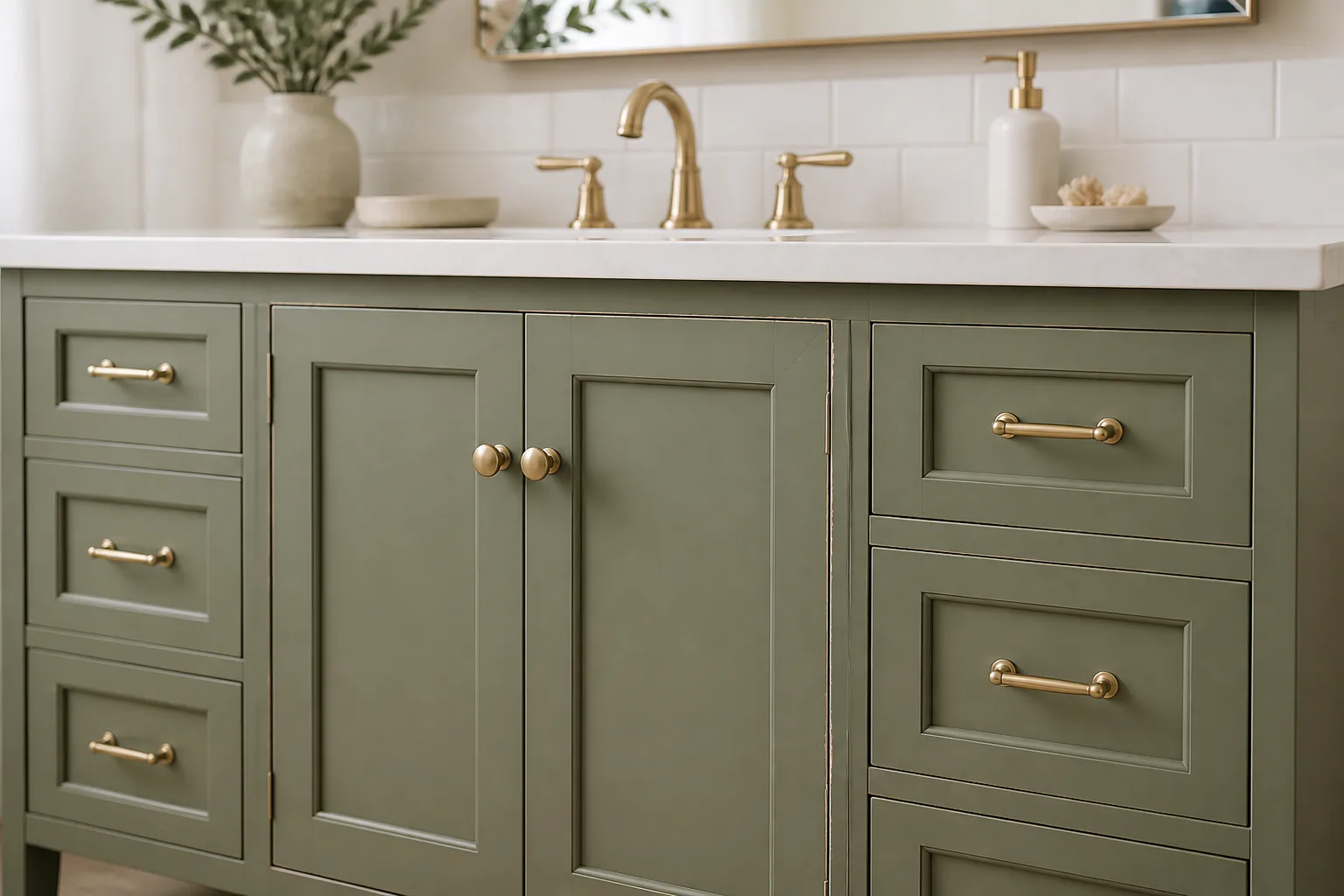
Painted finishes
Painted vanities create a tailored look and can brighten a room fast. White, soft gray, muted green, navy, and black remain strong options because they work across many tile and countertop combinations.
Smooth painted fronts fit modern spaces, while shaker-style painted doors work in transitional bathrooms. Keep in mind that chips and wear show more clearly on sharp corners and dark painted edges.
Natural wood
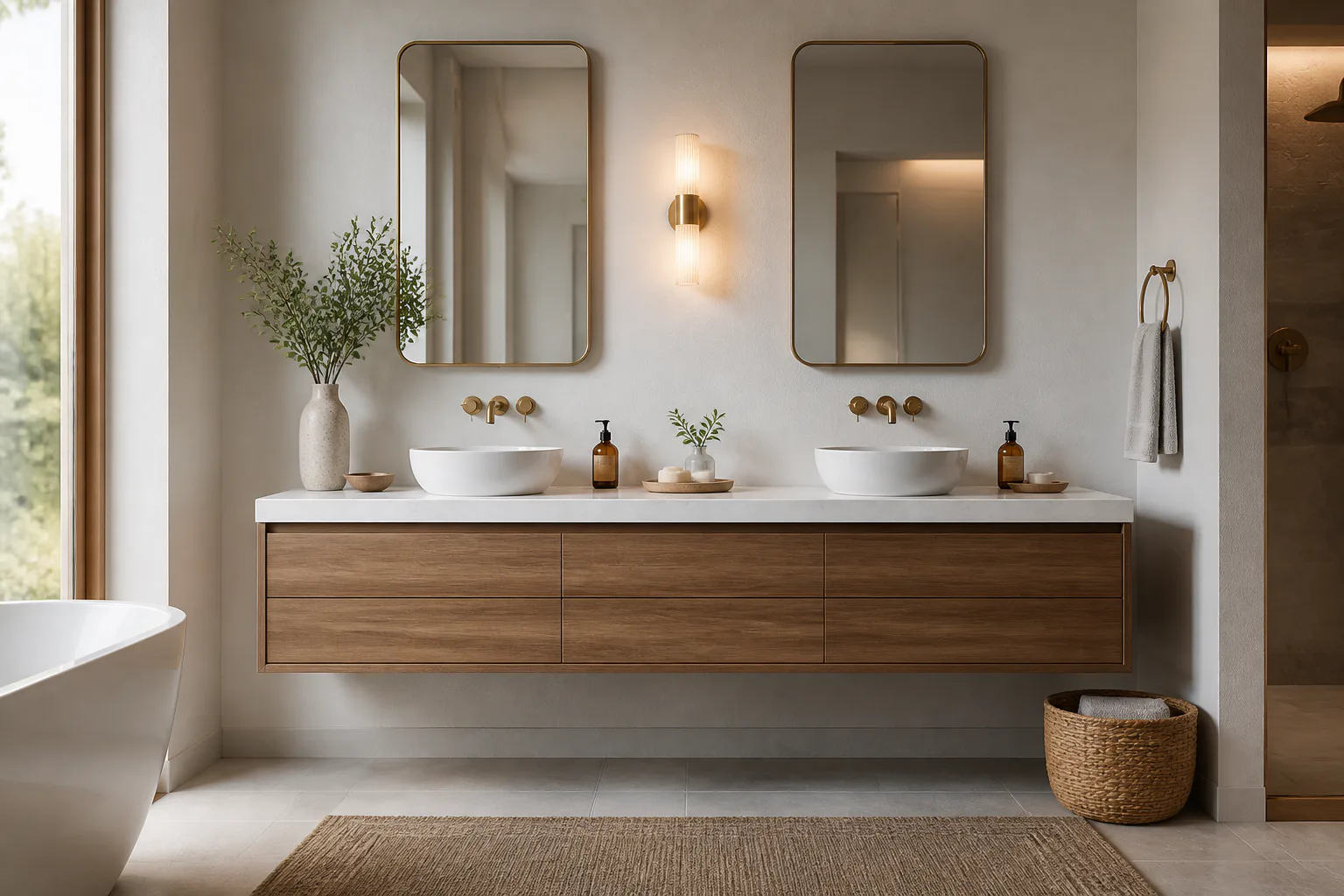
Natural wood adds warmth that helps bathrooms feel less sterile. White oak, walnut tones, and medium warm woods pair especially well with stone tops, brushed metal hardware, and simple wall tile.
This is a strong choice if you want a spa-like or organic modern feel. A wood look also balances bathrooms with lots of hard white and gray surfaces.
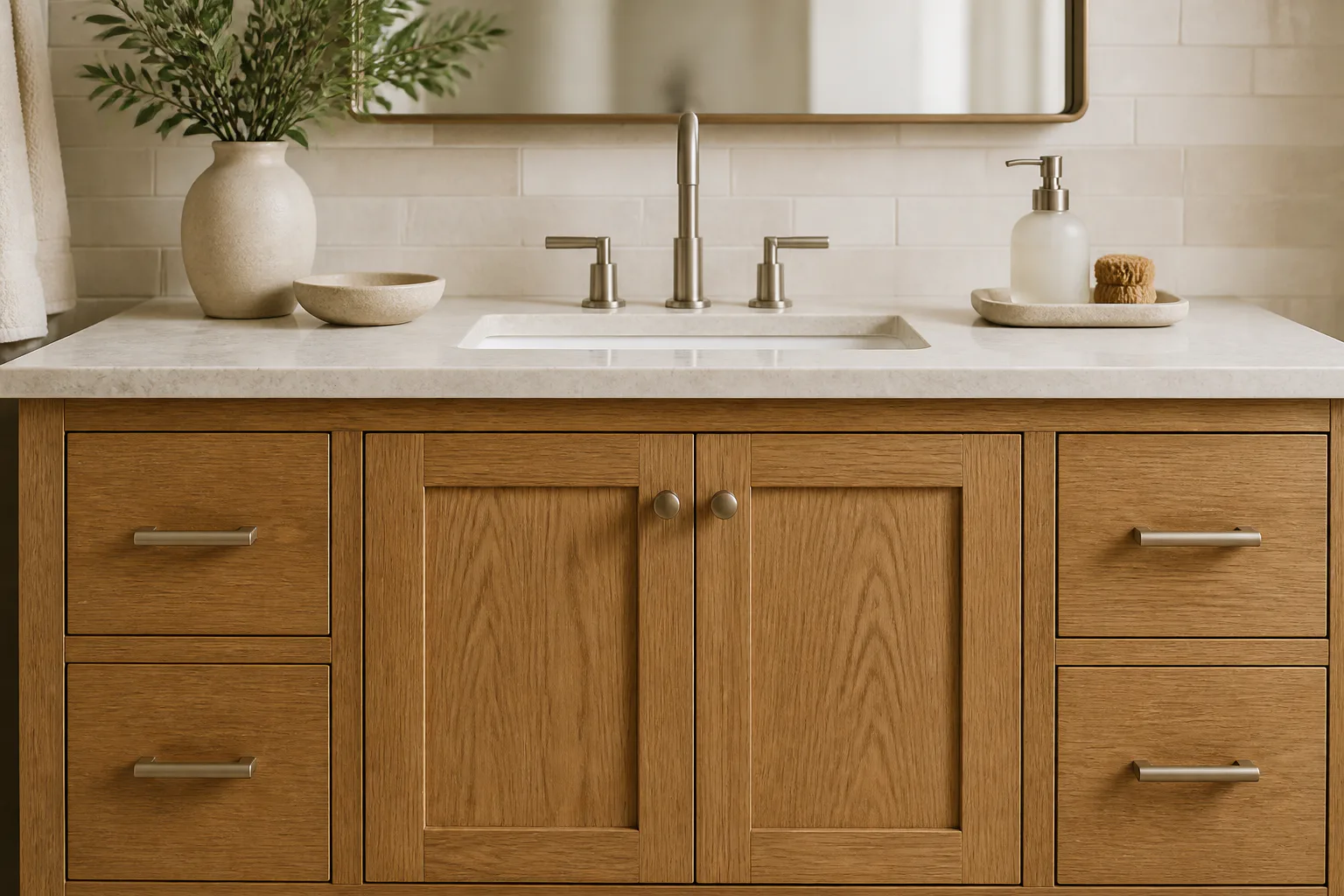
Laminate and veneer
Laminate and veneer can deliver a clean look with easier maintenance than some solid wood finishes. They are useful when you want a wood tone or matte color without making the vanity the highest-maintenance surface in the room.
Look for well-finished edges and durable hardware. In busy bathrooms, build quality matters as much as surface appearance.
Countertop choices
The vanity top affects both style and daily upkeep. Choose one that handles water well, cleans easily, and complements the cabinet finish without fighting for attention.
Countertop type | Best for | Look | Care level |
|---|---|---|---|
Quartz | Busy family bathrooms | Clean, polished, versatile | Low |
Solid surface | Minimal seams and simple upkeep | Smooth, modern | Low |
Marble-look surface | Classic or upscale style | Elegant, bright | Medium |
Concrete-look surface | Modern and industrial spaces | Matte, architectural | Medium |
Wood top | Warm decorative statement | Natural, soft | Higher |
If you want easy maintenance, quartz and integrated solid-surface tops are strong choices. If appearance leads the project, choose the surface that matches the room style, then be realistic about how much upkeep you want.
Storage that actually works
Good vanity storage is about access, not just volume. A cabinet can look spacious and still waste room if everything stacks behind plumbing and gets lost in the back.
Drawers over doors
Drawers are often the most efficient option for everyday items like hair tools, skincare, toothbrush supplies, and backup products. They let you see what you have without crouching and digging through shelves.
Deep drawers help for bulk storage, but shallow drawers are better for small items used every day. A mix of both works best in most bathrooms.
Built-in organizers
Simple inserts can turn an average vanity into a useful one. If you are planning a remodel, think beyond the cabinet box and account for the items that create clutter fastest.
Drawer dividers for grooming products
Vertical slots for hair tools
Pull-out bins for cleaning supplies
Interior trays for makeup or shaving items
Outlet access inside a drawer or cabinet for charging devices
Open and closed storage
The best balance often mixes both. Closed storage hides visual clutter, while one open shelf can hold towels or baskets and keep the room from feeling too boxy.
In guest baths, open storage can be enough. In primary and family baths, more closed storage usually leads to a cleaner-looking room.
Color direction
Vanity color can either blend in or become the main design feature. The right choice depends on how much contrast you want against the walls, floor, and countertop.
Light and bright
White, off-white, pale gray, and soft beige keep the bathroom feeling open. These shades work especially well in smaller rooms or spaces with limited natural light.
If you choose a very light vanity, add contrast with hardware, mirror frames, or sconces so the room does not feel flat. Texture also helps, especially through tile or wood accents.

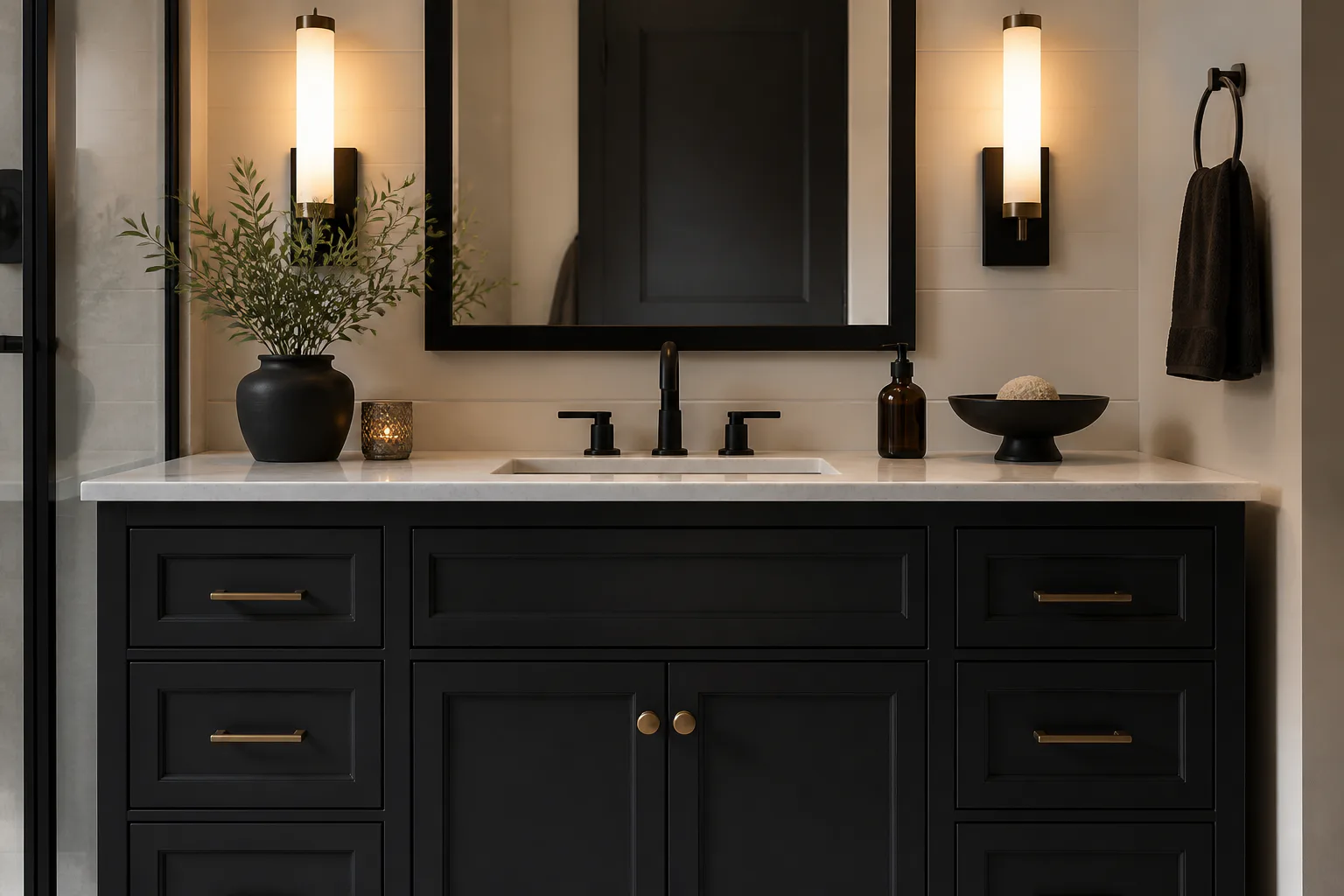
Dark and dramatic
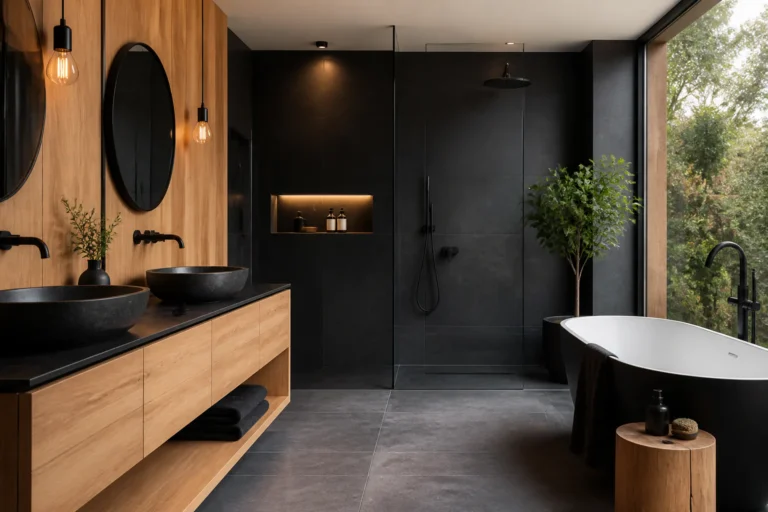
Black, charcoal, deep green, and navy create more contrast and make the vanity feel intentional. These colors often look best when paired with lighter countertops and enough lighting to prevent the room from feeling heavy.
Dark vanities can anchor a plain bathroom quickly. They are a strong move if the rest of the room is simple and you want one element to carry the design.
Wood-led warmth
Wood tones are one of the easiest ways to keep a bathroom current without making it feel trend-driven. They soften stone, metal, and white tile and can suit both modern and classic spaces.
If you want a look that ages well, warm wood is often easier to live with than a very bold painted color. It also tends to work across future updates to mirrors, lighting, and wall color.
Sink and mirror pairing
A vanity looks finished only when the sink, faucet, mirror, and lighting feel coordinated. You do not need matching sets, but the shapes and scale should relate to each other.
Single sink setups
For one sink, center the mirror and lighting over the basin, not just the cabinet. A wider mirror can make the room feel bigger, while a framed mirror adds definition in simpler bathrooms.
If the vanity has a strong wood grain or bold color, keep the mirror shape simple. Let one element lead and keep the others quieter.
Double sink setups
For double vanities, choose between two mirrors or one large mirror based on the room style. Two mirrors feel more tailored and help define personal zones, while one large mirror creates a cleaner, more continuous look.
Sconces between and beside mirrors can improve function and symmetry. Keep fixture size in scale with the mirror height and vanity width.
Ideas by design style
Modern
Floating vanity with flat-front drawers
Quartz top with integrated sink
Matte black, chrome, or brushed nickel hardware
Large frameless or thin-frame mirror
Under-cabinet lighting for a clean evening effect
Traditional
Furniture-style vanity with paneled doors
Stone-look top and framed mirror
Classic sconces
Polished metal hardware
Soft white, gray, or deep navy finish
Farmhouse
Warm painted or wood vanity
Simple shaker fronts
Bridge or cross-handle faucet style
Black or aged metal accents
Open lower shelf with baskets
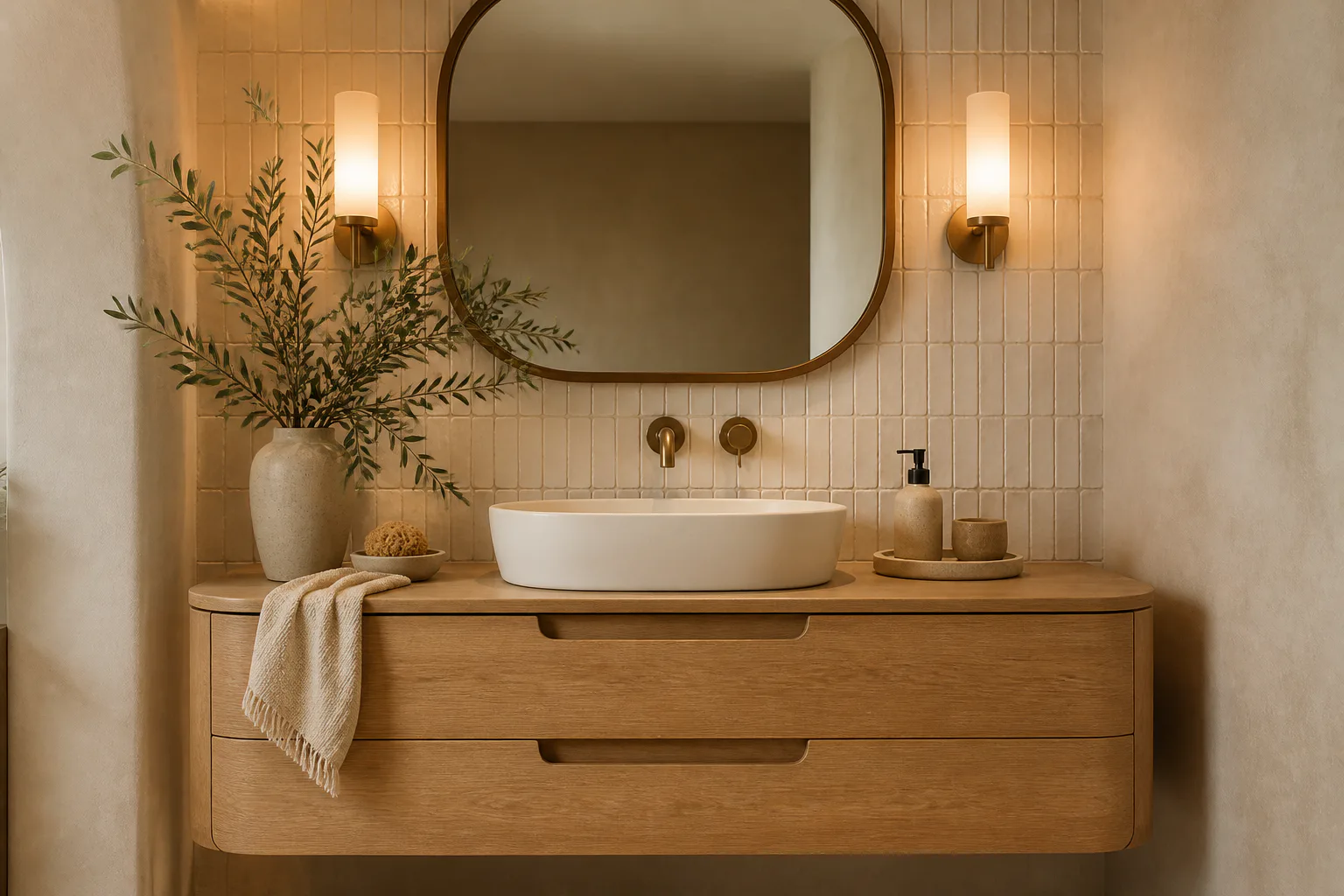
Organic modern
White oak or walnut-look vanity
Rounded mirror
Minimal hardware or integrated pulls
Textured tile and soft neutral walls
Layered warm lighting
Common mistakes
Many vanity problems come from scale, not style. A beautiful piece can still feel wrong if it is too deep, too low, too narrow, or visually too heavy for the room.
Choosing a vanity before measuring door and drawer clearance
Using open storage when you need clutter control
Picking a trendy finish that fights the rest of the bathroom
Ignoring cleaning access around legs, corners, and tight gaps
Undersizing the mirror or lighting
Forgetting where outlets and switches need to land
Quick decision guide
Your priority | Best vanity direction |
|---|---|
Make a small bathroom feel larger | Floating vanity in a light finish |
Need maximum daily storage | Freestanding vanity with drawers |
Want a statement piece | Furniture-style vanity |
Prefer easy cleaning | Wall-mounted or simple slab-front vanity |
Want warmth without clutter | Wood vanity with minimal hardware |
Designing a shared bath | Wide vanity with divided drawer zones |
FAQ
What vanity style makes a bathroom look bigger?
Floating vanities, open-leg designs, and light-colored finishes make a bathroom look bigger. They expose more floor area and reduce visual weight, which helps compact rooms feel less crowded.
Are drawers better than cabinets?
For most bathrooms, drawers are more practical for daily use. They improve access, make small items easier to organize, and reduce the problem of losing things behind plumbing or stacked supplies.
Should the vanity be darker or lighter than the floor?
Either can work, but contrast usually looks more intentional than a near-match that feels accidental. If the floor is dark, a lighter vanity can brighten the room, while a darker vanity can anchor a very light bathroom.
How do I choose between one sink and two?
Choose two sinks only if the bathroom has enough width for comfortable counter space and movement. In many layouts, one sink with better storage and more counter area works better than squeezing in two basins.
Do wood vanities work in bathrooms?
Yes, wood vanities work well in bathrooms and add warmth. The key is choosing a bathroom-suitable finish and keeping water from sitting on the surface or around seams.
Final pick
If you want a vanity idea that works in most homes, start with a drawer-based freestanding or floating vanity sized correctly for the room, then pair it with a durable low-maintenance top and lighting that fits the mirror. After that, choose the finish that supports the mood you want: light for openness, dark for contrast, or wood for warmth.
The best bathroom vanity idea is not the boldest one. It is the one that makes the room easier to use every day while still looking intentional and well-finished.