
25 Red Bedroom Ideas for a Bold, Cozy & Stylish Space

Red can completely change the personality of a bedroom. Used thoughtfully, it can make the space feel warm, dramatic, romantic, sophisticated, or even surprisingly modern. The key is choosing the right red and deciding where you want that color to make an impact.
You do not have to paint every wall red to create a beautiful red bedroom. A velvet headboard, patterned bedding, curtains, an accent wall, artwork, or even a small piece of furniture can bring the color into the room without making it feel too intense.
From rich burgundy and wine tones to softer terracotta and energetic cherry red, there are plenty of ways to work red into different decorating styles.
Here are 25 red bedroom ideas that can help you create a stylish and comfortable space while keeping the color balanced.
1. Red Velvet Headboard
A red velvet headboard is one of the easiest ways to give a bedroom a luxurious focal point. Instead of covering the entire room in red, you can concentrate the color around the bed, making it the visual center of the space.
Deep burgundy, ruby, or crimson velvet works especially well with warm neutral walls. Cream bedding, brass lighting, and natural wood nightstands can soften the richness of the fabric.
For a more contemporary bedroom, choose a tall channel-tufted headboard with clean edges. Traditional rooms can benefit from a curved or button-tufted design.
Keep the rest of the bedding relatively simple so the headboard remains the main feature.
2. Burgundy Bedding With Neutral Walls

If you want a red bedroom without committing to colorful walls, burgundy bedding is an excellent option. It introduces a rich red tone while allowing the walls and larger furniture pieces to remain neutral.
Try a burgundy duvet cover with ivory sheets and a few textured pillows. Beige, taupe, warm gray, and cream all work nicely with darker red bedding.
Layering different fabrics can make the bed look more inviting. Combine cotton sheets with a quilt, knitted throw, or velvet accent pillow.
This approach is also easy to change later because you can replace the bedding without repainting the room.
3. Deep Red Accent Wall
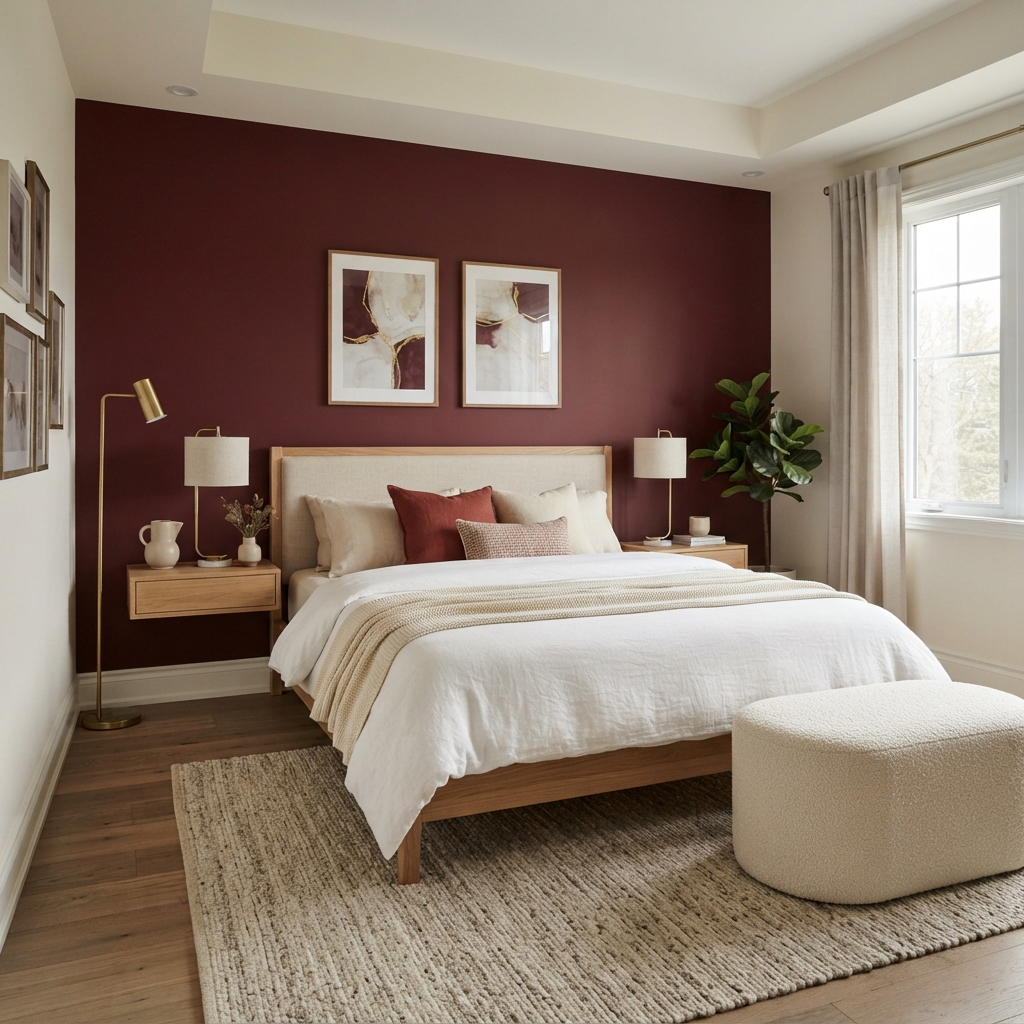
A deep red accent wall can give a bedroom instant character. The wall behind the bed is usually the best location because it naturally creates a backdrop for the room’s main furniture.
Instead of a bright primary red, consider shades such as burgundy, oxblood, merlot, or deep cranberry. These colors have more depth and tend to feel sophisticated in a bedroom.
Keep the remaining walls lighter to prevent the room from feeling enclosed. Cream, warm white, beige, or soft gray can provide a calm contrast.
Add only a few matching red accessories elsewhere so the accent wall feels connected to the rest of the room.
4. Red and White Bedroom

Red and white create a crisp contrast that can work in both traditional and contemporary bedrooms. White provides a clean background while red supplies the visual energy.
You could use white walls and bedding with a red upholstered bed, curtains, or decorative pillows. Another option is a mostly white bedroom with one red feature wall.
For a softer appearance, choose a muted brick red rather than an extremely bright shade. Warm white also tends to look more comfortable than a very cool white.
Natural wood furniture can help bridge the two colors and prevent the room from feeling too stark.
5. Red and Charcoal Gray

Red and charcoal gray create a dramatic modern color combination. The darker gray gives red a sophisticated backdrop while keeping the overall palette grounded.
Try charcoal walls with a red upholstered bed, or use light gray walls and introduce red through bedding and furniture.
Metal details can work particularly well here. Black, brushed brass, and aged bronze can all complement the combination.
For a balanced bedroom, keep the larger surfaces neutral or gray and reserve the strongest red tones for one or two focal pieces.
6. Red Floral Bedding
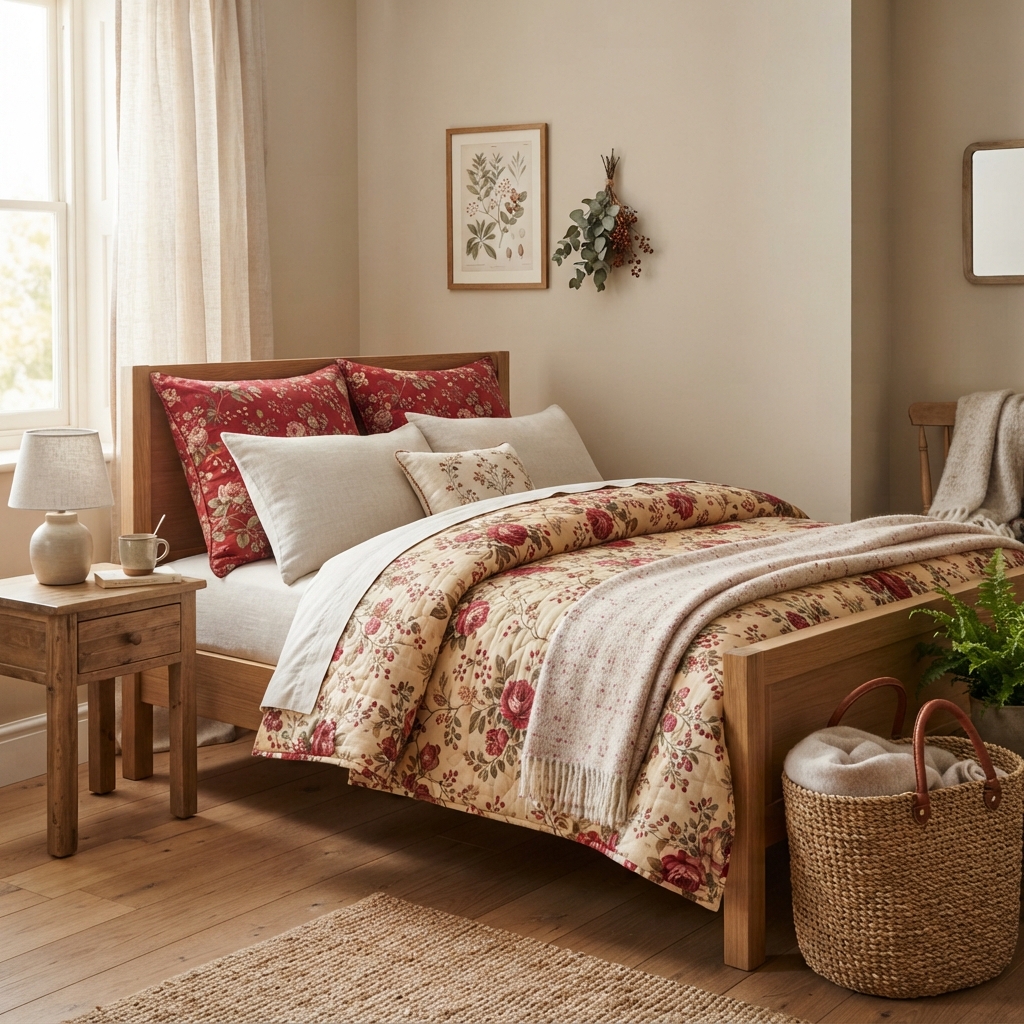
Floral bedding is an easy way to introduce red while adding pattern and personality. Instead of using a completely solid red comforter, choose a floral design with red flowers mixed with cream, green, pink, or muted brown.
This works especially well in cottage, vintage, traditional, and romantic bedrooms.
If the bedding has a busy pattern, keep the walls relatively simple. A warm white or soft beige wall allows the floral design to remain the star.
Complete the look with a woven basket, wooden furniture, and a few understated decorative pieces.
7. Red Curtains for a Dramatic Look

Red curtains can create a strong vertical accent without requiring any permanent changes to the room. Floor-length curtains in burgundy, wine, or brick red can make windows feel larger and give the bedroom a more finished appearance.
Velvet curtains create a luxurious atmosphere, while linen or cotton curtains feel lighter and more relaxed.
If the room already contains several red elements, choose curtains in a slightly different tone rather than trying to match everything perfectly.
Hang the curtains close to the ceiling and allow them to reach the floor for a more elegant appearance.
8. Terracotta Red Bedroom

Terracotta is a softer and earthier alternative to traditional bright red. Its warm clay undertones make it especially suitable for relaxed bedrooms.
Pair terracotta walls with cream bedding, light wood, woven textures, and natural fabrics. The result can feel warm without becoming visually overwhelming.
Terracotta also works beautifully with muted olive green, sand, tan, and warm beige.
If you have a small bedroom, consider using terracotta on one wall and keeping the other surfaces lighter.
9. Red Canopy Bed

A canopy bed can make a red bedroom feel romantic and dramatic. The frame itself can be dark wood, black metal, or painted red, depending on the style you want.
For a sophisticated look, use deep red fabric panels around a neutral canopy frame. Keep the bedding in cream, white, or soft beige to prevent the bed from becoming too visually heavy.
A canopy also creates a natural zone around the sleeping area, making it especially useful in larger bedrooms.
Add warm bedside lighting to emphasize the layered fabrics in the evening.
10. Ruby Red Accent Chair
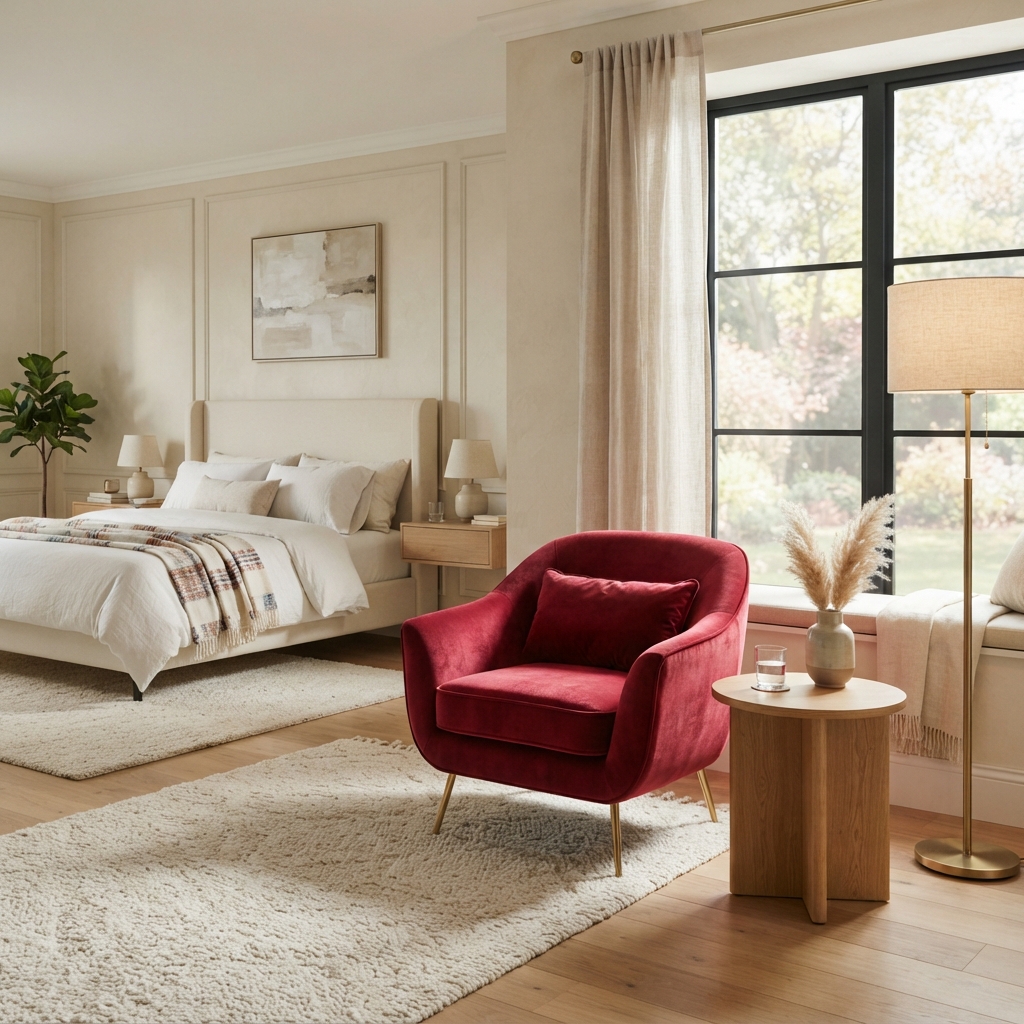
A red accent chair is a simple way to introduce color away from the bed. Place one beside a window, near a dresser, or in an empty corner to create a small reading or relaxation area.
Ruby red velvet looks elegant in traditional and glam rooms, while a simple red upholstered chair can work well in modern interiors.
Pair the chair with a small wooden or metallic side table. A neutral rug underneath can visually connect the seating area to the rest of the room.
This is also a practical choice because the chair provides useful seating rather than functioning only as decoration.
11. Red Wallpaper Behind the Bed

Wallpaper can bring color, pattern, and texture into a red bedroom at the same time. A patterned red wallpaper behind the bed can act almost like a large piece of artwork.
Look for floral, geometric, botanical, damask, or subtle textured patterns depending on the style of the room.
If the wallpaper is detailed, choose simpler furniture and bedding. If the pattern is understated, you can introduce stronger red accessories.
For renters, removable wallpaper can provide a similar effect without a permanent installation.
12. Burgundy and Gold Bedroom
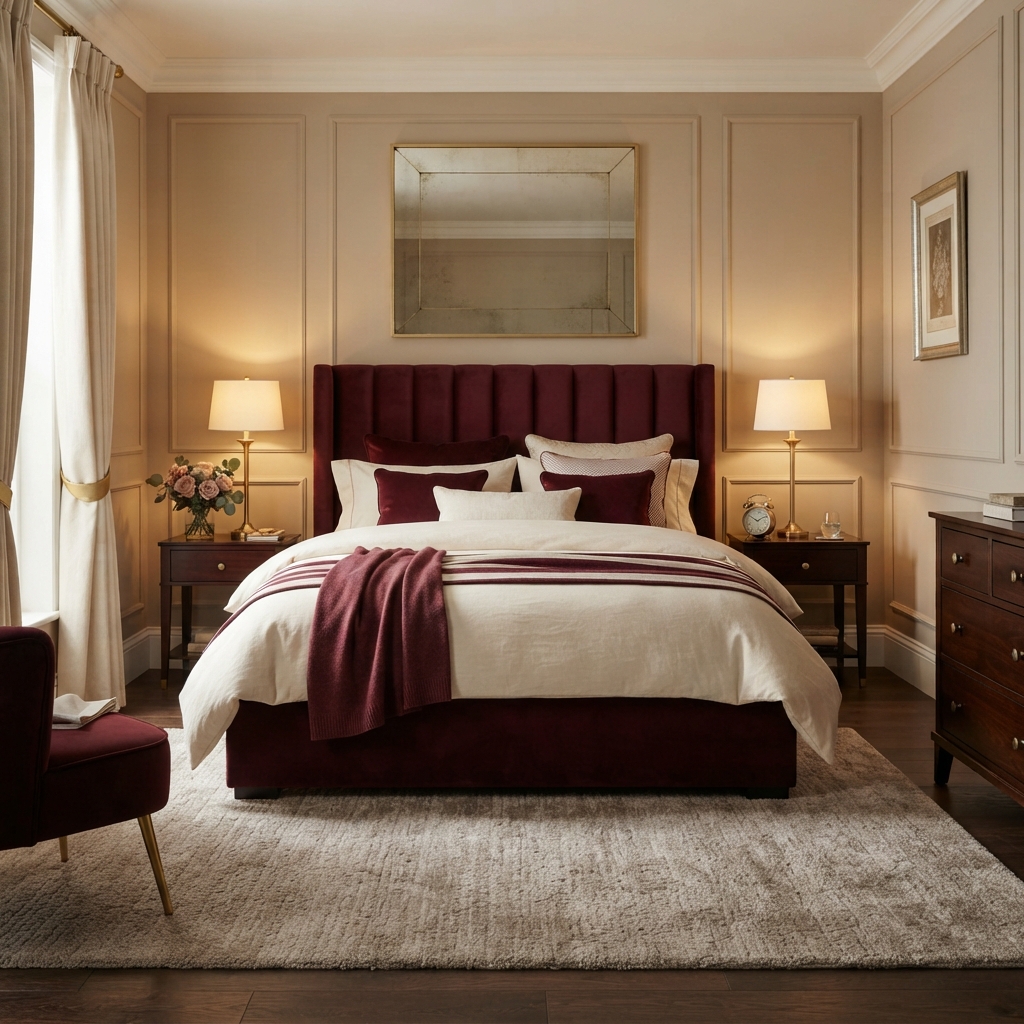
Burgundy and gold create a rich combination that suits elegant and traditional bedrooms. Burgundy supplies depth while gold adds warmth and a subtle decorative glow.
Use gold carefully rather than covering the room with metallic finishes. Brass bedside lamps, picture frames, drawer hardware, or a small mirror can be enough.
Cream or warm white bedding helps balance the darker burgundy tones.
Dark wood furniture can complete the palette, while soft lighting keeps the room comfortable rather than overly formal.
13. Red Throw Pillows and Blankets

You can create a red bedroom without changing any major furniture or wall color. A collection of red throw pillows and a coordinated blanket can provide enough color to change the entire look.
Mix several shades rather than choosing identical pieces. For example, combine burgundy, muted crimson, brick red, and a small amount of warm pink.
Different textures also make the arrangement more interesting. Try velvet, cotton, knitted fabric, linen, or woven materials.
This approach is ideal if you like to refresh your bedroom seasonally.
14. Cherry Red Nightstands
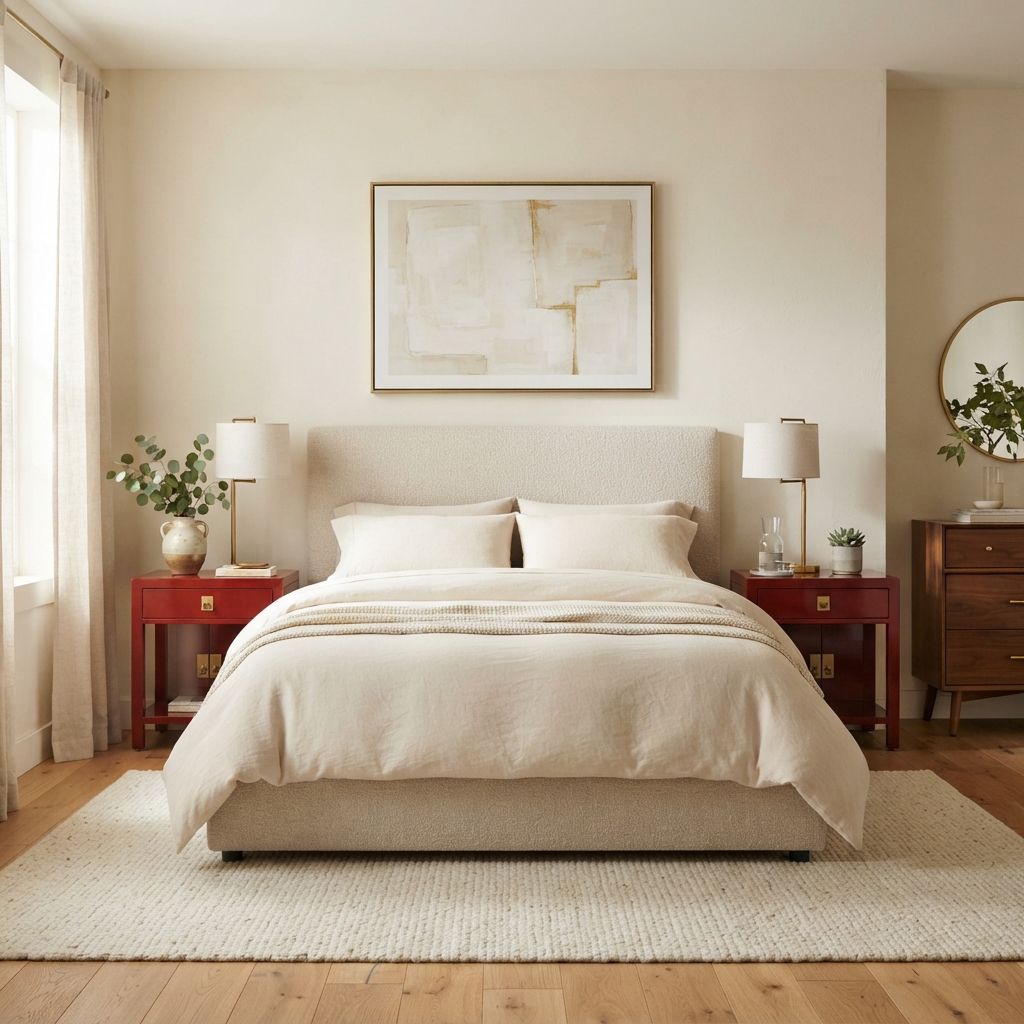
A cherry red nightstand can act as a small but noticeable focal point beside the bed. It works particularly well when the rest of the bedroom uses neutral furniture.
Choose a clean-lined nightstand for a modern bedroom or a painted vintage-style piece for a more traditional space.
Keep the surface relatively uncluttered. A simple lamp, small vase, and one decorative object are usually enough.
If you use two matching red nightstands, keep the bedding and walls more restrained so the furniture does not dominate the room.
15. Red and Natural Wood

Natural wood is an excellent partner for red because its warm undertones can soften strong color. Instead of combining red with lots of black or metallic finishes, use oak, walnut, or medium-toned wood furniture.
A red upholstered bed paired with wooden nightstands creates a comfortable balance between bold and natural.
Woven baskets, linen bedding, jute rugs, and wooden accessories can add additional texture.
This combination is particularly suitable for rustic, farmhouse, transitional, and relaxed modern bedrooms.
16. Red and Soft Pink

Red does not always have to look dramatic. Combining it with soft pink can create a warmer and more romantic bedroom palette.
Use deep red as the stronger color and reserve pale pink for smaller elements such as cushions, artwork, bedding details, or a chair.
Cream and beige can provide a neutral bridge between the two shades.
Avoid using too many equally strong colors. One dominant red, one soft pink, and a neutral background are usually enough.
17. Red Painted Ceiling

For something more unexpected, consider bringing red onto the ceiling instead of the walls. A muted burgundy or terracotta ceiling can make the bedroom feel cozy and distinctive.
This technique works best when the walls remain light and the furniture is relatively simple.
A warm white wall color can soften the contrast. Add small red details around the room so the ceiling does not feel disconnected.
This idea is particularly effective in bedrooms with architectural details, high ceilings, or attractive crown molding.
18. Red and Cream Bedroom
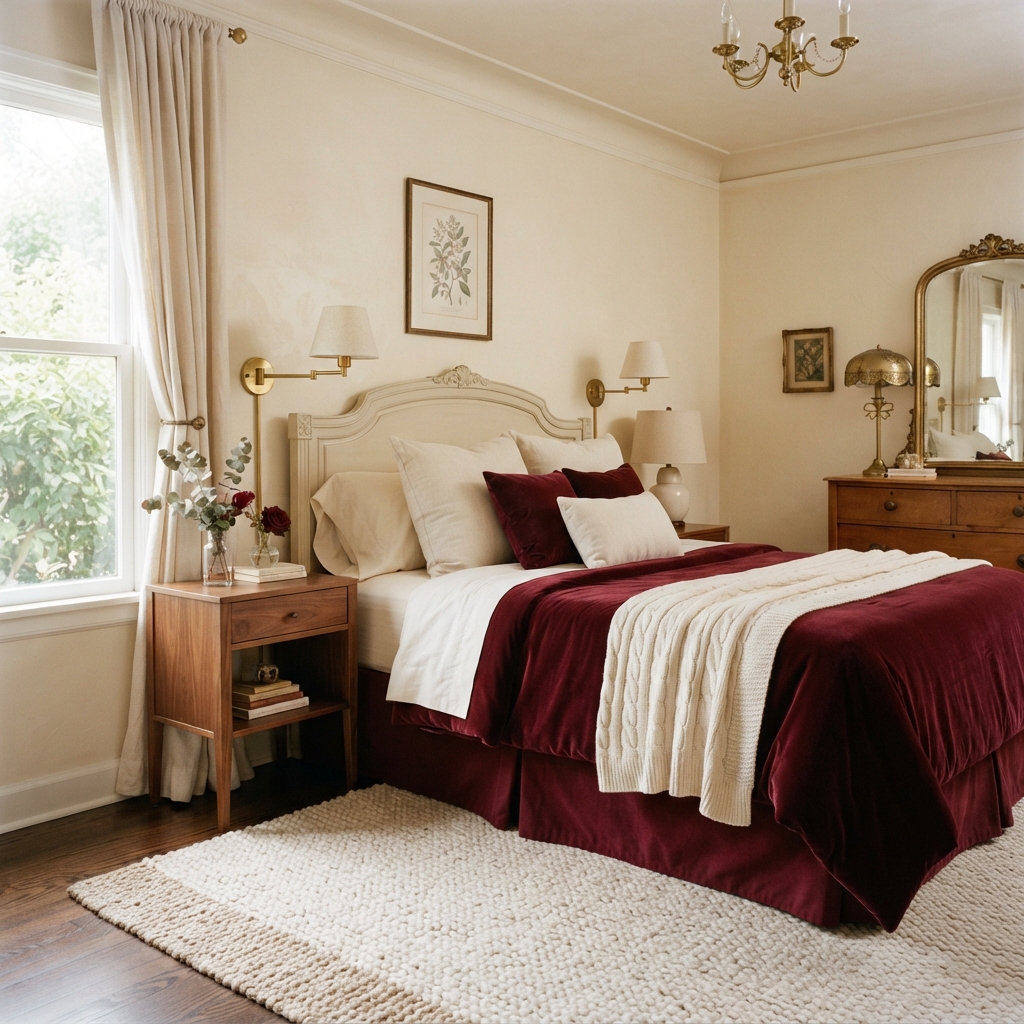
Cream is one of the easiest colors to combine with red. Unlike bright white, cream has warmer undertones that can make strong red shades feel softer.
Try cream walls with a burgundy bedspread, red artwork, and warm wooden furniture.
You can also reverse the palette by using red walls with cream bedding and curtains.
Add natural textures such as linen, wool, rattan, or wood to make the room feel layered and comfortable.
19. Red Gallery Wall

A gallery wall can introduce red without requiring large blocks of paint or red furniture. Choose artwork that includes different shades of red alongside neutral colors.
Black-and-white photography with occasional red artwork can create a sophisticated arrangement.
For a more traditional bedroom, use botanical prints, vintage illustrations, or framed textile art.
Keep the frames consistent or use a controlled combination of wood, black, and brass frames for a cohesive display.
Position the collection above the bed or on a large empty wall where it can become a visual focal point.
20. Red Upholstered Bench at the Foot of the Bed
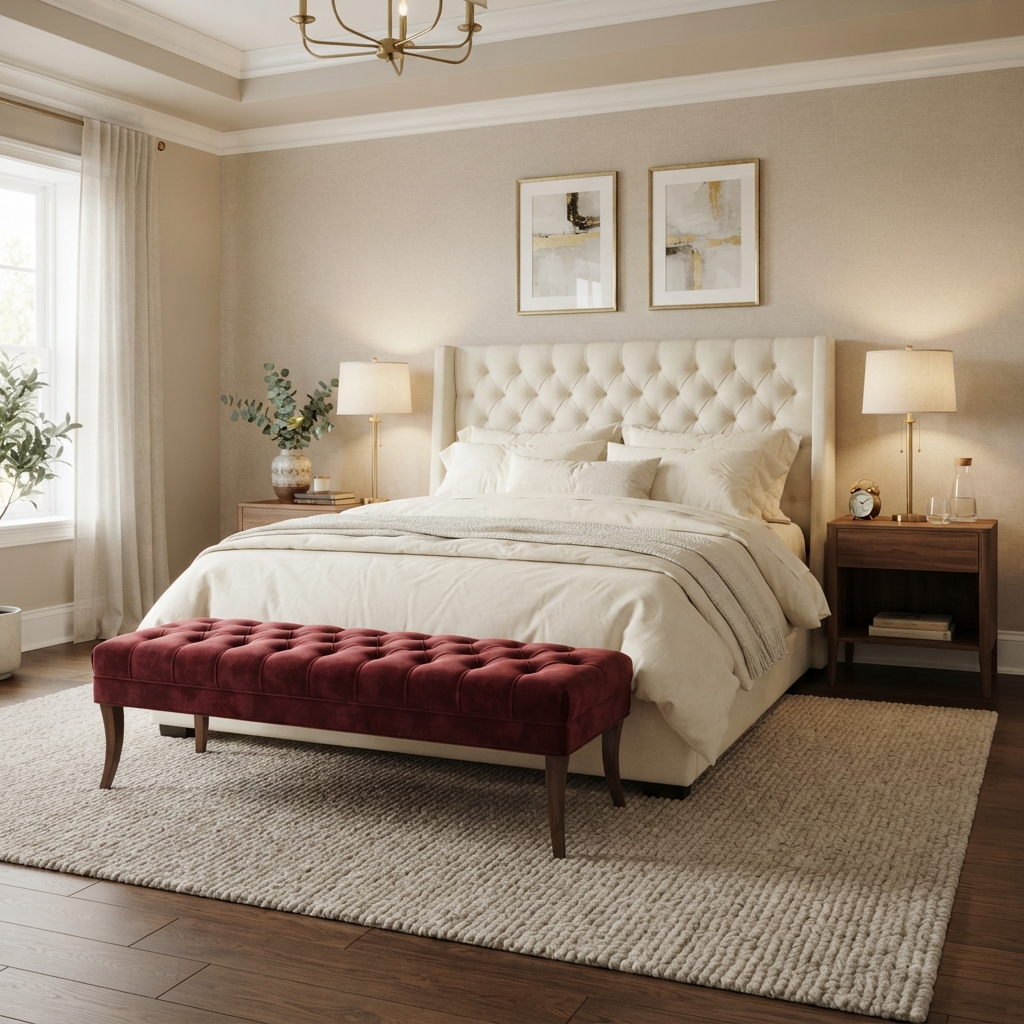
A red upholstered bench adds both color and function to a bedroom. Place it at the foot of the bed to create a finished furniture arrangement.
A long velvet bench in burgundy or crimson can look especially elegant with a neutral bed.
For a modern room, choose a simple rectangular silhouette. For a traditional bedroom, consider turned legs or subtle tufting.
The bench can also provide a convenient place to sit while getting dressed or to temporarily place blankets and pillows.
21. Burgundy Area Rug

A burgundy area rug can ground a bedroom while adding a rich layer of color underfoot. It is particularly useful when the walls and furniture are neutral.
Place the rug partially underneath the bed so that it extends beyond both sides.
Patterned rugs can add more visual interest, while a solid burgundy rug creates a cleaner appearance.
If your bedroom already has several red elements, select a rug with red as one of several colors rather than adding another solid red surface.
22. Red Pendant Light
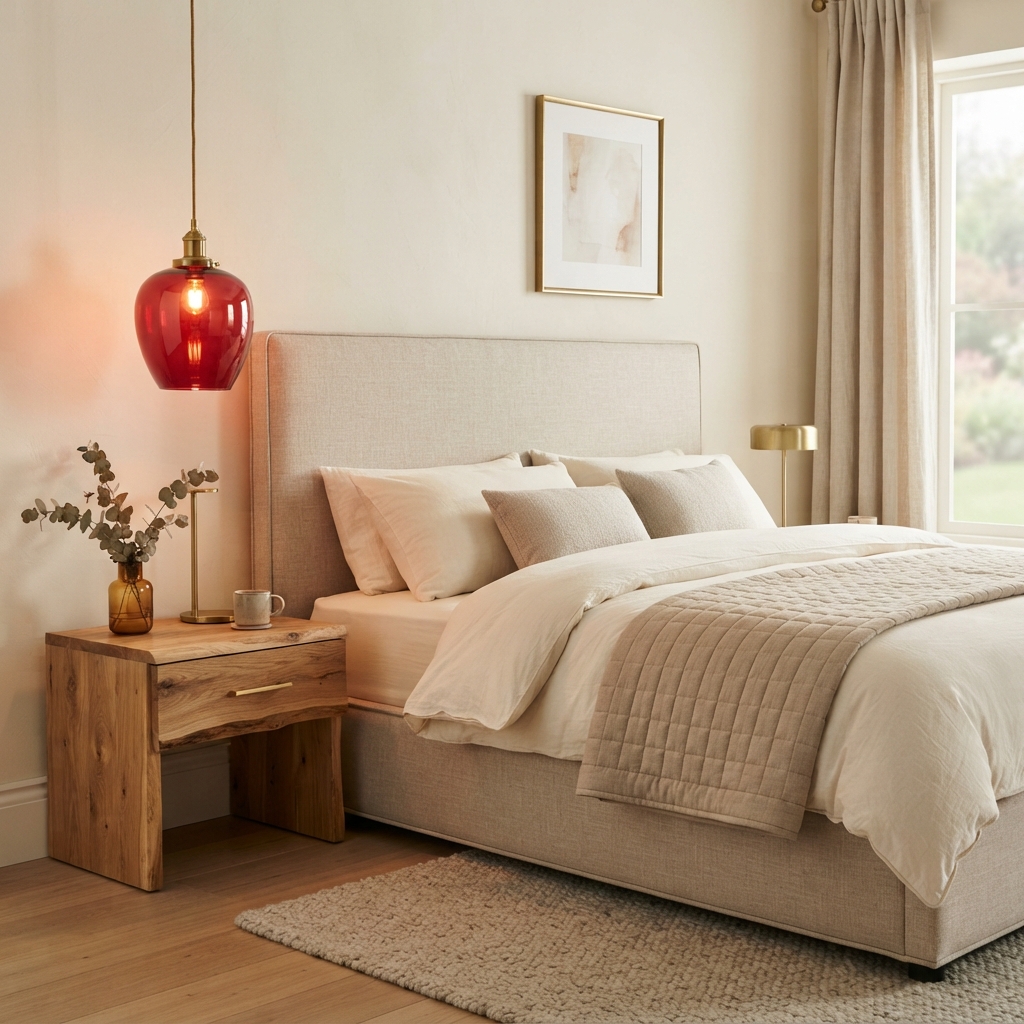
Lighting is another way to bring red into the bedroom. A red glass pendant or red-shaded hanging fixture can become an eye-catching detail above a bedside table or seating area.
Choose a fixture with a refined shape so it feels like part of the design rather than a random splash of color.
Warm bulbs can complement burgundy, brick, and terracotta shades beautifully.
If you use a strong red light fixture, keep the surrounding accessories simpler to maintain visual balance.
23. Red Accent Niche or Alcove

A small architectural feature can become an excellent place for red. If your bedroom has a recessed niche, built-in shelving, or alcove, paint that area in a rich red tone.
This creates visual depth without requiring an entire wall to be painted.
Style the niche with neutral books, ceramics, artwork, or small decorative objects.
For a cohesive look, repeat the same red in one or two smaller accessories elsewhere in the room.
24. Modern Red and Black Bedroom
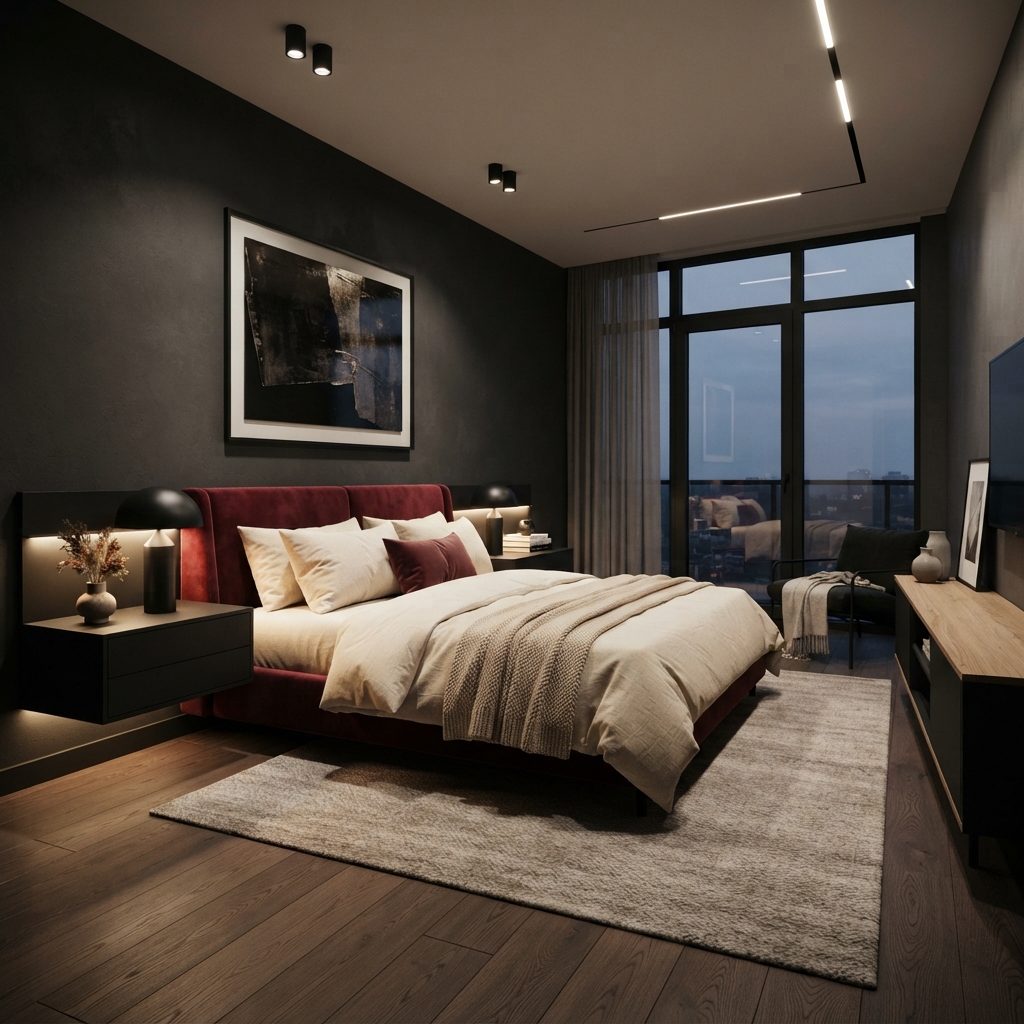
Red and black create a bold contemporary bedroom when used carefully. The combination works particularly well with clean furniture, simple shapes, and controlled decoration.
Instead of making both colors equally dominant, choose one as the main color and use the other for accents.
For example, use a charcoal-black bed frame with burgundy bedding, or a red upholstered bed against a soft black accent wall.
Add warm neutral elements such as cream bedding or natural wood to prevent the room from feeling too harsh.
25. Layered Red Bedroom With Multiple Shades

Using several shades of red can make a bedroom feel much richer than relying on one exact color. Burgundy, crimson, terracotta, ruby, brick, and muted rose can work together when they are balanced by neutrals.
Start with one dominant red shade. Then introduce two or three supporting tones through bedding, curtains, artwork, pillows, or furniture.
Keep the walls, floor, or larger furniture pieces relatively calm if the room contains several red shades.
The result is a layered bedroom where the colors feel connected without looking overly matched.
How to Choose the Right Red for Your Bedroom
Not every red creates the same mood. The shade you choose should work with your room’s natural light, furniture, and overall decorating style.
For a Dark and Moody Bedroom
Choose burgundy, oxblood, merlot, or deep cranberry. These shades create depth and work well with warm lighting, dark wood, brass, and cream.
For a Warm and Relaxed Bedroom
Terracotta, brick red, and muted clay shades are easier to live with than very bright reds. Combine them with natural wood, linen, beige, and woven materials.
For a Bright Modern Bedroom
Cherry, scarlet, or clean crimson can work when used as an accent. Pair strong red with white, light gray, or simple black furniture.
For a Romantic Bedroom
Burgundy, ruby, wine, and soft red shades can create a more intimate atmosphere. Velvet, soft lighting, and warm neutrals can make the combination feel comfortable rather than overly dramatic.
How to Balance Red in a Bedroom
Red is visually strong, so balance is important.
A useful approach is to let neutral colors occupy most of the room while red appears in selected focal areas. Cream walls, neutral bedding, natural wood, and soft gray furniture can all give strong red accents room to breathe.
Texture is another important part of the balance. If you have a large red surface, introduce softer materials nearby rather than adding more bright color.
Lighting also changes how red looks. A shade that appears sophisticated during the day can become much darker under warm evening lighting, so test paint samples in both natural and artificial light before committing.
Best Colors to Pair With Red
Red can work with many colors when the shades are chosen carefully.
| Color | Effect With Red |
|---|---|
| Cream | Warm and comfortable |
| White | Crisp and fresh |
| Beige | Soft and balanced |
| Gray | Modern and sophisticated |
| Black | Dramatic and contemporary |
| Natural Wood | Warm and organic |
| Gold | Elegant and luxurious |
| Soft Pink | Romantic and gentle |
| Olive Green | Earthy and refined |
| Terracotta | Warm and relaxed |
How to Make a Red Bedroom Feel Relaxing
A bedroom should still feel comfortable at the end of the day, even when the design uses a strong color.
Use softer red shades on large surfaces and reserve brighter reds for smaller accessories. Layer neutral bedding with comfortable fabrics, add warm bedside lighting, and avoid filling every available surface with decoration.
Natural materials can also help. Wood, linen, cotton, wool, rattan, and woven textures give the room a more relaxed character.
If a full red wall feels too intense, start with a red headboard, rug, curtains, or artwork. You can always add more color later.
Final Thoughts
Red can create one of the most memorable bedroom color schemes when it is used with intention. You can make the room dramatic with a deep burgundy wall, elegant with a velvet headboard, relaxed with terracotta, or modern with carefully selected red accents.
The most successful red bedrooms are not necessarily the ones with the most red. They are the ones where color, texture, lighting, furniture, and neutral tones work together.
Start with one feature you genuinely like, such as red bedding, a painted accent wall, a velvet chair, or a rug. Then build the rest of the room around that feature. This makes it much easier to create a bedroom that feels cohesive, comfortable, and personal.


