
20 Maximalist Bedroom Ideas for a Bold, Stylish Space

A bedroom should feel like more than a place to sleep. It should reflect your personality, favorite colors, treasured objects, and the little details that make you feel at home. If plain walls, matching furniture, and neutral bedding feel too predictable, maximalist bedroom design offers a completely different approach.
Maximalism is not simply about filling a room with as many things as possible. The best maximalist bedrooms combine color, pattern, texture, artwork, lighting, and personal collections in a way that feels intentional. The result can be dramatic and luxurious while still remaining comfortable enough for everyday life.
From expressive wallpaper and layered bedding to vintage furniture, colorful curtains, statement lighting, and collected artwork, there are plenty of ways to create a bedroom that feels full of character.
Here are 20 maximalist bedroom ideas to help you create a space that feels bold, personal, and beautifully layered.
1. Create a Bold Wallpaper Feature
Wallpaper is one of the easiest ways to establish a maximalist mood because it can introduce color, pattern, and personality across a large surface.
A dramatic floral, botanical, geometric, or vintage-inspired pattern can completely change the feeling of a bedroom. If covering every wall feels too intense, start with the wall behind the bed.
For a sophisticated result, choose bedding and furniture that repeat one or two colors from the wallpaper. This creates a connection between the different elements without making everything look perfectly matched.
Dark floral wallpaper works especially well with brass lighting, velvet upholstery, warm wood, and antique-style accessories.
2. Layer Rugs for Richer Texture
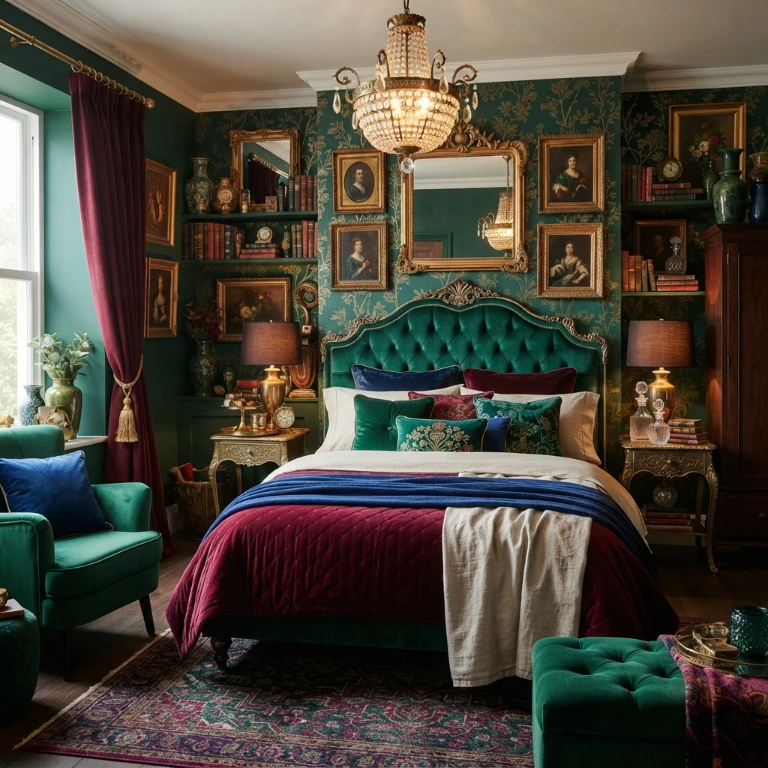
Maximalist bedrooms benefit from multiple layers of texture, and rugs are an excellent place to experiment.
Instead of using one large rug by itself, try placing a smaller patterned rug over a larger neutral or natural-fiber rug. A vintage-style rug layered over jute, wool, or sisal can create a collected and comfortable appearance.
The important thing is to vary the patterns and textures rather than choosing two rugs that compete for attention.
Keep one rug visually quieter while allowing the other to provide the stronger pattern.
This approach is particularly useful in large bedrooms where a single rug can look disconnected from the furniture arrangement.
3. Mix Patterns Across the Bedding
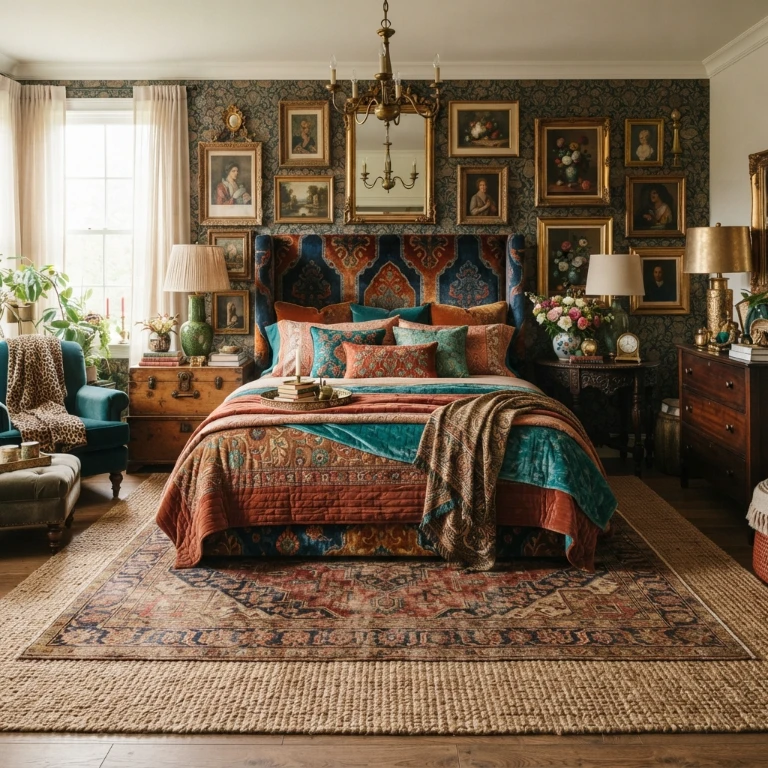
Your bed is usually the largest piece in the bedroom, making it one of the best places to introduce maximalist style.
Rather than purchasing a completely matching bedding set, combine different patterns that share a similar color family.
For example, pair floral bedding with striped sheets, patterned pillows, and a solid velvet throw. The patterns do not need to match exactly. They simply need to work together visually.
A useful trick is to combine different pattern scales. Use one large-scale print, one medium pattern, and a smaller design to create variety without making the bed look chaotic.
4. Build a Personal Gallery Wall
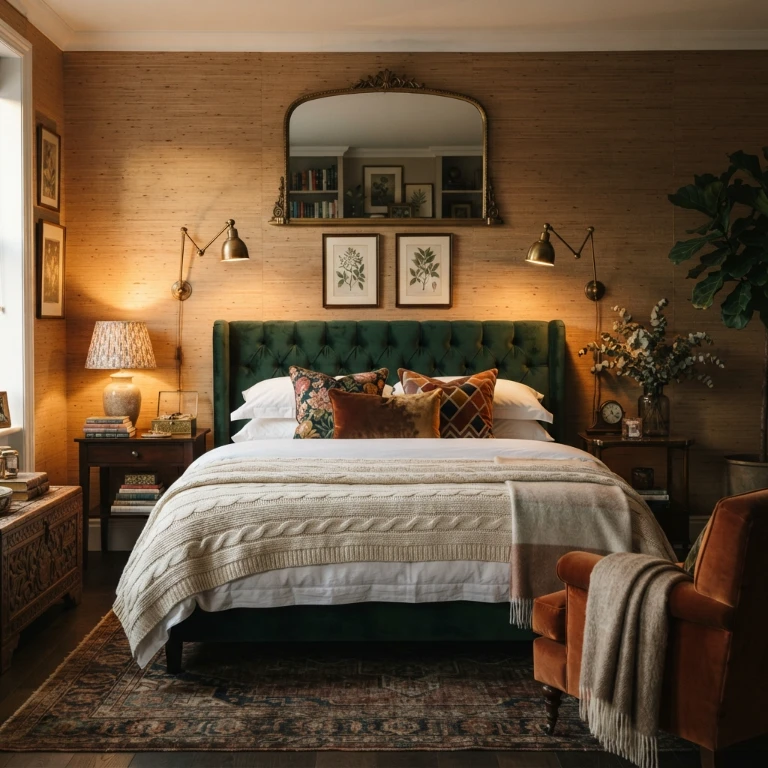
A gallery wall can turn an empty bedroom wall into a visual collection of memories, artwork, and personality.
Mix different frame sizes, artwork styles, photographs, botanical prints, vintage illustrations, and decorative objects. You can even include small mirrors or textile pieces to make the arrangement more dimensional.
For a cohesive appearance, repeat a few colors throughout the collection.
The arrangement does not have to be perfectly symmetrical. A slightly collected appearance often works better with maximalist interiors because it makes the room feel developed over time.
Before hanging anything, arrange the pieces on the floor and experiment with different layouts.
5. Use Rich Jewel-Tone Colors
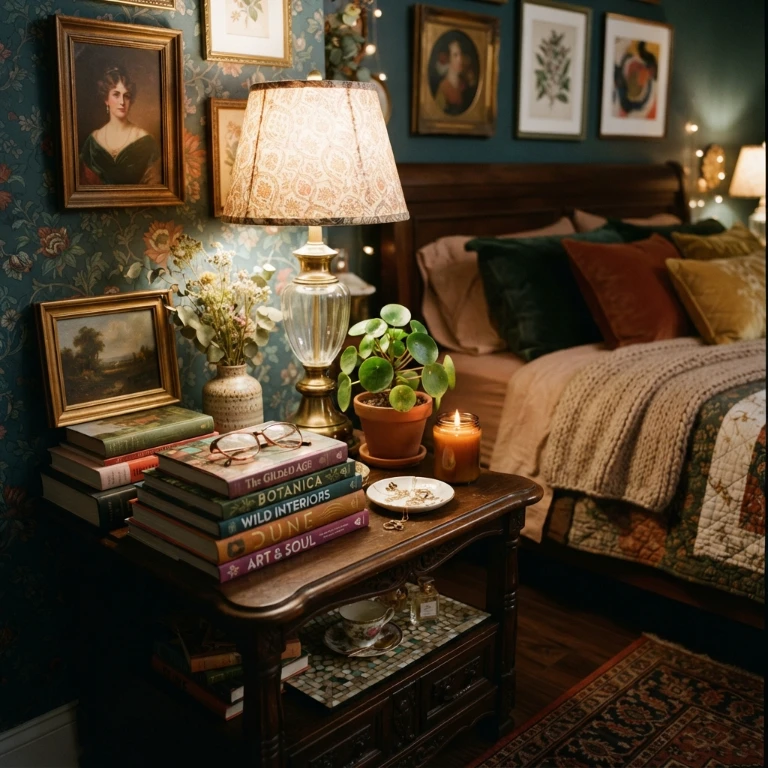
Maximalist design gives you permission to move beyond beige, white, and soft gray.
Deep emerald green, sapphire blue, ruby red, plum, aubergine, teal, and rich mustard can all create a luxurious bedroom atmosphere.
You do not have to use every color at once. Start with one dominant jewel tone and introduce supporting shades through pillows, curtains, artwork, rugs, and accessories.
For example, an emerald green wall can work beautifully with warm brass, cream bedding, walnut furniture, and touches of burgundy.
The key is repetition. When a color appears in several areas of the room, the overall scheme feels intentional.
6. Install a Statement Light Fixture
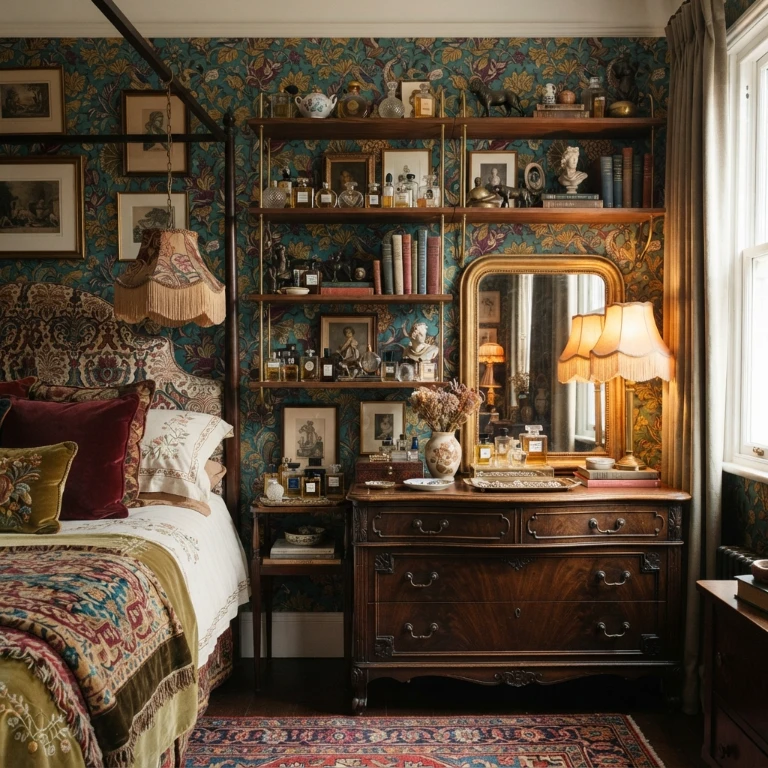
Lighting can become artwork in a maximalist bedroom.
Instead of treating the ceiling fixture as an afterthought, choose something with personality. A sculptural chandelier, oversized pendant, vintage-inspired fixture, or decorative brass light can become a focal point.
Layer the lighting with bedside lamps, wall sconces, floor lamps, or accent lighting.
Warm lighting is particularly effective because it softens bold colors and rich materials.
If the bedroom contains several dramatic elements, choose a light fixture that complements the existing palette rather than introducing an unrelated color.
7. Bring in Vintage and Thrifted Furniture
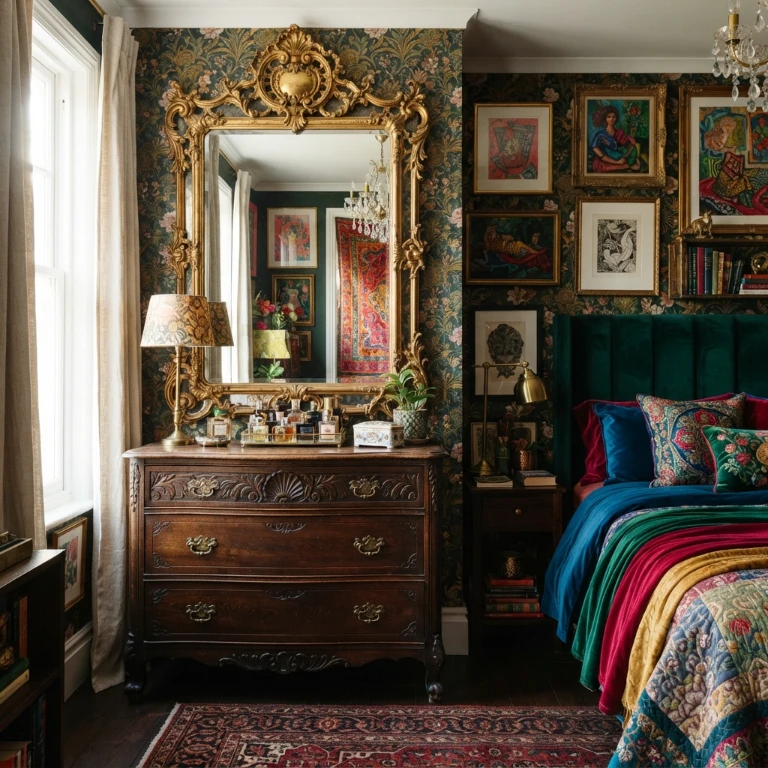
Maximalist bedrooms look more interesting when everything does not appear to have been purchased from the same furniture collection.
Add vintage or secondhand pieces such as an antique nightstand, carved dresser, old wooden chair, vintage mirror, or small cabinet.
These pieces provide character and make the bedroom feel collected rather than staged.
You can also combine older furniture with modern pieces. For example, an antique nightstand can sit beside a contemporary upholstered bed, while a modern lamp can be placed on top.
Small imperfections are often part of the charm.
8. Mix Several Patterns Carefully
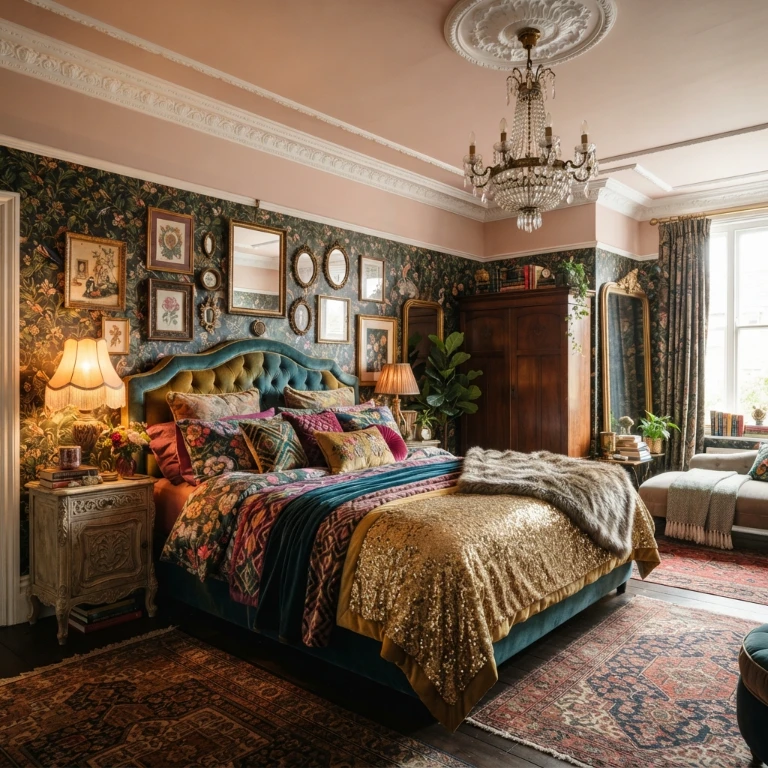
Pattern mixing is one of the defining features of maximalist interiors.
Florals, stripes, checks, geometric prints, animal-inspired patterns, paisleys, and abstract designs can coexist when they have some visual connection.
Start by choosing a main pattern. Then select secondary patterns that share at least one color with it.
Another useful strategy is to vary pattern scale. A large floral print can be balanced with a small geometric pattern and a simple stripe.
Avoid giving every surface an equally strong pattern. Some solid areas are necessary to give the eye a place to rest.
9. Add a Canopy or Dramatic Bed Frame

A canopy bed immediately adds architectural presence to a bedroom.
Traditional wooden canopy frames work beautifully with vintage and romantic maximalist interiors, while slim metal frames can create a more modern appearance.
For additional drama, hang lightweight fabric around the frame. You can use sheer curtains for a soft atmosphere or heavier fabric for a richer appearance.
The bed should remain the visual anchor of the room, so avoid surrounding it with too many equally large furniture pieces.
A dramatic bed paired with layered bedding, patterned wallpaper, and warm lighting can create a strong centerpiece without requiring a complete renovation.
10. Fill the Room With Greenery
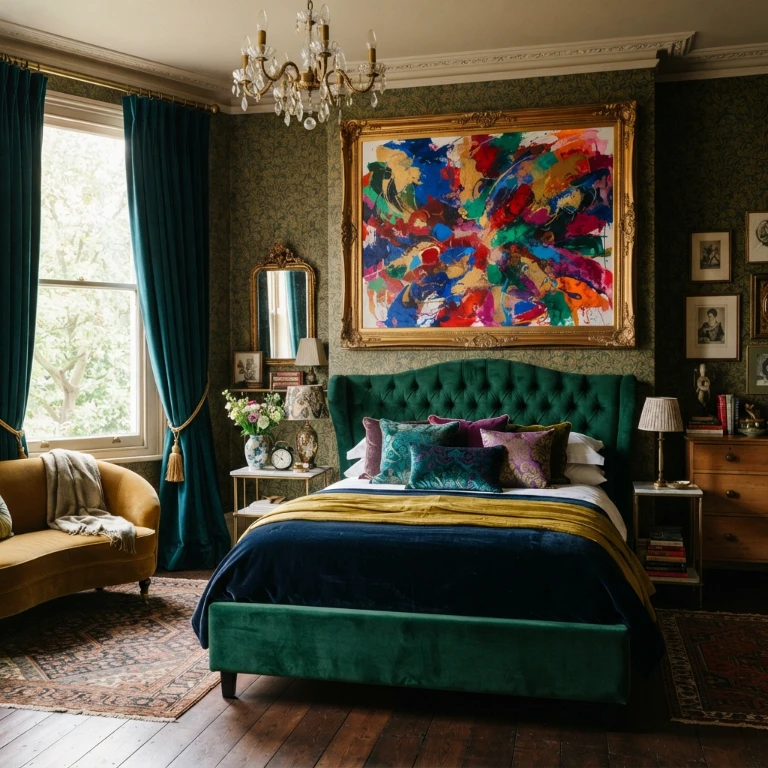
Plants add natural color and organic texture to a maximalist bedroom.
Large floor plants can fill empty corners, while smaller plants can be placed on shelves, dressers, and bedside tables.
Hanging plants are another option when floor space is limited.
Choose plants based on the actual lighting conditions in your room rather than selecting them only for appearance. Low-light varieties can work well in darker bedrooms, while sun-loving plants are better suited to bright windows.
If maintaining many plants is difficult, use a smaller number of healthy plants and combine them with botanical artwork or nature-inspired textiles.
11. Introduce Textured Wall Treatments
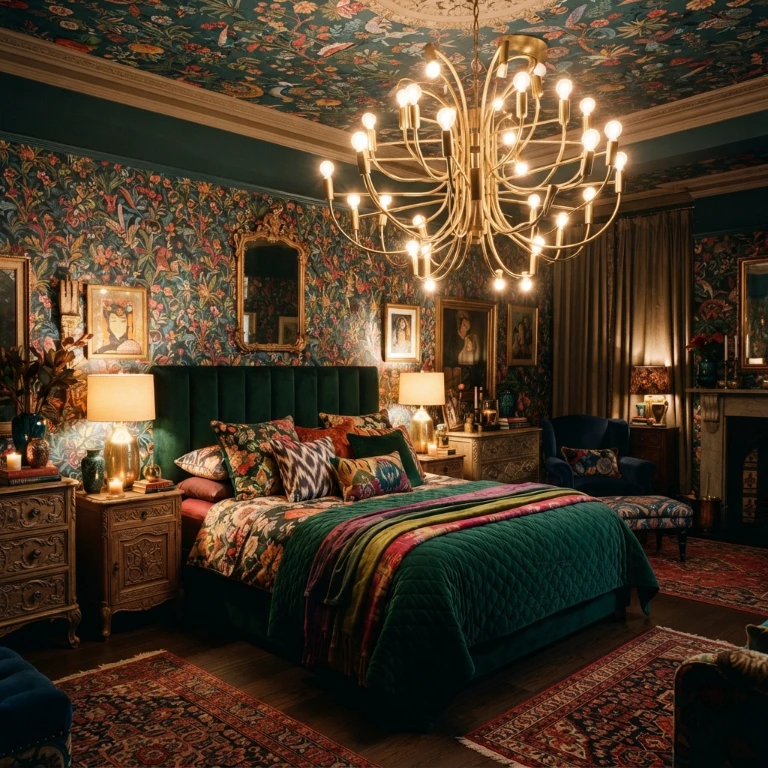
Walls do not have to be flat and plain.
Grasscloth-style wallpaper, decorative molding, fabric panels, limewash-inspired finishes, textured paint, and wood detailing can give the bedroom more visual depth.
A textured wall is especially effective behind the bed because it creates a natural focal point.
If you already have several strong colors in the room, consider using a subtle texture rather than another bold pattern.
For example, a warm neutral textured wall can balance jewel-toned bedding and colorful artwork.
12. Hang Oversized Artwork
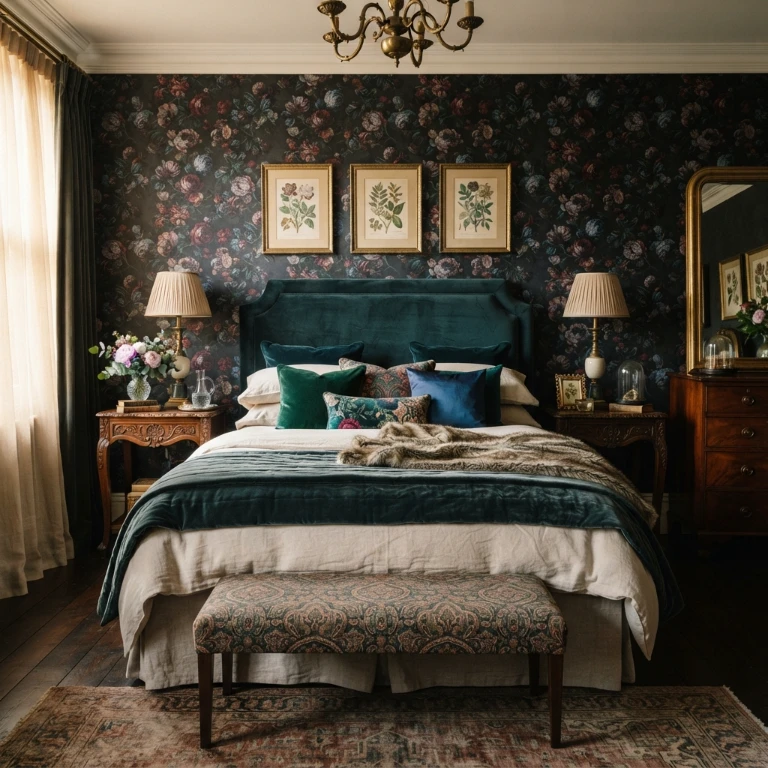
One large piece of artwork can make a stronger statement than many small decorative pieces.
An oversized abstract painting, colorful landscape, expressive portrait, or large botanical composition can become the main focal point above the bed or dresser.
Choose artwork that contains colors already present in the bedroom.
The frame matters too. A gold frame can emphasize a glamorous scheme, while dark wood can create a more traditional atmosphere.
If the artwork is especially colorful, keep some surrounding surfaces simpler so it has enough visual space.
13. Style the Nightstand With Personality
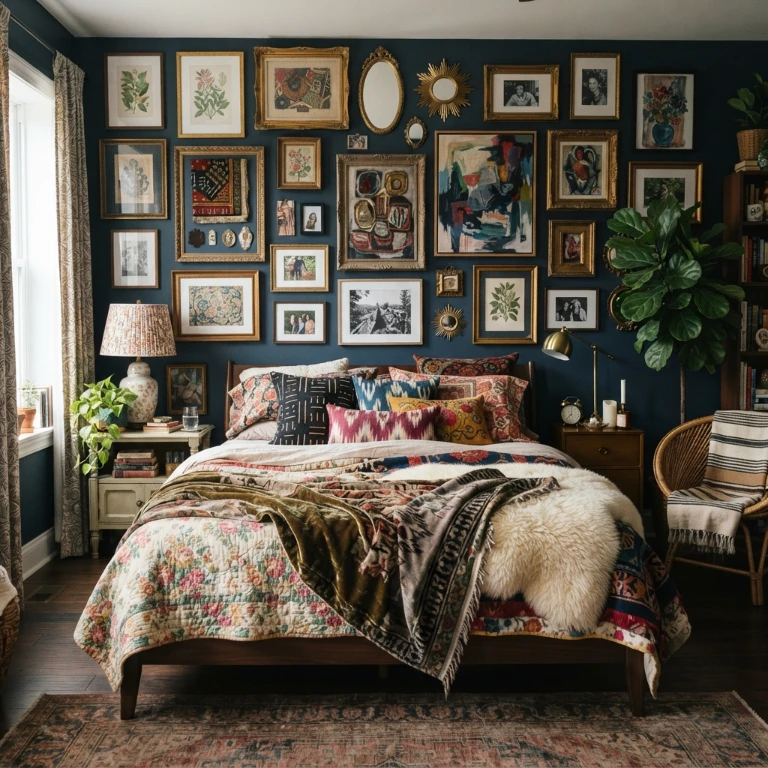
Maximalism also lives in the small details.
Instead of leaving your nightstand with only a lamp and phone charger, create a thoughtful arrangement using books, a decorative tray, a small vase, framed artwork, a candle, or a meaningful object.
The goal is not to cover every available surface. Choose objects that have different heights and textures.
A tall lamp can provide vertical balance, while books and smaller decorative objects create lower layers.
Keep frequently used items accessible so the arrangement remains practical.
14. Give the Ceiling a Decorative Role

The ceiling is often ignored, but it can become an important part of a maximalist bedroom.
Painting the ceiling in a contrasting shade can make the room feel more enveloping. Soft blush, deep blue, muted green, warm terracotta, or even a dramatic dark color can work depending on the room’s natural light.
You can also add decorative molding, ceiling medallions, wallpaper, or architectural trim.
If your walls already have a strong pattern, choose a simpler ceiling treatment. The goal is to make the fifth wall feel intentional without creating visual overload.
15. Choose Furniture That Looks Beautiful and Works Hard
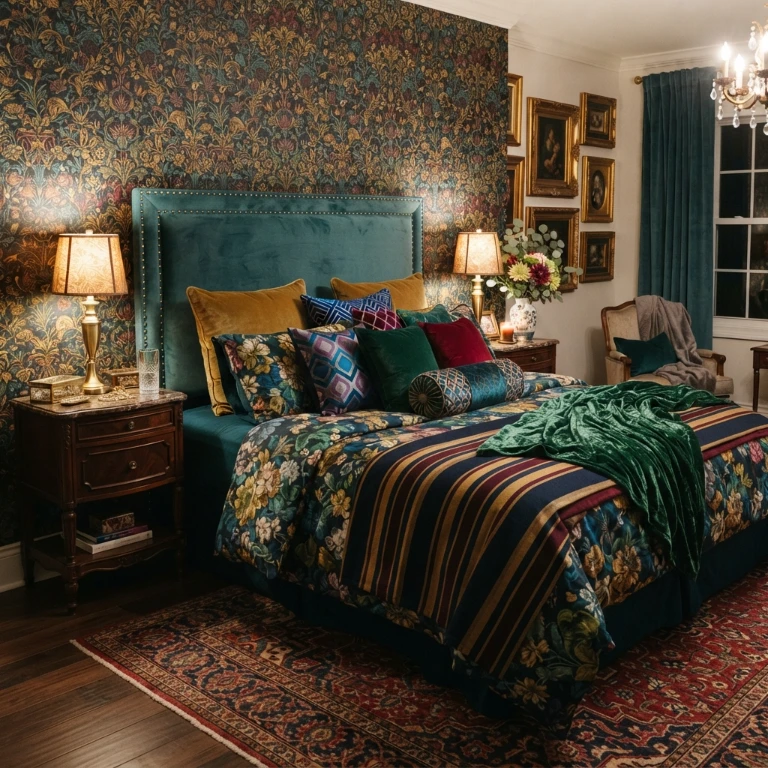
Maximalist bedrooms can contain more furniture than minimalist spaces, but every piece should still serve a purpose.
An upholstered storage bench at the end of the bed can provide seating and hidden storage. A vintage trunk can work as both storage and a decorative accent. A small writing desk can double as a vanity or workspace.
Choose furniture with interesting shapes, materials, or finishes.
Velvet upholstery, carved wood, painted furniture, brass details, and unusual silhouettes can all add character.
Just remember to maintain enough walking space around the major furniture pieces.
16. Make the Headboard a Major Focal Point
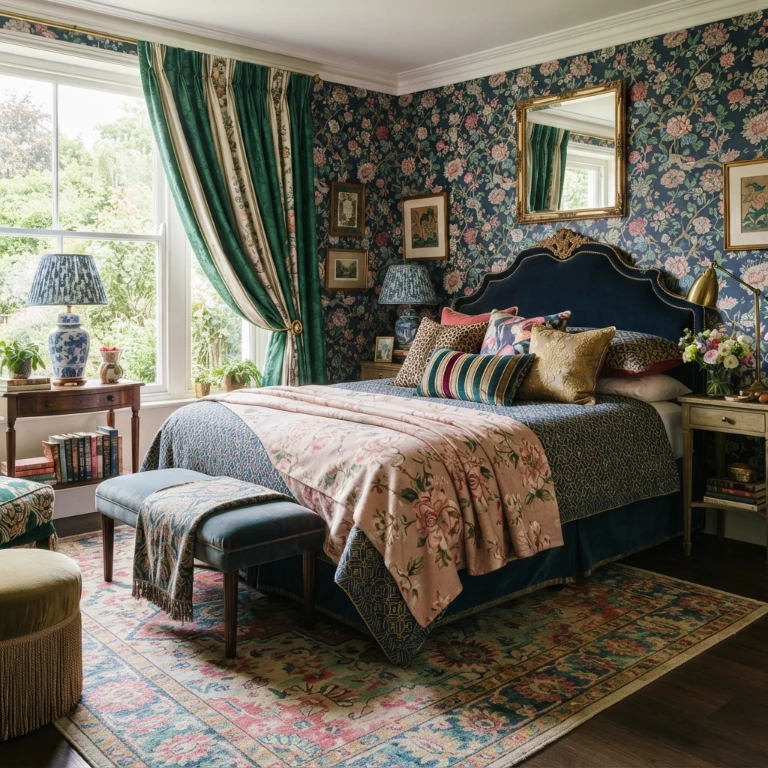
A dramatic headboard can transform an ordinary bed into the centerpiece of the bedroom.
Consider a tall upholstered headboard in velvet, patterned fabric, or a rich jewel tone. Curved silhouettes can create a softer appearance, while a tall rectangular headboard can make the room feel more architectural.
For additional detail, look for tufting, channel stitching, decorative trim, or contrasting piping.
If the headboard is already bold, keep the bedding slightly quieter so the two elements do not compete.
17. Frame the Windows With Dramatic Curtains
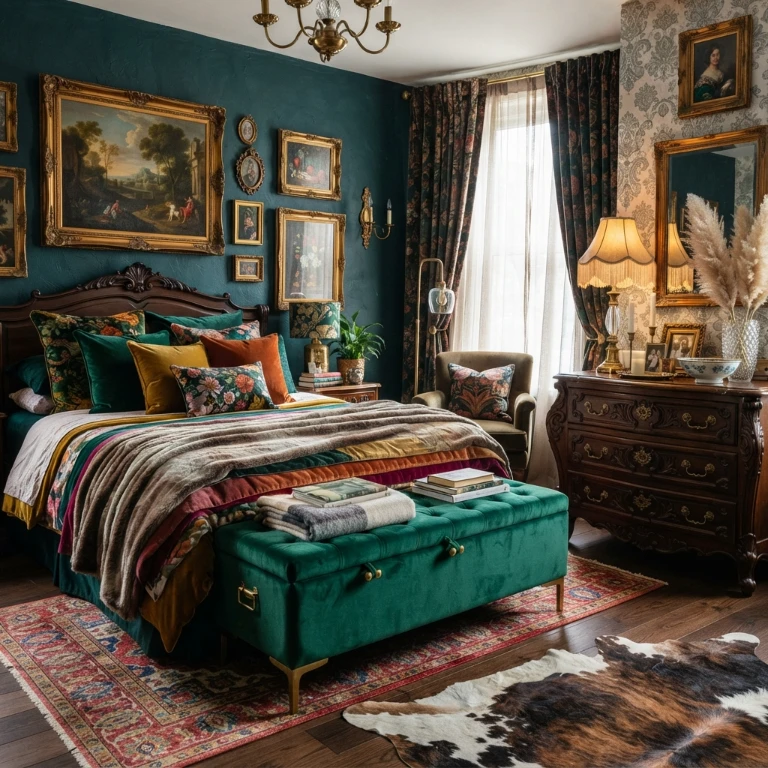
Window treatments can dramatically change the atmosphere of a maximalist bedroom.
Floor-to-ceiling curtains in velvet, linen, patterned fabric, or another substantial material can make windows feel taller and more luxurious.
Hang the curtain rod higher and wider than the window frame when possible. This helps the window treatment feel more substantial and allows the curtains to frame the entire area.
Deep navy, forest green, burgundy, plum, and warm neutrals can all work beautifully.
For bedrooms where darkness matters, combine decorative curtains with effective light-blocking shades or liners.
18. Try an Unexpected Color Combination
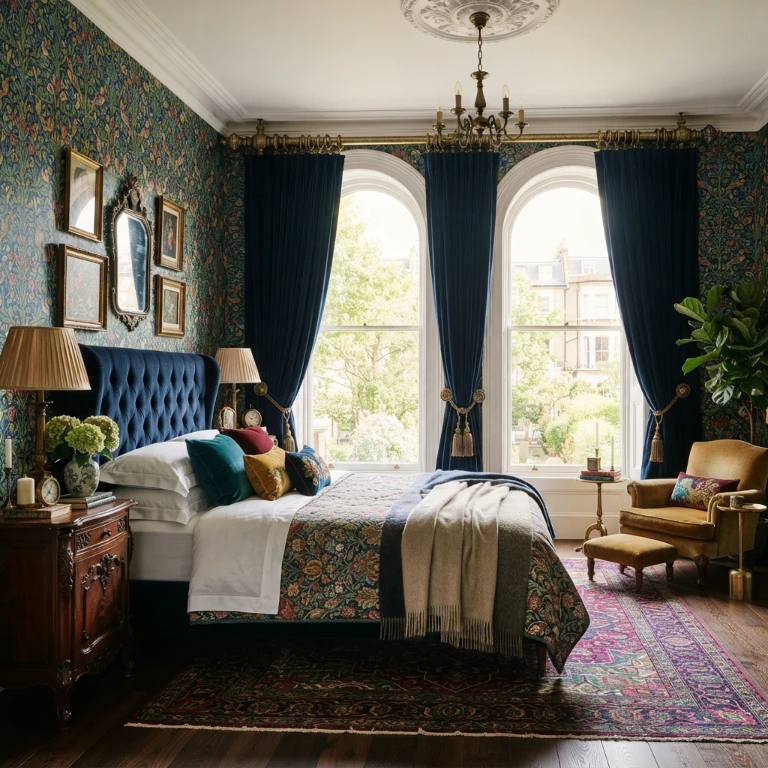
Maximalism is a great opportunity to experiment with combinations that feel unusual.
Emerald green and terracotta, navy and blush, burgundy and mustard, cobalt and warm pink, or plum and olive can create memorable interiors.
The easiest way to make an unexpected palette work is to repeat each major color several times.
For example, if you choose emerald and terracotta, use emerald in the wall or bedding and repeat it in artwork or accessories. Then introduce terracotta through pillows, a rug, or ceramics.
A few neutral elements can help connect the stronger colors.
19. Use Decorative Mirrors as Art
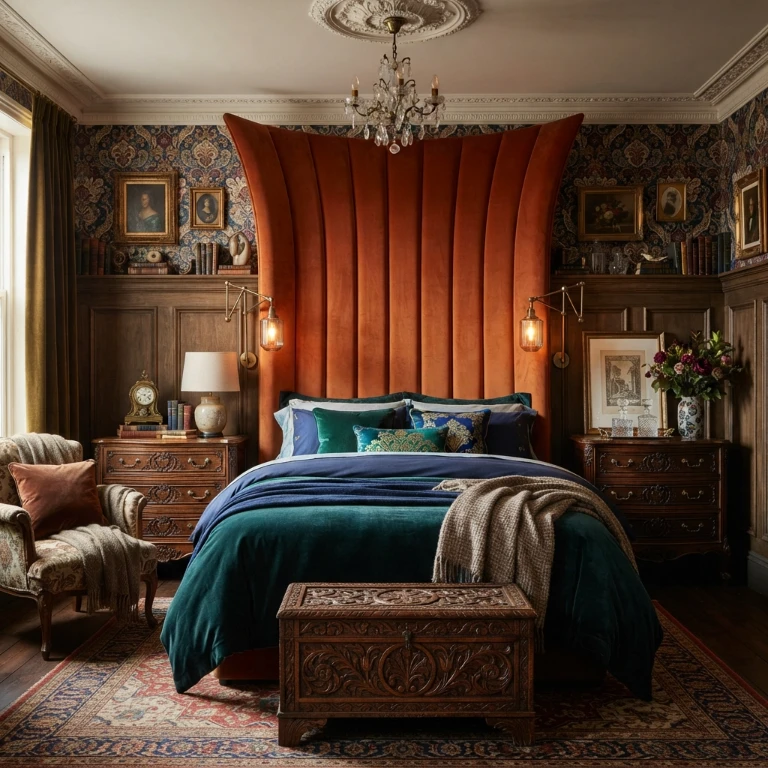
Mirrors can serve a practical purpose while also becoming decorative features.
An ornate gold mirror, vintage frame, sculptural round mirror, or unusual geometric design can add another layer of personality.
Place a mirror where it can reflect natural light or an attractive part of the room.
A large mirror opposite a window can help distribute daylight, while a decorative mirror above a dresser can create a traditional focal point.
For maximalist rooms, do not be afraid of detailed frames. A richly decorated mirror can work beautifully with vintage furniture and bold wallpaper.
20. Display Your Favorite Collections
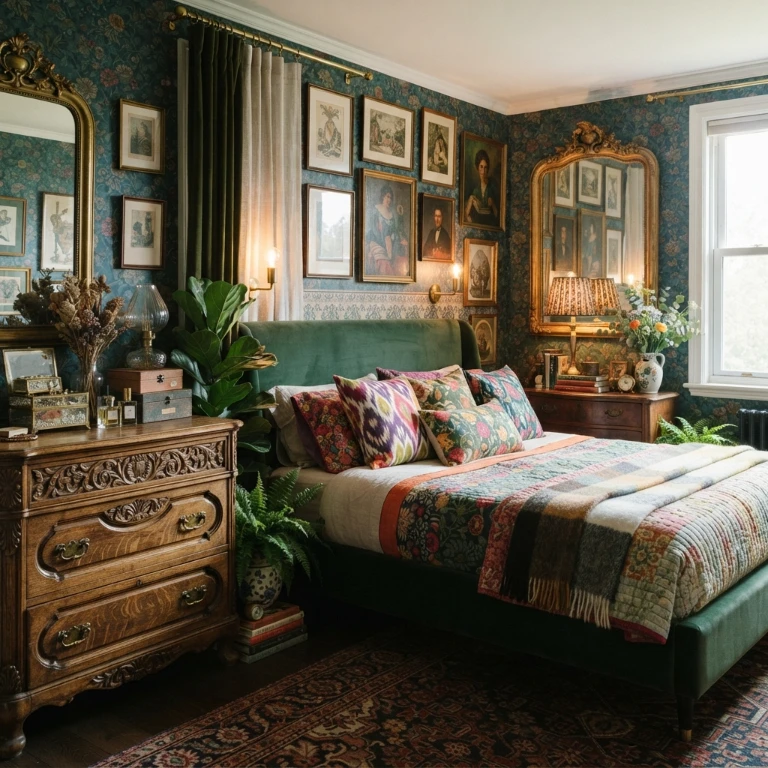
The most successful maximalist bedrooms usually feel personal because they contain objects that actually mean something to the person who lives there.
Display collections such as vintage perfume bottles, books, ceramics, framed photographs, travel souvenirs, artwork, small sculptures, or treasured finds.
Instead of spreading everything randomly around the room, group collections together.
A wall shelf, glass cabinet, dresser, or dedicated display area can keep the collection organized while making it part of the overall design.
The most important rule is simple: decorate with things you genuinely enjoy.
How to Make a Maximalist Bedroom Feel Stylish Instead of Cluttered
Maximalism can quickly become overwhelming if every element competes for attention. The difference between a beautiful maximalist bedroom and a cluttered room usually comes down to editing.
Start with a clear color story. You can use several colors, but repeating them creates visual connection.
Next, vary the scale. Large artwork, a substantial headboard, medium-sized furniture, and small accessories create a better hierarchy than objects of identical visual weight.
Texture is also important. Combine smooth surfaces with velvet, linen, wool, wood, metal, glass, or woven materials.
Most importantly, leave some breathing room. Maximalism does not mean that every wall, shelf, and corner needs to be filled.
Tips for Decorating a Maximalist Bedroom on a Budget
You do not need a large decorating budget to create an expressive bedroom.
Start with items you already own. Rearrange artwork, change the location of furniture, layer existing textiles, and group collections differently.
Thrift stores and secondhand markets can be excellent sources for unusual mirrors, lamps, artwork, tables, and decorative accessories.
You can also make a major difference with smaller changes:
- Replace plain bedding with layered textiles.
- Add colorful pillow covers instead of replacing the entire bed.
- Paint one wall in a dramatic shade.
- Use removable wallpaper for a feature wall.
- Replace basic lampshades with decorative versions.
- Add vintage-style hardware to an existing dresser.
- Frame inexpensive artwork in attractive frames.
- Layer a small patterned rug over an existing neutral rug.
- Add plants or botanical prints.
- Rearrange decorative objects into intentional groups.
How to Choose a Maximalist Color Palette
A successful maximalist color scheme usually starts with one dominant color and two or three supporting colors.
For example:
| Main Color | Supporting Colors | Overall Feel |
|---|---|---|
| Emerald Green | Cream, Brass, Burgundy | Rich and elegant |
| Navy Blue | Blush, Gold, Ivory | Dramatic and romantic |
| Terracotta | Olive, Beige, Rust | Warm and earthy |
| Plum | Dusty Pink, Cream, Walnut | Moody and sophisticated |
| Teal | Mustard, Brown, Off-White | Eclectic and energetic |
You can add smaller accent colors through artwork and accessories without giving every color equal visual importance.
Final Thoughts
A maximalist bedroom should feel expressive, comfortable, and personal rather than simply crowded. The strongest designs combine bold choices with thoughtful editing.
Start with one element you genuinely love, whether that is dramatic wallpaper, a colorful headboard, a vintage dresser, an oversized artwork, or a striking light fixture. Then gradually build the room around it.
Mix patterns, layer textures, experiment with color, and bring in pieces that have a story behind them. When every element has a reason for being there, maximalism becomes much more than “more is more.” It becomes a bedroom that feels unmistakably yours.


