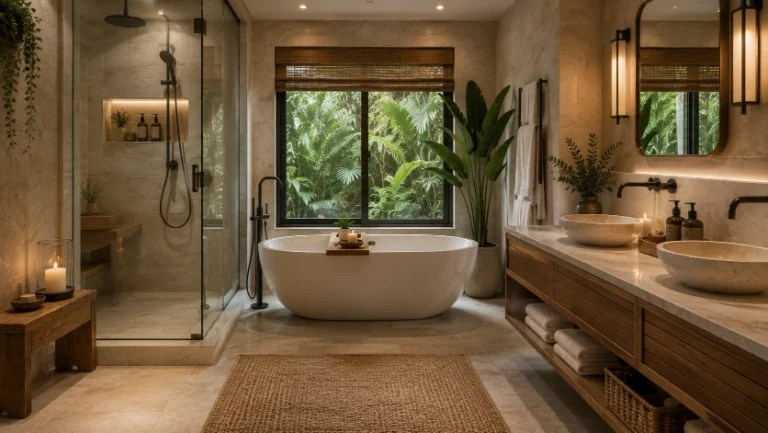
15 Spa Like Paint Colors for Bathrooms That Instantly Soothe Your Senses

A bathroom can feel like much more than a practical space. With the right paint color, lighting, and a few calming details, even a small bathroom can take on the peaceful atmosphere of a luxury spa. The best spa like paint colors for bathrooms usually have soft, muted undertones that make the room feel clean, warm, and relaxing without becoming visually overwhelming.
Cool greens, gentle blues, warm neutrals, soft grays, and subtle earthy shades are especially effective for creating this feeling. The key is choosing a color that works with your bathroom’s natural light, flooring, vanity, and fixtures.
Here are 15 soothing bathroom paint ideas to help create a peaceful retreat at home.
1. Sea Salt Serenity

A soft sea-inspired green-gray is one of the easiest ways to create a relaxing bathroom atmosphere. Its muted appearance brings a subtle connection to nature while keeping the space light and airy.
This type of color works especially well with white bathroom fixtures, light wood vanities, brushed nickel hardware, and natural stone surfaces. In a bathroom with plenty of daylight, the green undertone can become more noticeable, while warmer artificial lighting can make it appear softer and more neutral.
For a spa-inspired look, pair this shade with:
- White towels
- Natural wood accessories
- Woven baskets
- Simple greenery
- Soft white lighting
If your bathroom is small, a muted sea-green can add personality without making the walls feel heavy.
2. Cloud Bath in Pale Greige
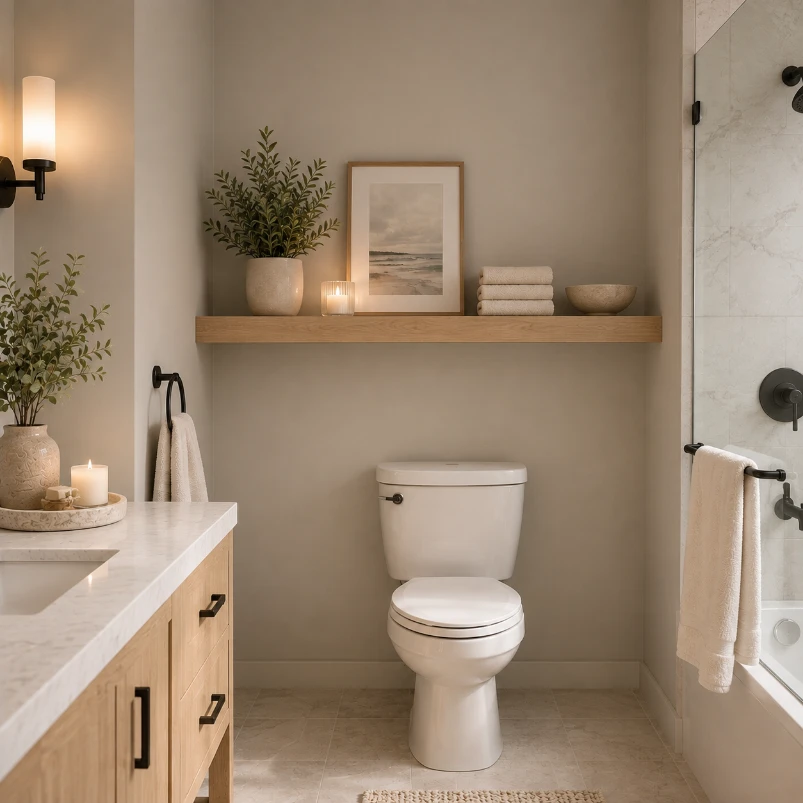
Pale greige combines the warmth of beige with the understated appearance of gray. It is an excellent option when you want a neutral bathroom that still feels comfortable and sophisticated.
Unlike stark white, greige can give the walls more depth. It also works with a wide range of materials, making it a practical choice for bathrooms where the flooring or countertop already has strong undertones.
Try combining pale greige walls with:
- Cream-colored towels
- Light oak cabinetry
- Matte black accents
- White marble
- Beige stone flooring
This combination creates a quiet, modern bathroom without relying on bold colors.
3. Tranquil Mist Blue

Soft blue is naturally associated with water and open skies, making it a natural choice for a spa-style bathroom. Instead of choosing an intense blue, look for a dusty or slightly gray version.
A muted blue can make a bathroom feel fresh while maintaining a peaceful appearance. It is particularly attractive with white subway tile, chrome fixtures, and pale wood.
For a more sophisticated result, use different textures rather than adding several competing colors. A fluffy white bath mat, linen shower curtain, and simple ceramic accessories can provide enough visual interest.
4. Mineral Spa Gray
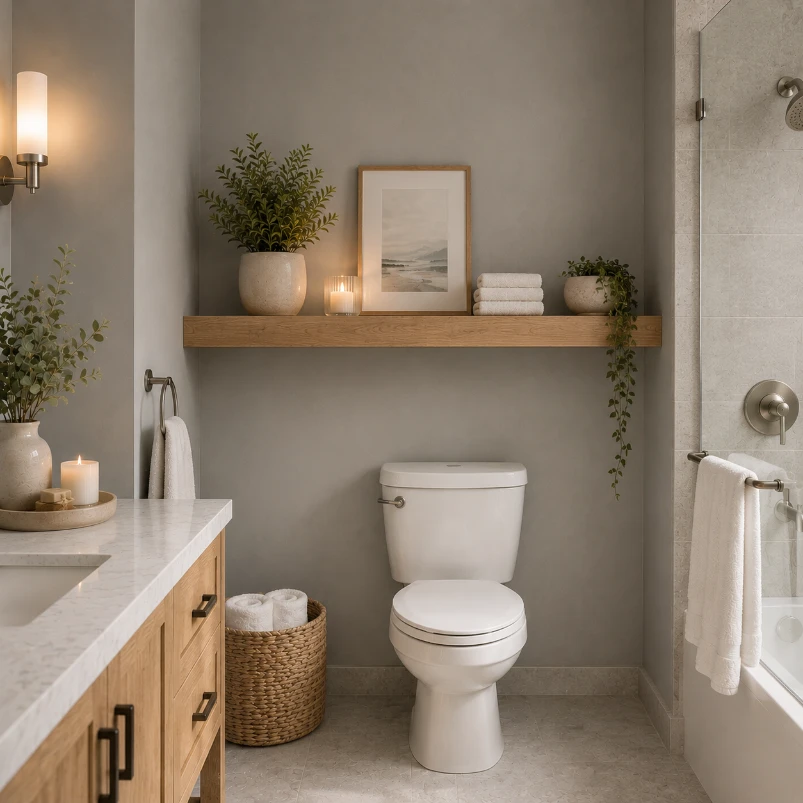
Gray can create a refined spa atmosphere when you choose a soft mineral-inspired shade instead of a very dark or cold gray.
A light mineral gray works beautifully with stone, concrete-look tile, white porcelain, and natural wood. It provides a neutral backdrop that allows architectural features and bathroom accessories to stand out.
If your bathroom receives limited daylight, avoid extremely cool gray paint. A gray with subtle warm or balanced undertones can help the room feel more inviting.
5. Warm Sand Retreat
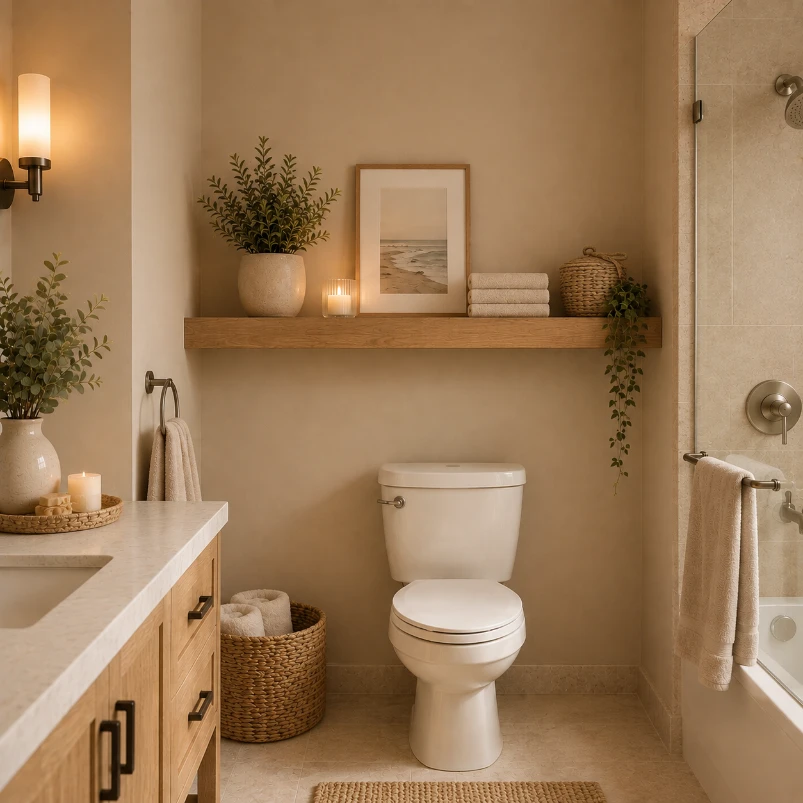
Warm sand tones bring an earthy quality to bathroom walls. These colors are particularly useful if you want your bathroom to feel cozy rather than clinical.
A soft sandy beige can complement travertine-style tile, wood cabinetry, cream countertops, and natural woven accessories. The overall effect is similar to the relaxed atmosphere of a resort bathroom.
Keep the palette simple by using two or three closely related neutral shades. This prevents the room from feeling busy.
6. Eucalyptus Whisper
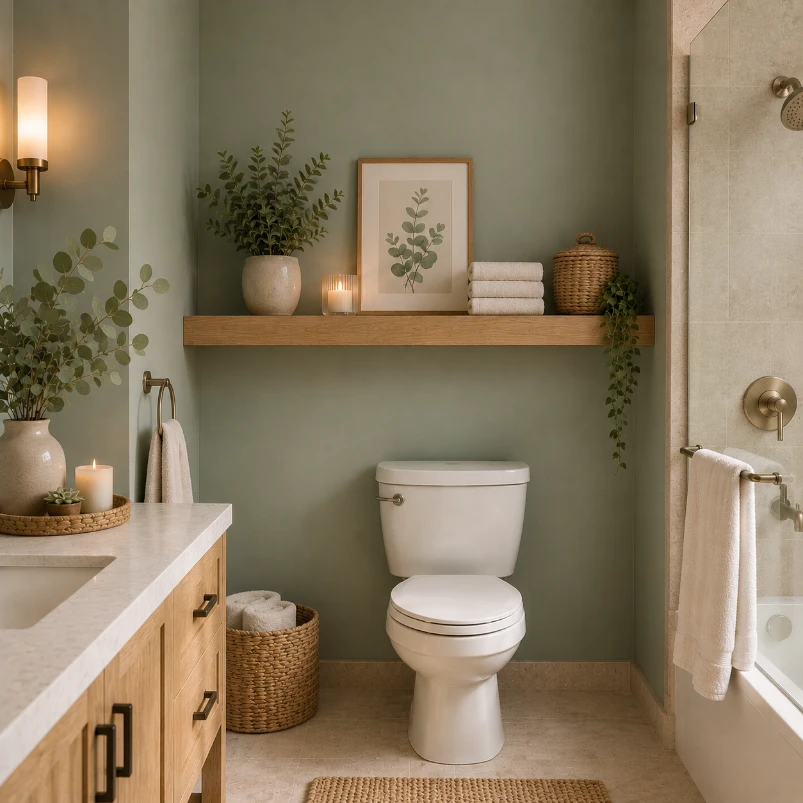
Muted eucalyptus green is another strong choice for a nature-inspired bathroom. Its soft green-gray appearance can make the room feel fresh without the intensity of brighter greens.
This color works particularly well with natural materials. Think oak, bamboo, stone, linen, and ceramic accessories.
You can reinforce the botanical theme with a small plant or eucalyptus-inspired decor, but avoid filling every surface with accessories. A spa bathroom usually benefits from visual simplicity.
7. Oyster Pearl Neutrals
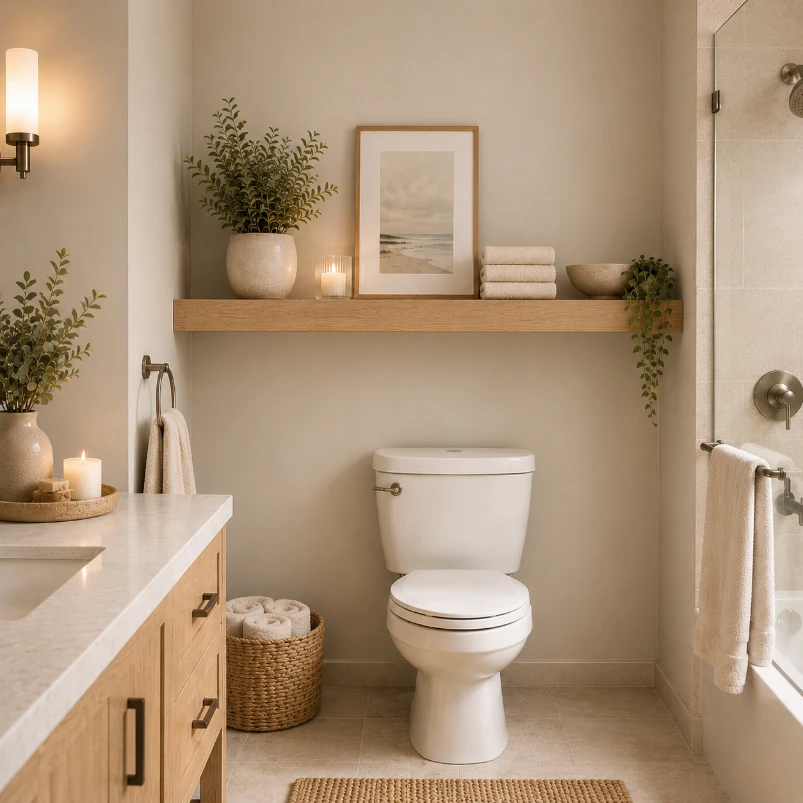
Oyster-inspired neutrals sit between cream, beige, and soft gray. They provide warmth while maintaining the clean appearance many people want in a bathroom.
This shade is especially useful when your bathroom already contains several permanent finishes. Because it is relatively understated, it can connect different materials without competing with them.
For example, oyster walls can work with:
- White vanities
- Beige floor tile
- Warm metal fixtures
- Cream textiles
- Light natural wood
The result is timeless and easy to update with seasonal accessories.
8. Soft Blush Steam
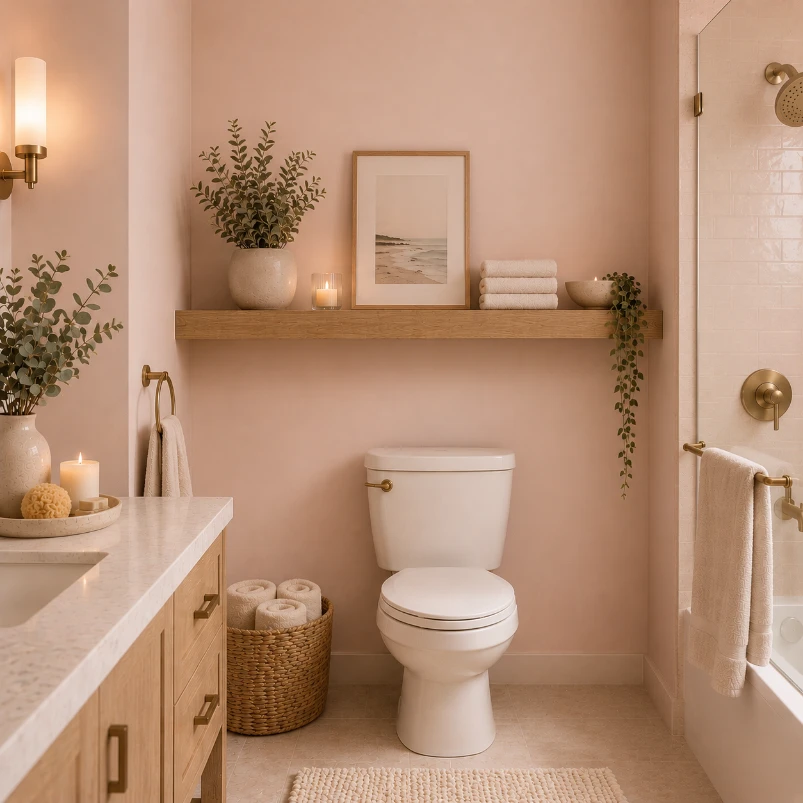
Soft blush can give a bathroom a warm, calming personality without looking overly colorful. The best versions are muted, dusty, and slightly neutral rather than bright pink.
This shade can work beautifully in bathrooms with brass fixtures, creamy tile, white countertops, and light wood.
If you are worried about using pink on every wall, consider applying it to the entire bathroom in a very soft tone rather than creating a small accent wall. A subtle blush can look surprisingly sophisticated when paired with restrained decor.
9. Foggy Driftwood Gray

For bathrooms inspired by coastal or rustic interiors, a driftwood-inspired gray can create a relaxed backdrop.
This color combines the weathered character of wood with the neutrality of gray. It works especially well with natural textures and slightly imperfect materials.
Consider pairing it with:
- Weathered wood
- Stone accessories
- White ceramic fixtures
- Linen textiles
- Warm lighting
The combination can make an ordinary bathroom feel more connected to nature.
10. Watery Teal Escape

If you want more color without losing the calming character of a spa bathroom, consider a muted teal.
Teal sits between blue and green, giving it a water-inspired quality. The trick is choosing a softened version rather than a highly saturated shade.
A dusty teal can become the main feature of a bathroom when balanced with simple white fixtures and neutral flooring. It can also work as an accent color behind a vanity or freestanding bathtub.
Because teal can appear darker under limited lighting, test a sample on the wall before committing to the entire room.
11. Almond Milk Minimalism
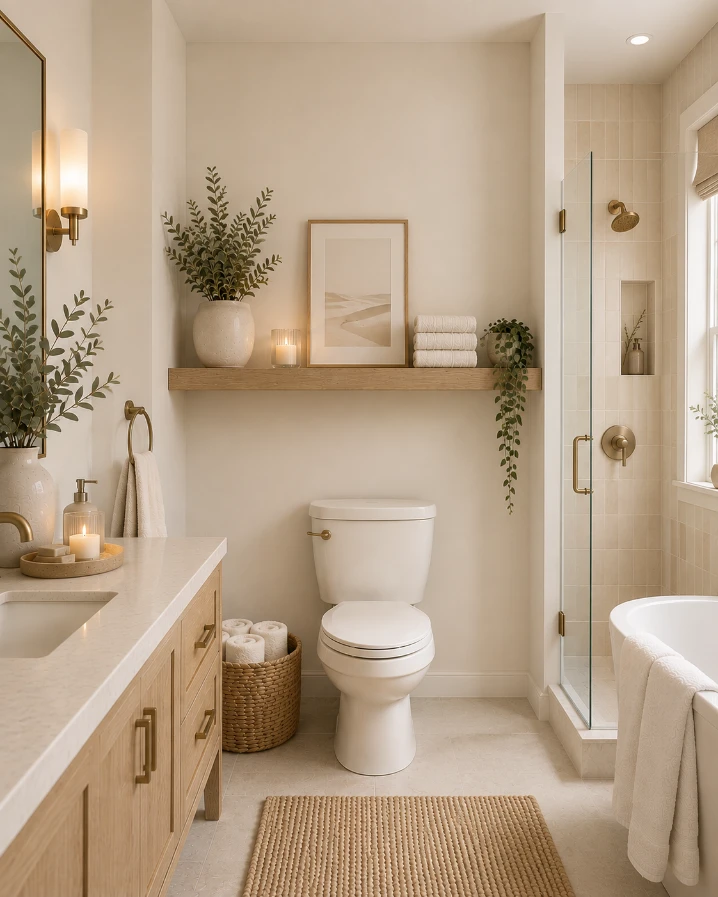
Warm off-white shades are perfect for homeowners who prefer a minimalist bathroom. An almond-inspired white feels softer than a bright, pure white while maintaining a clean appearance.
This color can make a compact bathroom feel open and uncluttered. It is also a useful choice when you want decorative elements such as wood, plants, mirrors, or artwork to become the focus.
Use different textures to prevent an all-neutral bathroom from looking flat. Ribbed towels, woven baskets, natural wood, and textured ceramic pieces can add subtle dimension.
12. Slate-Blue Hydro Calm

Slate blue offers a slightly moodier interpretation of the classic spa bathroom. It combines the peaceful character of blue with the sophistication of gray.
This shade can be especially effective in larger bathrooms or rooms with good natural light. It creates a stronger backdrop for white fixtures and metallic hardware.
For a balanced design, keep the ceiling and major fixtures light. A large mirror can also help reflect available light and prevent the darker wall color from making the room feel enclosed.
13. Celadon Zen Garden
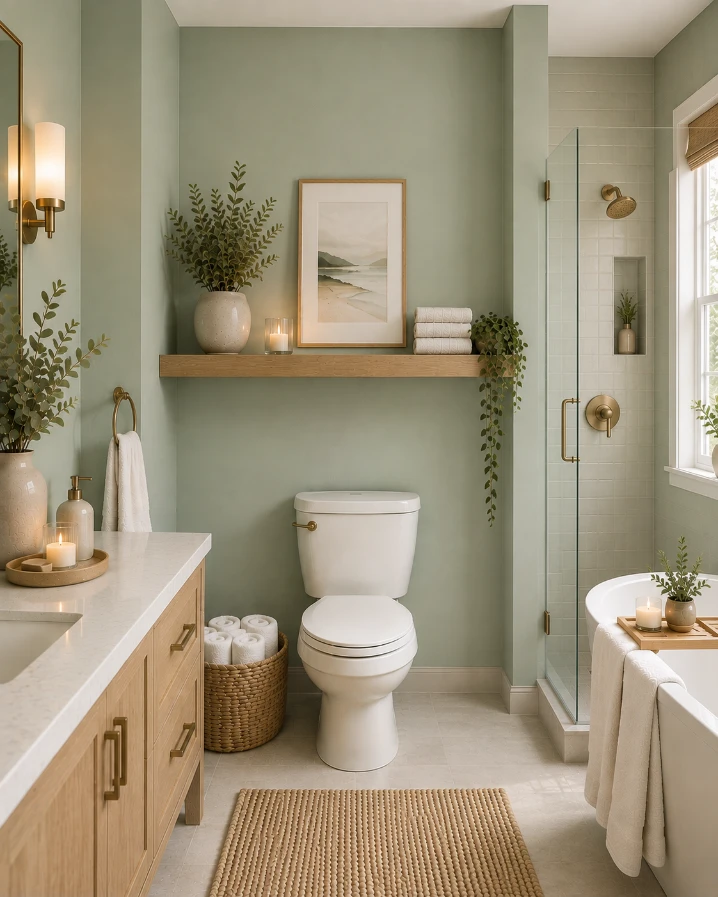
Celadon is a gentle green with a subtle gray quality. It brings a botanical feeling to the bathroom while remaining refined and understated.
This shade pairs naturally with:
- Light oak
- White stone
- Natural linen
- Bamboo
- Ceramic planters
A celadon bathroom can feel particularly peaceful when paired with warm lighting and a limited number of carefully selected accessories.
Instead of filling shelves with decorations, leave some empty space. That simplicity helps reinforce the relaxed atmosphere.
14. Lavender Gray Steam Room

Lavender does not have to make a bathroom look overly colorful. A gray-based lavender can create a subtle, sophisticated atmosphere while adding a little personality.
This type of shade works particularly well with soft white, warm gray, brushed metal, and pale wood.
It can be a good option for someone who wants something different from the usual beige, white, blue, and green bathroom palette.
Keep the rest of the room understated so the wall color remains the main visual feature.
15. Charcoal and Candlelight

For a dramatic spa-inspired bathroom, charcoal can create an intimate and luxurious atmosphere. Unlike lighter colors, a deep charcoal makes the room feel more enclosed and atmospheric.
This approach works best when balanced with plenty of light and reflective surfaces. Large mirrors, glass shower panels, light countertops, and carefully positioned lighting can prevent the space from feeling too dark.
If an entire charcoal bathroom feels like too much, use the color on one wall, around a vanity, or in a larger bathroom with strong natural light.
How to Choose the Best Spa Like Paint Color for Your Bathroom
The same paint color can look completely different depending on the room. Before choosing a shade, consider the amount of natural light, existing finishes, and overall size of the bathroom.
Consider Natural Light
North-facing rooms can make colors appear cooler, while warm sunlight can emphasize beige, yellow, or earthy undertones.
If possible, look at paint samples at different times of the day. A shade that looks perfect in the afternoon may appear completely different under bathroom lighting at night.
Match the Existing Finishes
Your bathroom paint should work with permanent features such as:
- Floor tile
- Shower tile
- Countertops
- Vanity cabinets
- Bathtub
- Hardware
For example, a bathroom with warm beige tile may look better with a warm neutral than with a strongly blue-gray paint.
Think About Bathroom Size
Light colors generally help a small bathroom feel more open, while medium and darker shades can create a cozy, dramatic atmosphere.
That does not mean small bathrooms must always be white. Soft greens, pale blues, warm greiges, and muted beige can all work beautifully in compact spaces.
Test the Paint Before Painting the Whole Room
Paint a sample on more than one wall and observe it throughout the day. Bathroom lighting can significantly change how undertones appear.
Do not judge a color from a tiny online swatch alone.
How to Create a Complete Spa Bathroom Look
Paint is only one part of the overall design. The most convincing spa-style bathrooms combine a calming color palette with simple materials, comfortable textures, and good lighting.
Use Warm, Layered Lighting
Avoid relying entirely on one bright ceiling fixture. Wall sconces, vanity lighting, and soft ambient lights can create a more relaxing atmosphere.
Warm lighting can also make neutral wall colors feel softer in the evening.
Add Natural Materials
Wood, stone, bamboo, linen, and woven textures can make a bathroom feel connected to nature.
A simple wooden stool or floating shelf may be enough. You do not need to redesign every surface.
Keep Countertops Clear
Clutter can quickly make a relaxing bathroom feel chaotic. Keep everyday products organized in drawers, cabinets, baskets, or simple containers.
Leave some open space around the sink and vanity.
Choose Soft Textiles
Towels and bath mats provide an easy way to reinforce the color scheme. White, cream, beige, muted green, and soft gray are versatile choices for a spa-inspired bathroom.
Bring in a Small Amount of Greenery
A suitable bathroom plant can introduce natural texture and color. Even one small plant can make a neutral bathroom feel more welcoming.
Final Thoughts
The best spa like paint colors for bathrooms are not necessarily the most expensive or dramatic shades. Soft greens, muted blues, warm neutrals, gentle grays, and earthy tones can all help create a peaceful environment.
Start by considering your bathroom’s natural light and existing finishes. Then choose a paint color that supports those elements rather than competing with them. Add warm lighting, natural textures, soft towels, and a few simple decorative pieces to complete the look.
Whether you prefer a light almond neutral, calming eucalyptus green, watery blue, warm sand, or dramatic charcoal, the right wall color can turn an everyday bathroom into a more relaxing retreat.