12 Small Walk-in Shower Ideas You’ll Want to Copy Immediately
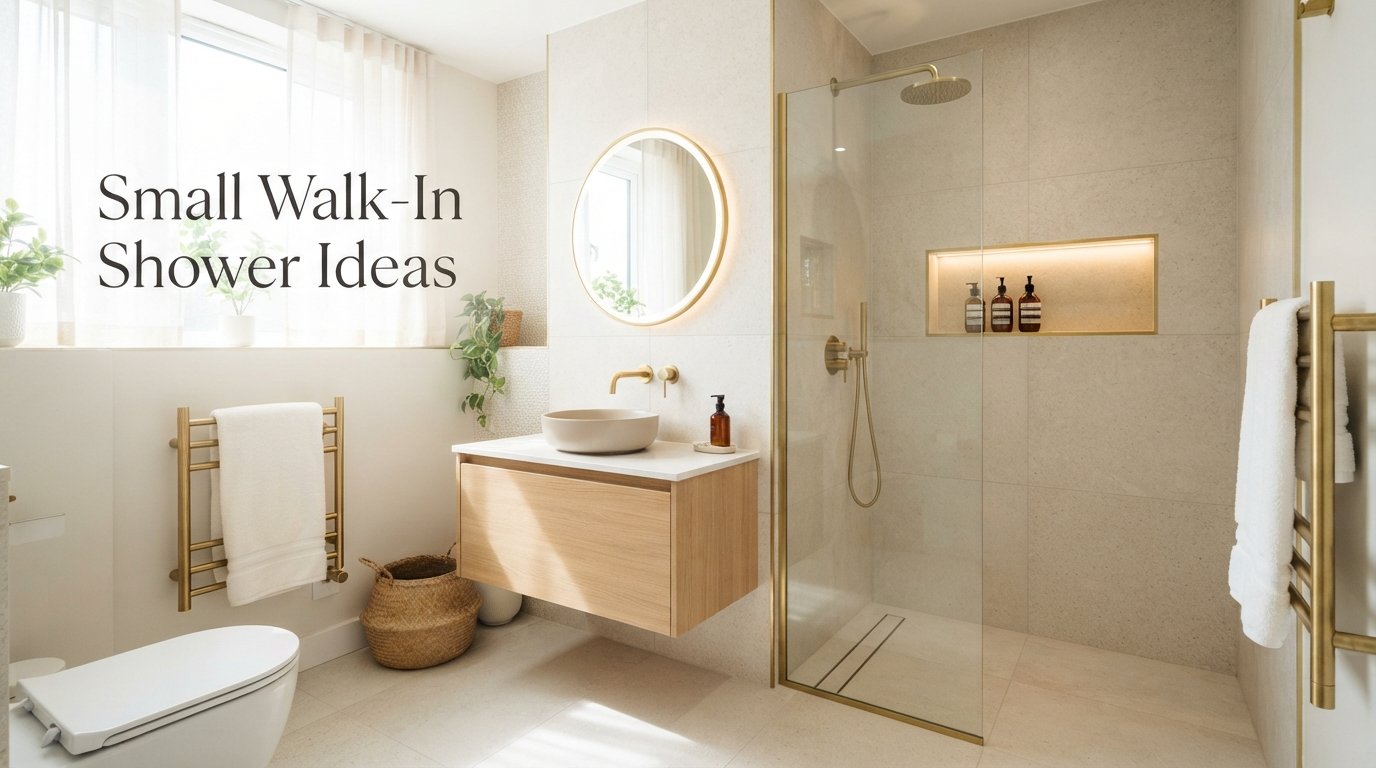
A small bathroom does not need to feel cramped or uncomfortable. With the right layout, materials, lighting, and storage, even a compact shower area can feel open, stylish, and surprisingly spacious. Small walk-in shower ideas are especially useful when you want a cleaner bathroom layout without adding a bulky shower enclosure.
Walk-in showers can make better use of limited floor space because they eliminate the need for a traditional tub and often use frameless or minimal glass. The result is a more continuous visual line across the bathroom, which can make the room appear larger.
From bright white finishes and warm wood tones to dramatic dark tile and natural stone looks, there are plenty of ways to personalize a compact walk-in shower. Here are 12 practical and stylish ideas to consider for your next bathroom update.
1. Cloud-White Minimal Spa With a Floating Bench
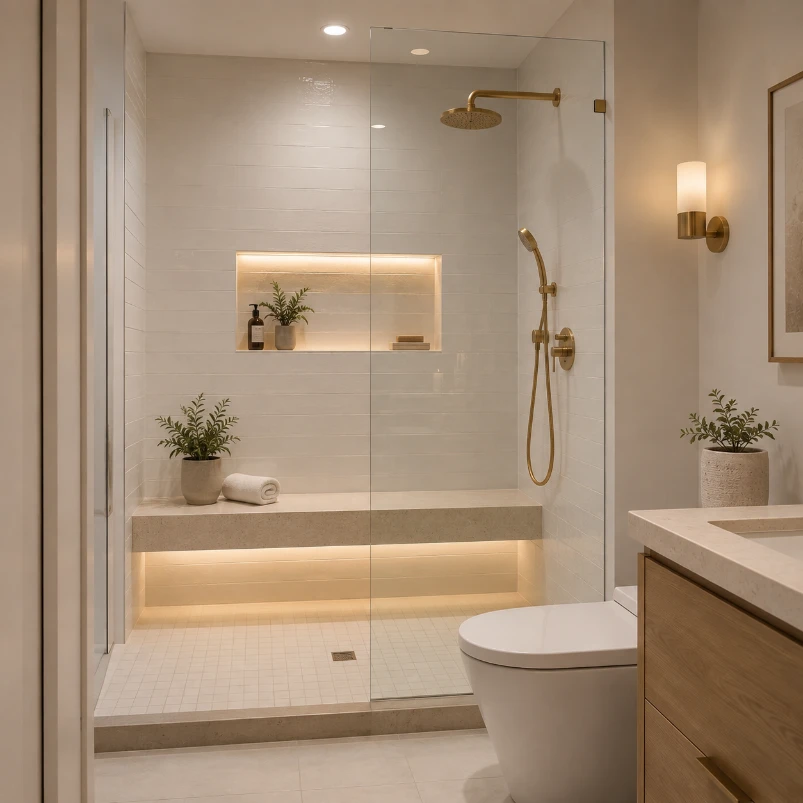
White is one of the easiest choices for making a small shower feel bright and airy. White wall tile reflects available light and creates a clean background that does not visually overwhelm a compact space.
A floating bench can make the shower more comfortable while keeping the floor underneath visible. Because the bench does not extend all the way to the floor, the design maintains an open appearance.
For a soft spa-inspired look, combine:
- Matte white or lightly textured wall tile
- A simple frameless glass panel
- A floating stone or quartz bench
- Recessed shower shelving
- Warm brushed-metal fixtures
- Soft ambient lighting
Instead of using several different tile patterns, keep the main surfaces consistent. A subtle variation in texture can add interest without making the shower look busy.
If the bathroom has limited natural light, this approach is particularly effective because the light surfaces help distribute brightness throughout the room.
2. Moody Charcoal Shower With Warm Brass Accents
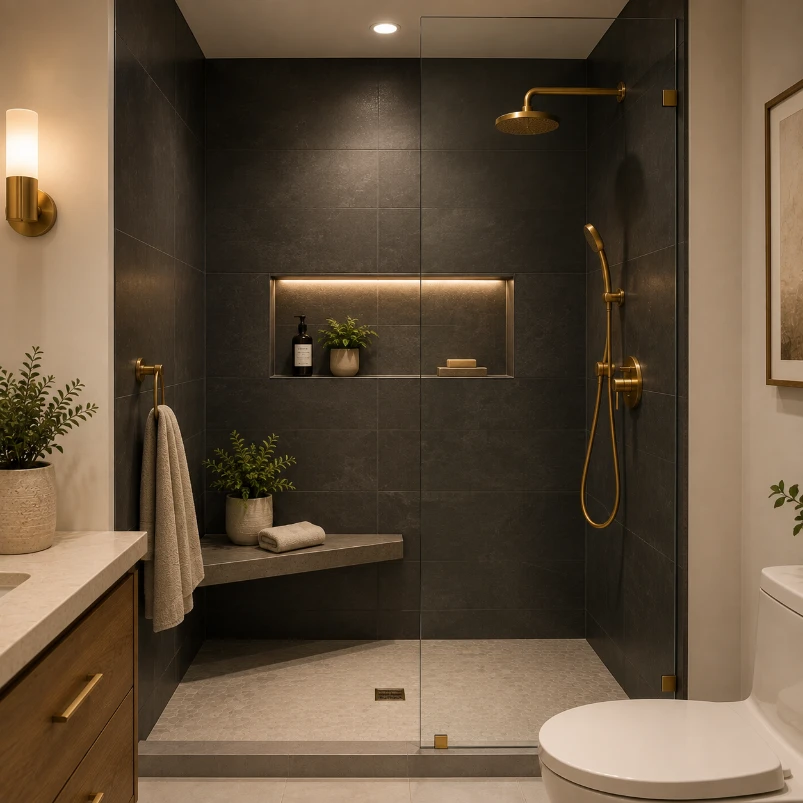
Dark colors can work surprisingly well in a small walk-in shower when they are balanced with good lighting and reflective surfaces.
Charcoal tile creates a dramatic, sophisticated atmosphere. Rather than covering every surface with the same dark finish, consider combining charcoal walls with lighter flooring or a glass enclosure.
Warm brass fixtures provide contrast and add a polished finishing touch. A brass showerhead, controls, and small accessories can stand out beautifully against charcoal tile.
For the best result, consider:
- Large-format charcoal wall tile
- Light grout for subtle definition
- Clear glass panels
- Brushed brass fixtures
- A recessed niche for storage
- Warm ceiling or wall lighting
Large tiles can also reduce the number of visible grout lines, giving the shower a more continuous appearance.
3. Scandinavian Light Oak and Soft Neutral Tile
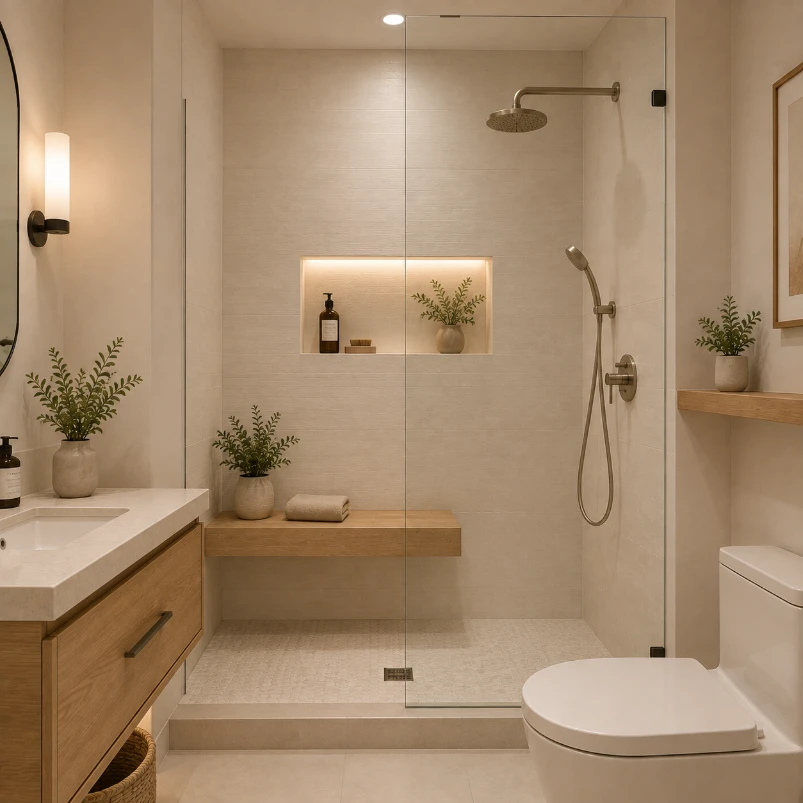
Scandinavian-inspired bathrooms are ideal for homeowners who want a compact shower to feel warm rather than sterile.
Pair pale neutral tiles with light wood details to create a simple and comfortable atmosphere. Because natural wood should be protected carefully in wet areas, use properly rated wood-look porcelain or waterproof materials where necessary.
A small floating vanity outside the shower can continue the same light-oak finish and create visual consistency throughout the bathroom.
Keep the design simple with:
- Warm beige or ivory tiles
- Light oak-effect cabinetry
- White quartz surfaces
- Clear glass shower panels
- Minimal black or brushed-metal hardware
- Soft, warm lighting
This combination works especially well in bathrooms with limited square footage because the neutral palette keeps the space visually calm.
4. Bold Black-and-White Statement Shower

If you prefer something more dramatic, use black and white tile to create a strong focal point.
The key is to give each color a clear purpose. For example, white wall tile can keep the shower feeling bright while black floor tile provides contrast and definition.
You could also use a patterned black-and-white accent wall behind the shower controls. This creates visual interest without covering the entire room in a busy pattern.
Try combinations such as:
- White subway tile with black grout
- Black hexagon floor tile
- White walls with a geometric accent strip
- Matte black fixtures
- Clear glass enclosure
When using bold patterns in a small shower, keep the remaining finishes relatively simple. This prevents the design from becoming visually crowded.
5. Japandi Wet Room With a Pebble-Inspired Floor
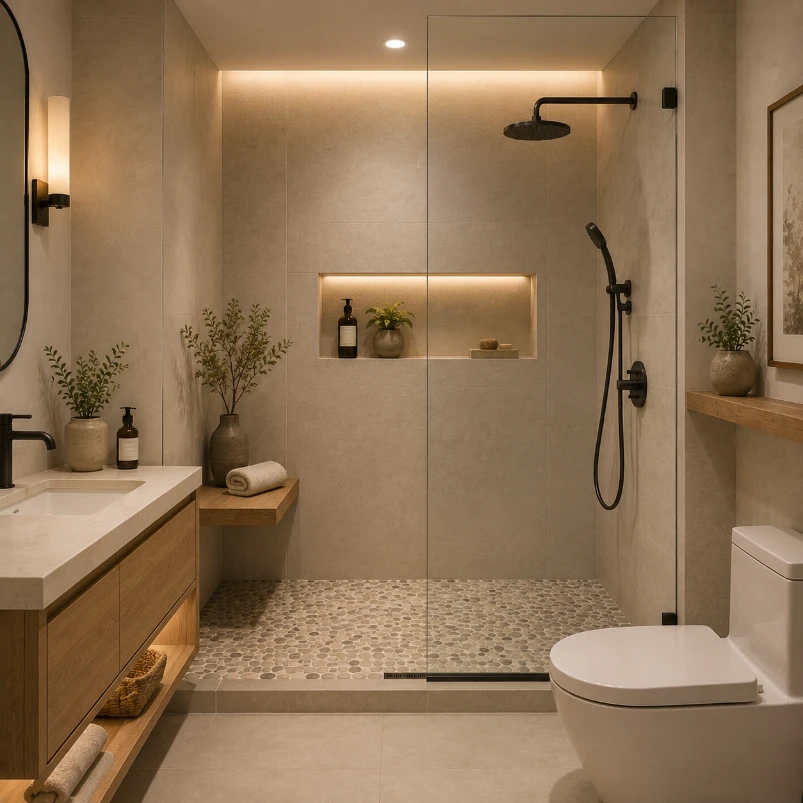
Japandi design combines the simplicity of Japanese interiors with the warmth of Scandinavian styling. It works beautifully in compact bathrooms because it focuses on clean lines, natural materials, and purposeful details.
A wet-room-style shower can help maximize the available floor area. Instead of creating a heavily enclosed shower zone, a glass screen can separate the wet area while keeping the bathroom visually connected.
A pebble-inspired floor adds texture and a natural character underfoot. Choose a properly installed, slip-resistant tile suitable for wet environments.
Complete the look with:
- Warm beige or stone-colored walls
- Natural wood accents
- Simple black or bronze fixtures
- A frameless glass screen
- Recessed storage
- Soft, warm illumination
Avoid adding too many decorative pieces. Japandi interiors work best when every element has a clear function.
6. Retro Mint Subway Tile With Chrome Fixtures
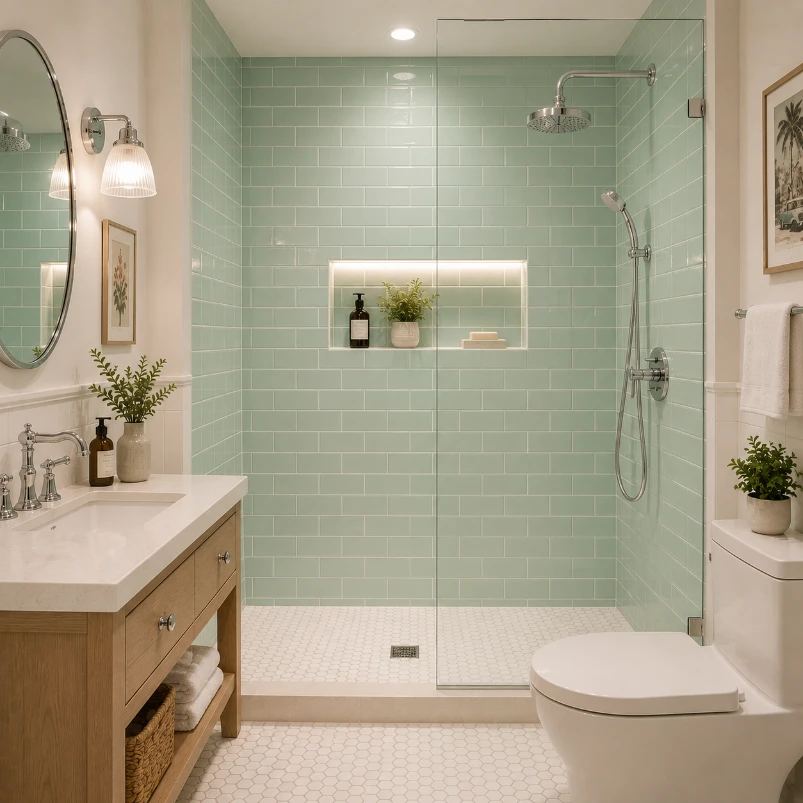
Small walk-in showers can also have plenty of personality. Mint green subway tile offers a playful retro appearance while keeping the space light and colorful.
Chrome fixtures pair naturally with this style because of their classic reflective finish. A rounded mirror and vintage-inspired lighting outside the shower can reinforce the theme.
For a balanced design, use mint tile as the main wall treatment and keep the floor neutral.
Good combinations include:
- Mint green subway tile
- White grout
- Small white floor tiles
- Polished chrome fixtures
- Rounded shower hardware
- Simple glass panels
This idea is particularly useful if you want a bathroom that feels cheerful rather than overly contemporary.
7. Natural Stone-Look Shower With a Hidden Drain
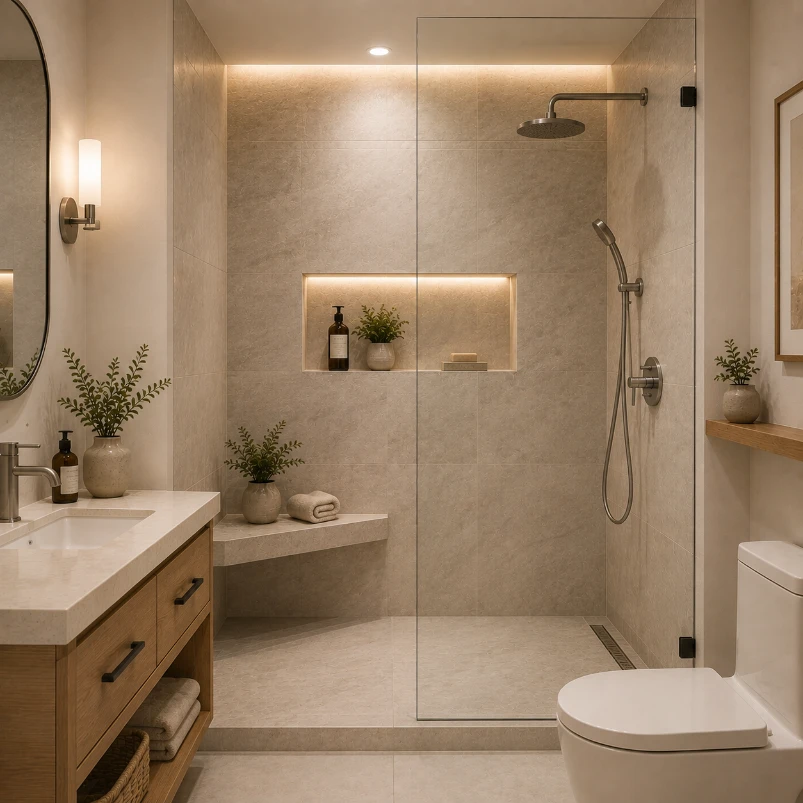
Natural stone can create a calm, luxurious atmosphere, but genuine stone may require more maintenance than porcelain or ceramic alternatives.
Stone-look porcelain tile can provide a similar visual effect while offering a practical option for everyday bathroom use.
A linear drain positioned along one side of the shower floor can create a cleaner appearance than a central drain. It also works well with larger-format floor tiles because fewer cuts may be needed, depending on the shower layout and installation requirements.
Consider using:
- Warm limestone-look porcelain
- Soft beige wall surfaces
- Frameless glass
- A recessed shower niche
- Minimal metal hardware
- A linear drainage design
The fewer competing patterns you use, the more seamless the stone effect will appear.
8. Industrial Steel and Concrete Angle Shower

An angled shower can be a smart solution when a bathroom has an awkward corner or unusual floor plan.
Instead of forcing a rectangular enclosure into the available space, an angled glass panel can help create a practical shower zone while maintaining a comfortable pathway through the bathroom.
Concrete-look tile combined with dark metal hardware gives the space an industrial character.
Try pairing:
- Concrete-effect porcelain tile
- Black metal shower fixtures
- Clear glass
- Simple recessed storage
- Minimal wood accessories
- Neutral flooring
The industrial style works best when the finishes remain intentional. A few strong materials can make a greater impact than many decorative elements.
9. Coastal Sand and Sea-Glass Walk-In Shower
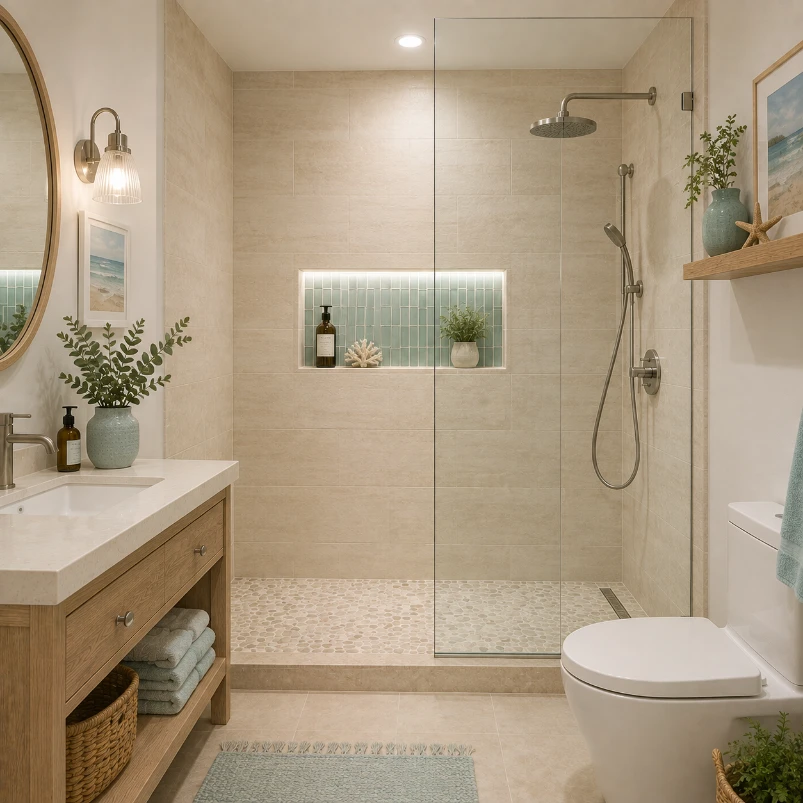
For a relaxed bathroom atmosphere, use colors inspired by the coast.
Soft sandy beige, pale blue-green, and warm white can create a light and peaceful shower design. These shades also work well with natural textures such as stone, wood-look tile, and woven accessories.
A sea-glass-inspired accent tile can be used sparingly on a niche wall or vertical feature strip.
Consider:
- Sandy beige wall tile
- Soft blue-green accent tile
- Light stone flooring
- White grout
- Brushed nickel fixtures
- Clear glass panels
Keep the coastal theme subtle. You do not need seashell decorations or heavy nautical accessories to communicate the style.
10. High-Contrast Herringbone With Slim Fixtures
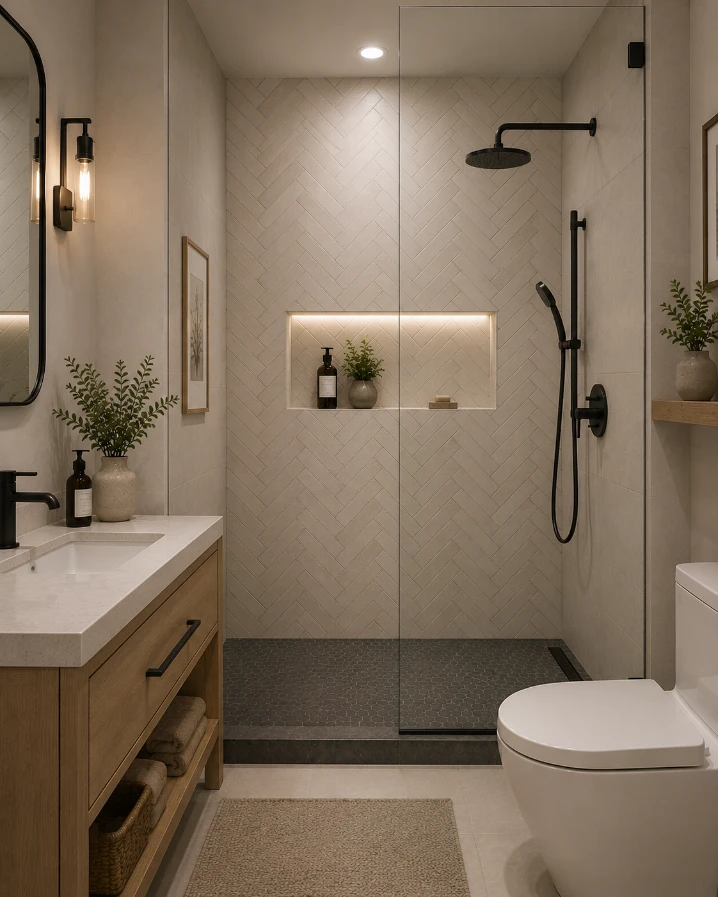
Herringbone tile can give a small shower plenty of visual movement. Because the pattern naturally attracts attention, it works best when the rest of the design remains restrained.
One option is to install a herringbone pattern on the back shower wall while using simple large-format tile on the other surfaces.
Slimline fixtures can further maintain the clean appearance of the space.
A practical combination might include:
- Light neutral herringbone wall tile
- Darker shower floor
- Slim black fixtures
- Clear glass
- Recessed niche
- Minimal accessories
If you are using a strong herringbone pattern, avoid combining it with several other competing patterns.
11. Terra-Cotta Warmth With an Arched Entrance

Terra-cotta-inspired colors bring warmth to a bathroom and can make a compact shower feel more inviting.
Instead of using traditional square corners everywhere, consider an arched opening or curved design detail. An arch can soften the overall appearance and create a distinctive architectural feature.
You can combine terra-cotta tile with creamy walls and natural wood accents for a Mediterranean-inspired atmosphere.
Try using:
- Warm terra-cotta floor tile
- Cream-colored wall tile
- Rounded or arched details
- Natural wood accessories
- Brushed bronze fixtures
- Soft warm lighting
Because terra-cotta is visually warm and expressive, keep the remaining surfaces relatively understated.
12. Glossy Micro-Tile Shower With LED Niches

A compact shower can benefit from small glossy tiles when used thoughtfully. Their reflective surface can bounce light around the room and add visual texture.
A built-in niche with integrated LED lighting can provide both storage and a decorative focal point.
Use the niche for everyday shower products instead of placing multiple bottles on the floor or a hanging organizer.
Useful features include:
- Glossy micro-tile walls
- Slip-resistant shower flooring
- Recessed LED niche lighting
- Frameless glass
- Wall-mounted fixtures
- Built-in storage
Lighting should be selected specifically for bathroom and wet-area requirements, and electrical work should follow local safety codes.
How to Make a Small Walk-In Shower Feel Bigger
The design style matters, but the layout often has an even greater effect on how spacious the shower feels.
Use Clear Glass
Clear glass allows the eye to travel through the shower area rather than stopping at an opaque enclosure. A frameless or minimally framed panel can create an especially clean appearance.
Choose Large-Format Wall Tile
Large tiles create fewer grout lines. This can make the walls appear more continuous and less visually fragmented.
Keep the Floor Relatively Simple
A complicated floor pattern can make a compact shower feel busier. If the walls already have a strong design, use a calmer floor.
Build Storage Into the Wall
A recessed niche is usually more space-efficient than a freestanding shower caddy. It also keeps products organized and reduces visual clutter.
Use a Consistent Color Palette
Two or three closely related colors are often enough. Too many contrasting finishes can make a small bathroom feel crowded.
Pay Attention to Lighting
Good lighting can completely change the atmosphere of a compact shower. Use appropriate bathroom-rated fixtures and combine general lighting with targeted illumination where practical.
What Tile Is Best for a Small Walk-In Shower?
There is no single best tile for every bathroom. The right option depends on the desired appearance, maintenance requirements, budget, and installation conditions.
Porcelain is a popular choice because it is durable and available in many colors, textures, and stone-inspired designs. Smaller tiles can work well on shower floors because their additional grout lines can help accommodate the slope toward the drain.
For walls, larger tiles can create a cleaner visual effect. Textured or patterned tiles are useful as accents but should be balanced with simpler surfaces.
Always select flooring specifically designed for wet areas and consider slip resistance when choosing shower floor materials.
Smart Storage Ideas for Compact Showers
Storage becomes especially important when floor space is limited.
Instead of adding bulky shelves, consider:
- Recessed wall niches
- Corner shelves
- Built-in benches with concealed storage
- Wall-mounted shower accessories
- Narrow vertical niches
- Integrated ledges
Keep frequently used products within easy reach, while less-used items can be stored outside the shower.
Common Mistakes to Avoid
Even a beautiful shower design can become frustrating if the layout is not practical.
Making the Shower Too Tight
Before choosing finishes, make sure there is enough usable space for comfortable movement and everyday use.
Ignoring Drain Placement
Drainage needs to be planned alongside the shower floor slope. A beautiful tile layout will not compensate for poor water management.
Adding Too Many Materials
Mixing stone, wood, several tile patterns, multiple metals, and strong colors can overwhelm a small bathroom.
Forgetting Storage
Without planned storage, bottles and accessories can quickly take over the shower floor.
Using Unsuitable Materials
Not every attractive material is appropriate for constant moisture. Choose products designed for bathroom and wet-area applications and follow the manufacturer’s installation requirements.
How to Choose the Right Small Walk-In Shower Idea
Start with the bathroom’s existing layout rather than choosing a style first.
Measure the available space and identify plumbing locations, doors, windows, and other fixed features. Then decide whether you want the shower to blend into the bathroom or become its main visual feature.
For a bright and timeless appearance, white or warm neutral tile is a reliable choice. For something more dramatic, charcoal or black-and-white combinations can create a stronger focal point.
If warmth is your priority, consider light oak tones, beige stone-look tile, or terra-cotta-inspired finishes.
Most importantly, prioritize the layout, waterproofing, drainage, storage, and safe materials before decorative details.
Final Thoughts
The best small walk-in shower ideas combine good design with practical planning. A compact shower can feel spacious when the layout is efficient, the glass is visually light, storage is built into the walls, and the materials work together rather than competing for attention.
Whether you prefer a bright white spa, warm Scandinavian finishes, dramatic charcoal tile, coastal colors, or a modern Japandi wet room, there is a style that can suit your bathroom.
Focus first on functionality and proportion, then add the colors, textures, fixtures, and lighting that reflect your preferred style. Even a small shower can become one of the most attractive and useful parts of the bathroom.