12 Stylish Attic Bedroom Ideas for a Cozy and Beautiful Retreat

An attic bedroom can become one of the most inviting rooms in a home. Sloped ceilings, exposed beams, dormer windows, and tucked-away corners give the space character that a standard bedroom often lacks. At the same time, those unusual features can make furniture placement, storage, lighting, and temperature control more challenging.
The key is to work with the shape of the room instead of trying to hide it. A low bed can fit beneath a sloped ceiling, built-in storage can turn awkward knee walls into useful space, and carefully chosen colors can make a compact attic feel brighter and more open. The right lighting and textiles can then add the warmth that makes the room feel like a true bedroom rather than an afterthought.
These attic bedroom ideas focus on practical layouts as well as style. Whether you are planning a full attic conversion or simply refreshing an existing bedroom, you can adapt these ideas to suit your space, budget, and decorating style.
1. Place a Low Bed Beneath the Sloped Ceiling
One of the easiest ways to make an attic bedroom work is to choose furniture that respects the ceiling height. A low-profile platform bed can sit comfortably beneath a sloping section where a tall bed frame or headboard would feel cramped.
Keep bedside furniture simple too. Floating shelves, small stools, or narrow nightstands can provide the essentials without making the lowest part of the room feel crowded. This approach is especially useful in small attic bedrooms where every inch matters.
For a finished look, use soft bedding, layered pillows, and a textured throw. The low furniture creates a relaxed, grounded feeling while the open area above it helps the room feel less restricted.
2. Make a Dormer Window the Bedroom’s Focal Point

If your attic has a dormer window, use it as an architectural feature instead of treating it as an obstacle. A bed, reading chair, or small seating area can be arranged so the window becomes a natural focal point.
Keep the surrounding decor fairly simple. Light curtains or Roman shades can provide privacy without covering too much of the glass. A small bench beneath the window can also create a useful sitting area while taking advantage of natural light.
When the view is attractive, avoid heavy furniture around the window. Let the daylight and outdoor scenery provide part of the room’s decoration.
3. Turn the Knee Walls Into Custom Storage

The short walls created by an attic roof are often difficult to furnish, but they can become some of the most useful storage in the room. Custom drawers and cabinets can follow the roofline and make use of areas that would otherwise remain empty.
Built-in storage is particularly helpful for clothing, bedding, shoes, books, and seasonal items. Drawers are usually easier to access than deep cupboards, while a combination of closed cabinets and open shelving can give you both practical storage and display space.
For a seamless appearance, paint the cabinetry in the same or a closely related color as the walls. This makes the storage feel like part of the architecture rather than a large piece of furniture added afterward.
4. Use a Light Color Palette to Open Up the Space

Attic rooms can feel smaller when the ceiling slopes sharply or natural light is limited. A light palette can help reflect available daylight and create a more spacious appearance.
Soft white, warm ivory, pale beige, light gray, and muted pastel shades are all good starting points. You do not have to make the entire room plain white. Instead, introduce warmth through natural wood, woven baskets, linen bedding, and subtle accent colors.
Painting the ceiling and walls in similar tones can also make the transition between surfaces feel smoother. This is particularly effective when the attic has several unusual angles.
5. Highlight Exposed Beams and Rafters

Exposed beams and rafters can give an attic bedroom a distinctive architectural identity. Instead of covering these features, consider making them part of the decorating plan.
Natural wood beams work beautifully with warm neutrals, cream bedding, earthy colors, and simple furniture. If the existing wood feels too dark, a lighter finish or carefully chosen paint can create a more contemporary appearance.
Lighting is another way to highlight the structure. Small directional fixtures can draw attention to beams without filling the ceiling with bulky fittings. Keep the rest of the decor restrained so the architecture remains the main feature.
6. Create a Cozy Reading Nook
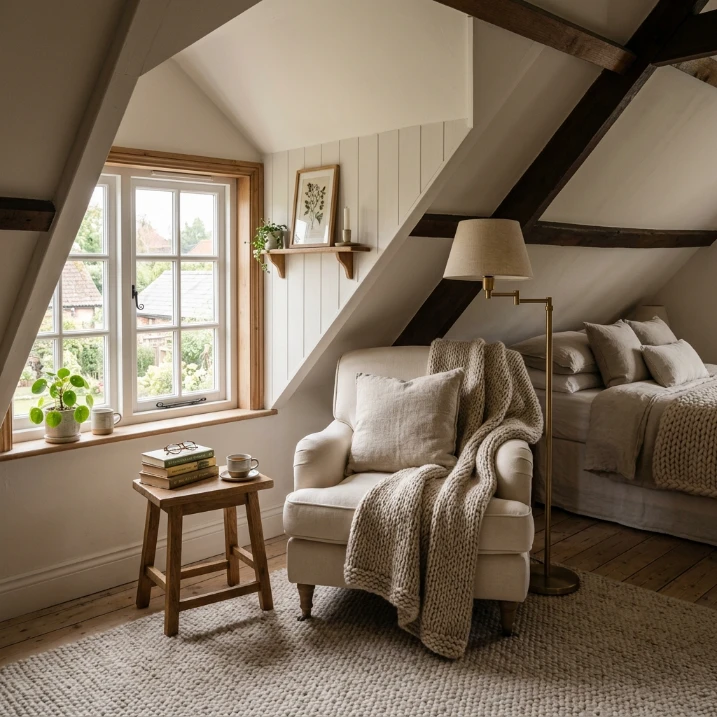
An unused attic corner can become a comfortable reading nook with surprisingly little furniture. Look for a spot near a window or beneath a dormer where you can place a compact armchair, floor cushion, or built-in bench.
Add a small side table for books and a warm floor or wall lamp for evening reading. A soft rug can define the area and make a hard-to-use corner feel intentional.
If the space is very tight, a built-in bench with drawers underneath can combine seating and storage. Add a few cushions and a throw to make the nook feel connected to the bedroom rather than like a separate zone.
7. Add a Small Workspace Without Crowding the Room
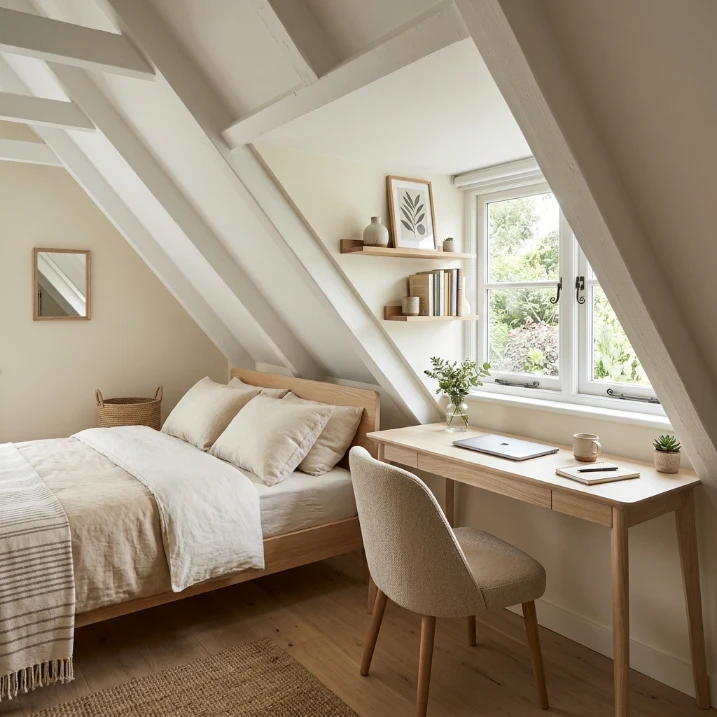
An attic bedroom can also accommodate a compact home office. The trick is to choose a desk that fits the architecture rather than forcing a full-size workstation into a narrow area.
A slim desk beneath a dormer window can provide natural light during the day. Wall-mounted shelves can hold notebooks and small office supplies without taking up valuable floor space.
Choose a comfortable chair with a relatively small footprint and keep the desktop uncluttered. If the workspace is not used every day, a folding or wall-mounted desk can provide even more flexibility.
8. Add Warmth With Layered Lighting

Good lighting is essential in an attic bedroom because the ceiling shape can create shadows in unexpected places. Instead of depending on a single overhead fixture, use several sources of light at different levels.
Bedside sconces are useful when floor space is limited. A pendant can provide general illumination from the highest part of the ceiling, while a floor lamp can brighten a reading chair or darker corner.
Warm-toned bulbs and dimmable fixtures can make the room feel more relaxing at night. If you have exposed beams, discreet lighting placed near them can also emphasize the architecture without creating visual clutter.
9. Use a Statement Wall Behind the Bed

A feature wall can add personality to an attic bedroom, but it works best when placed strategically. The wall behind the bed is often the strongest choice because it naturally acts as the visual anchor of the room.
You could use muted botanical wallpaper, a warm earthy paint color, vertical paneling, or a subtle textured finish. If the room is small, avoid covering every surface with a busy pattern. One well-designed wall can provide enough contrast.
Keep the bedding and nearby furniture relatively calm so the statement surface feels intentional. This approach allows you to add character without making the attic feel visually crowded.
10. Choose Space-Saving Doors and Furniture

Traditional swing doors can take up valuable floor area in a compact attic. Where the layout allows, sliding doors or pocket doors can make movement easier and give you more flexibility when arranging furniture.
The same principle applies to wardrobes and cabinets. Built-in units, narrow dressers, floating shelves, and furniture designed for low walls can make the room much easier to use.
Before buying anything, measure the usable floor area rather than relying only on the overall room dimensions. Remember to account for the sloping ceiling when deciding where a person will stand, sit, or walk.
11. Add Texture for a Warm, Layered Look
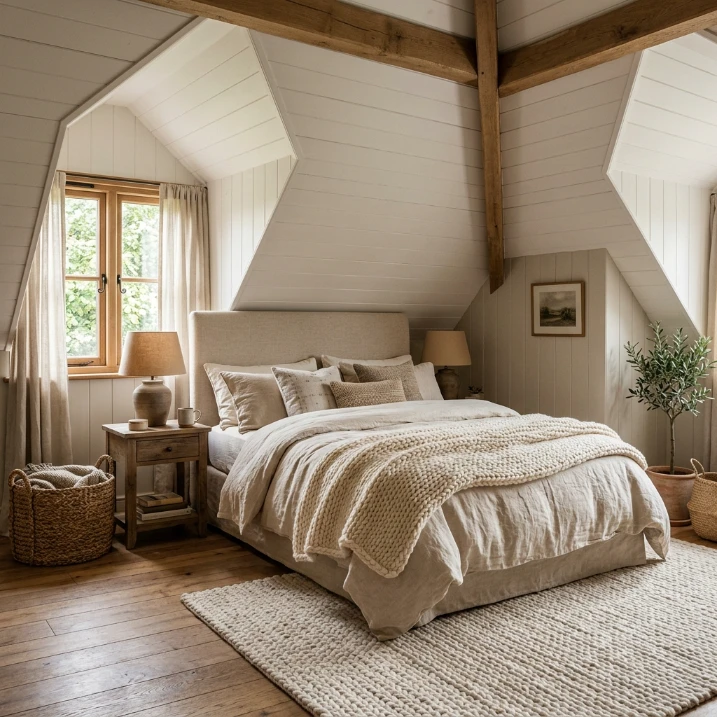
Because attic bedrooms often have unusual architectural lines, texture can make the space feel softer and more comfortable. The goal is to create visual depth without filling the room with too many patterns.
Start with natural fabrics such as linen, cotton, wool, or woven materials. A textured duvet, knitted throw, upholstered headboard, and soft rug can make a simple bedroom feel much more inviting.
Wall treatments can also add character. Shiplap, beadboard, limewash-style finishes, or subtle wood paneling can work well when used selectively. Choose one or two textural elements and let the architecture provide the rest of the visual interest.
12. Make Comfort a Priority With Insulation and Ventilation

Beautiful decor will not make an attic bedroom enjoyable if the room becomes extremely hot in summer or cold in winter. Comfort should therefore be considered alongside the design.
Proper insulation can help maintain a more stable indoor temperature and may also reduce outside noise. Roof windows, operable windows, ventilation systems, or a suitable ceiling fan can improve airflow where appropriate.
Window treatments matter too. Blackout shades can make it easier to sleep when morning light enters through roof windows, while lined curtains can add another layer of insulation and softness.
For an attic conversion, it is worth discussing insulation, ventilation, electrical work, and structural requirements with qualified professionals before major construction begins. Good planning will make the finished bedroom more comfortable and easier to maintain.
How to Make a Small Attic Bedroom Feel Larger
Small attic bedrooms do not need to feel cramped. Start by keeping the central walking area open and choosing furniture that matches the scale of the room. A low bed, slim nightstands, and built-in storage usually work better than several large freestanding pieces.
Mirrors can help reflect natural light, while a consistent color palette keeps the room visually calm. Curtains mounted close to the ceiling can emphasize the height of the room, and furniture with visible legs can make more of the floor area visible.
Most importantly, avoid filling every corner simply because space is available. A little empty space can make a compact attic feel much more comfortable.
How to Choose the Right Style for an Attic Bedroom
The architecture of an attic can work with many decorating styles. A Scandinavian-inspired room can emphasize pale wood, simple furniture, and soft neutrals. A boho attic bedroom can introduce woven textures, plants, patterned textiles, and warm earthy colors. A modern design can rely on clean lines, built-in storage, and a limited palette.
If you prefer a more decorative look, you can also borrow elements from Art Deco bedroom ideas or create a softer atmosphere inspired by pastel bedroom ideas. The important thing is to keep the scale of the furniture and decor appropriate for the roofline.
Final Thoughts
The best attic bedroom ideas do more than make an unusual room look attractive. They make the roofline, limited floor area, and architectural details work in your favor. Low furniture can fit beneath slopes, built-in storage can reclaim awkward corners, and layered lighting can make the entire room feel warmer and more functional.
Start with the biggest challenge in your attic bedroom. If the room feels dark, improve the color palette and lighting. If storage is limited, focus on the knee walls. If the room feels uncomfortable, address insulation and ventilation before spending heavily on decor.
Once the practical details are handled, add the personal touches that make the bedroom feel like yours. Comfortable bedding, a favorite color, meaningful artwork, natural textures, and a quiet reading corner can turn the top floor into one of the most enjoyable spaces in the home.