12 Bedroom Accent Wall Ideas to Create a More Beautiful Sleeping Space

A bedroom accent wall can change the entire feel of a room without requiring a full renovation. The right wall treatment gives the bed a clear focal point, adds color or texture, and helps the room feel more finished. Even a simple paint treatment can make a noticeable difference when the color, scale, and placement work with the rest of the bedroom.
The best bedroom accent wall ideas are not simply about making one wall stand out. They should also support the mood you want to create, whether that means calm and natural, modern and polished, warm and cozy, or bold and artistic. Below are twelve practical ideas that can work in large bedrooms, compact rooms, guest spaces, and primary suites.
1. Create a Soft Color-Block Accent Wall
Color blocking is an easy way to make a bedroom wall feel intentional without covering it in a busy pattern. Instead of painting the entire wall one shade, combine two related colors or create a large painted shape behind the bed.
For a calm bedroom, try warm beige with muted clay, soft sage with cream, or dusty blue with a light neutral. A curved color block can soften a room with many straight lines, while a rectangular block can give a modern bedroom a cleaner architectural feel.
Keep the rest of the room fairly simple so the painted treatment remains the main feature. Matching one small detail, such as a cushion or throw, to the accent color can also make the design feel connected.
2. Add Board-and-Batten for Classic Texture

Board-and-batten is a reliable choice when you want an accent wall with dimension but do not want a strong pattern. Vertical battens can make the wall appear taller, while evenly spaced panels give the bedroom a tailored appearance.
Painting the trim and wall in the same color creates a subtle, sophisticated finish. White and cream work well for traditional rooms, while charcoal, olive, navy, and warm taupe can give the treatment a more contemporary look.
Before installing anything, measure the wall carefully and plan the spacing around the bed, doors, and outlets. Balanced proportions matter more than having a large number of panels.
3. Frame the Bed With an Oversized Painted Arch
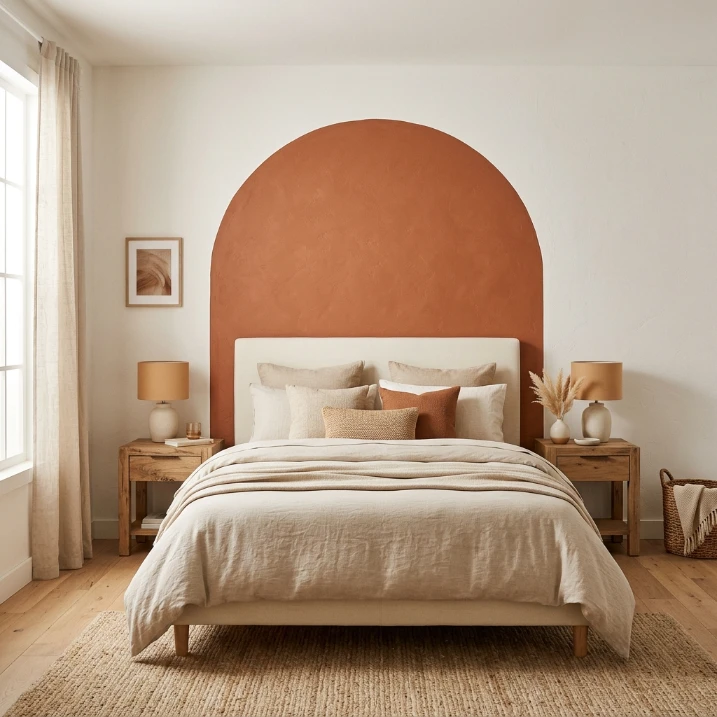
A painted arch can act almost like a custom headboard. The shape naturally draws attention toward the bed and gives the wall a softer focal point than a standard rectangle.
Choose a color that contrasts gently with the surrounding wall. A terracotta arch against warm white feels earthy, while a muted green arch can bring a natural quality to a neutral bedroom. For a more dramatic room, use a deeper shade such as charcoal blue or olive.
The arch does not have to extend from floor to ceiling. A large shape that begins behind the mattress and rises above the headboard can create the same visual effect while using less paint.
4. Use Fabric Panels for a Cozy Bed Wall

Fabric can make an accent wall feel warmer and more comfortable than hard materials. Upholstered panels behind the bed provide visual softness and can also help reduce the echo created by large, bare surfaces.
Neutral linen, textured cotton, boucle, and velvet are all useful choices. For a refined bedroom, keep the panels in a single color and let the texture provide interest. If you want more personality, use a subtle stripe or small-scale pattern.
Wall-to-wall upholstery creates a hotel-inspired effect, while several large vertical panels can provide a more affordable alternative. Make sure the fabric is practical for the room and easy to maintain.
5. Try Botanical Wallpaper Behind the Bed

Botanical wallpaper brings pattern and movement to the bedroom without requiring extra artwork on the same wall. Large leaves, delicate branches, meadow-inspired prints, and understated botanical drawings can all work beautifully behind a bed.
The key is to choose a pattern that matches the size of the room. A large-scale print can look impressive on a wide wall, while a smaller pattern may feel more comfortable in a compact bedroom.
Pull one or two colors from the wallpaper for bedding and accessories rather than matching everything exactly. This keeps the room coordinated without making it feel overly planned.
6. Give the Wall an Aged Plaster Finish

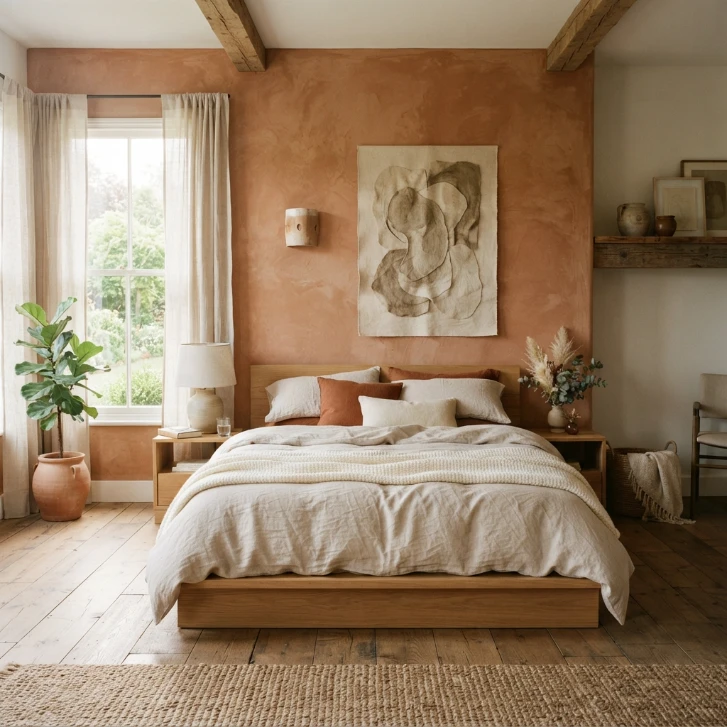
If you prefer an organic bedroom, a plaster-inspired finish can add depth without relying on a strong pattern. Limewash-style paint, mineral finishes, and subtle faux plaster techniques create gentle variations that change as natural light moves across the wall.
Soft sand, mushroom, warm ivory, stone, and muted taupe are particularly easy to live with. They pair naturally with wood furniture, linen bedding, woven baskets, ceramic lamps, and other natural materials.
Because the finish already has visual variation, keep the surrounding decor restrained. A simple upholstered headboard and warm wood nightstands can be enough to complete the look.
7. Build a Warm Wood Accent Wall

Wood can instantly add warmth to a bedroom, especially when the rest of the room uses neutral colors. Instead of covering the wall with a complicated pattern, use narrow vertical boards or wider natural planks with consistent spacing.
Light oak suits Scandinavian and modern interiors, walnut creates a richer appearance, and medium-toned oak works well in transitional bedrooms. If natural wood is outside your budget, stained plywood or carefully finished wood strips can provide a similar visual direction.
Keep the wood finish consistent with other timber in the room when possible. Matching the tone of the floor or nightstands helps the accent wall feel like part of the overall design.
8. Turn the Wall Into a Layered Picture Display

An accent wall does not have to rely on paint or construction. A carefully arranged collection of artwork can create a strong focal point behind the bed while allowing you to change the look later.
For a polished result, choose a limited frame finish and repeat a few colors throughout the artwork. A symmetrical arrangement creates a more formal look, while an organic gallery arrangement feels relaxed and collected.
Leave enough breathing room between the artwork and the headboard. The goal is to create one visual composition rather than a crowded collection of separate objects.
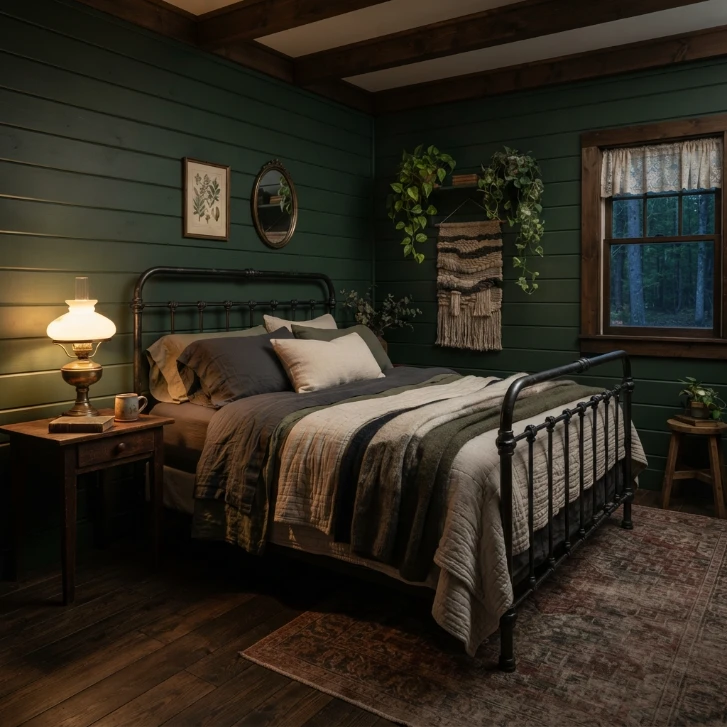
9. Use a Dark Accent Wall for a Cocooning Effect

Dark colors can make a bedroom feel intimate and restful when they are balanced with lighter furnishings. Deep green, charcoal, navy, brown, and muted plum can all work well on the wall behind the bed.
A dark accent wall is especially effective when the bedding, curtains, and rug contain lighter or warmer tones. Natural wood also helps prevent the room from feeling too cold.
Test your chosen color at different times of day before committing. A shade that looks soft in afternoon light can appear considerably darker at night, particularly in a room with limited natural light.
10. Continue the Accent Color Onto the Ceiling

For a bedroom with a strong architectural statement, carry the accent color from the feature wall onto part of the ceiling. This creates a wrapped effect that makes the sleeping area feel more enclosed and intentional.
This approach works particularly well with soft colors such as muted green, dusty blue, warm beige, or clay. The ceiling does not need to be dramatically darker than the walls; a close tonal relationship can be enough to create the effect.
Use this technique selectively. In a small room, keeping the surrounding walls light can help maintain balance while the colored section defines the bed zone.
11. Add a Decorative Panel With Built-In Lighting
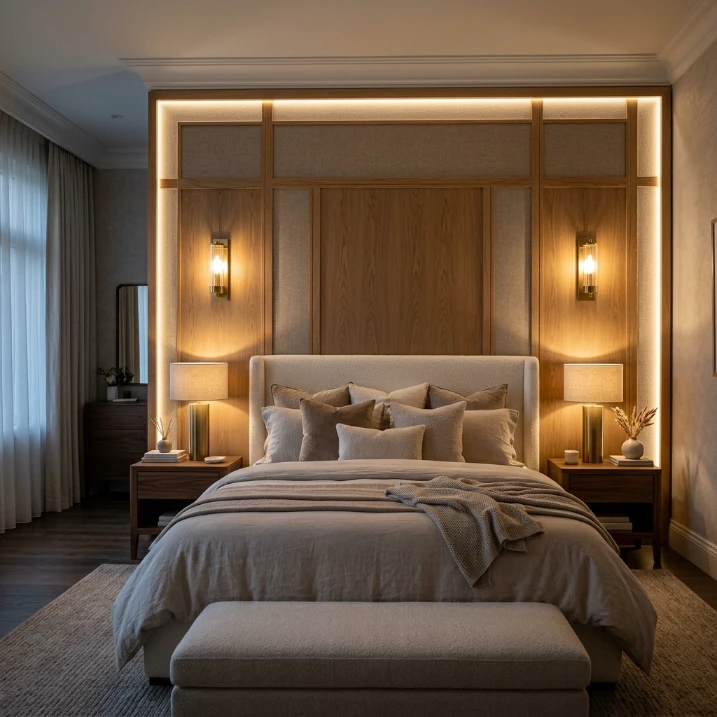
A custom-looking panel behind the bed can combine an accent wall with practical lighting. A shallow architectural frame, wood panel, or painted backdrop can provide a dedicated surface for wall sconces or concealed illumination.
Warm lighting is usually more comfortable in a bedroom than a very cool white. Place reading lights where they are useful and keep decorative illumination soft enough for the evening.
The panel should be wide enough to visually anchor the bed. If the bed is large, a narrow feature can look disconnected, so consider extending the treatment beyond the mattress on both sides.
12. Make a Small Bedroom Feel Larger With Vertical Lines

Vertical lines can guide the eye upward and make a bedroom appear taller. You can create this effect with narrow wood battens, vertical paneling, painted stripes, or a wallpaper pattern with a subtle upright direction.
For a sophisticated result, keep the contrast moderate. A tone-on-tone treatment often looks more expensive than sharply contrasting stripes and works well with simple bedding.
This idea is especially useful in rooms with low ceilings. Pairing vertical detailing with curtains hung close to the ceiling can reinforce the sense of height.
How to Choose the Best Bedroom Accent Wall
The wall behind the bed is usually the easiest place to create a focal point because the bed already acts as the room’s visual anchor. However, it is not the only option. In a bedroom with a strong window, fireplace, or architectural feature, another wall may make more sense.
Consider these factors before choosing a treatment:
- Room size: Large patterns and heavy textures can dominate a small bedroom, while a large room can usually handle stronger materials.
- Natural light: Test colors in morning, afternoon, and evening light before painting.
- Existing furniture: Your accent wall should complement the bed, nightstands, rug, curtains, and flooring.
- Budget: Paint is usually the simplest starting point, while wood, upholstery, and custom panels require more planning.
- Maintenance: Choose washable finishes and practical materials if the bedroom receives heavy daily use.
Bedroom Accent Wall Color Combinations
A good color combination can make even a simple accent wall look carefully designed. Consider these pairings:
| Accent Color | Pair With | Overall Feel |
|---|---|---|
| Sage green | Cream, oak, linen | Natural and relaxed |
| Deep navy | Warm white, walnut, brass | Classic and polished |
| Terracotta | Sand, beige, natural wood | Warm and earthy |
| Charcoal | Ivory, light oak, soft gray | Modern and dramatic |
| Dusty blue | White, taupe, pale wood | Calm and airy |
Simple Mistakes to Avoid
The strongest bedroom accent wall designs usually have one clear focal point. Avoid adding several competing treatments to the same wall. For example, a heavily patterned wallpaper may not need a large gallery of artwork directly on top of it.
Also avoid choosing a color only because it looks attractive in a store or online photograph. Your bedroom’s natural and artificial lighting can change the appearance significantly. Sample the color or material in the actual room first.
Finally, consider the scale of the bed. The accent treatment should visually support it rather than stopping awkwardly at its edges. A wider feature often creates a more balanced composition.
Final Thoughts
The right accent wall can give your bedroom a completely different character without changing every piece of furniture. Whether you prefer painted shapes, classic paneling, warm wood, botanical wallpaper, textured finishes, or layered artwork, the best choice is the one that fits your room and the atmosphere you want to create.
Start by identifying the wall you want to emphasize, then consider your lighting, furniture, budget, and preferred style. A thoughtful color choice and a well-proportioned treatment can make even a simple bedroom feel more finished, comfortable, and personal.