
20 Grey Nursery Ideas for a Calm and Beautiful Baby Room

Grey is one of the easiest colors to work with when designing a nursery. It feels soft and peaceful, works beautifully with both warm and cool tones, and gives you plenty of flexibility as your baby grows. Instead of feeling plain, the right combination of grey walls, natural textures, soft fabrics, wood accents, and carefully chosen decor can create a nursery that feels thoughtful and inviting.
Another advantage of grey is its versatility. A pale grey nursery can feel bright and airy, while charcoal accents can give the room more contrast. You can also pair grey with white for a clean look, blush for softness, sage green for a natural feel, or warm wood for extra comfort.
If you are planning a nursery and want something timeless rather than overly themed, these 20 grey nursery ideas can help you create a beautiful room that feels comfortable for both baby and parents.
1. Soft Grey and White Nursery
A soft grey and white color scheme is an excellent starting point for a peaceful nursery. Use a warm or pale grey on the walls and keep the larger furniture pieces white to make the room feel bright.
A white crib, dresser, and shelving can prevent the grey from making the space feel too heavy. Add a textured rug, white curtains, and simple grey bedding to create layers without making the room look busy.
Natural wood accessories can also warm up the palette. A wooden picture frame, small side table, or woven basket can add just enough contrast.
2. Grey Nursery With Natural Wood Accents
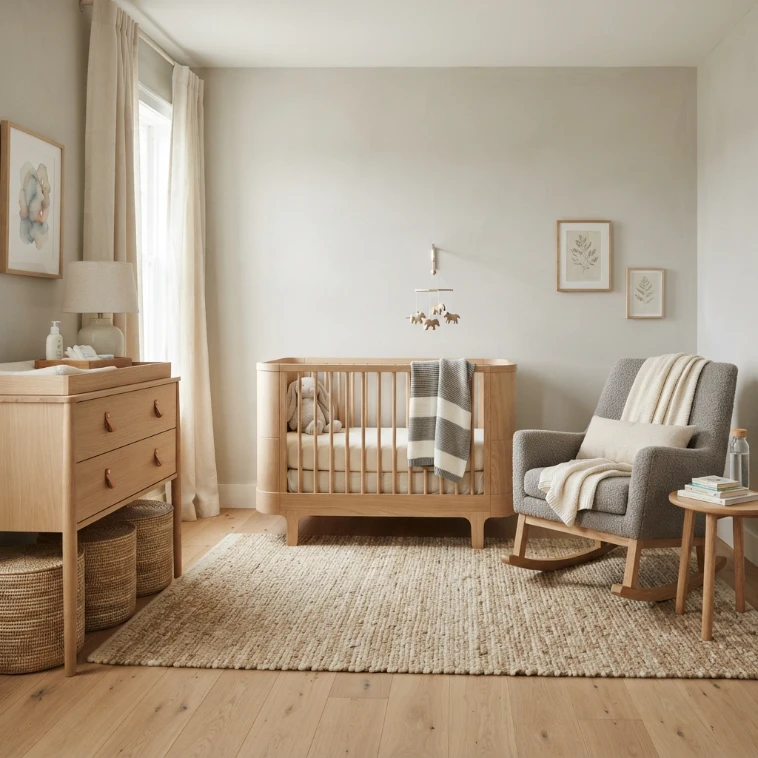
Grey and natural wood make a beautiful combination because the coolness of grey is balanced by the warmth of timber. This approach works particularly well if you prefer a modern, Scandinavian, or organic nursery.
Choose light oak or natural ash furniture against soft grey walls. Add woven baskets, a wooden mobile, and a few neutral textiles to continue the natural theme.
Keep the decor simple so the wood grain remains visible. Cream, beige, and off-white accessories can help connect the different materials throughout the room.
3. Grey and Blush Pink Nursery
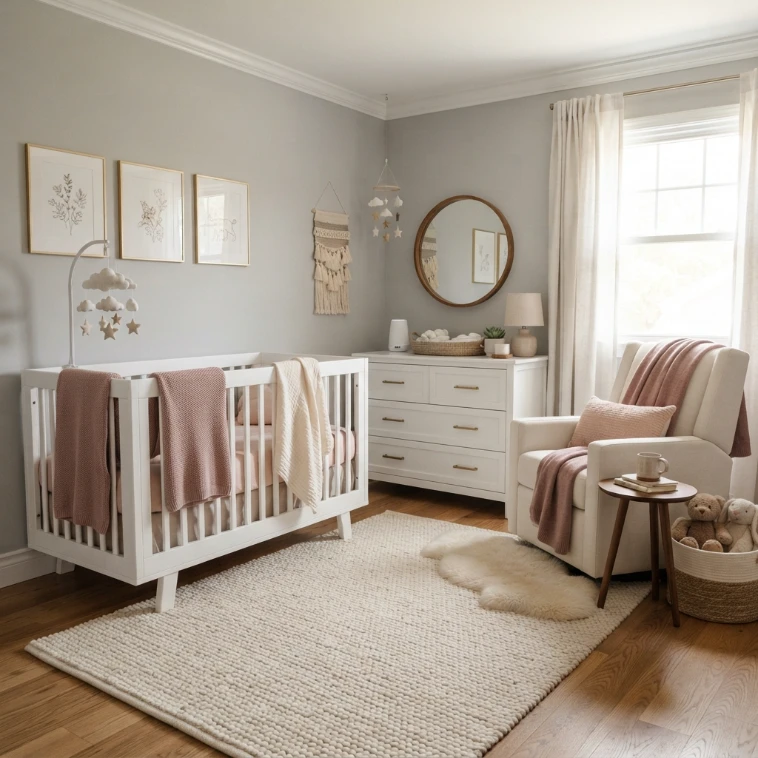
Grey and blush pink create a gentle color combination without making the nursery feel overly bright. The grey provides a neutral foundation while blush adds warmth and personality.
You can introduce blush through a rug, curtains, artwork, cushions for a parent chair, or small decorative accessories. There is no need to use pink everywhere.
For a sophisticated result, choose dusty or muted blush rather than an extremely bright pink. Combine it with white furniture, pale grey walls, and warm metallic details for an elegant finish.
4. Grey and Sage Green Nursery

Sage green is a natural partner for grey and works especially well in a calm, nature-inspired nursery. The two colors create a soft palette that feels relaxing without becoming boring.
Try pale grey walls with sage green bedding or a sage accent wall. Add natural wood furniture, woven baskets, and botanical-inspired artwork.
Cream-colored textiles can soften the combination further. The result is a nursery that feels fresh and timeless while still having plenty of character.
5. Grey Mountain-Themed Nursery

A mountain-inspired nursery can turn grey into part of the room’s main story. Instead of relying on a traditional cartoon theme, use layered mountain shapes, muted colors, and natural textures.
A simple mountain mural behind the crib can become the focal point. Keep the shapes understated with different shades of grey, beige, taupe, or muted green.
Finish the room with wood furniture, a soft neutral rug, and simple nature-inspired artwork. This gives the nursery personality without making it feel overwhelming.
6. Grey Nursery With Starry Ceiling

A starry ceiling can add a dreamy element to a grey nursery while keeping the walls relatively simple. This idea works particularly well when you want the room to feel magical without filling every wall with decorations.
Use a soft grey or slightly darker shade on the ceiling and introduce subtle star details. Keep the stars delicate rather than overly bright.
Pair the ceiling with warm bedside lighting, white furniture, and soft bedding. The result can feel especially cozy during evening routines.
7. Grey Nursery With a Statement Rug

You do not need to decorate every wall to make a grey nursery interesting. A statement rug can become the main decorative feature while keeping the rest of the room calm.
Choose a grey-and-white geometric design, a subtle pattern, or a plush neutral rug. Position it beneath the crib and extend it far enough to visually connect the main furniture pieces.
A patterned rug is also useful for adding texture to an otherwise simple color palette. Keep the surrounding decor understated so the rug remains the focal point.
8. Cozy Grey Rocking Chair Corner

A comfortable rocking chair can become one of the most useful areas in a nursery. Instead of treating it as only a functional piece, create a dedicated cozy corner around it.
Choose a soft grey upholstered chair and place it near a window or a warm floor lamp. Add a small side table for books, bottles, or other nighttime essentials.
A washable neutral throw and a small textured rug can make the area feel even more comfortable. This corner should be practical first, but it can still become one of the most beautiful parts of the nursery.
9. Grey Nursery With Cloud-Inspired Decor

Cloud-inspired details work naturally with a grey color scheme. They create a soft, dreamy atmosphere without requiring a complicated theme.
Consider cloud-shaped wall shelves, simple cloud artwork, soft pendant lighting, or white cloud-shaped decorative pieces. Keep the shapes minimal for a more modern appearance.
Pale grey walls provide the perfect background because they resemble an overcast sky without making the room dark. Add white and cream textiles to maintain the airy feeling.
10. Charcoal Grey Accent Wall

If pale grey feels too subtle, a charcoal accent wall can create a stronger focal point. Use it behind the crib or another major piece of furniture so the darker shade has a clear purpose.
Balance the charcoal with white or light-colored furniture. Warm wood can also prevent the room from feeling too cool.
Because charcoal is visually strong, keep the remaining walls and accessories relatively simple. A few carefully selected pieces will have more impact than a room filled with decorations.
11. Grey Nursery With Woven Storage Baskets

Storage can be decorative when you choose baskets that complement the nursery palette. Grey, cream, and natural woven baskets can keep everyday items organized while adding texture.
Place baskets beneath shelves, beside the changing station, or inside open storage units. They can hold blankets, toys, clothes, and other nursery essentials.
Choose baskets in different sizes but similar materials for a coordinated appearance. Natural fibers are especially useful for adding warmth to a predominantly grey room.
12. Modern Grey Nursery With Black Accents

For a more contemporary nursery, combine grey with small amounts of black. This creates contrast and gives simple furniture a more modern appearance.
Black can appear through lighting fixtures, picture frames, cabinet handles, curtain rods, or small decorative objects. You do not need much of it.
Pair the black details with light grey walls, white furniture, and warm wood to keep the nursery balanced. The result is modern without feeling harsh.
13. Grey Nursery With Textured Wallpaper

Textured wallpaper can add depth to grey walls without requiring a complicated color scheme. Look for subtle geometric patterns, linen-inspired textures, tiny stars, or understated organic shapes.
A wallpapered feature wall behind the crib can establish the room’s visual direction. Keep the furniture simple so the pattern remains easy to appreciate.
For a softer appearance, choose a wallpaper with several closely related grey tones rather than a strong high-contrast design.
14. Grey Changing Station With Smart Storage

A changing station should be practical, but that does not mean it needs to look purely functional. A grey dresser with organized storage can become an attractive part of the nursery.
Use matching baskets or small organizers inside drawers to separate diapers, clothing, blankets, and other essentials.
Keep frequently used items within easy reach while avoiding unnecessary clutter on the dresser surface. A simple mirror or framed artwork above the furniture can complete the arrangement.
15. Grey Nursery With Layered Textures
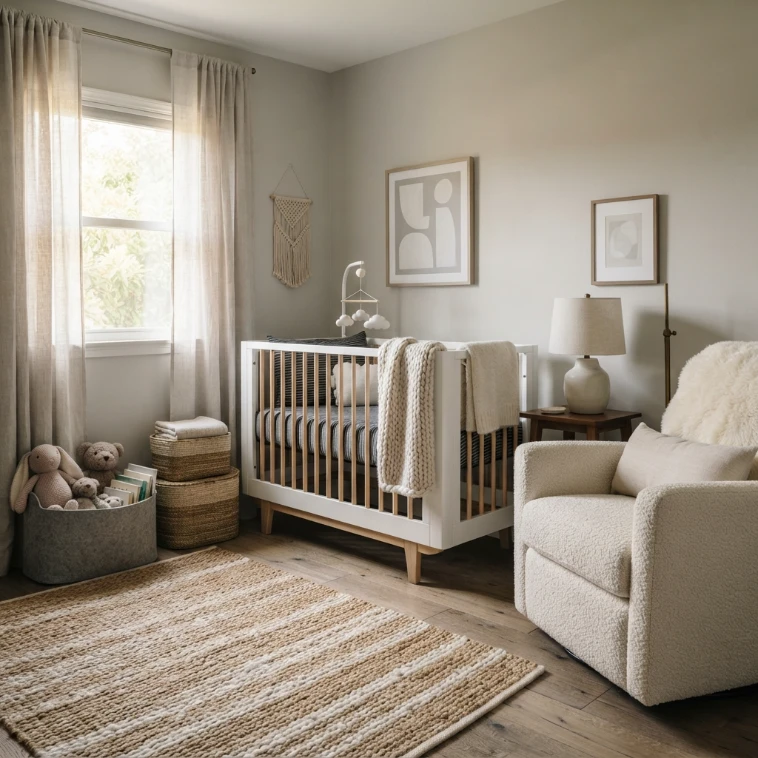
A monochromatic grey nursery becomes much more interesting when you combine different textures. This is one of the easiest ways to prevent a neutral room from looking flat.
Layer materials such as knitted blankets, linen curtains, boucle upholstery, woven baskets, soft rugs, and cotton bedding.
The colors can remain simple while the textures provide visual depth. Use several shades of grey rather than trying to match every item perfectly.
16. Grey and Cream Nursery

Grey and cream create a warmer alternative to the traditional grey-and-white nursery. Cream has a softer appearance and can make cool grey walls feel more welcoming.
Use cream curtains, a warm ivory rug, natural linen bedding, and light-colored furniture. Add pale wood accents to reinforce the cozy atmosphere.
This palette works especially well when you want a nursery that feels elegant and understated rather than strongly themed.
17. Grey Nursery With Animal Artwork

Animal artwork can add personality while keeping the room’s color palette controlled. Choose illustrations in grey, cream, beige, black, or muted earth tones.
Create a small gallery wall above a dresser or on the wall opposite the crib. Mix different animal illustrations while keeping the frames consistent.
For a polished result, avoid using too many unrelated colors. A limited palette will help the artwork feel like one coordinated collection.
18. Grey Nursery With Soft Geometric Patterns

Geometric patterns can give a grey nursery a modern appearance without requiring bold colors. Try subtle triangles, arches, grids, stripes, or simple repeating shapes.
Introduce the pattern through a rug, wallpaper, curtains, bedding, or artwork. Choose only one or two patterned elements so the room remains peaceful.
Grey and white geometric designs are particularly versatile because they can work with both contemporary and Scandinavian-inspired furniture.
19. Grey Nursery Reading Corner

A small reading corner gives the nursery an extra layer of function. Place a comfortable grey chair or floor cushion beside a low bookshelf where picture books can be easily displayed.
Add a soft rug and a warm lamp to make the space inviting. Front-facing book storage can also make colorful covers part of the decor.
As your child grows, this corner can become a regular place for bedtime stories and quiet play, making it a useful investment beyond the early nursery stage.
20. Elegant Grey Nursery With Warm Metallic Details

For a more refined look, combine grey with subtle metallic accents. Brushed brass, muted gold, or soft champagne finishes can add warmth without making the nursery feel overly formal.
Use metallic details sparingly through cabinet hardware, lighting, picture frames, or small decorative accessories.
Pair these accents with warm grey walls, cream textiles, white furniture, and natural wood. The combination creates a sophisticated nursery that still feels soft and comfortable.
How to Choose the Right Grey for a Nursery
Not every grey has the same effect. Some greys have blue undertones and can feel cooler, while others contain beige or brown undertones and appear warmer.
Before painting the entire room, test a few samples at different times of day. Natural daylight can make a shade look very different from how it appears under artificial lighting.
For a bright nursery, pale warm grey is usually an easy choice. If the room receives plenty of natural light, you can experiment with medium or darker shades on one wall.
Colors That Work Well With Grey
Grey is flexible enough to support many nursery color palettes. Some combinations are particularly easy to style:
- Grey + white: clean and airy
- Grey + cream: warm and soft
- Grey + blush: gentle and elegant
- Grey + sage: natural and calming
- Grey + navy: classic and slightly dramatic
- Grey + warm wood: cozy and organic
- Grey + muted yellow: cheerful without becoming overwhelming
The key is to choose one dominant palette and then use accent colors selectively.
How to Make a Grey Nursery Feel Warm
If your nursery starts feeling too cool, introduce warmer materials instead of immediately changing the wall color.
Wood furniture, woven baskets, cream fabrics, natural rugs, warm lighting, and textured blankets can all soften grey.
Lighting is particularly important. Warm-toned lamps can make grey walls appear much more inviting during the evening than cool white bulbs.
You can also layer several shades of grey. Combining pale grey, medium grey, and small charcoal accents creates depth while maintaining a cohesive appearance.
Final Thoughts
These 20 grey nursery ideas show how versatile this neutral color can be. Grey does not have to create a cold or boring room. With the right combination of textures, furniture, lighting, patterns, and accent colors, it can become the foundation for a beautiful and comfortable nursery.
For a timeless approach, start with soft grey walls and add white, cream, and natural wood. If you prefer something more distinctive, bring in sage green, blush pink, charcoal, geometric patterns, or a statement mural.
Most importantly, create a nursery that works for everyday life. Comfortable seating, practical storage, easy-to-clean materials, and good lighting are just as important as the decorative details. When those practical elements are combined with a thoughtful grey palette, the result is a nursery that feels beautiful, peaceful, and ready to grow with your family.


