11 Stunning Shower With Bench Ideas That Make Your Bathroom Feel Like a Spa

A shower bench can make a bathroom feel more comfortable, practical, and thoughtfully designed. It gives you a convenient place to sit, provides extra space for shower essentials, and can become an attractive architectural feature within the shower.
The best shower with bench ideas are not limited to large luxury bathrooms. Corner benches, floating slabs, fold-down seats, and compact designs can work in smaller showers too. The key is choosing a style that fits your available space, tile design, storage needs, and overall bathroom aesthetic.
From warm teak wood to elegant marble, these 18 shower bench ideas can help you create a relaxing shower area with a polished, spa-like appearance.
1. Built-In Corner Bench
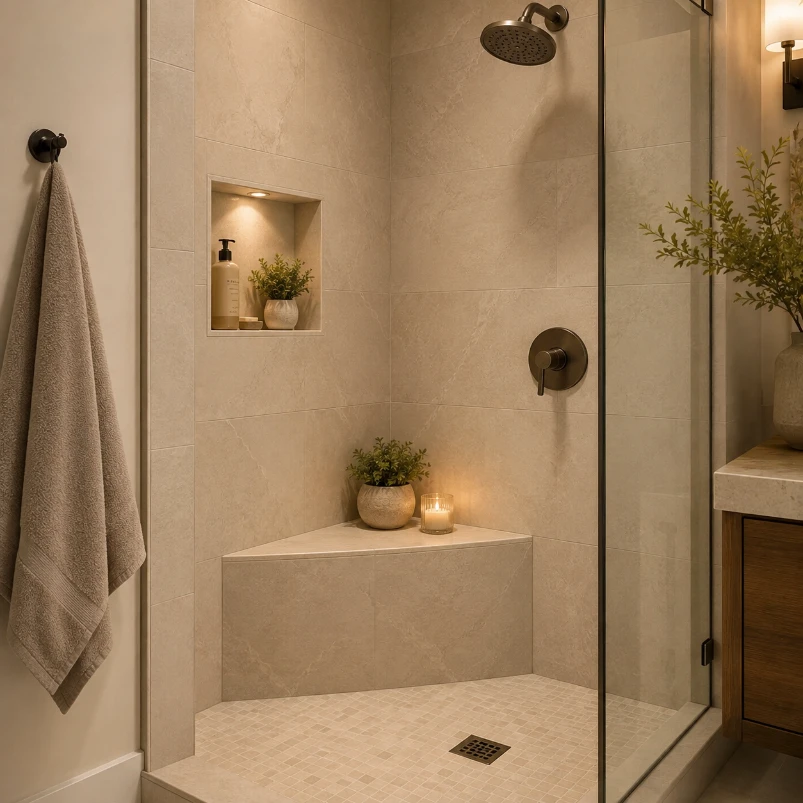
A built-in corner bench is one of the most practical choices for a shower. By using an otherwise unused corner, this design adds seating without taking too much space away from the main shower area.
A tiled corner bench works particularly well in contemporary, traditional, and transitional bathrooms. You can use the same tile as the shower walls for a seamless appearance or choose a contrasting surface to make the bench a focal point.
For a small bathroom, keep the bench compact and pair it with a recessed shower niche. This combination provides both seating and convenient storage without adding freestanding furniture.
2. Floating Stone Bench
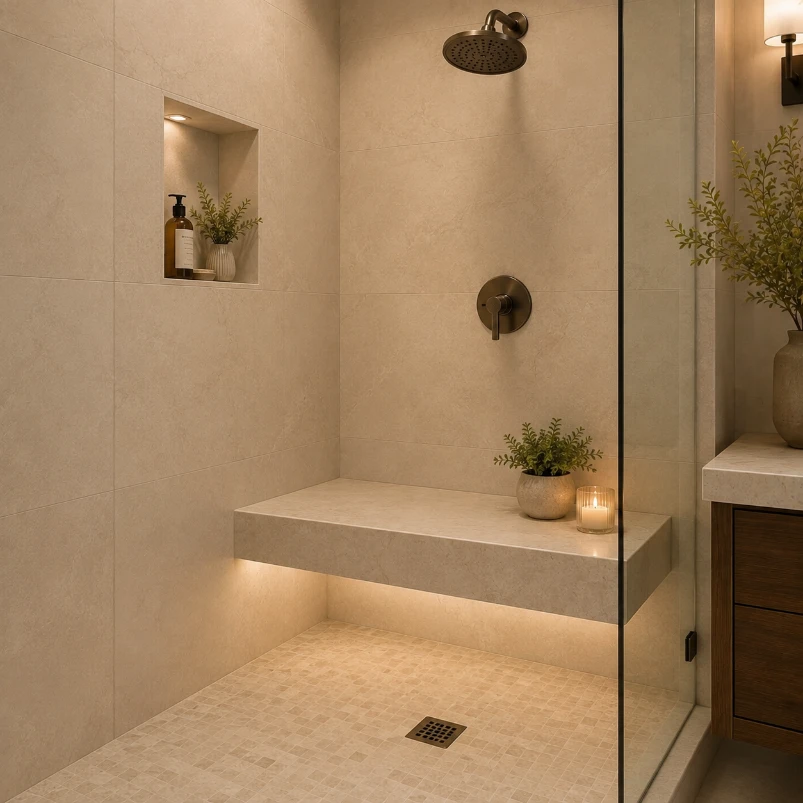
A floating stone bench creates a clean, modern appearance because there are no visible legs or bulky supports beneath the seat. The open space underneath also makes the shower floor appear more spacious.
Natural stone, quartz, or a suitable solid-surface material can give the bench a high-end finish. Light-colored stone works especially well with neutral walls, while darker stone can create an attractive contrast.
Make sure the bench is properly supported during installation. A floating design should be planned as part of the shower construction rather than treated as a simple decorative addition.
3. Full-Length Shower Bench

If you have a spacious walk-in shower, consider extending the bench across much of the back wall. A full-length shower bench provides generous seating while creating a strong horizontal element in the room.
This design can also provide additional space for toiletries and towels, depending on the layout. Large-format tiles can make the bench look particularly streamlined because there are fewer visible grout lines.
For a balanced look, coordinate the bench material with the vanity countertop, shower niche, or bathroom flooring.
4. Teak Wood Shower Bench
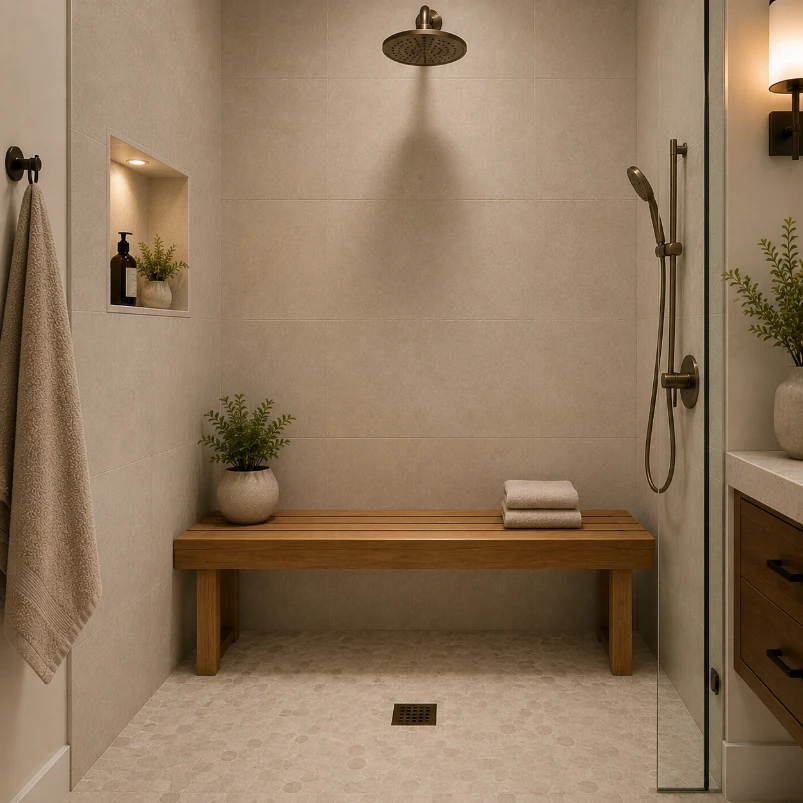
Teak brings warmth and natural character to a bathroom filled with hard surfaces. A teak shower bench can soften the appearance of stone and tile while adding a relaxed spa-inspired feel.
A slatted teak seat is especially attractive because water can drain between the boards. However, choose a product specifically designed for wet environments and follow the manufacturer’s care recommendations.
Teak works beautifully with white tile, beige walls, stone floors, and natural accessories. It is also a great option when you want a less built-in appearance.
5. Curved Shower Bench

A curved bench introduces softer lines into a bathroom dominated by rectangular tiles and straight walls. It can make a shower feel more custom-designed and visually interesting.
This idea works particularly well in larger showers where there is enough room to create a comfortable curve without restricting movement.
For a cohesive design, repeat curved shapes elsewhere in the bathroom through mirrors, lighting, cabinetry, or decorative details.
6. Fold-Down Shower Bench

A fold-down bench is an excellent choice when you want seating but need to preserve floor space. The seat can remain folded against the wall when it is not being used.
This makes it especially useful for compact bathrooms and multi-purpose showers.
When selecting or installing a fold-down seat, pay close attention to the manufacturer’s weight rating, wall reinforcement requirements, water exposure, and installation instructions. The mounting system needs to be appropriate for the wall construction.
7. Bench With Storage

Combining seating and storage can make a shower much more functional. A built-in bench can incorporate an open shelf underneath or nearby recessed compartments for shower products.
This approach is particularly useful when wall space is limited. Instead of adding separate storage fixtures, the bench becomes part of the overall organization system.
Use waterproof materials and avoid creating areas where water can collect. A properly sloped seat and good drainage details are important for a built-in shower bench.
8. Marble Slab Bench
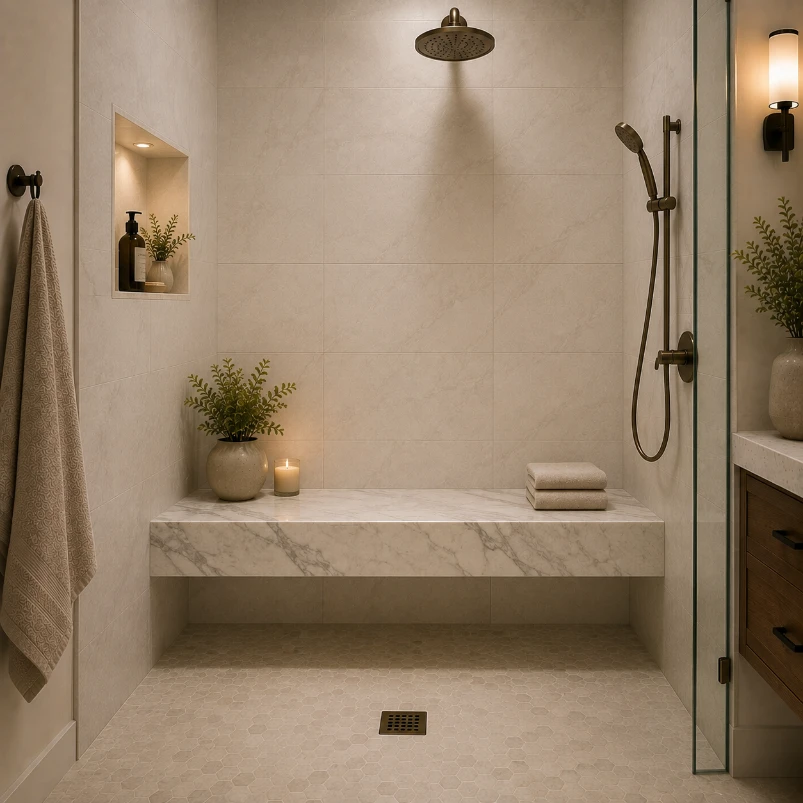
A marble slab can instantly give a shower a sophisticated appearance. Its natural veining creates visual interest without requiring additional decoration.
For a luxurious look, choose a marble slab that complements the surrounding tile rather than competing with it. For example, subtle gray veining can work beautifully with white subway tile or large-format porcelain.
Because natural stone requires appropriate care, check that the selected material is suitable for wet areas and follow the recommended sealing and maintenance instructions.
9. Bench and Niche Combo

A shower bench paired with a recessed niche creates a practical and visually balanced wall. The bench provides seating while the niche keeps shampoo, conditioner, and body wash organized.
You can coordinate the niche and bench with the same accent tile to create a unified design.
This combination is particularly useful in modern walk-in showers where you want to reduce visual clutter. Keeping everyday products inside the niche helps the shower look cleaner and more organized.
10. Tile-Matching Bench
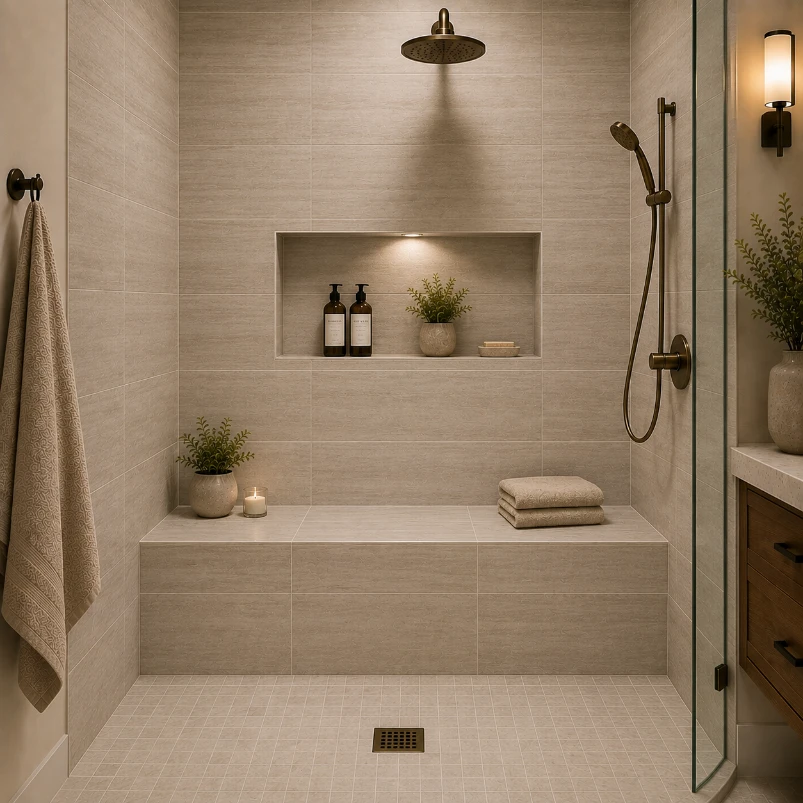
Using the same tile on the shower walls and bench creates a continuous, built-in appearance. This is one of the easiest ways to make a bench feel like an intentional part of the architecture.
Large-format porcelain tiles can create a particularly seamless effect. If the same tile is used throughout the shower, consider changing the direction or pattern slightly on the bench to create subtle visual definition.
A contrasting grout color can also highlight the bench without introducing another material.
11. Glass Wall Bench
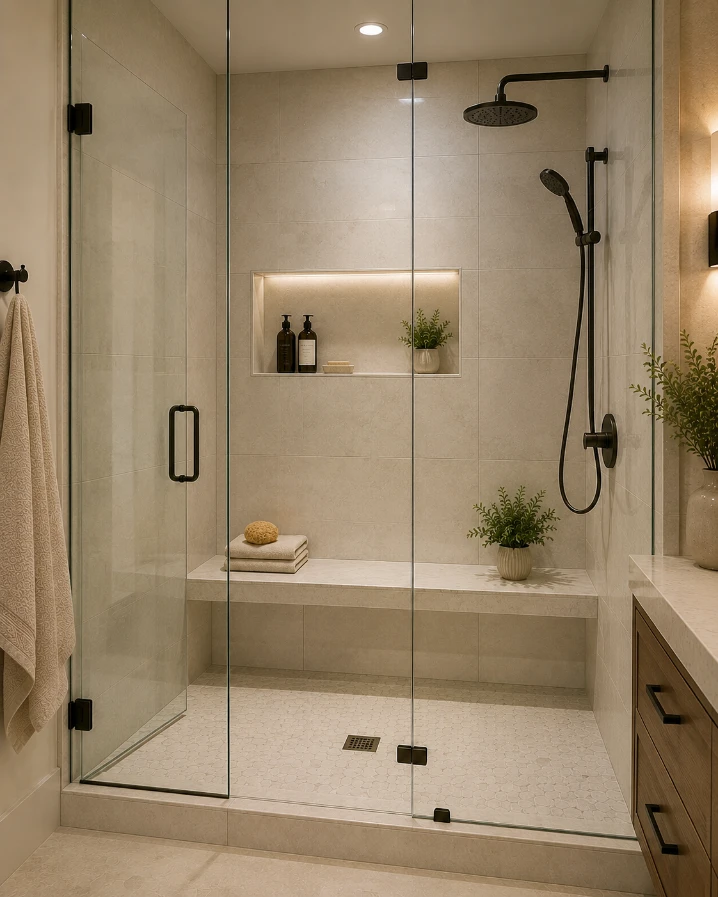
A glass-enclosed shower can make a bathroom feel bright and open. Adding a bench inside the enclosure keeps the seating visually connected to the shower while allowing light to travel through the space.
A stone or tiled bench behind clear glass works well in minimalist bathrooms. Keep accessories simple so the glass enclosure remains the dominant visual feature.
When planning the layout, make sure the enclosure does not interfere with the controls, shower fixtures, or movement around the seat.
Create Your Perfect Shower With Bench
Choosing the right shower bench is about more than picking a beautiful material. The bench should work with the size of the shower, placement of the fixtures, drainage, storage, and the way you expect to use the space.
Before construction begins, consider these factors:
- Measure the shower carefully: Make sure the bench does not make the shower feel cramped.
- Choose the right material: Porcelain, natural stone, solid-surface materials, and properly selected wood can all create different looks.
- Plan drainage: Built-in surfaces should be designed so water does not sit on the bench.
- Think about maintenance: Highly textured materials may require more cleaning than smooth surfaces.
- Coordinate finishes: Match or complement the bench with the shower tile, vanity, floor, and hardware.
- Plan storage: A nearby niche can prevent bottles from collecting on the bench.
- Consider accessibility: If accessibility is important, discuss dimensions, grab bars, seat type, and reinforcement with a qualified professional.
- Use proper structural support: Built-in and floating benches must be adequately supported for their intended use.
The National Kitchen & Bath Association’s bathroom planning guidance recommends planning a shower seat around the needs of the user and available space, with a recommended seat height of 17–19 inches and a depth of about 15 inches.
For projects involving accessibility requirements, always check the applicable local building codes and the official ADA standards rather than relying only on general design advice.
Final Thoughts
The right shower with bench ideas can turn an ordinary bathroom into a more comfortable and polished space. A compact corner bench can make a small shower more functional, while a full-length stone seat can become the centerpiece of a spacious walk-in shower.
Teak brings natural warmth, marble adds elegance, floating slabs create a modern appearance, and fold-down designs help preserve valuable floor space. You can also combine a bench with a niche, contrasting tile, or thoughtful storage to make the entire shower more practical.
The best design is ultimately the one that fits your space and daily routine. Focus on comfortable proportions, durable materials, proper drainage, strong support, and a layout that leaves enough room to move comfortably. With those details in place, your shower bench can be both a beautiful design feature and a useful part of the bathroom.