18 Two-Tone Wall Paint Ideas for Bathrooms That Look Stunning
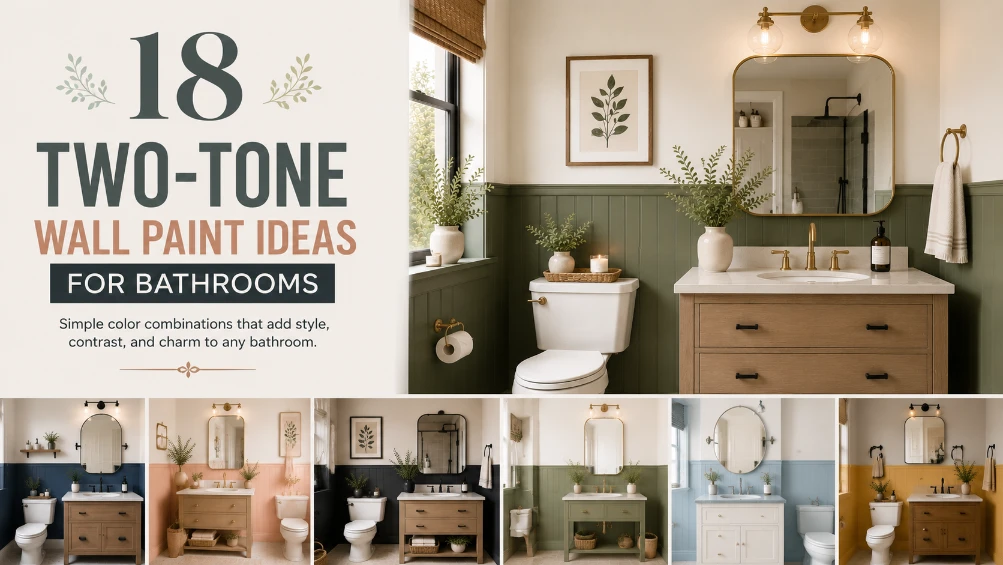
Two-tone wall paint is a simple way to give a bathroom more personality without changing the entire space. By combining two complementary colors, you can make a small bathroom feel taller, wider, brighter, or more visually interesting.
The best part is that this idea works with almost every bathroom style. You can pair soft neutrals for a calm look, use dark and light shades for contrast, or bring in earthy colors for a warm and modern finish.
Below are 18 beautiful two-tone wall paint ideas for bathrooms, followed by practical tips to help you choose the right color placement, finish, and combination.
1. Soft Blush and Warm White
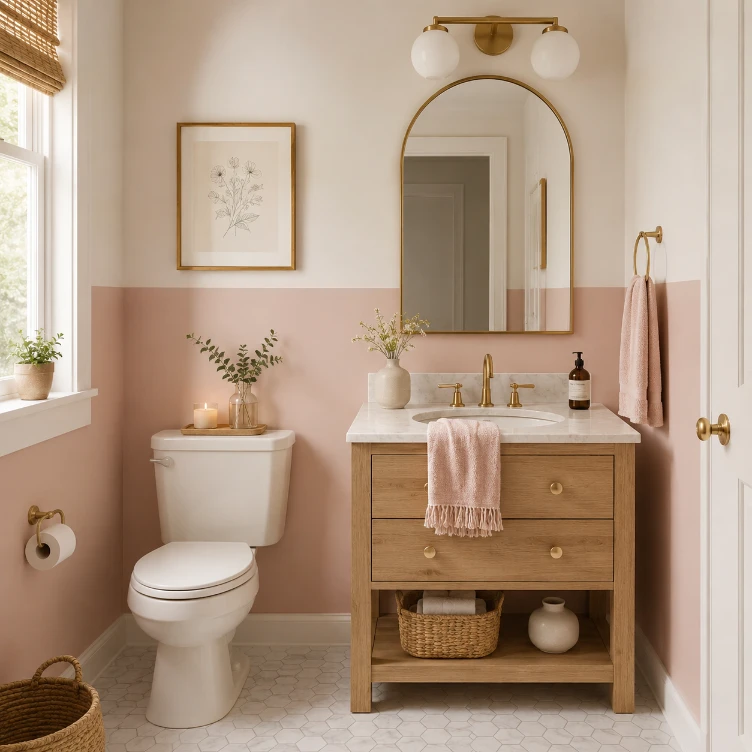
Soft blush paired with warm white creates a gentle and welcoming bathroom. This combination works especially well in bathrooms with white fixtures, light wood accents, and brass hardware.
Try painting the lower half of the wall in blush and the upper portion in warm white. The lighter color keeps the room open while the blush adds warmth and character.
This combination is a great choice for:
- Small bathrooms
- Powder rooms
- Vintage-inspired spaces
- Feminine or soft modern interiors
Add a natural wood vanity or warm metallic fixtures to complete the look.
2. Navy Blue and Crisp White

Navy blue and crisp white offer a classic contrast that always feels polished. The dark navy brings depth, while white prevents the bathroom from looking too heavy.
For a balanced design, use navy on the lower section of the walls and white above. A horizontal split around chair-rail height can create a clean, structured appearance.
White subway tiles, chrome fixtures, and a simple framed mirror work particularly well with this color combination.
If your bathroom has limited natural light, keep the navy section lower and use plenty of white on the upper walls.
3. Sage Green and Cream

Sage green is a popular choice for bathrooms because it creates a calm, natural atmosphere. Pairing it with cream instead of bright white gives the room a softer and warmer appearance.
Use sage green on the bottom half of the wall and cream above. This combination looks beautiful with:
- Oak or walnut wood
- Brushed brass hardware
- White ceramic sinks
- Natural woven accessories
A few green plants can also help tie the color scheme together.
4. Charcoal Gray and Soft Taupe
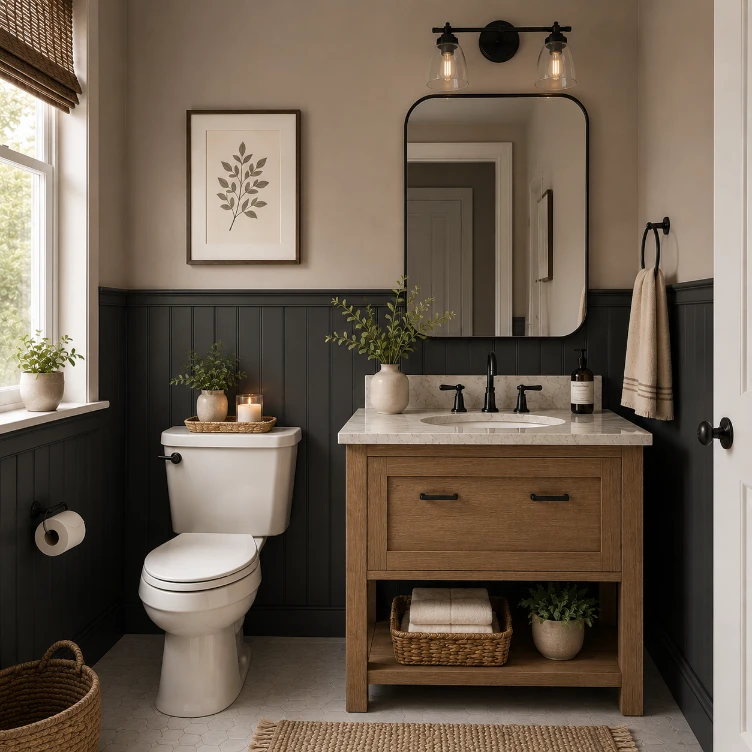
For a more sophisticated bathroom, combine charcoal gray with soft taupe. Charcoal adds drama, while taupe softens the overall look.
This pairing works best when the darker shade is used strategically. Consider painting the lower half charcoal and using taupe above, especially in a bathroom with good lighting.
You can also reverse the placement if you want a darker upper wall and a lighter lower section for a more unusual design.
Matte black fixtures and warm wood accents complement this palette nicely.
5. Terracotta and Beige

Terracotta adds warmth and an earthy feel to a bathroom. When combined with beige, the result feels relaxed, stylish, and slightly Mediterranean.
Paint one section of the wall in a muted terracotta shade and balance it with a sandy beige. The colors work well with natural textures such as stone, rattan, clay, and wood.
This is a particularly good option if you want your bathroom to feel warm without using overly bright colors.
Choose softer, muted terracotta rather than a strong orange-red for a more timeless result.
6. Soft Teal and White

Soft teal can bring a fresh, spa-like feeling into the bathroom. Paired with white, it creates a clean contrast that still feels calm.
You can use teal below the paint line and white above it. This helps introduce color without overwhelming the entire room.
Soft teal works beautifully alongside:
- White tiles
- Light gray floors
- Chrome fixtures
- Natural wood shelving
It is also a good choice for coastal, modern, and transitional bathroom styles.
7. Mustard Yellow and Warm Gray

Mustard yellow may not be the first color that comes to mind for a bathroom, but when used in moderation, it can create a bold and stylish result.
Pair it with warm gray to keep the space balanced. Use mustard on a smaller section, such as the lower half of one wall, while gray acts as the calmer background color.
This combination works best in bathrooms with plenty of natural or artificial light.
Consider adding black hardware or medium-toned wood to give the design a more modern appearance.
8. Olive Green and White
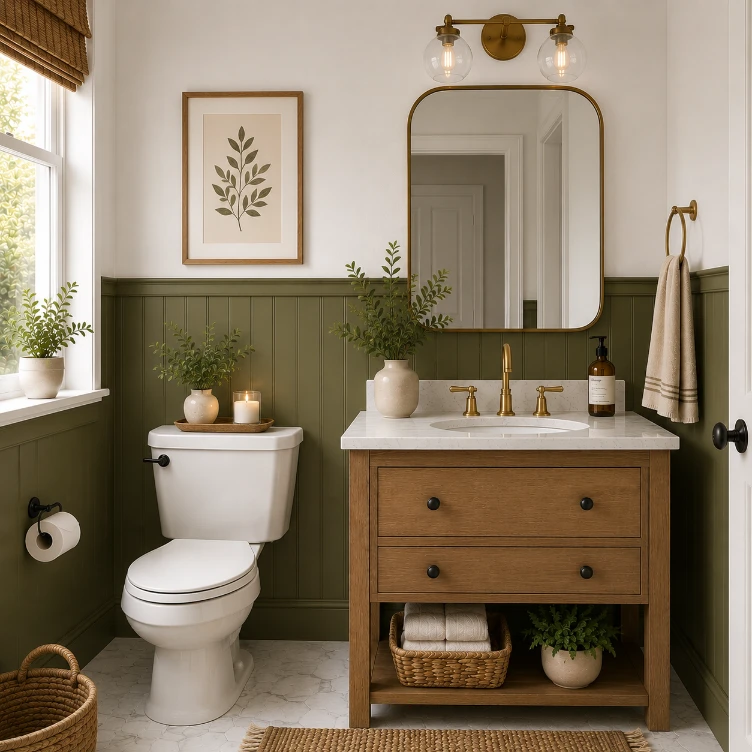
Olive green adds richness without feeling as dark as black or charcoal. When paired with white, it creates a clean yet earthy bathroom design.
For a traditional two-tone look, paint the lower wall olive green and the upper section white.
This combination looks especially good with:
- Brass or black fixtures
- White marble
- Natural wood vanities
- Textured towels
- Simple framed artwork
Olive green is also a practical choice because it can hide minor marks better than very light colors.
9. Dusty Blue and Stone Gray

Dusty blue has a soft, relaxed appearance that works beautifully in bathrooms. Pairing it with stone gray creates a subtle contrast without making the walls feel overly colorful.
Use dusty blue as the main feature color and stone gray as the neutral companion.
For example, you could paint the lower portion dusty blue and the upper section stone gray. Add white trim between the two colors for a more finished appearance.
This palette works particularly well in modern and transitional bathrooms.
10. Mauve and Soft White

Mauve brings a muted hint of color that feels elegant rather than overly bright. Soft white helps maintain a light and airy bathroom.
This combination is ideal for anyone who wants something more interesting than a neutral bathroom while still keeping the design understated.
Use mauve on the lower section or as an accent wall, then continue with soft white around the remaining walls.
Brass lighting, warm wood, and creamy towels can make the overall palette feel even more cohesive.
11. Black and Soft Beige
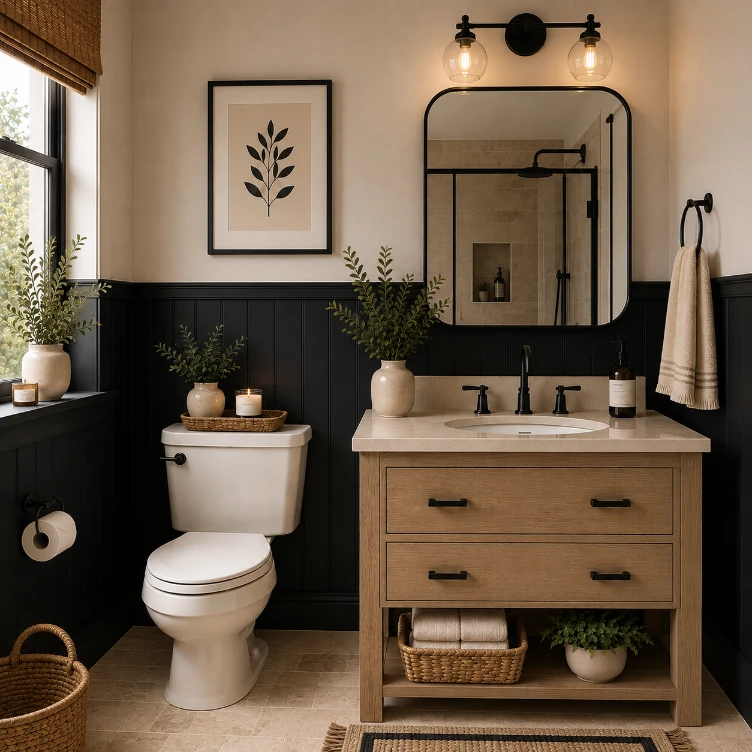
Black and soft beige create a striking balance between dramatic and warm. Instead of pairing black with bright white, beige helps soften the contrast.
This is a good choice for a modern bathroom, especially when combined with:
- Black-framed shower glass
- Matte black faucets
- Light wood cabinets
- Stone or beige floor tiles
In a small bathroom, avoid covering every wall in black. Using it on the lower section or on one feature wall can provide enough contrast without making the space feel closed in.
12. Pastel Peach and White
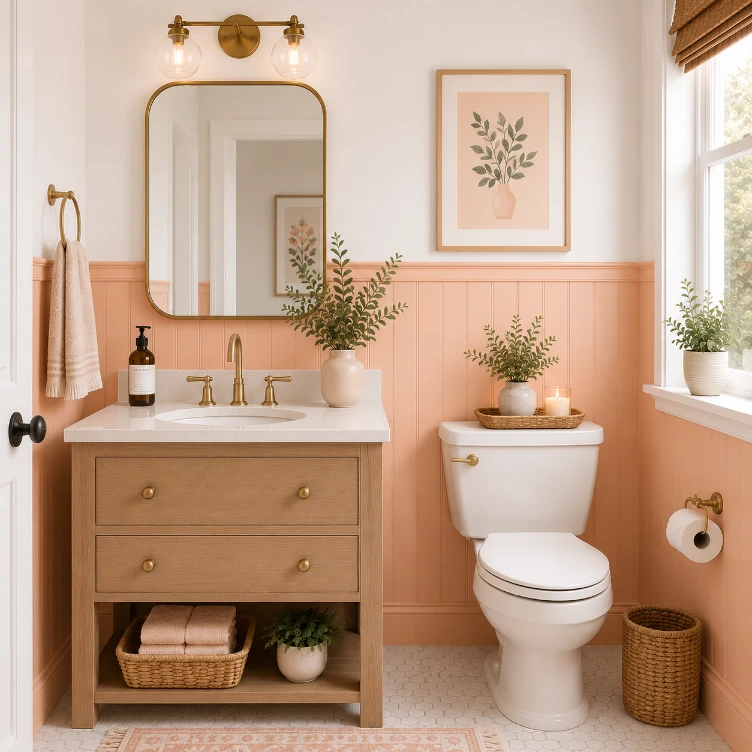
Pastel peach creates a cheerful and warm atmosphere. When paired with white, it feels fresh and clean.
Try using peach on the lower half of the wall, with white above. This placement keeps the color grounded while allowing the upper section to reflect more light.
This combination works nicely in:
- Guest bathrooms
- Small powder rooms
- Vintage-style bathrooms
- Family-friendly spaces
Choose a muted peach tone for a more refined appearance.
13. Deep Forest Green and Ivory

Forest green and ivory create a rich, timeless combination. The darker green adds visual weight, while ivory brings warmth and softness.
This pairing can look particularly beautiful in a bathroom with traditional details, wood cabinetry, or brass fixtures.
Use forest green below the color split and ivory above. A thin trim or molding between the two colors can give the walls a more architectural appearance.
Because forest green is quite strong, good lighting is important. Use mirrors and lighter surfaces to reflect light around the room.
14. Slate Blue and Warm White

Slate blue is darker and more muted than traditional blue, making it a versatile choice for bathrooms.
Pairing it with warm white creates contrast without making the design feel harsh.
This combination works with both modern and classic interiors. You can paint the lower wall slate blue and keep the upper section warm white.
For a cohesive result, repeat the slate blue somewhere else in the room, such as in towels, artwork, or a small decorative accessory.
15. Coral and Sand
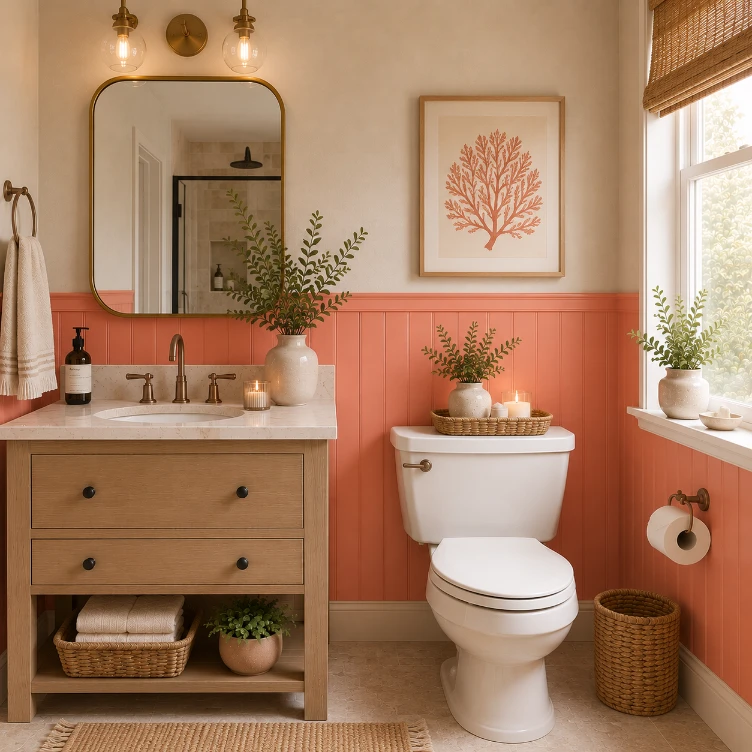
Coral and sand bring warmth and energy to a bathroom. This combination can create a relaxed, sunny atmosphere when the shades are kept muted.
Use a soft coral rather than a highly saturated orange or pink. Pair it with a sandy neutral on the remaining wall sections.
Natural materials work especially well here, including:
- Light wood
- Woven baskets
- Stone accessories
- Linen or cotton textiles
This combination can make a simple bathroom feel more lively without requiring a major renovation.
Quick Tips for Using Two-Tone Paint in Bathrooms
Choosing beautiful colors is only part of the process. The placement of the colors, paint finish, and surrounding materials can all affect the final result.
Where Should the Color Split Go?
The most common option is to place the color split around one-third to halfway up the wall.
A lower color split can make the walls feel grounded and works well when using a darker shade below.
A split closer to the middle creates a more traditional two-tone appearance, especially when paired with trim or molding.
Before painting, use painter’s tape to mark the proposed line and step back to see how it looks from different areas of the bathroom.
Here is a simple guide:
| Color Placement | Best For |
|---|---|
| Lower 1/3 dark, upper light | Small bathrooms and strong contrast |
| Half and half | Balanced, classic two-tone look |
| High color split | Decorative or dramatic designs |
| One accent wall | Bathrooms where you want less color overall |
Choose the Right Paint Finish
Bathrooms experience moisture, steam, and regular cleaning, so the paint finish matters.
A quality satin or semi-gloss finish is often a practical choice for bathroom walls because it is easier to clean and handles moisture better than very flat finishes.
However, many modern bathroom paints are available in matte finishes designed for humid areas. Always check whether the specific paint is suitable for bathrooms.
In general:
- Satin: Soft appearance and easy maintenance
- Semi-gloss: More moisture resistant and highly washable
- Bathroom-specific matte: Modern appearance with appropriate moisture protection
The right choice depends on your bathroom’s ventilation and how much moisture the walls receive.
Easy Ways to Make the Look Feel Cohesive
Two-tone walls look their best when the colors connect with other parts of the room.
You can create a more unified design by repeating one or both wall colors in small details.
For example:
- Match towels to one wall color.
- Choose artwork that includes both shades.
- Add a trim color that complements the palette.
- Repeat the darker shade in a vanity or storage cabinet.
- Use hardware that suits the warmth or coolness of the paint colors.
Also consider your existing tiles, flooring, countertops, and fixtures before choosing paint. The new wall colors should work with permanent elements rather than compete with them.
How to Choose the Best Two-Tone Bathroom Colors
When deciding between different color combinations, start by looking at the size and lighting of your bathroom.
A small or dark bathroom often benefits from lighter upper walls because they help reflect available light. A larger bathroom gives you more freedom to use dark or saturated colors.
You should also consider the mood you want to create.
For a calm bathroom: Try sage and cream, dusty blue and gray, or light mocha and cream.
For a bold bathroom: Consider navy and white, black and beige, or forest green and ivory.
For a warm and inviting bathroom: Terracotta and beige, coral and sand, or soft blush and warm white can work beautifully.
It is also helpful to test paint samples directly on the wall. Colors can look very different depending on natural light, artificial lighting, nearby tiles, and the time of day.
Final Thoughts
Two-tone bathroom walls can completely change the appearance of the space without requiring new tiles, cabinetry, or expensive renovations.
Whether you prefer soft blush and warm white, dramatic navy and crisp white, earthy terracotta and beige, or a bold forest green and ivory combination, the key is to create enough contrast while keeping the overall room balanced.
Think about your bathroom’s lighting, size, existing finishes, and the atmosphere you want to create. Use lighter shades strategically, choose a practical paint finish, and repeat your chosen colors through small details around the room.
With the right combination and placement, two-tone wall paint can give even a simple bathroom a more polished, stylish, and personal look.
Meta Title
18 Two-Tone Wall Paint Ideas for Bathrooms That Look Stunning
Meta Description
Explore 18 beautiful two-tone wall paint ideas for bathrooms, from soft neutrals to bold color combinations, plus practical tips for creating a stylish finish.
Primary Keyword
- Two-tone wall paint ideas for bathrooms
Related Keywords
- Two-tone bathroom paint ideas
- Bathroom wall color ideas
- Two-color bathroom walls
- Bathroom paint color combinations
- Modern bathroom paint ideas
- Small bathroom color ideas
- Bathroom accent wall ideas
- Two-tone bathroom walls
- Best colors for bathroom walls
Internal Linking Suggestions
You can internally link this article to relevant posts using natural anchor text such as:
- small bathroom ideas
- modern bathroom ideas
- bathroom accent wall ideas
- bathroom storage ideas
- shower wall ideas
- bathroom color ideas
- spa bathroom ideas
- luxury bathroom ideas
External Authority References
For paint preparation, moisture-resistant paint, ventilation, and bathroom painting guidance, consider referencing recognized paint manufacturers or home improvement resources where relevant.