20 Shower Pan and Niche Ideas for Modern Bathroom Renovations
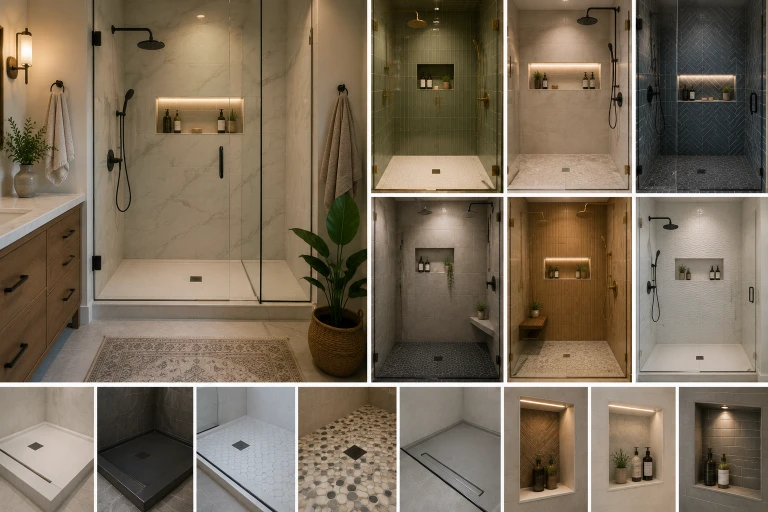
A well-designed shower can completely change the look and function of a bathroom. While tile, glass, and fixtures often receive the most attention, the shower pan and niche also play an important role in creating a practical and polished space. The right shower pan provides a reliable foundation for the shower, while a well-planned niche keeps toiletries organized without taking up valuable floor space.
Modern bathroom renovations offer many options, from sleek linear drains and marble surfaces to textured pebble floors and built-in storage. Whether you are remodeling a compact bathroom or creating a spacious walk-in shower, the combination of the right shower pan and niche can improve both everyday convenience and visual appeal.
Below are 20 shower pan and niche ideas that can work with different bathroom styles, materials, and budgets.
1. Curved Shower Niches

A curved shower niche adds a softer architectural detail to a modern bathroom. Instead of using the typical rectangular opening, the rounded shape creates a more decorative appearance while providing useful storage.
Curved niches work especially well with contemporary, spa-inspired, and organic bathroom designs. They can be finished with small mosaic tiles, natural stone, or the same tile used throughout the shower walls.
For a cohesive appearance, consider matching the niche trim with the shower fixtures or other bathroom hardware.
2. Pebble Tile Shower Pan
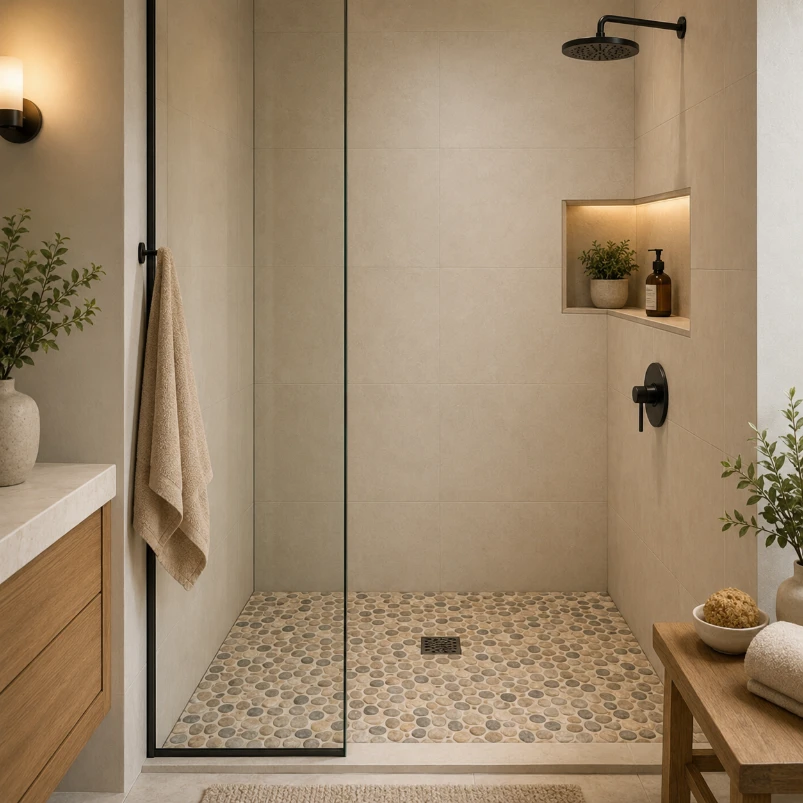
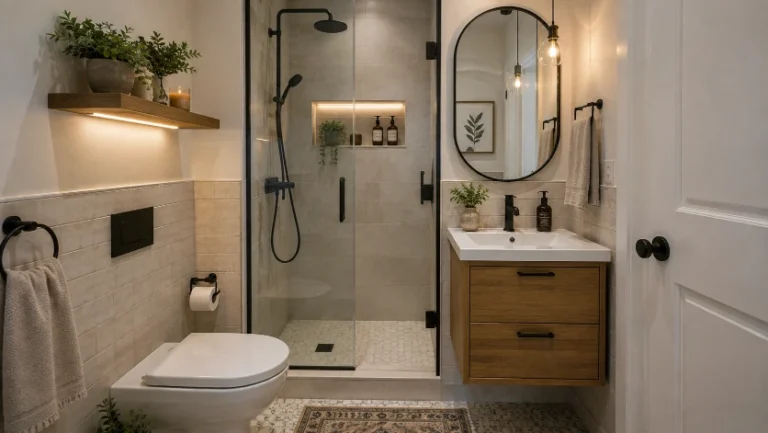
Pebble tile is a popular choice for shower floors because it introduces natural texture and visual interest. The rounded stones can give the shower a spa-like character while creating a distinctive surface beneath your feet.
Choose properly sealed pebble tiles designed for wet areas. The grout lines and surface texture should also be considered during cleaning and maintenance.
A pebble shower pan pairs nicely with neutral wall tiles, wood-look cabinetry, and natural stone accents.
3. Recessed Shower Shelf

A recessed shower shelf provides convenient storage without extending into the shower area. It is particularly useful in smaller bathrooms where every inch of space matters.
The shelf can hold shampoo, conditioner, soap, and other everyday shower products. Multiple compartments can be added if more storage is needed.
For a clean appearance, use a contrasting tile inside the shelf or continue the same tile for a more seamless finish.
4. Hexagon Tile Shower Pan
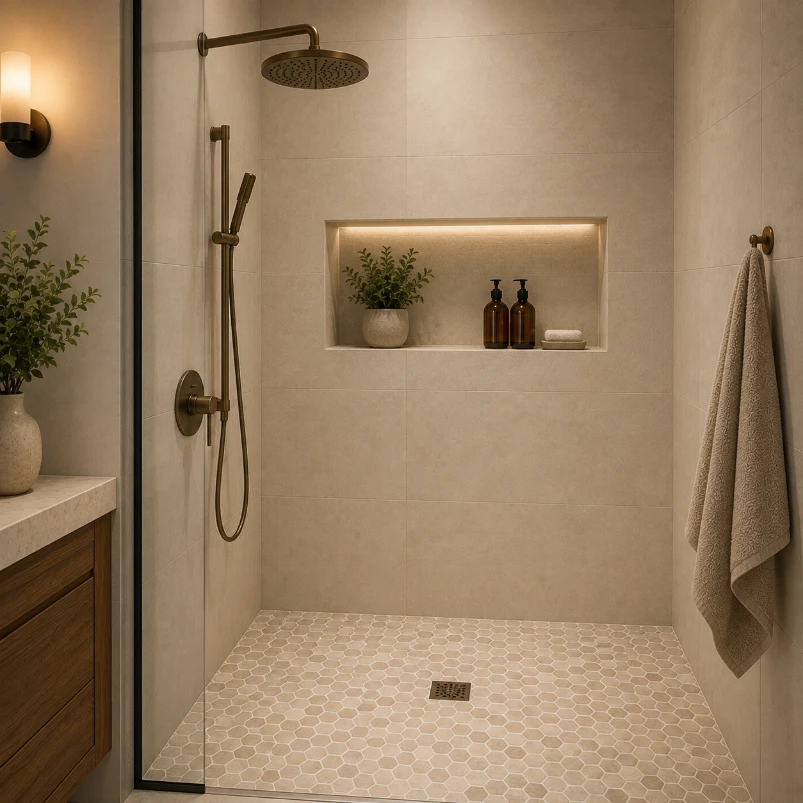
Hexagon tiles can give a modern shower floor a geometric appearance without making the design feel overly complicated. They are available in many sizes, colors, and finishes.
Small hexagon tiles are often useful for shower floors because the additional grout joints can provide visual texture. Choose a suitable slip-resistant product intended for wet floors.
For a balanced design, pair a patterned hexagon floor with simpler wall tiles.
5. Stainless Steel Shower Niche

A stainless steel shower niche offers a sleek alternative to fully tiled storage. Its clean surface works especially well in contemporary and industrial-style bathrooms.
Stainless steel can coordinate naturally with stainless fixtures, shower controls, and other metal accents. It also creates a crisp contrast against stone or ceramic wall tiles.
When choosing a metal niche, select a product specifically designed for shower environments and make sure the installation provides proper waterproofing.
6. Natural Stone Shower Pan
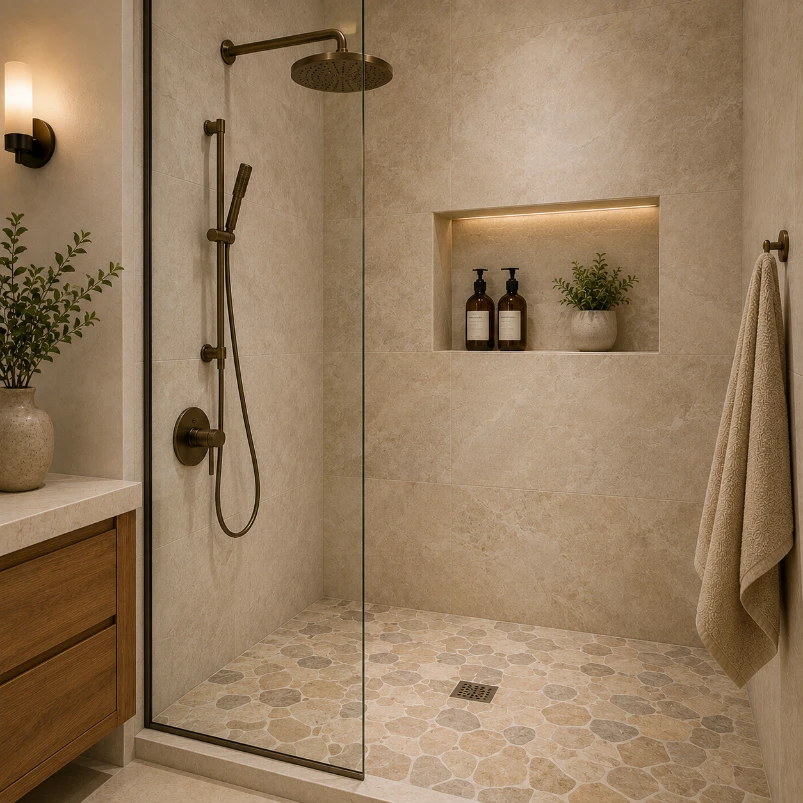
Natural stone can give a shower a warm and luxurious appearance. Options such as stone slabs and suitable natural-stone tiles can create an attractive connection with other materials used throughout the bathroom.
Stone requires appropriate sealing and maintenance because some varieties can absorb moisture or react to certain cleaning products.
A natural stone shower pan works particularly well with earthy colors, wood accents, and simple modern fixtures.
7. Integrated Shower Bench
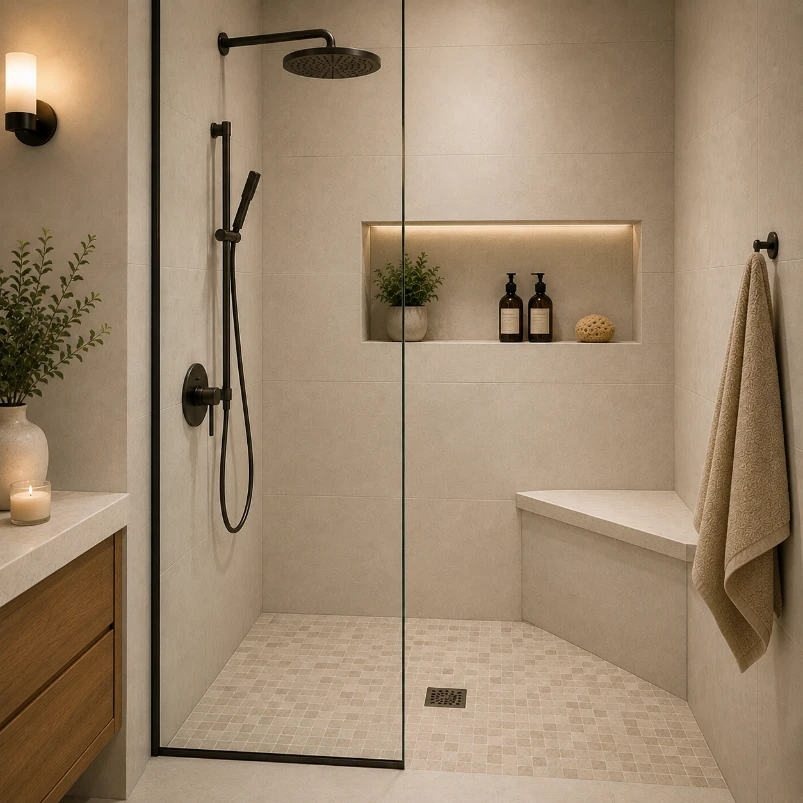
An integrated shower bench combines seating with practical bathroom functionality. It can be useful when you want a comfortable place to sit while showering or a convenient surface for personal-care items.
A built-in bench can be covered with the same wall tile as the shower or finished with a contrasting stone slab.
The bench should be properly sloped so water does not remain on its surface. Waterproofing beneath the finished material is also essential.
8. Frameless Glass Niche

A frameless glass niche can create a lightweight and elegant storage feature. Glass shelves allow light to pass through the storage area, helping the shower feel open rather than visually crowded.
This approach works especially well in minimalist bathrooms with large-format tiles and frameless shower doors.
Use tempered glass and have the shelves installed securely by a qualified professional.
9. Teak Wood Shower Pan
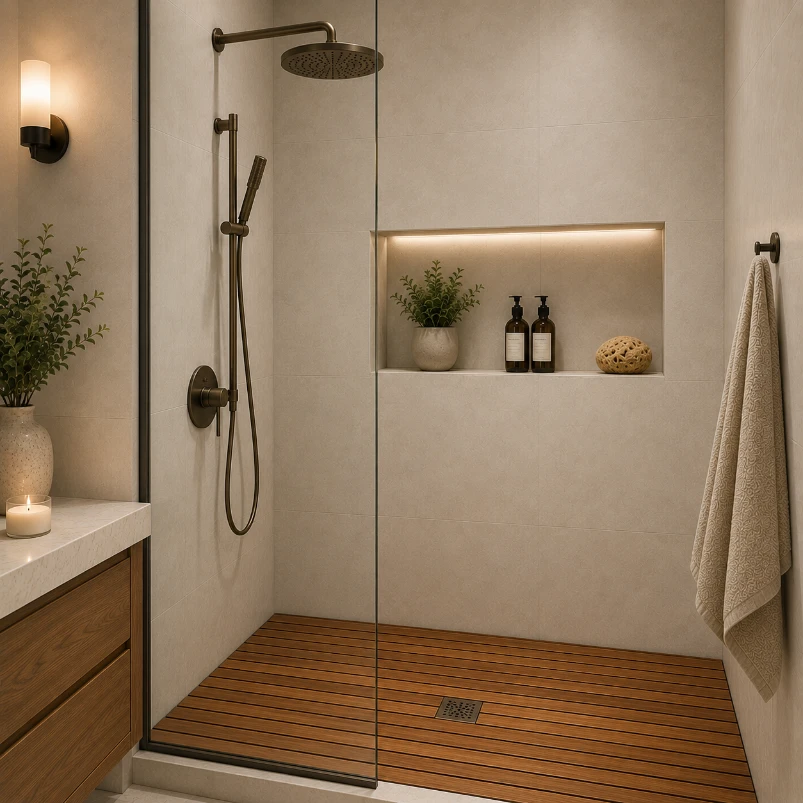
Teak is naturally resistant to moisture and has long been used in wet environments. A properly designed teak shower floor can add warmth to a bathroom dominated by tile and stone.
The warm wood tone pairs beautifully with white, beige, gray, and earthy bathroom finishes.
A teak shower floor needs suitable construction, drainage, ventilation, and maintenance. It should not be treated as a substitute for a properly waterproofed shower base.
10. Mosaic Tile Niche

A mosaic tile niche is an easy way to introduce a decorative detail into a shower. Because the niche is relatively small, you can use a more noticeable tile without overwhelming the rest of the bathroom.
Try a patterned mosaic inside the niche while keeping the surrounding shower walls simple. This creates a focal point without requiring a complete wall makeover.
Mosaic tiles can also coordinate with accent strips or the shower floor.
11. Linear Drain Shower Pan

A linear drain can give a walk-in shower a streamlined appearance. Unlike a traditional center drain, a linear drain is usually positioned along one edge of the shower.
This design can make large-format floor tiles easier to incorporate because fewer tile cuts may be needed around the drain.
The shower floor still needs the correct slope toward the drain, and the drainage system must be properly sized and installed for the shower.
12. Brushed Nickel Niche

A brushed nickel niche can introduce a subtle metallic accent without the stronger shine of polished finishes. It works well with modern, transitional, and classic bathroom designs.
Pairing brushed nickel storage with matching faucets, shower controls, and cabinet hardware can create a consistent look.
For a more understated design, choose a niche frame that blends with the surrounding tile.
Understanding Shower Pans
The shower pan is the base of the shower area. It collects water from the shower floor and directs it toward the drain.
A properly designed pan needs to work together with the waterproofing system, drain, floor surface, and surrounding walls. A visually attractive shower can still develop problems if water is allowed to move into areas where it should not.
When planning a renovation, consider the shower pan early rather than treating it as an afterthought.
Types of Shower Pans
Several shower pan options are available for modern bathroom renovations.
Pre-fabricated pans: These are manufactured units available in standard sizes and configurations. They can provide a relatively straightforward installation option.
Custom tiled pans: These are built specifically for the shower dimensions and finished with tile or another suitable surface.
Solid-surface pans: These can provide a seamless appearance and are available in several colors and textures.
Stone or stone-look pans: These can create a premium appearance while coordinating with other bathroom surfaces.
The best choice depends on the shower dimensions, drainage requirements, design goals, installation method, and budget.
Materials Used in Shower Pans
Shower pans can be made from various materials, including acrylic, fiberglass, solid surface, tile assemblies, and other engineered or custom materials.
Acrylic and fiberglass options are commonly available as ready-made units. Tile shower bases provide more flexibility in appearance and dimensions, while solid-surface products can create a clean, low-profile look.
The material should be selected based on durability, maintenance, water resistance, slip resistance, and compatibility with the complete shower system.
Importance of Proper Installation
Installation is one of the most important parts of a shower renovation. Even premium materials can perform poorly if the shower is not properly waterproofed or drained.
The shower floor needs the appropriate slope toward the drain, while corners, joints, penetrations, and transitions need careful attention.
For a major bathroom renovation, working with an experienced contractor or qualified tile professional can help reduce the risk of drainage and waterproofing problems.
Best Practices for Shower Niches
A shower niche should be planned around both appearance and everyday use. Before construction begins, consider what you normally store in the shower and how much space those products require.
A niche that looks attractive but cannot comfortably hold your toiletries will not be very practical.
Waterproofing is also critical. The niche should be integrated into the shower’s waterproofing system rather than simply cut into a finished wall.
Optimal Placement of Shower Niches
The ideal niche position depends on the shower layout and the people using it. It should be easy to reach without requiring awkward stretching or bending.
Avoid placing the niche where it interferes with shower controls, plumbing, doors, or other fixtures.
For family bathrooms, consider the height of the people who will use the shower. Multiple shelves can also make it easier to organize different products.
Choosing Durable Materials for Niches
Choose materials that can handle regular exposure to water, humidity, cleaning products, and temperature changes.
Porcelain, ceramic, suitable natural stone, glass, stainless steel, and other purpose-made shower materials can all work depending on the design.
Pay attention to the shelf edges and corners as well. These areas should be properly finished so water can drain rather than collect.
Final Thoughts
The right shower pan and niche can make a bathroom renovation more functional while adding a strong visual element to the design. From pebble tile and marble shower pans to recessed shelves, custom niches, and linear drains, there are plenty of ways to create a shower that suits your style.
When choosing between different options, focus on more than appearance. Consider drainage, waterproofing, slip resistance, cleaning, durability, available space, and installation requirements.
A successful modern shower combines these practical details with materials and finishes that complement the rest of the bathroom. By planning the shower pan and niche together from the beginning, you can create a cleaner, more organized, and more cohesive bathroom design.