15 Black and Wood Bathroom Ideas for a Warm, Modern Look
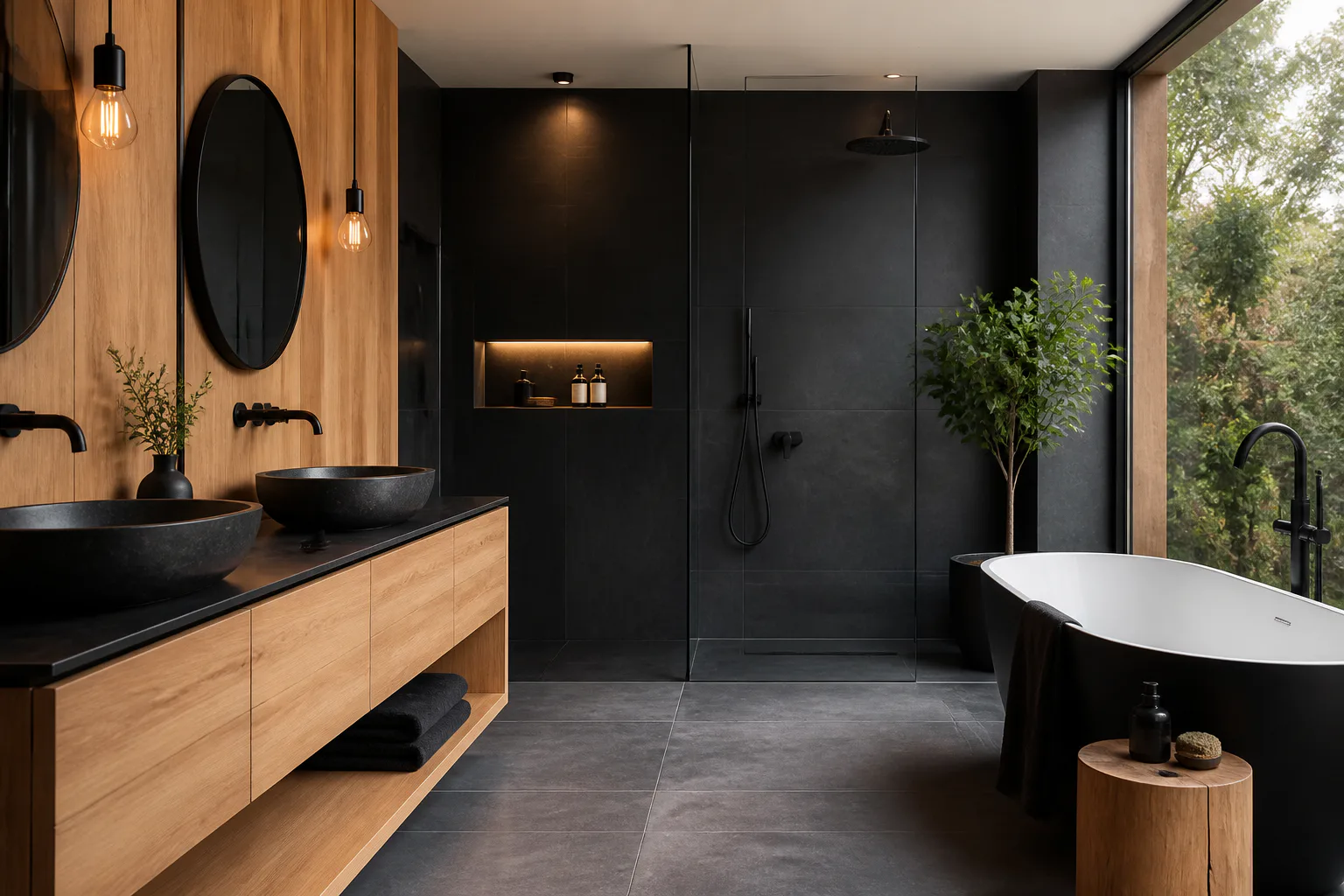
Black and wood is one of the easiest bathroom combinations to get right. Black adds contrast and structure, while wood brings warmth so the room feels finished instead of cold. These ideas show different ways to use the pairing, whether you want a modern powder room, a spa-like primary bath, or a small-space refresh.
Why this palette works
Black creates definition around fixtures, mirrors, frames, and tile lines. Wood softens that edge and adds natural texture, which helps the bathroom feel balanced. Together, they fit several styles, from clean modern to rustic, Japandi, industrial, and minimal.
The key is deciding which material leads the room. If black dominates, the space feels sharper and more dramatic. If wood dominates, the room feels warmer and calmer, with black acting as an accent.
15 bathroom ideas
1. Floating wood vanity
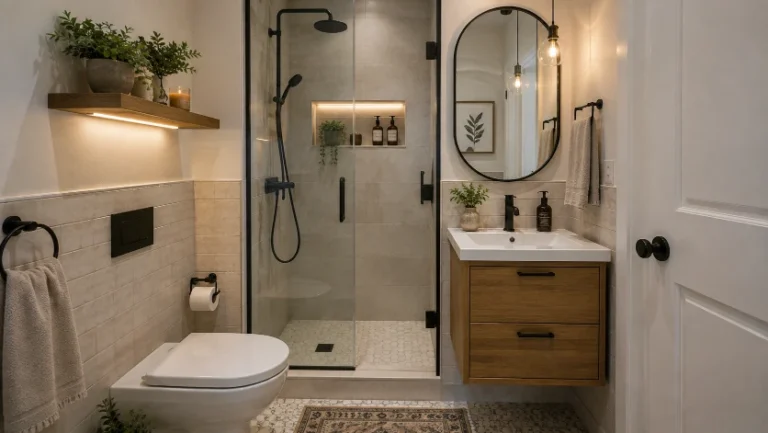
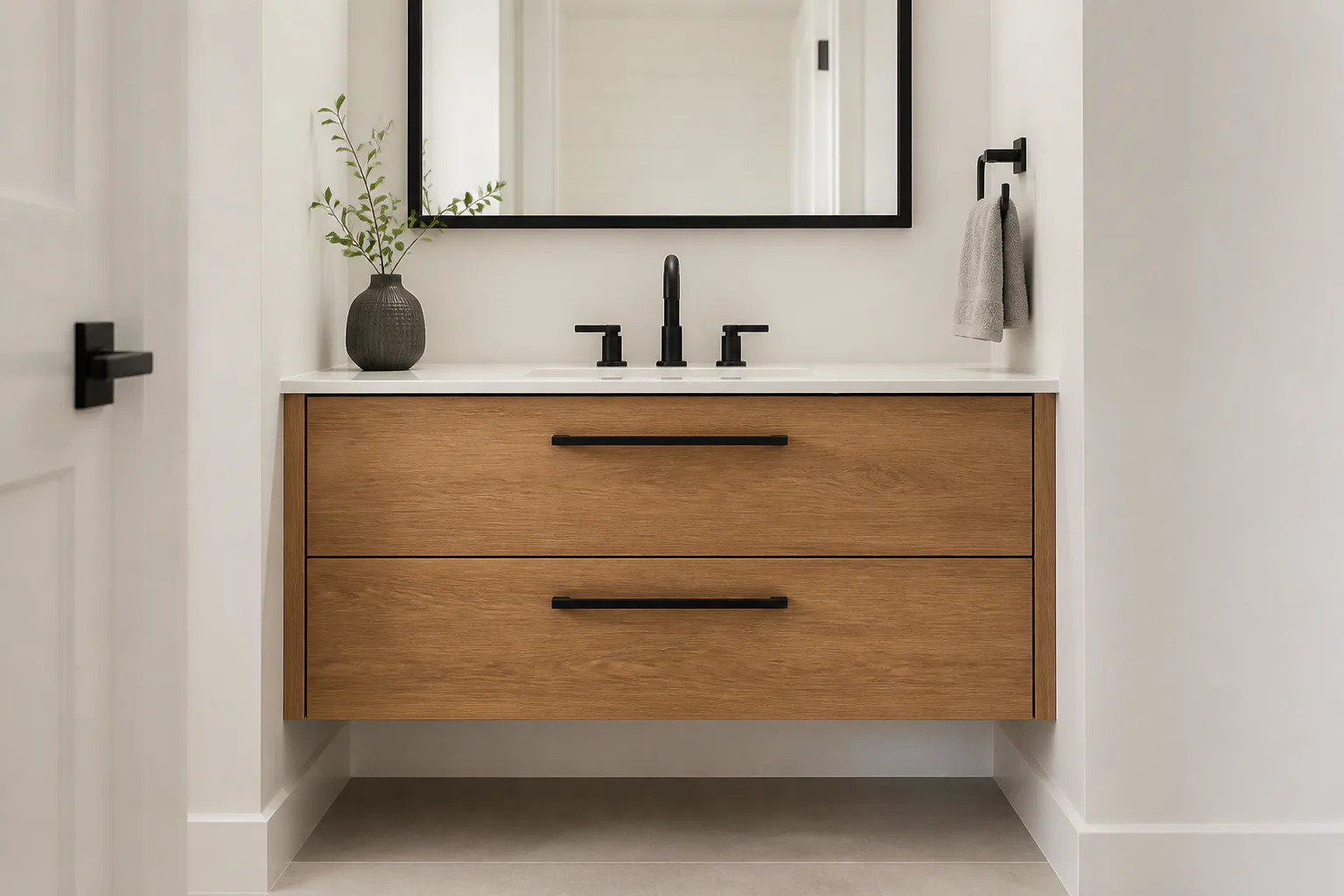
A floating wood vanity with black hardware is a strong starting point for this look. The open space below keeps the room lighter, which helps in smaller bathrooms. Pair it with a black faucet, black mirror frame, or black drawer pulls to tie the palette together.
2. Black walls, warm oak
Paint one or more walls black, then offset the depth with warm oak cabinetry or shelving. This works especially well in powder rooms, where a darker envelope feels intentional instead of overwhelming. Keep the ceiling light if you want the room to feel taller.

3. Wood slat accent wall
A vertical wood slat wall behind the vanity adds texture without clutter. Black sconces, a black-framed mirror, and a black faucet make the slats look more architectural. This is a good option if you want warmth without using wood on every surface.
4. Black hex tile floor
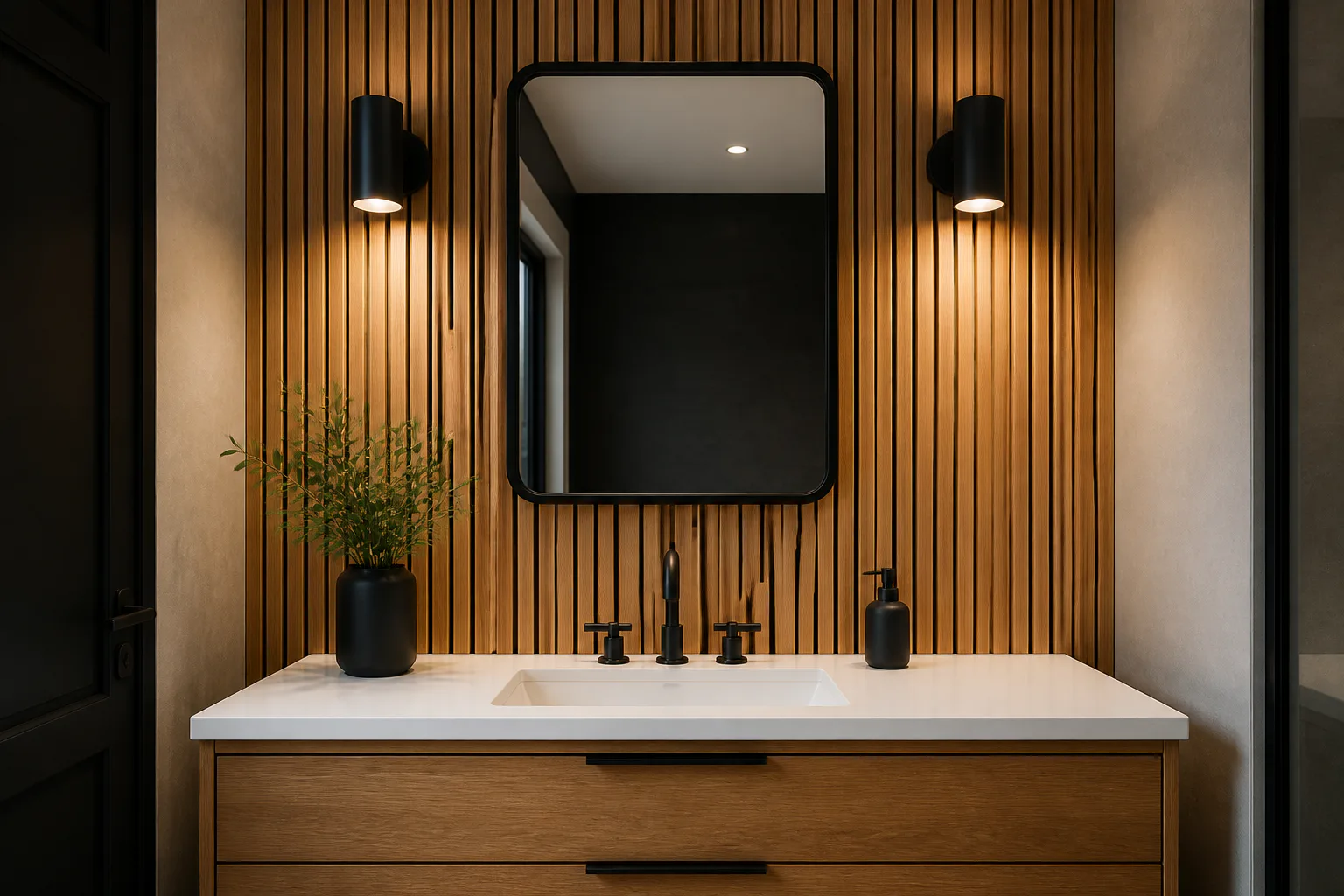
Use black hex tile on the floor and bring in a mid-tone wood vanity for contrast. The tile grounds the room, while the wood keeps it from feeling too hard or glossy. White walls or light stone counters stop the palette from becoming too heavy.
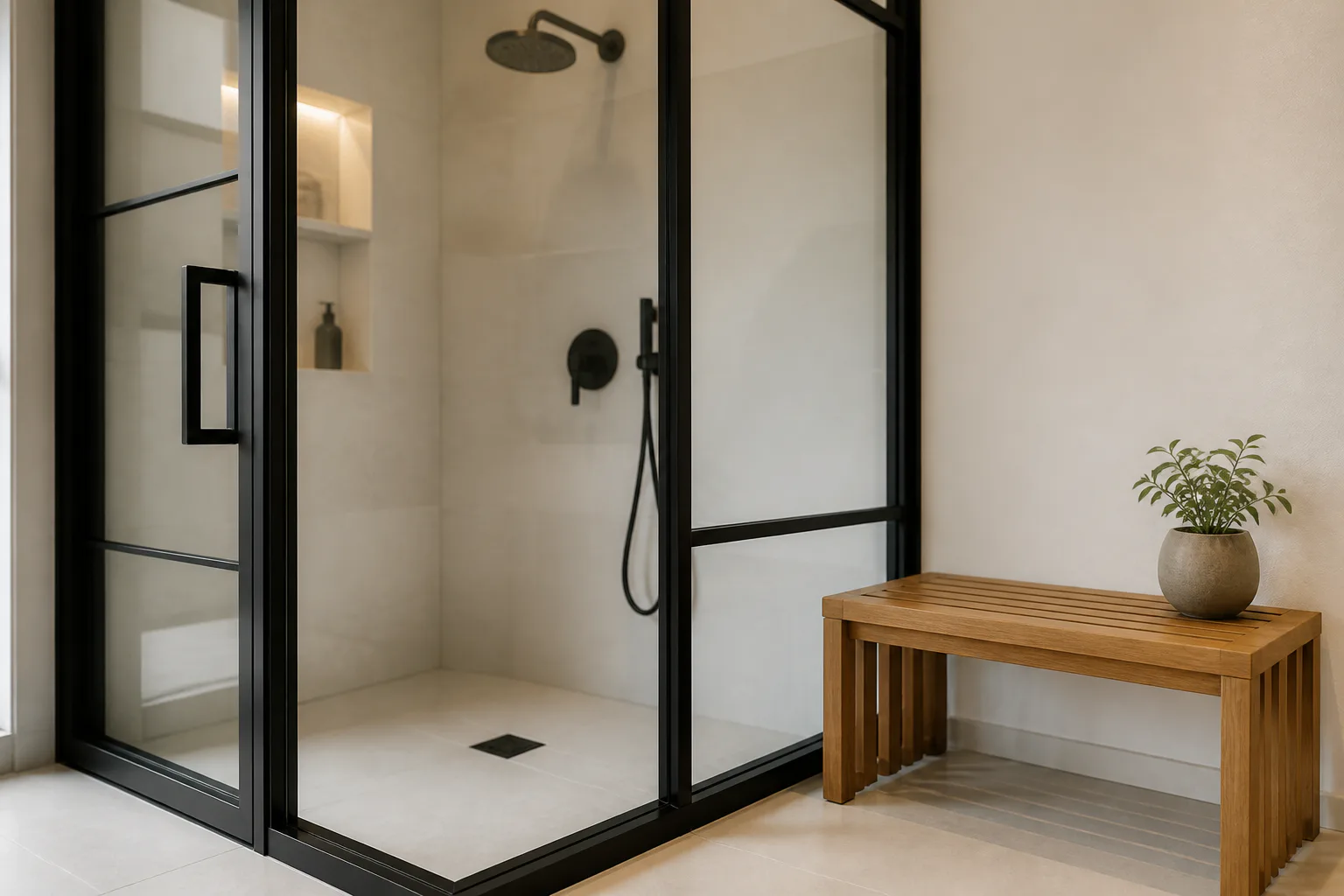
5. Matte black shower frame
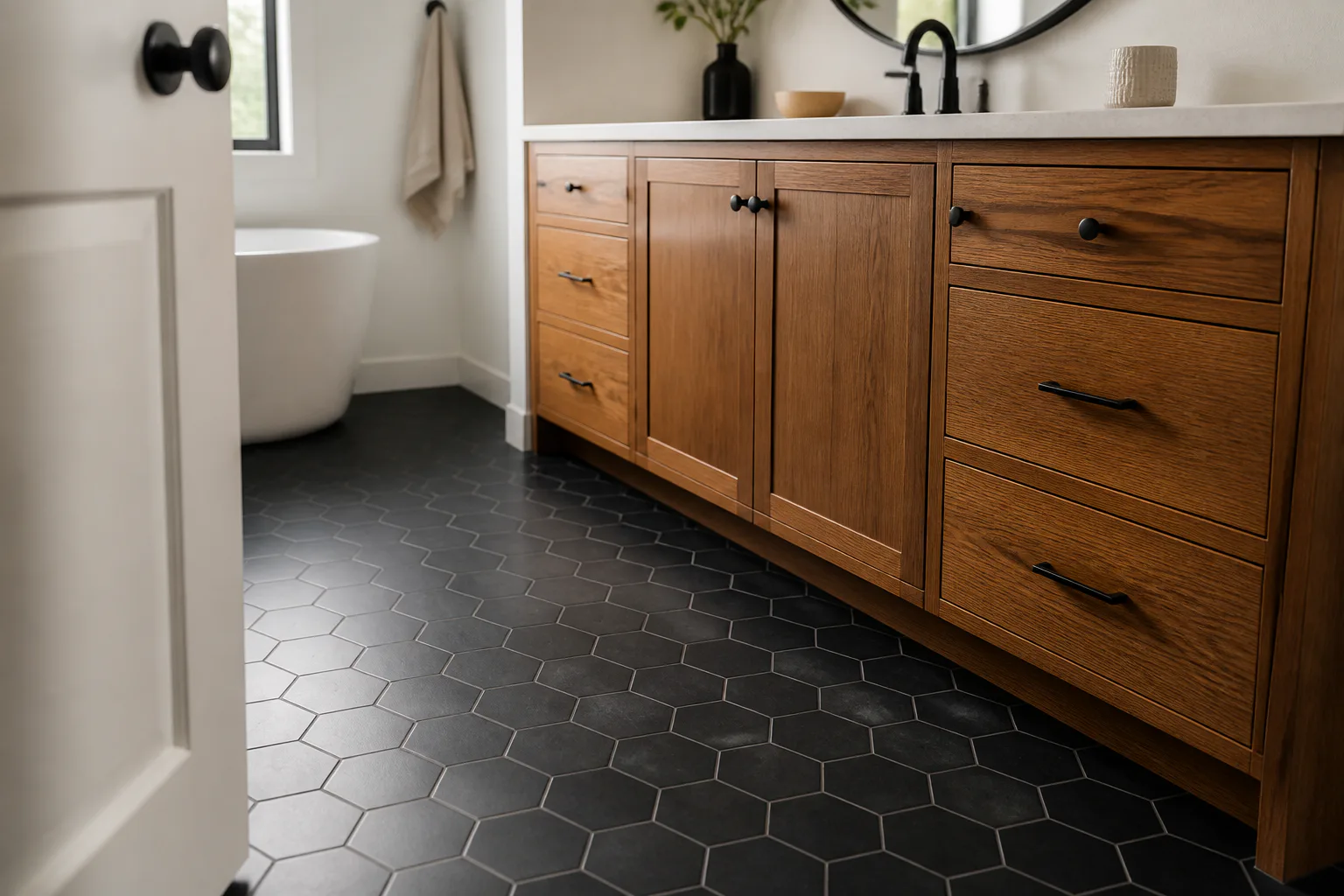
A matte black shower enclosure instantly defines the wet zone. Balance that sharp outline with a teak bench, wood stool, or wood vanity nearby. This idea works best when the rest of the finishes stay simple, so the frame reads as a feature instead of visual noise.
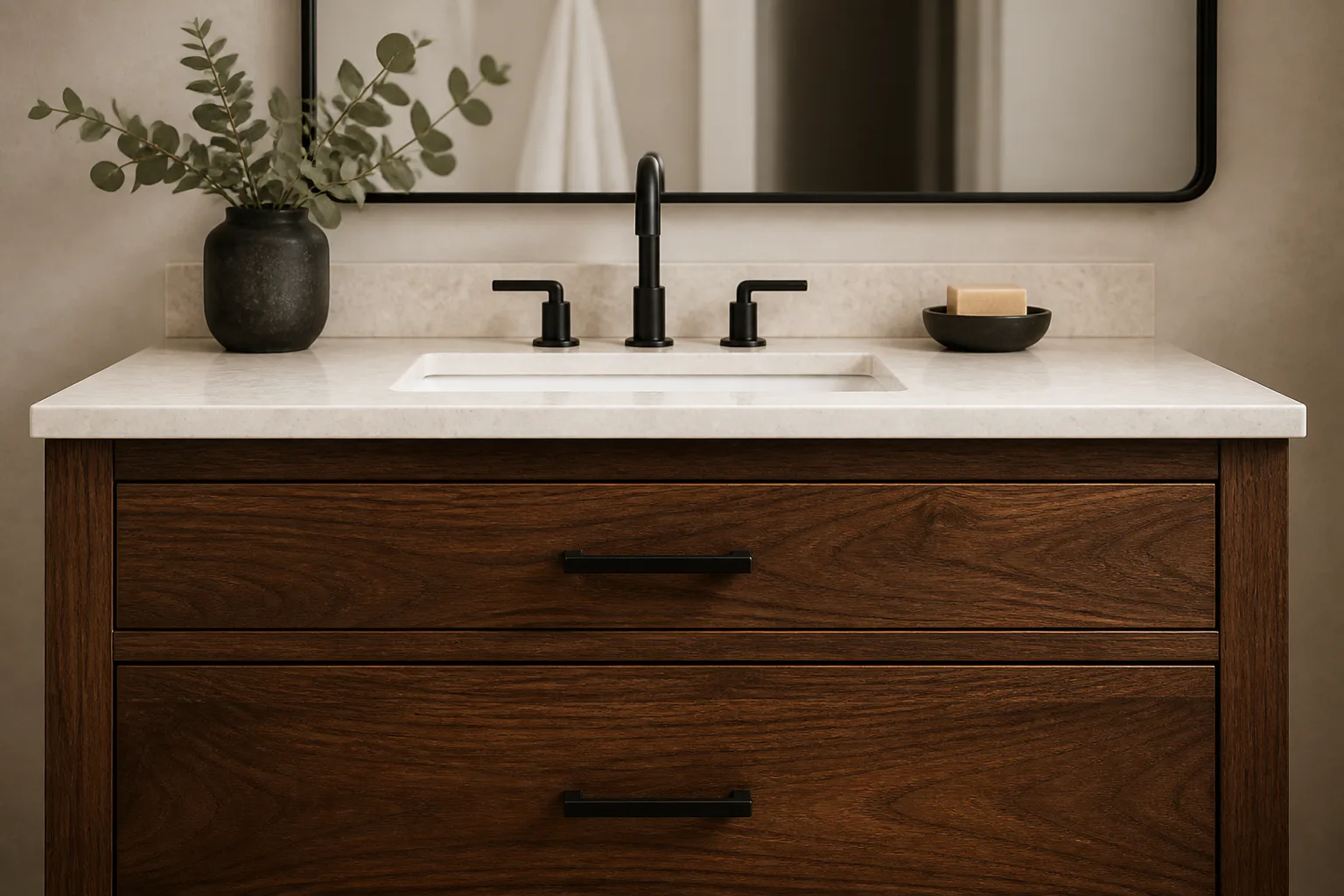
6. Walnut vanity with stone top
A walnut vanity brings richer color and a more tailored look than pale wood. Pair it with matte black taps and a light stone countertop for a refined mix of warm and cool surfaces. This combination fits both contemporary and classic bathrooms.
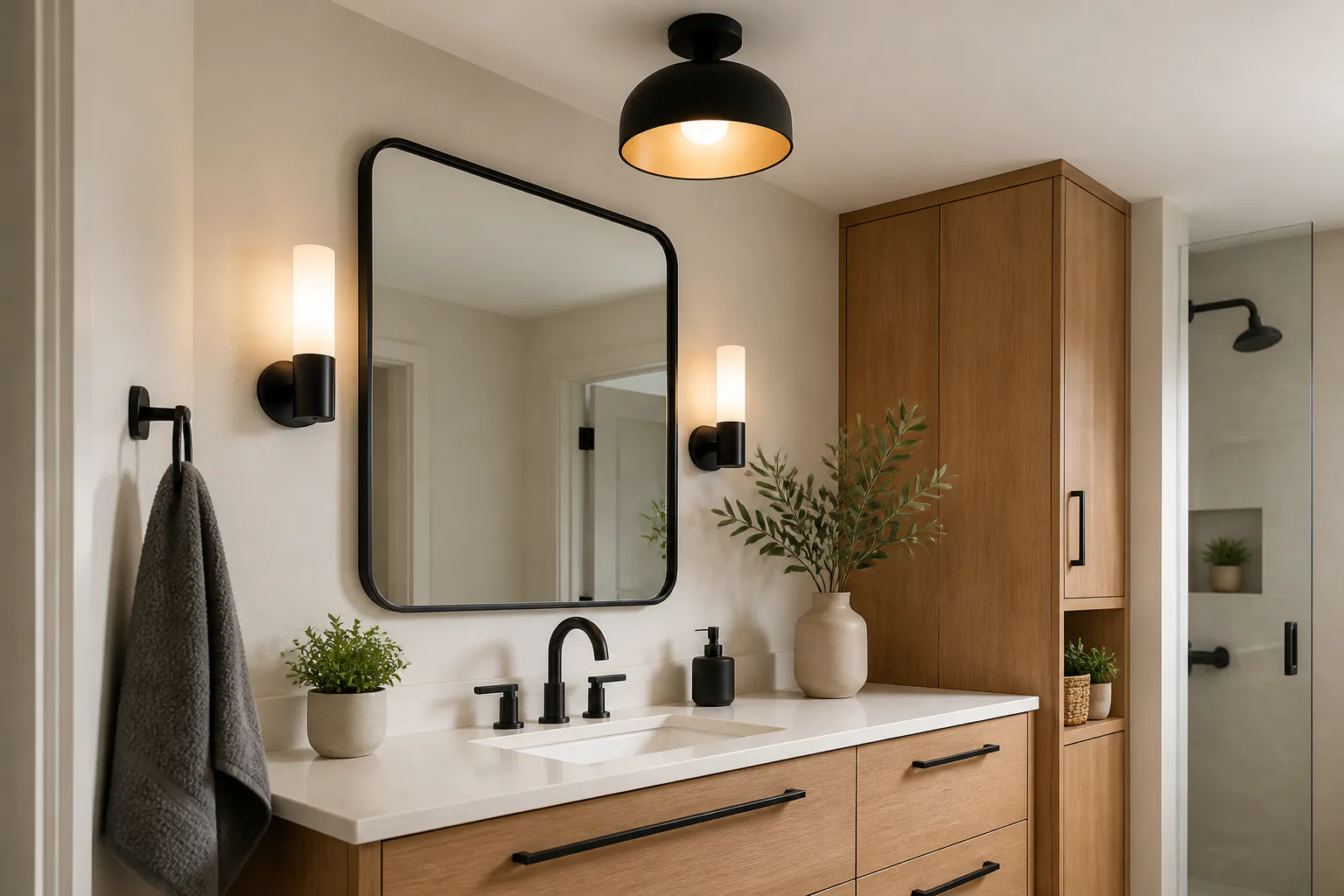
7. Black ceiling accents
If full black walls feel too strong, use black on the ceiling light, mirror frame, towel hooks, and faucet instead. Then let wood lead through the vanity and storage pieces. This approach gives you contrast without darkening the entire room.
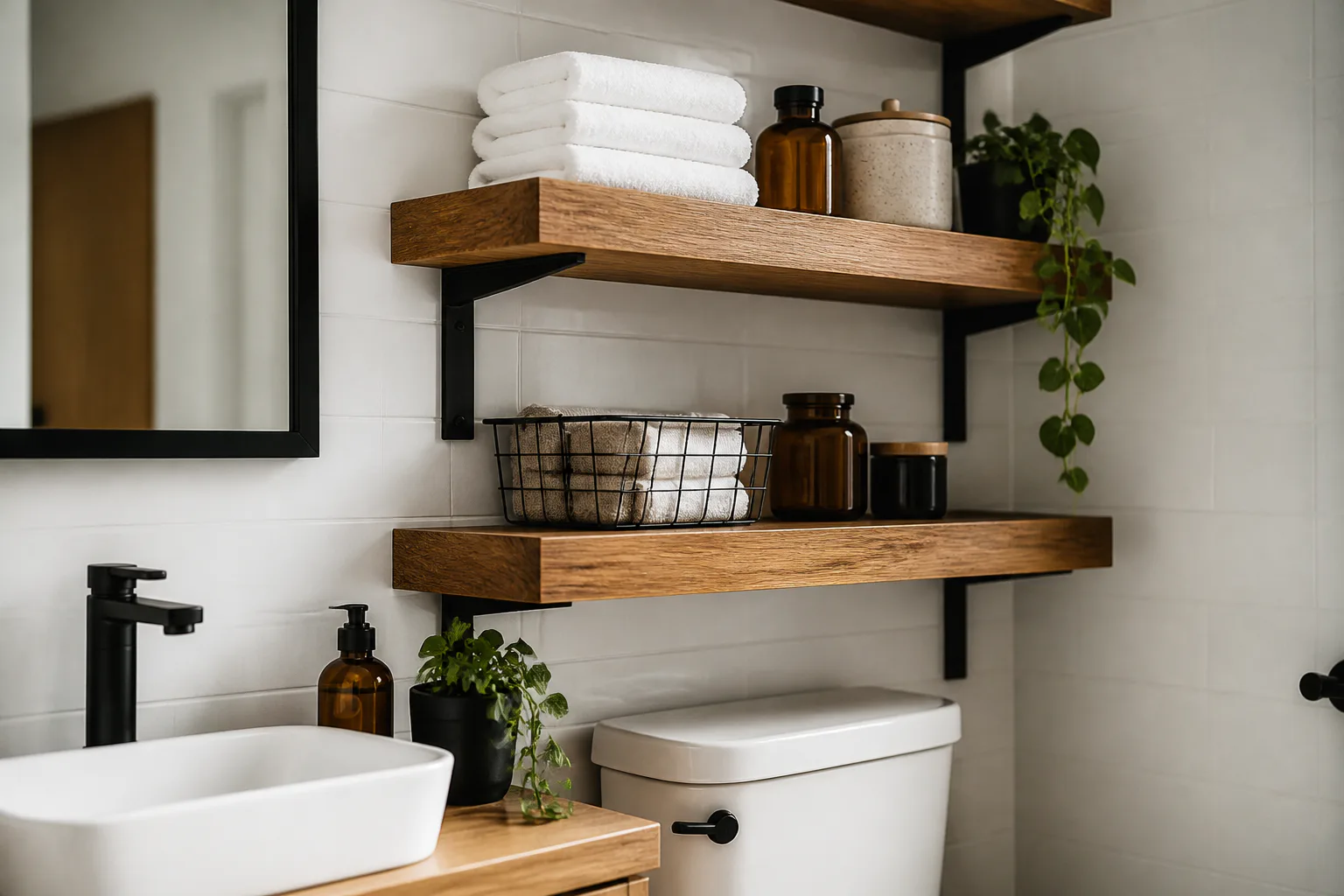
8. Wood open shelving
Open wood shelves against white or light tile add warmth in a simple, budget-friendly way. Use black brackets or place the shelves near black fixtures so they feel connected to the palette. Keep the styling restrained with folded towels, jars, and a small plant.
9. Black tile shower, wood vanity
A black-tiled shower wall creates a bold focal point, especially with soft lighting. Set it across from a natural wood vanity so the room has a clear balance between dark and warm. This layout works well in longer bathrooms where each side can hold a distinct material story.

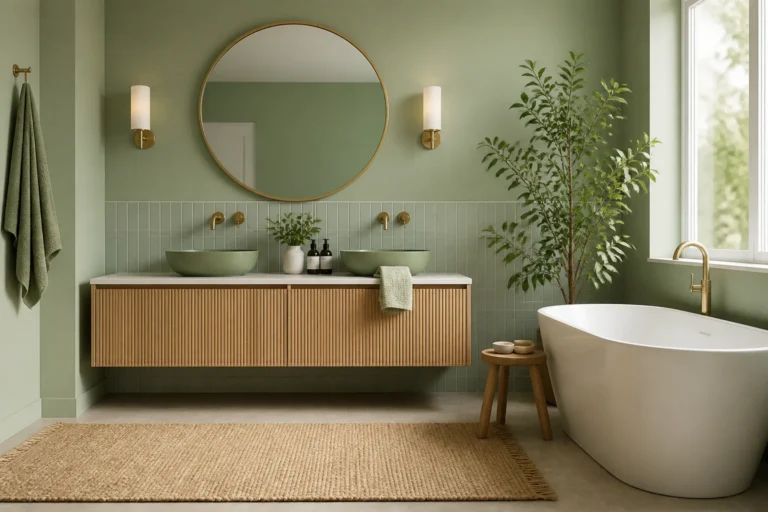
10. Ribbed wood cabinet fronts
Fluted or ribbed wood fronts add movement without changing the color scheme. They look especially good with flat black mirrors and simple black pulls. If the room already has plain tile and clean lines, this detail adds depth without making the space busy.

12. Charcoal tile with pale wood
Charcoal tile gives you the depth of black with a slightly softer feel. Pair it with pale wood such as ash or light oak for a cleaner, brighter contrast. This look suits minimal bathrooms where you want strong lines but not a fully dramatic mood.
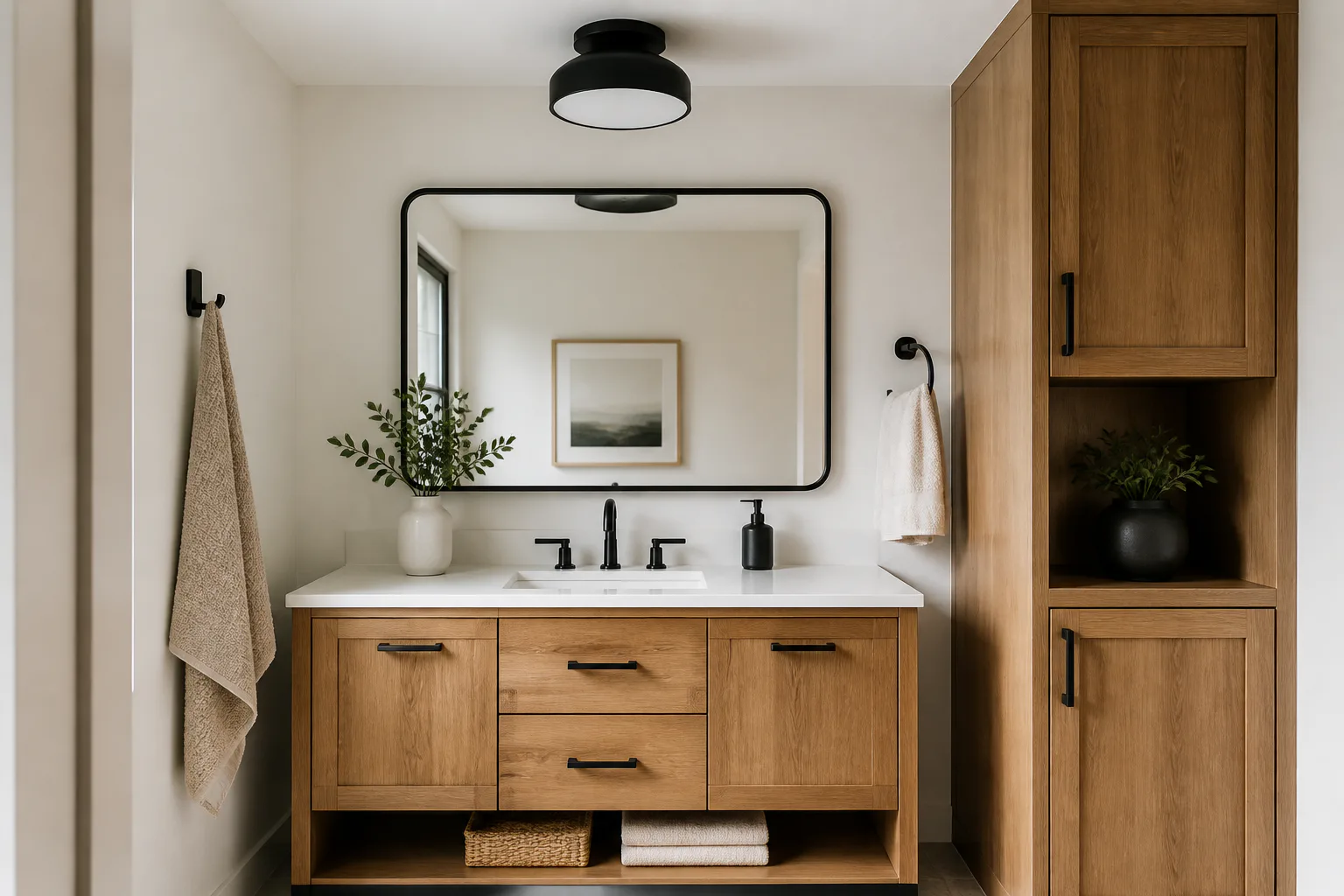
13. Wood double vanity, black sconces
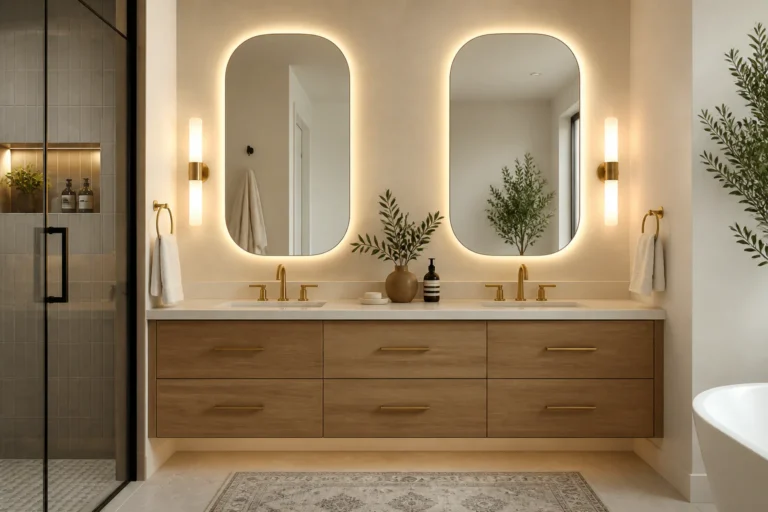
In a larger bathroom, a double wood vanity keeps the room warm and grounded. Add black sconces, black faucets, and a black shower frame to repeat the darker tone at eye level. Repetition matters here, because scattered black details can feel accidental.
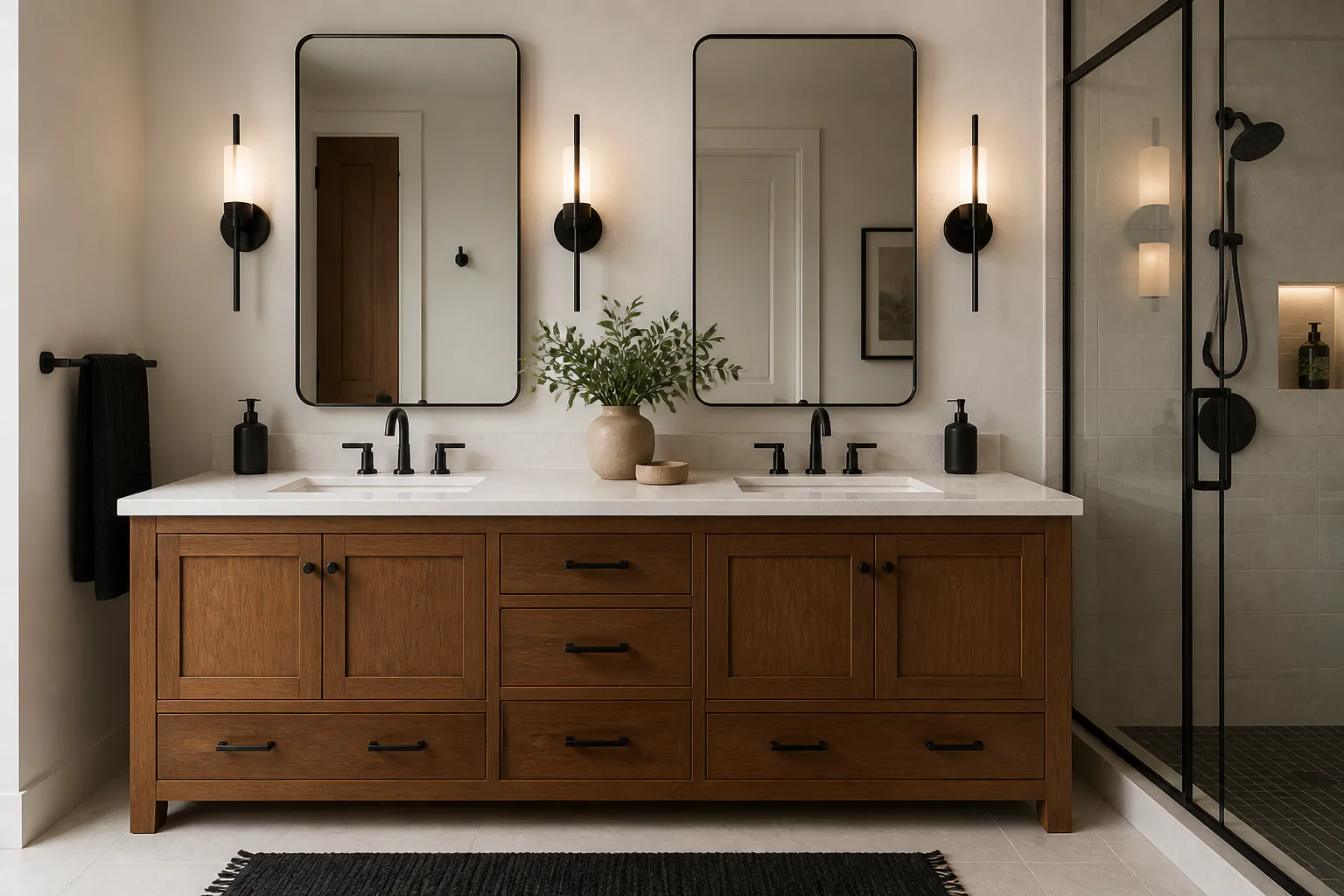
14. Black paneling below, wood above
Use black wall paneling or tile on the lower half of the room and introduce wood through a vanity, shelf, or mirror above it. The darker lower section hides wear and adds structure, while the wood prevents the room from feeling too formal. This split works especially well in narrow bathrooms.

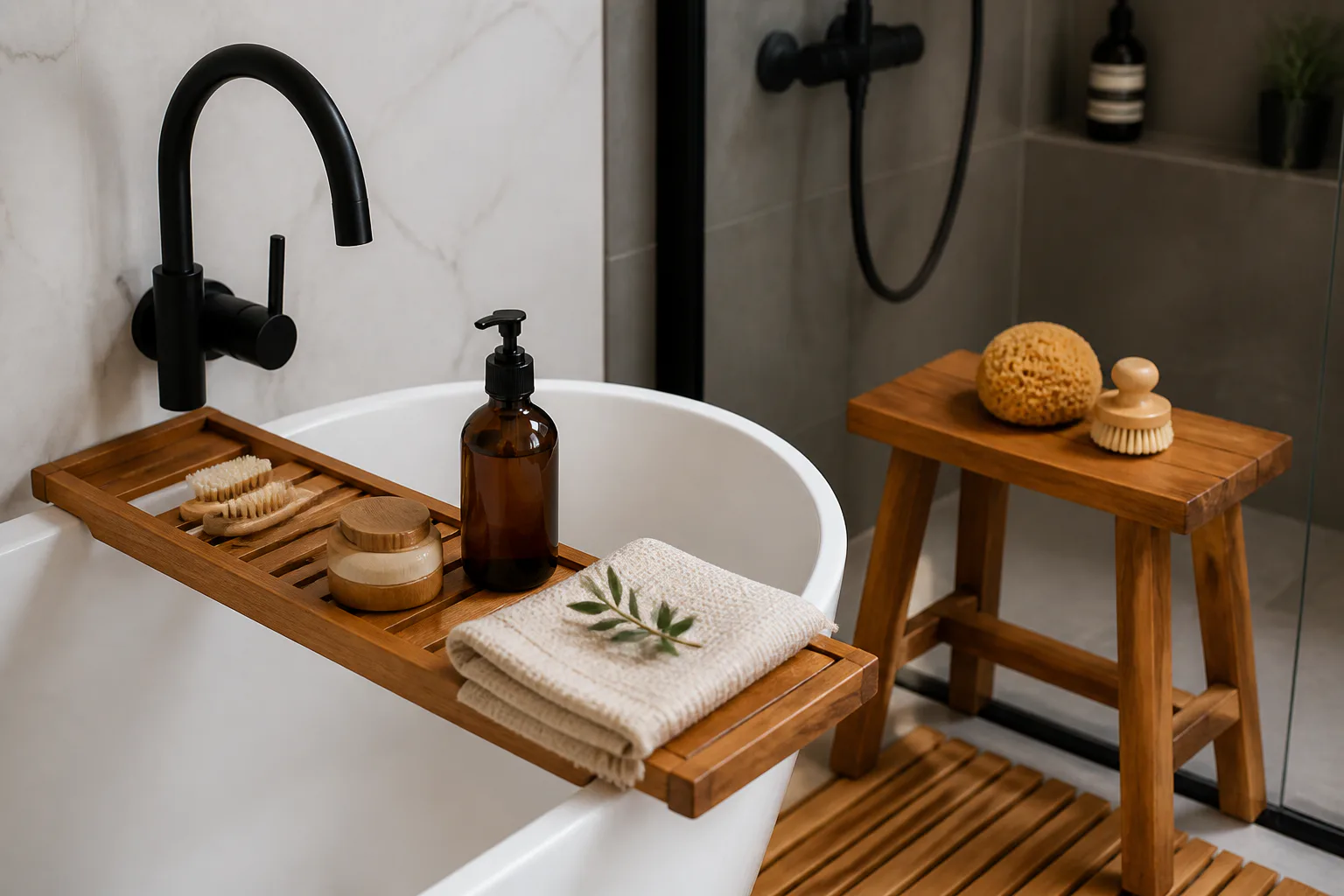
15. Spa look with teak
For a softer, more relaxed version of the trend, combine matte black fixtures with teak accessories. A teak stool, bath tray, or slatted mat adds warmth without a full renovation. This is an easy way to test the black-and-wood look before changing cabinetry or tile.
Best pairings
Black element | Wood element | Best result |
|---|---|---|
Matte black faucet | Oak vanity | Clean, modern contrast |
Black shower frame | Teak bench | Spa-like balance |
Black floor tile | Walnut cabinet | Rich, tailored look |
Black mirror frame | Wood slat wall | Strong focal point |
Black sconces | Floating wood vanity | Light, architectural feel |
How to keep it balanced
Choose one lead finish
Start by deciding whether black or wood should be the main visual force. If both compete equally on every surface, the room can feel scattered. One lead material and one support material gives the design a clearer direction.
Use a light third surface
Most black-and-wood bathrooms need a lighter surface to keep the room open. White walls, pale stone, warm beige tile, or soft gray counters all work well. That extra light tone separates the dark and warm elements so each one stands out.
Repeat black at least three times
One black faucet alone often looks disconnected. Repeating black in the mirror, lighting, hardware, or shower trim makes the palette feel intentional. The same idea works for wood tones, which should show up in more than one place when possible.
Common mistakes
Using too many wood tones in one small room.
Choosing glossy black finishes when the goal is a softer, natural look.
Adding black accents without repeating them elsewhere.
Making every surface dark, especially in bathrooms with limited light.
Mixing warm wood with cool gray tile without a bridging neutral.
FAQ
Is black too dark for a small bathroom?
No, if you use it with restraint. Black works well on fixtures, frames, a floor, or a single wall, while wood adds warmth and texture. Keep some lighter surfaces in the room to maintain brightness.
What wood tone looks best with black?
Oak, walnut, teak, and ash all pair well with black. Warm oak and teak create a softer, more relaxed feel. Walnut looks deeper and more formal, while pale ash gives the room a lighter modern look.
Should the wood match exactly?
No, but it should feel related. A vanity, shelf, and mirror frame do not need identical grain, yet they should stay in a similar warmth range. Too many unrelated tones can make the bathroom feel unplanned.
Do black fixtures show water spots?
They can show residue more clearly than brushed or lighter finishes. Regular wiping helps them stay crisp, especially around the faucet and shower trim. Matte finishes often look less harsh than high-gloss black.
Final pick
If you want the easiest version of this style, start with a floating wood vanity and matte black fixtures. It gives you the black-and-wood look without committing to dark walls or full tile changes. From there, add a black mirror, wood shelves, or a shower frame to build the room gradually.