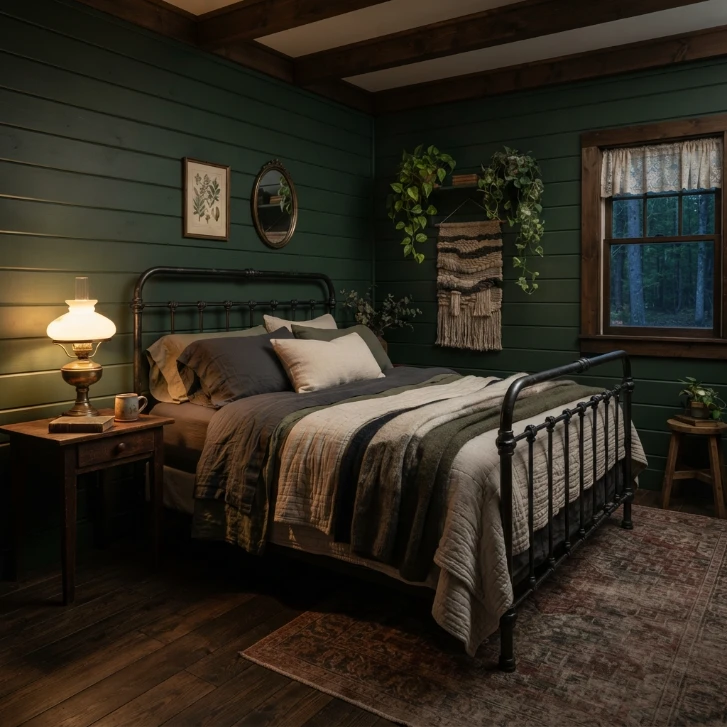
18 Bedroom Accent Wall Lighting Ideas for a Warm, Stylish Retreat

A bedroom accent wall can become the visual center of the room, but the right lighting gives it depth and character after sunset. Light can emphasize paint, wood, wallpaper, artwork, panels, and architectural details while also making the bedroom more comfortable at night.
The best bedroom accent wall lighting ideas balance decoration with everyday function. From wall sconces and hidden LEDs to pendant lights and smart dimmers, the right approach depends on your wall finish, bedroom size, furniture layout, and the mood you want to create.
Here are 18 practical ideas you can adapt to modern, cozy, minimalist, traditional, Japandi, farmhouse, and contemporary bedrooms.
1. Add Slim Wall Sconces Beside the Bed
Wall sconces are an easy way to give an accent wall both style and function. Mounting one on each side of the bed creates symmetry and directs useful light toward the bedside area. This arrangement works especially well when the accent wall sits behind the headboard.
Choose warm bulbs and a fixture finish that complements the room. Adjustable sconces are especially useful if you read in bed because you can direct the light without brightening the whole room.
2. Use Hidden LED Lighting Behind the Headboard

Hidden LED lighting creates a soft halo around the headboard and makes the accent wall feel layered. Because the light source stays concealed, the wall receives the attention rather than the fixture.
This works beautifully with dark paint, upholstered walls, wood panels, and textured finishes. Warm white LEDs and a dimmer can create a relaxed evening atmosphere without making the room feel harsh.
3. Highlight Wall Art With Picture Lights
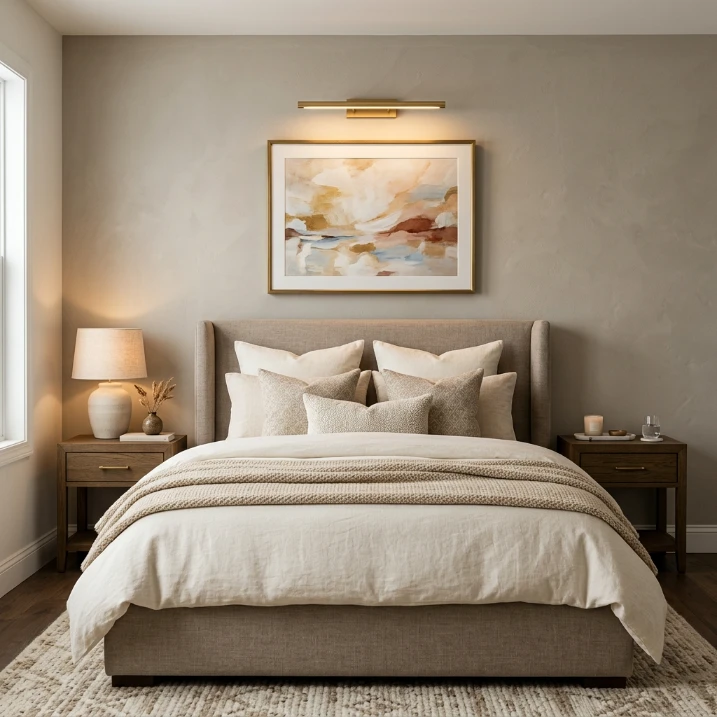
If your accent wall features artwork, a picture light can give it more presence. Instead of illuminating the entire wall, the fixture focuses attention on one painting, photograph, framed print, or decorative panel.
Choose a fixture that fits the artwork and position it to spread light evenly across the surface. Warm illumination pairs particularly well with natural wood, linen, cream, taupe, and other soft bedroom finishes.
4. Create a Warm Glow With Wood Slat Lighting
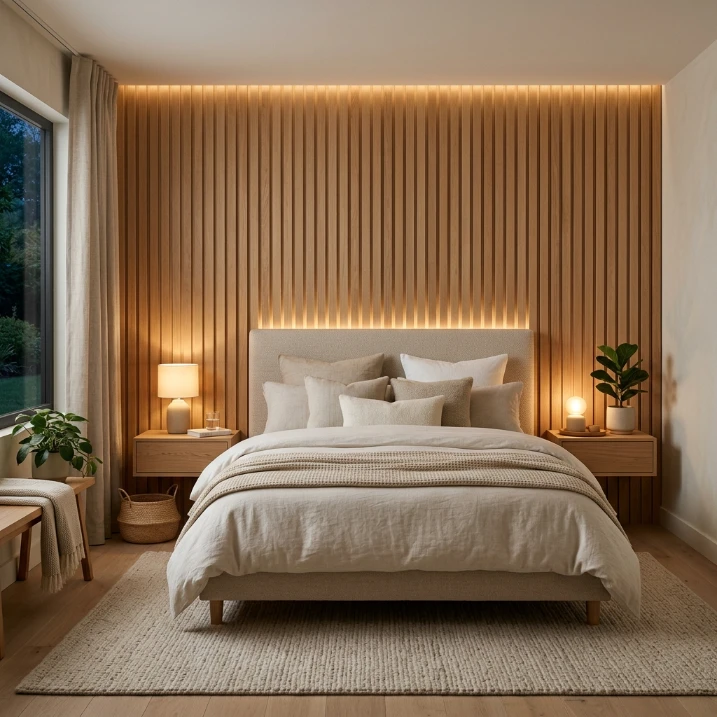
Wood slat walls already add texture, but concealed lighting can make their vertical pattern stand out after dark. Install warm LED lighting behind selected slats or along the edges to create a gentle wash across the wood.
Oak and walnut work especially well in Scandinavian, Japandi, modern farmhouse, and contemporary bedrooms. Keep the brightness moderate so the lighting enhances the texture rather than overpowering the room.
5. Frame the Accent Wall With LED Strip Lighting

A concealed LED border can visually define an accent wall and make it feel like an intentional architectural feature. This can work around a painted rectangle, paneled section, recessed wall, or headboard area.
For a refined result, hide the strip behind trim or within a shallow recess. Warm white light at moderate brightness usually looks more sophisticated than an extremely bright outline.
6. Install Pendant Lights for a Decorative Look

Pendant lights on either side of the bed can replace traditional table lamps while adding vertical interest to the accent wall. Matching pendants create a balanced look, while slightly varied placement can feel more relaxed.
Glass shades suit smaller bedrooms, woven shades add warmth, and simple metal fixtures can reinforce a modern style. Keep the hanging height practical so the fixtures do not interfere with movement around the bed.
7. Use Recessed Lighting to Emphasize Wall Texture
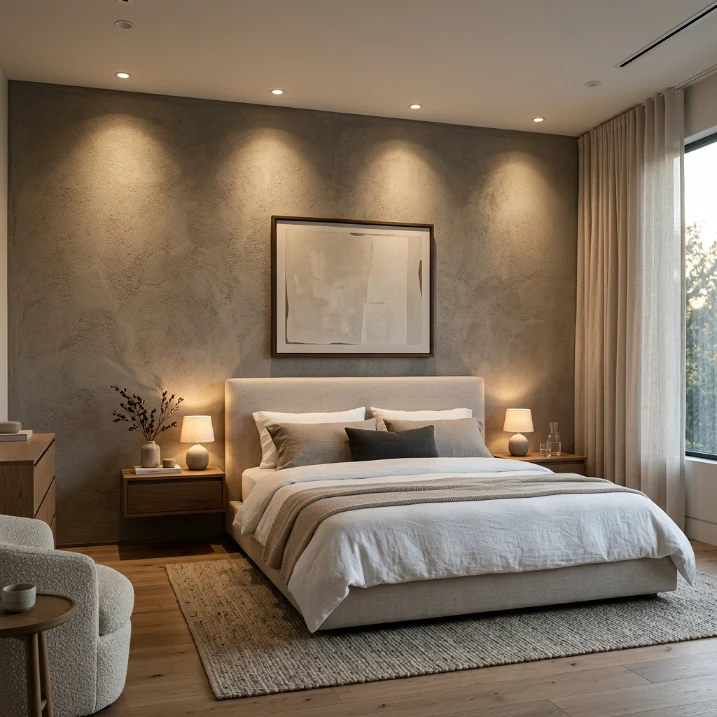
Directional recessed lights are useful when the accent wall has stone, plaster, fluted panels, textured wallpaper, or another surface with noticeable detail. Angled light creates gentle shadows that make the texture easier to see.
Spacing is important. Test the beam angle before installation when possible, because a light that is too close can create harsh hotspots while one that is too far away may lose the desired wall-washing effect.
8. Add a Soft Halo With a Statement Wall Light

A sculptural wall light can become the main focal point on a simple accent wall. A large round fixture, diffused globe, or artistic wall lamp can sit above the headboard or in another intentional position.
Choose diffused materials such as frosted glass, fabric, or opal finishes when you want a softer bedroom atmosphere. Keep surrounding décor simple so the statement fixture has enough visual space.
9. Install Reading Lights Into the Accent Wall
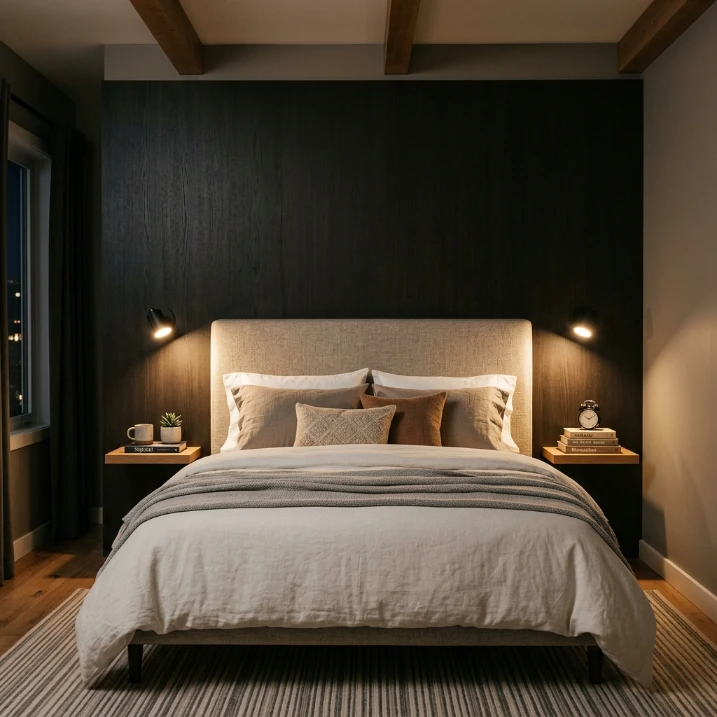
If the bedroom is used for reading, build practical lighting directly into the accent wall. Small adjustable reading lights can sit near each side of the bed, giving each person a dedicated source without relying on a large central fixture.
This is especially useful in compact bedrooms where nightstands are small. Choose fixtures with adjustable heads and easy bedside controls so the light can be positioned exactly where it is needed.
10. Wash a Painted Accent Wall With Upward Light

Upward wall washing can make a painted accent wall appear taller and more dimensional. Place concealed or low-profile fixtures near the lower wall and direct the light upward across the surface.
This works particularly well with deep green, navy, charcoal, terracotta, and other rich colors. Keep the light soft so the paint remains the visual focus instead of creating glare.
11. Add Backlighting Around a Curved Headboard

A curved or rounded headboard can look more elegant with concealed lighting around its rear edge. The light creates a smooth outline and gives the headboard a floating appearance against the accent wall.
Use an LED strip with consistent brightness around the curve and hide the source from direct view. This idea works well in contemporary and hotel-inspired bedrooms where clean lines are important.
12. Highlight Vertical Wall Panels With Side Lighting

Vertical wall panels can benefit from narrow side lighting that emphasizes their height and spacing. Positioning light along the edges of the paneling creates subtle shadows and makes a plain wall feel more architectural.
This technique works with painted MDF panels, fluted designs, upholstered panels, and other structured surfaces. Keep the beam controlled so the individual panels remain visible without creating uneven bright spots.
13. Use a Pair of Swing-Arm Lights
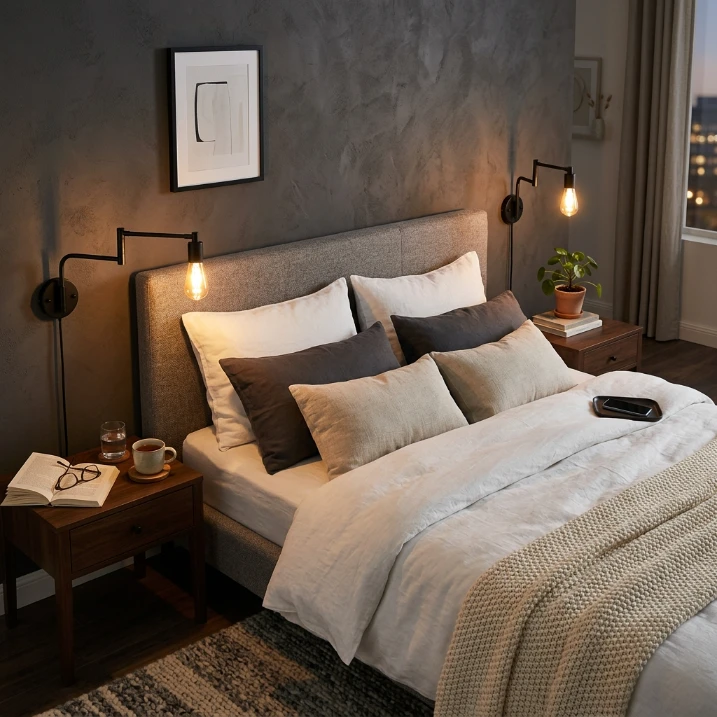
Swing-arm wall lights combine a decorative appearance with excellent flexibility. Place one on each side of the bed so the arms can be moved toward the reader when needed and folded closer to the wall when not in use.
They are a strong choice for bedrooms that need practical task lighting but still want a clean accent wall. Brass, black, aged bronze, and simple neutral finishes can all work depending on the room.
14. Create a Cozy Glow With Cove Lighting

Cove lighting hides the light source inside a ledge, recess, or architectural detail and allows illumination to spread gently across the accent wall. The result is softer than exposed fixtures and can make the wall feel part of the architecture.
Use cove lighting above a headboard, inside a ceiling-to-wall transition, or within custom paneling. A dimmable warm-white source gives the most control over the final mood.
15. Light a Textured Stone or Brick Accent Wall

Stone and brick surfaces become more interesting when light grazes across their uneven texture. Narrow-beam fixtures placed strategically can create shadows that reveal natural variation in the material.
This works well in rustic, industrial, modern farmhouse, and contemporary bedrooms. Avoid excessive brightness because very strong light can flatten the texture instead of enhancing it.
16. Place Small Spotlights Above the Accent Wall
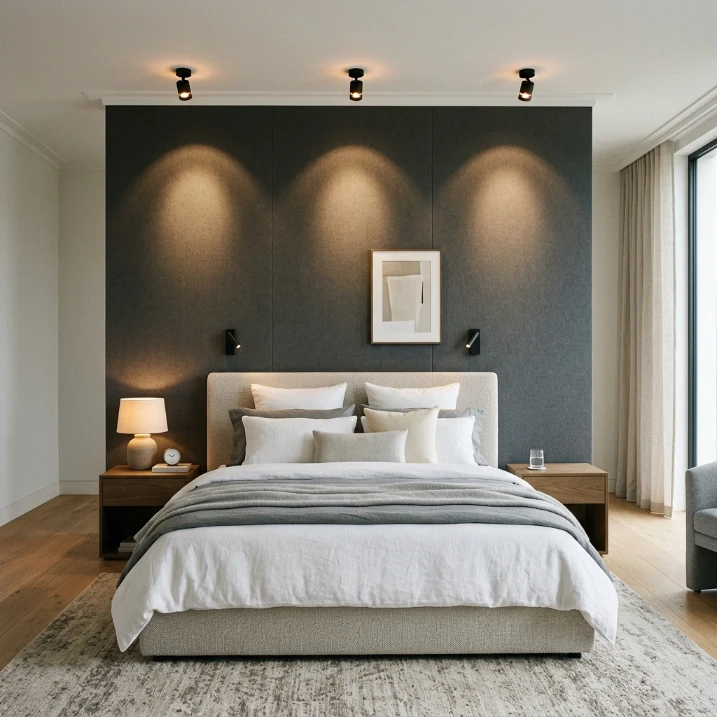
Small ceiling spotlights can direct controlled beams toward a feature wall without adding visible fixtures to the wall itself. This keeps the design clean while giving you precise control over what receives attention.
Use adjustable heads to highlight artwork, paneling, a textured finish, or the area directly behind the bed. Several small lights usually look more balanced than one oversized spotlight.
17. Combine Accent Lighting With Bedside Lamps

Layering accent wall lighting with bedside lamps creates a more flexible bedroom. The wall lighting can provide a soft background glow while bedside lamps handle reading or other close-up tasks.
Keep the sources at different brightness levels so the room does not become uniformly bright. Coordinating the lamp finishes with the accent wall lighting also helps the overall design feel intentional.
18. Use Smart Dimmable Lighting for Flexible Mood Control

Smart dimmable lighting gives you control over brightness without changing the fixture. You can keep the accent wall softly illuminated while relaxing and increase the brightness when you need more visibility.
Choose a system that can be controlled from the bedside or through a compatible smart-home setup. Warm settings are generally comfortable for evening use, while adjustable brightness lets you fine-tune the room for different activities.
How to Choose the Right Lighting for Your Accent Wall
Start by deciding whether the accent wall is mainly decorative, functional, or both. A textured wall may need directional light, while a simple painted wall can benefit from indirect illumination. If you read in bed, adjustable task lighting should take priority.
- Wall finish: Textured materials benefit from directional or grazing light, while smooth walls work well with decorative and indirect options.
- Bedroom size: Smaller rooms usually look better with slim fixtures or concealed lighting.
- Color temperature: Warm white light generally creates a softer bedroom atmosphere.
- Brightness: Dimmable fixtures make it easier to switch between relaxing and practical lighting.
- Scale: Match fixtures to the bed, wall width, ceiling height, and surrounding furniture.
- Controls: Bedside switches or smart controls make everyday use easier.
Tips for Making Accent Wall Lighting Look Polished
Good placement often matters more than an expensive fixture. Keep visible wires hidden, avoid mixing too many unrelated finishes, and repeat metal or material tones already used elsewhere in the bedroom.
Layer different light sources instead of making every fixture equally bright. A softly lit accent wall can work with bedside lamps, ceiling lighting, and focused reading lights to create depth without making the room feel overlit.
Final Thoughts
The right bedroom accent wall lighting can change the character of the entire room without requiring a major renovation. From slim sconces and hidden LEDs to wood slat lighting, wall washing, pendant fixtures, and smart dimmers, there are plenty of ways to match lighting with your bedroom style and daily routine.
Choose the feature you want to emphasize first, then select a lighting method that supports it without creating glare or clutter. Warm illumination, concealed hardware, practical controls, and thoughtful layering can help your accent wall look polished both day and night.
For more bedroom inspiration, explore our bedroom accent wall ideas, boho bedroom ideas, and pastel bedroom ideas.