11 Bedroom Curtain Ideas for a Cozy, Stylish and Polished Space

Bedroom curtains do much more than cover a window. The right fabric, color, length, and hanging style can make a bedroom feel warmer, brighter, calmer, or more refined without changing the furniture. Curtains also help control daylight and privacy, making them one of the easiest decor updates to combine with everyday comfort.
The best bedroom curtain ideas work with the room instead of competing with it. A light linen panel can soften a modern bedroom, while full-length velvet can create a richer atmosphere. Sheer layers can keep a small room airy, and blackout panels can make a bright bedroom much more comfortable for sleeping.
Below are 11 practical curtain styles, followed by simple guidance for choosing the right fabric, color, length, and hardware for your space.
1. Floor-to-Ceiling Linen Curtains
Floor-to-ceiling linen curtains create an easy, relaxed look that works across many bedroom styles. Their natural texture adds softness without making the window feel heavy, and the long vertical lines can make the ceiling appear taller.
Choose warm white, ivory, oatmeal, sand, or soft beige when you want a calm neutral palette. Natural linen also pairs beautifully with wood furniture, woven accents, cotton bedding, and simple upholstered beds.
For the best proportions, mount the rod several inches above the window frame and let the panels reach close to the floor. If you want a more relaxed finish, allow a small amount of fabric to gather at the floor. For a cleaner modern appearance, let the curtain just meet the floor.
2. Sheer Curtains for Soft Natural Light

Sheer curtains are ideal when you want privacy without giving up natural light. During the day, they filter sunlight and create a gentle glow that can make the bedroom feel brighter and more peaceful.
White and cream sheers are the easiest choices, but soft gray, blush, pale sage, and muted blue can add subtle color. A fine voile or lightweight polyester blend is practical for regular use, while linen sheers provide a more textured appearance.
Sheers can be used alone in a private bedroom or layered with a heavier curtain when you need stronger light control at night. Their light appearance also makes them useful in small bedrooms where bulky treatments could feel overwhelming.
3. Blackout Curtains for Better Sleep

If your bedroom receives strong morning sunlight, blackout curtains can make a noticeable difference. They are designed to reduce incoming light and can also provide extra privacy, making them a practical choice for bedrooms facing busy streets or neighboring homes.
For a polished look, choose a solid blackout panel rather than a very busy print. Charcoal, navy, warm taupe, deep green, and chocolate brown can create a cozy atmosphere, while beige and soft gray keep the room lighter.
Pay attention to the width as well as the length. Curtains that extend beyond the sides of the window can reduce light leakage around the edges. A ceiling-mounted track can be especially effective when you want maximum coverage and a streamlined appearance.
4. Layered Sheer and Blackout Panels

Layering two curtain types gives you more control over both style and function. A sheer inner panel can soften daylight during the morning and afternoon, while a heavier outer panel can be closed when you want darkness and privacy.
A double curtain rod makes this arrangement simple. Keep the two layers in related colors for a calm bedroom, such as ivory sheers with beige drapes or white sheers with muted olive panels.
This combination is particularly useful in primary bedrooms because it lets you change the atmosphere throughout the day. Open both layers for maximum daylight, close only the sheers for filtered light, or close both for privacy and sleep.
5. Soft Beige Curtains for a Warm Neutral Bedroom

Beige curtains can make a bedroom feel warmer without introducing a strong accent color. They work especially well with cream bedding, light wood, warm white walls, tan rugs, and other natural finishes.
For a sophisticated look, choose a beige shade that is slightly different from the wall color. Tonal variation keeps the room from looking flat while still creating a cohesive palette. Linen, cotton, and textured woven fabrics are all good options.
Soft beige is also easy to update around. If you change your bedding later, the curtains can continue to work with new colors and patterns. That makes them a reliable choice for a bedroom that you want to keep flexible.
6. Velvet Curtains for a Luxurious Bedroom

Velvet curtains bring depth and visual weight to a bedroom. The fabric catches light differently across its folds, giving the window a richer appearance than a flat cotton or synthetic panel.
Deep green, burgundy, navy, cocoa, and dusty rose can create an elegant bedroom, while cream or warm gray velvet offers a softer interpretation. Velvet works especially well with upholstered headboards, brass lighting, dark wood, and layered bedding.
Because velvet is visually substantial, use it thoughtfully in smaller bedrooms. A pair of full-length panels can be enough to create the effect without adding too many other heavy textiles.
7. Patterned Curtains as a Bedroom Accent

Patterned curtains can become the main decorative feature around a bedroom window. Floral prints, subtle stripes, botanical designs, small geometrics, and vintage-inspired motifs can all add personality without requiring a complete room makeover.
The easiest way to keep a patterned curtain from looking disconnected is to repeat one of its colors elsewhere. A blue detail in the curtains might appear again in a cushion, throw, artwork, or rug. You do not need to match every element exactly.
If your bedding already has a strong pattern, choose curtains with a quieter design. When the rest of the room is mostly solid colors, the window can handle a more noticeable print.
8. Curtains Hung Wide to Make the Window Look Larger

How you hang curtains can be just as important as the fabric you choose. Mounting the rod wider than the window allows the panels to sit mostly outside the glass when they are open. This exposes more of the window and can make it appear larger.
The same technique also lets more daylight enter the bedroom. It is particularly useful when the window is relatively narrow and you want to create a stronger sense of openness.
Use a sturdy rod and make sure there is enough wall space on both sides for the curtain panels to stack neatly. If the window is close to a corner, measure carefully so the hardware does not interfere with another wall or piece of furniture.
9. Roman Shades With Soft Side Curtains

Roman shades offer a tailored alternative to full curtains, and adding narrow side panels can give the window a softer, more finished appearance. This combination works well when you want the clean lines of a shade without losing the decorative quality of fabric panels.
Choose a simple Roman shade in a neutral or subtle pattern and use side curtains in a complementary fabric. The shade can handle privacy and light control while the curtains frame the window.
This setup is also useful for bedrooms with furniture positioned close to the window. Because the shade operates upward, it can leave more space around the sill and floor area than a large curtain treatment.
10. Romantic Floral Curtains

Floral curtains can bring a softer, more romantic feeling to a bedroom, especially when the pattern includes muted colors rather than very bright contrasts. They are a natural fit for cottage, vintage, traditional, and feminine bedroom styles.
Look for botanical branches, small-scale flowers, watercolor-style prints, or larger floral motifs depending on the size of the room. A large bedroom can usually handle a bolder print, while a smaller space often benefits from a more delicate pattern.
Keep the rest of the room relatively calm when the curtains are the main pattern. Cream bedding, natural wood, simple lamps, and a textured rug can support the floral design without competing with it.
11. Ceiling-Mounted Curtains for a Clean Modern Look
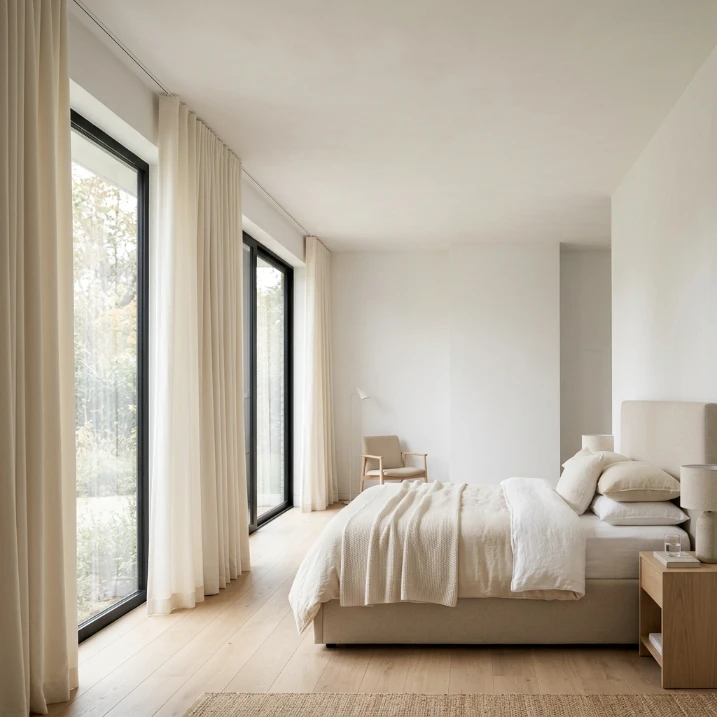
Ceiling-mounted curtains create a streamlined appearance because the hardware is less visually prominent and the fabric can run almost continuously from the ceiling toward the floor. This treatment is especially effective in modern bedrooms with simple architecture.
Choose plain linen, cotton, or a smooth blackout fabric for a clean finish. A wall-to-wall track can make a large window feel more substantial, while a narrower ceiling track can frame one opening without taking attention away from the rest of the room.
This approach is also useful when the windows are unusually tall or when the wall above the window is limited. The curtain becomes part of the architecture rather than simply an accessory attached to the window frame.
How to Choose the Right Bedroom Curtain Fabric
Start with the amount of light and privacy your bedroom needs. Lightweight linen and sheers are attractive when daylight is important, while lined cotton, velvet, and blackout fabrics offer more control.
Think about the other textiles already in the room. If the bed has a thick upholstered headboard and a layered rug, a lighter curtain can prevent the room from feeling too heavy. If the bedroom is mostly smooth surfaces, a textured linen or woven curtain can add useful visual depth.
Maintenance matters too. Bedrooms with pets, children, or frequent dust may benefit from washable fabrics and simple designs that are easy to remove. Always check the care instructions before choosing a fabric based only on appearance.
How Long Should Bedroom Curtains Be?
For most bedrooms, floor-length curtains create the most finished look. Measure from the planned rod or track position to the floor, then account for the style of the curtain header and how much fabric you want at the bottom.
A slight break at the floor gives a relaxed appearance, while curtains that just skim the floor look crisp and modern. Avoid panels that stop several inches above the floor unless the room layout makes a shorter treatment necessary.
If you have a radiator, desk, or other obstacle beneath the window, a Roman shade or shorter curtain may be more practical. The best length is the one that looks intentional and works safely with the room.
Bedroom Curtain Color Ideas
| Curtain Color | Works Well With | Bedroom Feel |
|---|---|---|
| Warm white | Oak, cream, beige, sage | Light and relaxed |
| Soft beige | Ivory, tan, brown, natural wood | Warm and timeless |
| Sage green | Cream, white, oak, muted brass | Natural and calming |
| Dusty blue | White, gray, taupe, pale wood | Fresh and restful |
| Deep navy | Ivory, walnut, brass | Rich and classic |
| Burgundy | Cream, beige, dark wood | Cozy and dramatic |
Simple Curtain Styling Mistakes to Avoid
- Choosing the wrong scale: Oversized patterns can dominate a small bedroom, while tiny prints may disappear in a large room.
- Stopping curtains too high above the floor: Short panels can make the window treatment look unfinished unless they are deliberately designed that way.
- Ignoring the rod: A weak or undersized rod can make expensive curtains look less polished.
- Using too many competing patterns: If your bedding is already bold, let the curtains provide balance rather than adding another strong print.
- Forgetting the light direction: Test fabrics during the actual times of day when the bedroom is used.
Final Thoughts
The right bedroom curtains can change the atmosphere of a room without requiring a major renovation. Linen panels can bring natural softness, sheers can brighten a space, blackout curtains can improve light control, and velvet or patterned fabrics can make the window a genuine focal point.
Start with the practical needs of the room, then choose a fabric and color that support the style you already have. Pay attention to curtain height, width, fullness, and hardware because these small details can have a surprisingly large effect on the finished look.
For more bedroom inspiration, you can also explore our bedroom accent wall ideas, pastel bedroom ideas, and Art Deco bedroom ideas for ways to coordinate curtains with the rest of your decor.