10 Blue and Gray Bedroom Ideas for a Calm, Stylish Retreat
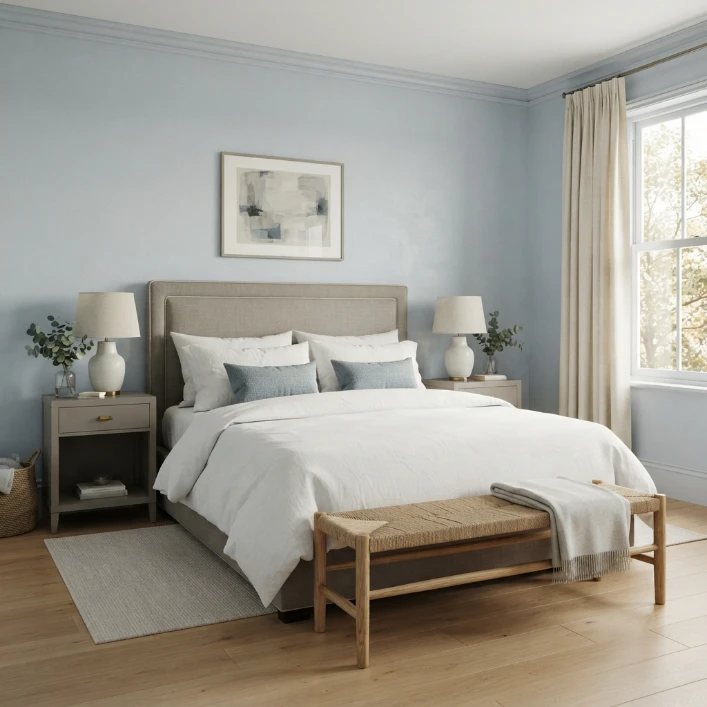
Blue and gray make an especially versatile bedroom combination because the two colors can feel calm, sophisticated, cozy, or modern depending on the shades and materials you choose. Pale blue with warm gray creates an airy room, while navy with charcoal produces a richer and more dramatic look. The key is not simply putting both colors into the same room. It is choosing a clear balance between cool tones, warm materials, texture, lighting, and contrast.
If you are planning a bedroom refresh, these blue and gray bedroom ideas can help you build a room that feels finished without becoming overly coordinated. From soft blue walls and layered bedding to navy furniture, natural wood, patterned fabrics, and warm lighting, each idea can be adapted to a small bedroom, primary suite, guest room, or teen bedroom.
1. Pair Soft Blue Walls With Warm Gray Furniture
Soft blue walls create a peaceful background that works beautifully with warm gray furniture. Instead of choosing a very icy gray, look for a greige-leaning gray with subtle beige undertones. That small shift keeps the bedroom comfortable and prevents the blue from making the space feel cold.
A gray upholstered bed is an easy starting point. Add matching or slightly varied gray nightstands, then bring in white bedding and a few muted blue accents. Light oak flooring or a natural wood bench can add another warm layer.
This combination is particularly useful when you want a bedroom that feels bright during the day but still relaxing at night. Keep the largest surfaces simple and use blue through the walls, pillows, artwork, or curtains rather than trying to make every item match.
2. Create a Navy Focal Point Behind the Bed

A navy wall behind the bed can give a bedroom a strong focal point without requiring a complete makeover. The darker color naturally draws attention toward the bed and creates a sense of depth, especially when the other walls remain soft gray, warm white, or pale blue.
For balance, use lighter bedding and furniture around the navy wall. White sheets, a light gray duvet, and natural wood nightstands can keep the room from becoming too heavy. Brass or brushed metal lighting can also introduce warmth.
If the bedroom receives limited natural light, consider using navy on one wall rather than throughout the room. This gives you the dramatic effect while preserving brightness around the rest of the space.
3. Layer Blue and Gray Bedding for a Boutique-Hotel Feel

Bedding is one of the easiest places to experiment with this color palette because you can change individual layers without repainting the room. Start with crisp white or soft gray sheets, then add a medium-gray quilt or coverlet and a blue duvet, blanket, or folded throw.
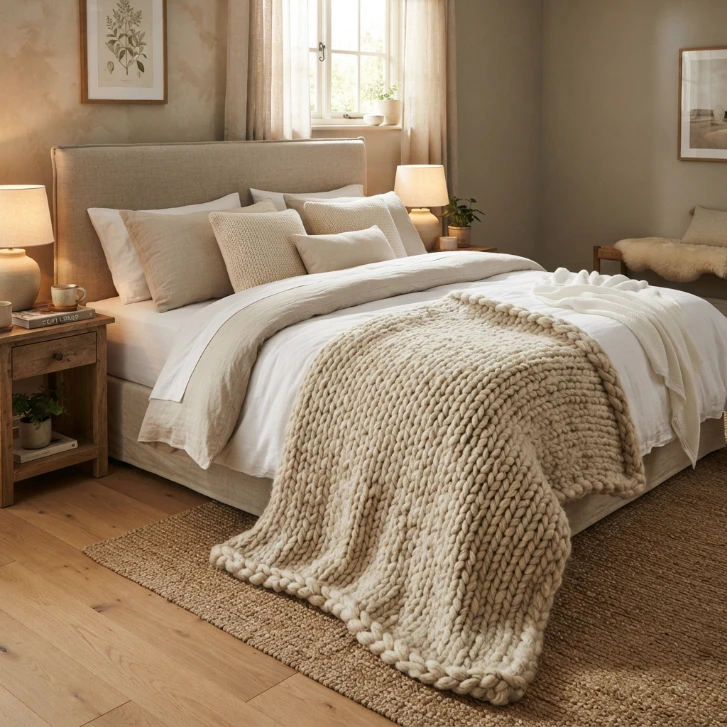
Use different fabrics to keep the bed from looking flat. Washed linen, cotton, velvet, boucle, and knitted materials each reflect light differently and make the palette more interesting. You can also vary the blue shades slightly, such as pairing dusty blue with muted navy.
Keep the arrangement intentional. Two or three larger pillows, a couple of standard sleeping pillows, and one or two blue accent cushions are usually enough. A textured throw folded across the lower third of the bed can finish the look without creating visual clutter.
4. Mix Dusty Blue With Charcoal for a Moody Bedroom

For a bedroom with more depth and character, combine dusty blue with charcoal gray. This pairing works especially well in rooms with good natural light because the darker shades have enough contrast to feel dramatic without making the entire space gloomy.
Use charcoal selectively on an accent wall, curtains, an upholstered headboard, or a rug. Let dusty blue soften the darker elements through bedding, cushions, artwork, or a painted feature. Warm white ceilings and lighter flooring can provide additional breathing room.
Lighting matters even more with a darker palette. Bedside lamps, wall sconces, and warm bulbs create a softer evening atmosphere and prevent charcoal and navy from appearing harsh.
5. Give the Room a Relaxed Coastal Look

Blue and gray naturally lend themselves to a relaxed coastal bedroom, but you do not need obvious nautical decorations to achieve the effect. Focus on pale blue, soft gray, warm white, sandy beige, and natural wood.
Choose simple furniture with light finishes and add linen curtains that allow plenty of daylight into the room. A woven pendant, rattan basket, jute rug, or light wood bench can bring organic texture into the otherwise cool palette.
For pattern, use restrained stripes or subtle washed designs instead of covering the room in beach-themed prints. One landscape artwork or a few natural accessories can suggest the coastal influence while keeping the bedroom sophisticated.
6. Add Warm Brass Accents to Blue and Gray

Because blue and gray are generally cool colors, a warm metallic accent can make the bedroom feel more balanced. Brass is especially effective because its golden tone creates contrast without competing with the main palette.
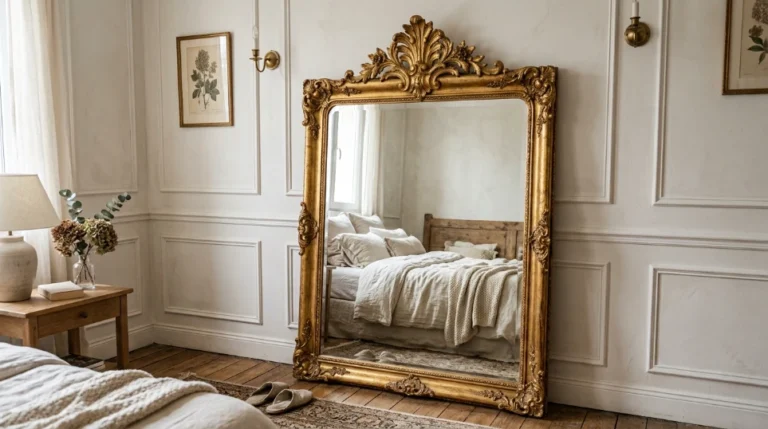
Try brass bedside lamps, cabinet hardware, a mirror frame, curtain hardware, or a small decorative tray. You do not need metallic pieces everywhere. Two or three repeated details are usually enough to make the room feel intentional.
For a more contemporary bedroom, combine brass with clean-lined furniture and solid fabrics. For a softer traditional look, choose aged brass with rounded lamps, an upholstered headboard, and classic bedding.
7. Let a Statement Headboard Lead the Design

A statement headboard can provide a strong focal point while allowing the rest of the bedroom to remain simple. Navy upholstery is a natural choice, especially against light gray or warm white walls.
Channel stitching, gentle curves, or a tall upholstered silhouette can change the character of the room without adding many extra decorations. Keep the bedding relatively quiet so the headboard remains the main feature.
Natural wood nightstands can soften the combination, while black hardware can create a sharper modern edge. If you add artwork above the bed, choose one large piece instead of several small pieces competing with the headboard.
8. Use Blue and Gray Patterns With a Simple Color Rule

Patterns can keep a blue and gray bedroom from feeling too plain, but the easiest way to make them work is to control the scale. Choose one main pattern, then support it with smaller or quieter patterns.
For example, a blue-and-gray floral or abstract duvet can act as the main pattern, while a small stripe pillow and a subtle geometric throw add secondary interest. Keep the colors within the same blue-gray family so the room feels connected.
Patterns do not have to be limited to bedding. A rug, curtains, upholstered bench, or accent chair can carry the design. If one large item already has a strong pattern, keep nearby pieces mostly solid.
9. Warm Up the Palette With Natural Wood
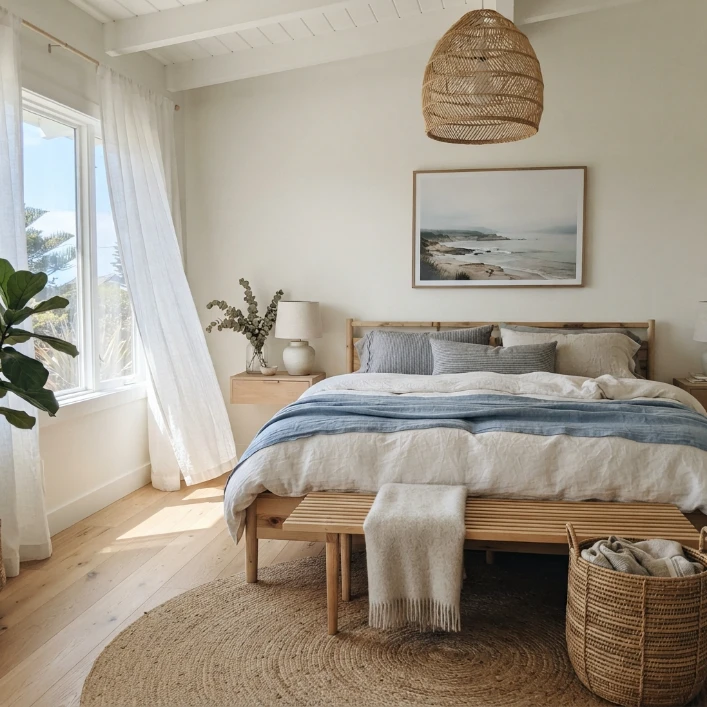
Natural wood is one of the best ways to balance a predominantly blue and gray bedroom. Wood introduces warmth, visible grain, and an organic quality that prevents cool colors from feeling sterile.
Light oak works particularly well with pale blue and soft gray. Medium walnut can support richer navy and charcoal combinations. You can introduce wood through a bed frame, nightstands, dresser, bench, flooring, or even a simple decorative stool.
The goal is not to make every wood finish identical. A little variation can make the bedroom feel more collected and natural. Keep the overall undertones compatible, and repeat the same wood tone in at least two areas so the room feels cohesive.
10. Finish the Room With Warm, Layered Lighting

Good lighting can change how blue and gray actually look in the room. Cool white bulbs may make blue appear sharper and gray appear colder, while warmer lighting can make both colors feel softer and more inviting.
Use several light sources rather than depending on one ceiling fixture. Bedside lamps provide practical reading light, wall sconces can frame the bed, and a soft overhead fixture can provide general illumination. A floor lamp or small accent lamp can add another layer if the room needs it.
Choose dimmable lighting when possible so you can adjust the atmosphere throughout the day. During the evening, lower warm lighting can make navy, dusty blue, and charcoal feel rich and comfortable rather than overly dark.
How to Balance Blue and Gray Without Making the Room Feel Cold
The most common problem with a blue and gray bedroom is using too many cool surfaces at once. Gray walls, blue bedding, gray furniture, metal accessories, and cool lighting can quickly make a room feel flat. The solution is to introduce warmth through materials rather than abandoning the color palette.
- Add natural wood through furniture or flooring.
- Use warm white instead of an extremely bright, cool white.
- Mix soft fabrics such as linen, cotton, wool, velvet, or boucle.
- Choose warm lamps and layered lighting.
- Bring in beige, cream, tan, or muted natural tones in small amounts.
- Use plants or fresh greenery to add a natural contrast.
It also helps to choose one dominant color and one supporting color. If blue is the main color, let gray act as the neutral foundation. If gray dominates the walls and furniture, use blue as the accent through bedding, curtains, artwork, or upholstery.
Choosing the Right Blue and Gray Combination
Not every shade of blue works equally well with every gray. Pale blue pairs naturally with light gray and warm white, while dusty blue works well with greige and medium gray. Navy becomes more balanced when surrounded by lighter gray, cream, natural wood, or warm metallic finishes.
Before painting, test samples on the actual bedroom wall. Natural daylight, artificial lighting, flooring, and existing furniture can all change how a color appears. Look at the sample in the morning, afternoon, and evening before making a final decision.
If you are also updating the room’s windows, consider coordinating the palette with your bedroom curtain ideas. For a stronger focal wall, you can also compare these bedroom accent wall ideas. Small finishing details such as bedside lighting can be improved with the right bedroom lamp ideas.
Final Thoughts
Blue and gray give you plenty of flexibility when designing a bedroom. The combination can be light and airy, dark and dramatic, relaxed and coastal, or polished and modern. The strongest results usually come from choosing a clear color balance and then adding warmth through wood, fabric, lighting, and a few carefully selected accents.
You do not need to replace every piece of furniture to create the look. A new wall color, layered bedding, warmer lighting, a textured rug, or a navy headboard can make a noticeable difference. Start with the element you want to change most, then build the rest of the room around it.